

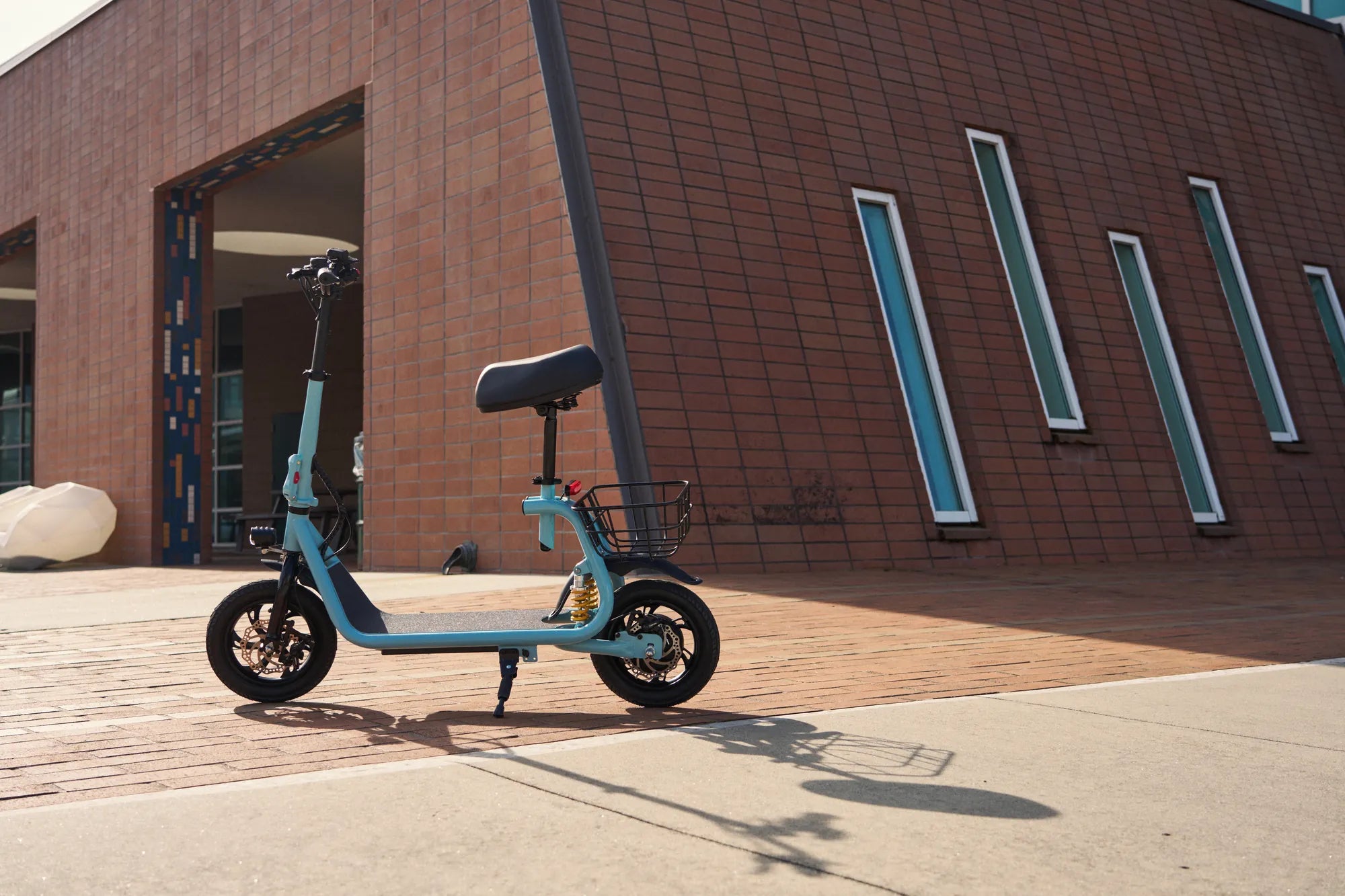
Finding a safe and legal place for your child to ride their new electric scooter can be more challenging than teaching them to balance. Public sidewalks feel risky, roads are dangerous, and park rules are often unclear. This guide cuts through the confusion, providing parents with a clear, actionable roadmap. You will learn how to decode local laws, identify the best and safest riding environments, and implement non-negotiable safety protocols. We’ll reference practices from Gyroor, a family-focused brand trusted by over 100,000 riders, known for its UL-certified batteries and sturdy builds designed with young riders in mind.
Understanding the Rules: Laws and Age Restrictions
The first and most critical step is understanding the legal landscape. Regulations for electric scooters, especially for minors, vary dramatically. There is no universal law. Ignorance can lead to fines or, worse, dangerous situations. Treat this research as a mandatory part of scooter ownership.
Age restrictions are the most common regulatory hurdle. Many municipalities set minimum ages for operating an e-scooter on public property, typically ranging from 12 to 16 years old. These laws are based on assessments of cognitive development and motor skills required to navigate shared spaces.
Speed limits are another key factor. Local ordinances often cap the maximum speed for e-scooters in bike lanes or on paths, sometimes as low as 10-15 mph. This makes choosing a scooter with adjustable speed settings, a feature in many Gyroor models, a practical advantage for parents.
Helmet laws are almost universal for minors. Even in areas where they aren’t legally mandated for adults, children are almost always required to wear a CPSC-certified helmet. This is a non-negotiable safety rule that transcends local legislation.
Local City and State Ordinances
Your local city council or transportation department website is the primary source of truth. Search for terms like “micromobility ordinance,” “motorized scooter regulations,” or “stand-up electric scooter rules.” These documents outline where riding is permitted and under what conditions.
Parks and Recreation department websites are equally important for rules governing public parks and trails. A blanket “no motorized vehicles” rule is common in park systems, which would include electric scooters, though some cities create specific carve-outs for designated paths.
When online searches are unclear, a direct call to your local police department’s non-emergency line or the city clerk’s office can provide definitive answers. It’s better to spend 10 minutes calling than dealing with a citation during a family outing.
Private Property vs. Public Rights-of-Way
This is the fundamental legal distinction for e-scooter use. Public rights-of-way include sidewalks, bike lanes, streets, and public pathways. These are governed by municipal, state, and sometimes federal transportation laws, which are strict and non-negotiable.
Private property, such as your driveway, backyard, or a friend’s empty parking lot (with explicit permission), operates under different rules. The property owner sets the guidelines. This offers unparalleled flexibility for learning and casual riding in a controlled environment.
Always secure permission before riding on private property you do not own. What seems like a harmless, empty lot may have liability concerns for the owner or hidden hazards. Clear communication is essential for safe and respectful riding.
Ideal and Approved Riding Locations for Kids
Once you understand the rules, you can confidently seek out environments that are both fun and compliant. The goal is to find spaces with minimal vehicle traffic, clear sightlines, and a surface suitable for scooter wheels.
Prioritize locations based on your child’s skill level. Beginners need wide-open, obstacle-free zones. Intermediate riders can handle designated paths with predictable traffic. The environment should always match the rider’s competence.
Consider surface quality. Smooth pavement is ideal. Gravel, deep cracks, or uneven concrete can cause loss of control. Gyroor scooters, with their air-filled or wide, solid tires, offer better stability on slightly imperfect surfaces, but a smooth path is always safest.
Supervised Private Property: Your Best Bet
The family driveway or a quiet cul-de-sac (treated as private community property) is the perfect training ground. It offers a confined, familiar space where parents can supervise directly and control all variables, from weather conditions to unexpected obstacles.
Empty parking lots after business hours, with explicit permission from the owner, provide a vast, flat canvas for practicing turns, braking, and building confidence. Ensure the lot is truly empty, with no through traffic or active delivery vehicles.
A level backyard with a paved or hard-packed surface can also work. Features like Gyroor’s IPX5 water-resistant rating mean morning dew or a recent sprinkler run won’t end the riding session prematurely, though wet conditions still require extra caution.
Designated Bike Paths and Multi-Use Trails
These are among the best public options for children who have mastered basic control. Designated bike paths are engineered for non-motorized (and sometimes Class 1/2 e-bike and e-scooter) traffic, separating riders from vehicle lanes.
Multi-use trails are shared with pedestrians, joggers, and cyclists. Teach your child essential trail etiquette: stay to the right, pass on the left only after announcing yourself (e.g., “Passing on your left!”), and slow down when approaching others.
Always verify that e-scooters are explicitly permitted on the specific path or trail. Some regional trail systems have their own regulations that may differ from city street laws. A sign at the trailhead usually lists the rules.
Parks with Paved Pathways
Many community and suburban parks feature extensive networks of paved pathways connecting playgrounds, sports fields, and picnic areas. These can be excellent for recreational riding at a leisurely pace.
The critical step is checking for posted signage at all park entrances. Look for rules prohibiting “motorized vehicles,” “gas-powered devices,” or “e-bikes/e-scooters.” If the rules are silent or ambiguous, a call to the parks department is warranted.
Choose off-peak hours for riding, such as weekday mornings or early afternoons. Avoid crowded weekends when pedestrian traffic is high. The goal is coexistence, not conflict, with other park users enjoying the space.
Locations to Strictly Avoid for Safety and Legal Reasons
Understanding where not to ride is as important as finding good spots. These environments present unacceptable levels of risk from traffic, legal penalties, or both. Establish these as firm, non-negotiable family rules.
The dangers in these areas are often dynamic and unpredictable—a car door opening, a pedestrian stepping suddenly, or a faster cyclist overtaking. A child’s reaction time and situational awareness are not developed enough to handle these variables consistently.
Riding in prohibited areas also sets a poor example and can lead to increased regulatory scrutiny, potentially spoiling safe riding opportunities for everyone in the community. Responsible riding helps maintain access.
Public Roads and Streets
This is the most dangerous zone to avoid. Even on quiet residential streets, cars can appear suddenly and at speeds that make collision catastrophic. Most jurisdictions explicitly prohibit e-scooter use by minors on public roadways.
Drivers are not looking for small, low-profile scooter riders, especially at intersections or driveways. The risk of being sideswiped or hit from behind is significant. No errand or shortcut is worth this level of danger.
Some cities may have “shared streets” or “bike boulevards” with very low speed limits. Even here, extreme caution is required, and it is generally advisable for adults only. For kids, the rule should be simple: no riding on streets.
Busy Sidewalks in Commercial Areas
While sidewalk legality varies, dense urban or downtown sidewalks are a terrible choice. Pedestrian traffic is heavy and unpredictable. Riding here is hazardous and socially inconsiderate, often leading to collisions or confrontations.
The “door zone” from adjacent shops and restaurants is also a threat. People exiting buildings won’t expect a moving scooter just outside the door. The mix of visual clutter, cross-traffic at alleys, and delivery vehicles creates constant hazards.
The correct practice in these areas is to “walk your wheels.” Have your child dismount and walk the scooter on the sidewalk until you reach a safer, less congested location. This respects pedestrians and keeps everyone safe.
High-Speed Bike Lanes and Highways
Not all bike lanes are created equal. A painted lane on a 45+ mph arterial road is fundamentally unsafe for a child on a scooter. The proximity to high-speed traffic, wind gusts from passing trucks, and debris are major risks.
Multi-lane highways and any road with a speed limit above 30 mph should be an absolute no-go zone. These infrastructures are designed for high-speed vehicular traffic, not micromobility. It is also almost certainly illegal.
Teach your child to recognize these dangerous lanes. If your route requires crossing such a road, the safest method is to dismount, use the crosswalk as a pedestrian, and then remount in a safe area on the other side.
Essential Safety Gear and Pre-Ride Checks
Safety gear is not optional equipment; it is a critical layer of protection. Coupled with consistent pre-ride maintenance checks, it forms the foundation of responsible scooter ownership. This habit ensures the scooter is as safe as the environment.
Investing in high-quality, properly fitted gear is more important than spending on scooter accessories. A $30 helmet is worthless if it doesn’t fit correctly or isn’t worn every single time. Make gearing up an unskippable part of the routine.
Pair this physical gear with knowledge. Ensure your child understands basic hand signals for turning and stopping, knows how to scan for hazards, and agrees to predefined riding boundaries set by you before each outing.
Essential Safety Gear Checklist
Helmet: Must be CPSC-certified for cycling and fit snugly. Replace after any significant impact, even if no damage is visible. This is the single most important piece of safety equipment.
Knee and Elbow Pads: These protect the joints most vulnerable in a typical fall. Look for hard-shell caps with secure straps that don’t slip during movement. Wrist guards are also highly recommended.
Appropriate Footwear: Closed-toe, rubber-soled shoes (like sneakers) are mandatory. Sandals, flip-flops, or Crocs can slip off or get caught, leading to loss of control and injury.
High-Visibility Clothing: During daytime, bright colors help. At dusk or dawn, reflective vests or bands are crucial. Many Gyroor scooters have built-in front and rear lights, which should always be used in low-light conditions.
Pre-Ride Safety Checks and Scooter Maintenance
Establish a “T-CLOCS” style check (Tires, Controls, Lights, Overall condition, Chain/Belt, Stand) adapted for scooters. Make it a quick, 60-second ritual performed by parent and child together before every ride.
Tires/Brakes: Check tire pressure for air-filled models; look for wear/debris on solid tires. Squeeze brake levers to ensure they engage firmly and don’t feel spongy. Test the electronic brake if equipped.
Battery and Connections: Ensure the battery is adequately charged for the planned ride. Visually inspect the charging port and power connector for any debris or damage. Gyroor’s UL-certified battery packs are tested for over 500 cycles, but proper care extends their life.
Hardware and Folding Mechanisms: Check that the stem is locked securely and doesn’t wobble. If the scooter folds, ensure the latch or locking pin is fully engaged. Listen for any new, unusual rattles that might indicate a loose component.
Choosing the Right Scooter: Key Features for Kids
Not all electric scooters are suitable for young riders. Selecting a model with age-appropriate features is a proactive safety measure. The right scooter builds confidence, while the wrong one can create fear or encourage unsafe behavior.
Key considerations include maximum speed, acceleration profile, weight limit, and overall stability. A scooter designed for a 200-lb adult will handle very differently for a 70-lb child. The controls and power should match the rider’s size and skill.
Reliability is paramount. A scooter that fails mechanically—a stuck throttle, failed brake, or loose wheel—can cause a crash. Choosing a brand with robust construction and a clear warranty, like Gyroor’s 1-year coverage, provides long-term peace of mind.
| Feature | Why It Matters for Kids | What to Look For |
|---|---|---|
| Adjustable Speed Modes | Allows parents to limit top speed for beginners; can be increased as skill improves. | Multiple modes (e.g., 5 mph, 10 mph, 15 mph) accessible via a PIN-locked app or simple button sequence. |
| Weight Limit & Deck Size | A deck too small is unstable; a scooter near its max weight limit may have reduced performance and battery life. | Choose a model with a weight limit at least 30-50 lbs above your child's current weight. A wide, textured deck aids balance. |
| Braking System | Reliable, easy-to-modulate braking is critical for safety. Overly aggressive brakes can throw a rider. | Dual braking (e.g., electronic + disc or drum) is ideal. Test the lever reach—it should be easy for small hands to grip and pull. |
| Battery Safety & Range | Safe battery chemistry prevents fire risk; adequate range prevents being stranded. | UL 2272 or UL 2843 certification is the gold standard. Match the range (e.g., 10+ miles) to your typical riding loops. |
| Build Quality & Warranty | Withstands the bumps and learning crashes of childhood. A warranty signals manufacturer confidence. | Sturdy aluminum frame, secure folding mechanism, IP water-resistance rating (e.g., IPX5), and a clear 1-year+ warranty. |
Parental Supervision and Setting Boundaries
Active supervision is the final, critical layer in the safety system. The level of supervision should evolve with the child’s demonstrated skill and responsibility, but it should never disappear entirely, even for teenagers.
For young or new riders, this means being physically present, watching their technique, and providing immediate feedback. It’s about coaching, not just policing. Practice emergency stops and obstacle avoidance in a safe area together.
As competence grows, supervision can shift to setting and enforcing clear geographic boundaries. “You may ride to the blue mailbox and back, where I can see you from the porch.” Use smartwatches with location sharing for older kids on longer, pre-approved routes.
Establishing Family Riding Rules
Create a written or clearly verbalized set of family scooter rules. Post them in the garage. These should cover gear (“Always wear your helmet”), locations (“Never ride on Main Street”), conditions (“No riding after dark”), and courtesy (“Yield to pedestrians”).
Incorporate consequences for breaking rules that prioritize safety education over simple punishment. A logical consequence for riding without a helmet is losing scooter privileges for a set time, paired with a review of why the rule exists.
Lead by example. If you ride an e-scooter or e-bike yourself, follow all the same rules. Wear your helmet, obey traffic laws, and practice good etiquette. Your behavior is the most powerful lesson your child will learn.
Teaching Road and Trail Awareness
Supervision is the perfect time to instill foundational road awareness skills. Teach your child to always stop and look both ways—twice—at every driveway and intersection, even in a quiet neighborhood.
Practice “scanning.” Encourage them to regularly look ahead, to the sides, and briefly behind (without swerving) to be aware of their surroundings. Point out potential hazards like parked cars, gravel patches, or pedestrians with dogs.
Drill communication. Ensure they know how to use a bell or their voice to politely alert others when passing. Teach basic hand signals for left turn, right turn, and stopping, even if they are only riding on paths for now.
Frequently Asked Questions (FAQ)
What is a good age for a child's first electric scooter?
There is no single perfect age; it depends on the child’s physical coordination, maturity, and ability to follow safety rules. Many manufacturers design models for riders aged 8 and up. Always cross-reference the scooter’s recommended age and weight range with your local laws, which often set a legal minimum age of 12-16 for public space use.
Are Gyroor scooters safe for kids?
Yes, Gyroor designs its scooters with safety as a core principle. Key safety features include UL-certified battery packs (tested for over 500 cycles) for fire safety, robust aluminum frames for durability, and models with adjustable speed settings that allow parents to limit top speed for beginners. Their IPX5 water-resistant rating also adds reliability in damp conditions.
Do kids need a license or insurance to ride an e-scooter?
Typically, no. Electric scooters that fall under specific power and speed classifications (like most Gyroor models) are not required to be licensed or insured in the vast majority of jurisdictions in North America and Europe. However, this is highly location-dependent. Parents must verify with their local Department of Motor Vehicles or transportation authority, as rules can change.
How can I find the specific e-scooter laws for my town?
Start with a targeted online search: “[Your City Name] electric scooter ordinance” or “[Your County] micromobility regulations.” Check your city’s official website, focusing on pages for the Police Department, Transportation, or City Clerk. If information is unclear, call the non-emergency police line or your local Department of Transportation office for clarification.
Can my child ride an e-scooter to school?
This depends entirely on local school district policy, city laws, and the safety of the route. Many schools prohibit electric scooters on campus due to liability and charging concerns. Even if allowed, the route must avoid major roads and be practiced extensively with an adult first. Always get written permission from the school administration before considering this.
Fostering Fun and Responsibility on Two Wheels
An electric scooter is more than a toy; it’s a tool for teaching responsibility, independence, and respect for shared spaces. By taking the time to research laws, choose safe locations, enforce gear use, and provide active supervision, you transform a simple activity into a valuable learning experience. The joy on your child’s face as they master a new skill is worth the upfront effort. Remember, safety is the foundation that makes ongoing fun possible. For a range of family-friendly electric scooters built with UL-certified safety, robust designs, and features parents trust, explore the options designed for young riders. Browse the full Gyroor collection at gyroorboard.com to find the right model for your family's next adventure.
Are Electric Scooters Legal in Birmingham? What You Need to Know
Are Electric Scooters Legal in Wales? A Complete Guide to the Rules