



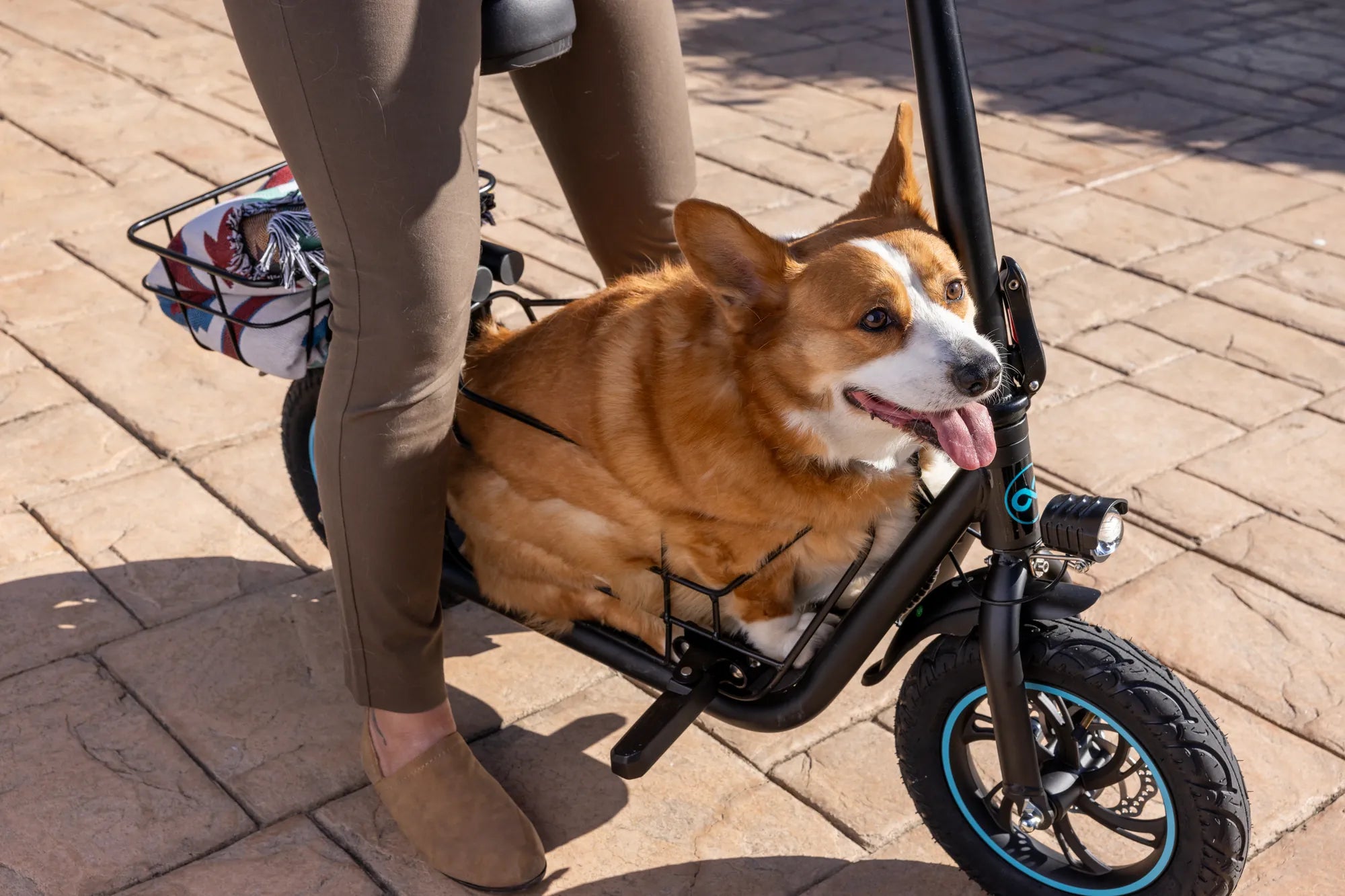
The $1,000 Electric Scooter Revolution
The landscape of urban mobility is undergoing a fundamental shift, driven by a single, powerful price point: the $1,000 electric scooter. This isn't about cheap toys or disposable gadgets; it's about a new category of serious personal electric vehicles (PEVs) that offer legitimate transportation for the masses. At this critical juncture of cost and capability, riders gain access to models with certified safety systems, sufficient range for most commutes, and build quality designed for daily use.
This revolution makes high-quality, reliable electric scooters accessible, transforming them from niche novelties into practical tools for beating traffic, saving money, and reducing urban congestion. Leading brands like Gyroor have been instrumental in this shift, engineering UL-certified, warrantied models that deliver trust and performance at this accessible price. The future of getting around our cities is being redefined, one reliable mile at a time.
What Defines a True "$1,000 Electric Scooter"?
A genuine $1,000 electric scooter represents a significant leap from budget options. The price tag should correspond to a clear transition from "toy" to "legitimate transport." Key performance benchmarks define this category, creating a reliable standard for commuters and daily riders.
Expect a minimum real-world range of 18 to 25 miles on a single charge. This covers the vast majority of round-trip urban commutes. Top speeds should reliably sit between 19 and 25 mph, providing a pace that keeps up with city traffic flow. Motor power is crucial, with 350W to 500W motors being the standard, offering enough torque for moderate inclines.
Essential features become non-negotiable. Dual braking systems—typically a combination of electronic and disc or drum brakes—are mandatory for safe stopping power. Integrated, bright front and rear lighting is essential for visibility. Build quality should feel substantial, with a sturdy deck and reliable folding mechanism for portability.
The Non-Negotiable: Safety and Certification Standards
At the $1,000 price point, rigorous safety certifications are the most critical differentiator. These are not optional extras; they are fundamental requirements that separate reputable vehicles from potential hazards. The foremost certification is UL 2272 for the battery system.
UL 2272 involves extensive testing for electrical, mechanical, and environmental safety, drastically mitigating the risk of battery fires. For the entire scooter system, UL 2849 certification provides a comprehensive safety standard covering the electrical drive train, battery, and charger. Gyroor's commitment to using UL-certified battery packs across its lineup exemplifies the industry standard for this category.
Choosing a scooter without these certifications to save a few hundred dollars is a significant risk. It compromises not just your investment, but your personal safety. In the $1,000 tier, certified safety is the baseline, not a premium feature.
Why the $1,000 Price Point is a Game-Changer for Cities
The economic and urban impact of the accessible $1,000 electric scooter is profound. It creates a compelling alternative to traditional transport by offering an unbeatable total cost of ownership. When analyzed against monthly expenses, the value proposition becomes undeniable.
Compare the one-time investment to a monthly public transit pass, which can easily exceed $100 in many metropolitan areas. Within ten months, the scooter pays for itself. Against ride-share services, where a few short trips per week can cost $50-$100, the savings are even more immediate. It also presents a fraction of the cost of car ownership, eliminating insurance, fuel, parking, and maintenance fees.
This price point effectively fills the "micro-mobility gap"—those trips between 1 to 5 miles that are too far to walk comfortably but inefficient for a bus or car. By providing a fast, affordable, and fun solution for these journeys, $1,000 electric scooters can directly reduce traffic congestion, lower carbon emissions, and increase overall urban mobility efficiency.
Performance vs. Price: What You Actually Get
Understanding the value spectrum is key. The $1,000 tier sits in the optimal "sweet spot," balancing performance, safety, and durability for the average commuter.
| Feature Category | Sub-$800 Scooters | $1,000 Scooters | $1,500+ Scooters |
|---|---|---|---|
| Real-World Range | 10-15 miles | 18-25 miles | 30-50+ miles |
| Typical Motor | 250W-350W | 350W-500W | 500W-1000W+ |
| Top Speed | 15-18 mph | 19-25 mph | 25-40+ mph |
| Braking System | Single brake (often foot/drum) | Dual system (E-ABS + disc/drum) | Advanced dual/triple disc |
| Suspension | Often none or basic | Spring or basic hydraulic common | Full hydraulic or advanced |
| Water Resistance | IPX4 or unspecified | IPX5 (like Gyroor models) | IPX6 or IPX7 |
| Battery Certification | Rarely certified | UL 2272 becoming standard | UL 2272 standard |
| Warranty & Support | 90 days or less, limited | 1-year comprehensive (e.g., Gyroor) | 1-2 years, premium support |
This comparison shows the $1,000 electric scooter delivers the core features needed for dependable daily use without the premium cost of extreme performance that most urban riders don't require.
Key Features to Prioritize in Your $1,000 Scooter Investment
With numerous options at this price, knowing which features deliver the most value for real-world urban commuting is essential. Prioritizing correctly ensures your investment serves you reliably for years.
Battery Quality & Certification: This is paramount. Always verify UL 2272 certification. A high-quality battery from a reputable brand ensures not only safety but also consistent range over hundreds of charge cycles. Gyroor utilizes UL-certified battery packs tested for over 500 cycles.
Real-World Range: Manufacturer range claims are often based on ideal conditions. Prioritize models that transparently list real-world or tested range figures. For a $1,000 electric scooter, 20+ miles of realistic range should be the target.
Water Resistance (IP Rating): Urban commuting means encountering puddles and light rain. An IPX5 rating, like those on Gyroor scooters, means the scooter is protected against water jets from any direction, making it viable for all-weather reliability.
Suspension & Tires: Pneumatic (air-filled) tires and even a basic front or dual spring suspension dramatically improve comfort and control on uneven city streets, reducing fatigue and increasing safety.
The Warranty & Support Advantage: Protecting Your Investment
A strong warranty and accessible customer support are not mere afterthoughts; they are integral components of the scooter's value. A $1,000 electric scooter is a significant purchase that should be protected.
A comprehensive 1-year warranty, like the one offered by Gyroor, covers the motor, battery, controller, and frame against manufacturing defects. This provides peace of mind that your primary commute vehicle won't leave you stranded due to a component failure. Beyond the warranty, assess the brand's support network.
Are replacement parts like tires, brakes, and chargers readily available? Is there accessible customer service via phone, email, or chat? A brand with a established presence in North America and Europe, trusted by over 100,000 riders like Gyroor, typically offers a more reliable support ecosystem than an unknown entity.
The Gyroor Difference: Engineering Trust at an Accessible Price
Gyroor exemplifies the principles that define the best of the $1,000 electric scooter category. The brand's engineering philosophy centers on delivering certified safety, all-weather reliability, and dependable performance—exactly what a serious urban commuter needs.
Every Gyroor scooter in this segment is built around a core promise: a UL-certified battery pack. This commitment to verified safety is the foundation of their design. Furthermore, an IPX5 water-resistant rating is standard across their commuter models, ensuring splashes, wet roads, and light rain don't end your ride.
This is paired with performance specs tailored for the city: motors up to 500W for confident hill climbing, ranges that meet or exceed 20 miles, and dual braking systems. The 1-year warranty, backed by US-based support, protects the rider's investment. For over 100,000 riders, this combination has made Gyroor a trusted name in affordable, reliable e-mobility.
Looking Ahead: The Future of Affordable E-Mobility
The maturation of the $1,000 electric scooter segment is democratizing urban transport, making efficient, low-carbon mobility a realistic option for a vastly larger population. This trend is set to accelerate and evolve in several key ways.
We can expect increased integration with public transit systems, with more cities installing secure scooter parking or charging stations at transit hubs. Municipal subsidies or tax incentives for PEV purchases, similar to e-bike programs, could further lower the barrier to entry. Technologically, advancements like solid-state batteries and more efficient motors will eventually trickle down, becoming standard in this price bracket, offering even greater range and durability.
The core lesson remains: the future belongs to certified, well-supported brands that prioritize safety and longevity. As this market grows, making an informed choice—focusing on UL certification, realistic performance, and reliable warranty support—is the key to a safe, sustainable, and personally empowering shift in how we move.
Frequently Asked Questions (FAQ)
Q: Is a $1,000 electric scooter powerful enough for hills?
A: Yes, when equipped with a motor in the 350W to 500W range, which is standard for this tier. A 500W motor provides ample torque for moderate urban inclines. For very steep hills, checking the scooter's specified gradeability (often 15-20%) is advised.
Q: How does the IPX5 water resistance rating protect my scooter?
A: An IPX5 rating means the scooter's electrical components are sealed against water jets from any direction. In practice, this makes it safe to ride on wet roads, through puddles, and in light rain. It is a crucial feature for commuters who cannot always avoid inclement weather.
Q: What's the true cost of ownership beyond the purchase price?
A: The ongoing costs are minimal. Electricity for charging is negligible—often less than $0.50 for a full charge. Maintenance primarily involves periodic brake pad replacements and tire changes (every 6-12 months with regular use). A strong warranty is the best defense against unexpected component costs.
Q: Can I legally ride a $1,000 electric scooter in my city?
A: Laws vary significantly. Most cities allow e-scooters on bike lanes and paths, often with a speed limit (e.g., 15-20 mph). Helmet laws are common. It is essential to check your local municipality's regulations regarding maximum power/wattage, age restrictions, and whether riding on sidewalks is prohibited before you ride.
Q: How long does the battery typically last, and what affects its lifespan?
A: A quality UL-certified battery, like those used by Gyroor, is rated for 500+ full charge cycles while maintaining over 80% of its original capacity. This translates to several years of daily use. Lifespan is affected by extreme temperatures, consistently draining the battery to 0%, and using non-standard chargers. Proper care can extend battery life significantly.
Ready to join the mobility revolution with a scooter built for real life? Explore models that combine certified safety, all-weather capability, and reliable performance. Browse the full Gyroor collection at gyroorboard.com to find your perfect commute companion.
History of Electric Scooters: From Patents to Pavement
Are Electric Scooters Safer Than Bikes? An In-Depth Safety Analysis