



What is the true top speed of a modern 1000cc motorcycle? This question captivates enthusiasts and defines the pinnacle of production motorcycle engineering. The pursuit of a 1000 cc bike top speed represents the ultimate battle between horsepower, aerodynamics, and electronic control. This guide will dissect the engineering principles, provide verified performance data, and separate manufacturer claims from real-world results. You will learn the key factors that determine terminal velocity, how rider skill and legality intersect with extreme performance, and why the headline top speed figure is just one part of the liter-bike experience.
Introduction to 1000cc Motorcycles: The Pinnacle of Performance
The 1000cc "liter-class" segment is the undisputed king of production sport and naked motorcycles. These machines represent the zenith of mass-market engineering, where cutting-edge technology from MotoGP and World Superbike racing is distilled into street-legal form. Historically, the category evolved from the 750cc superbikes of the 90s, with the Honda CBR900RR Fireblade pioneering the concept of a lightweight, agile open-class machine.
Today, a modern 1000 cc bike top speed often flirts with or exceeds 186 mph (300 km/h), a figure that has become a common electronic limit. The reputation of these bikes is built not just on this staggering number, but on their explosive acceleration, telepathic handling, and race-derived electronics. They serve as the ultimate expression of two-wheeled performance for skilled riders, offering an experience that is both exhilarating and demanding.
The core appeal lies in the balance of extreme power and manageable weight. With engines producing between 160 to over 210 horsepower and weighing under 450 pounds wet, the power-to-weight ratio surpasses that of most supercars. This makes the quest for a 1000 cc bike top speed a fascinating study in physics and rider psychology. It's a benchmark that continues to drive innovation in materials, aerodynamics, and electronic rider aids.
While the 1000 cc bike top speed is a key marketing metric, it's crucial to understand it as a theoretical maximum achieved under ideal, controlled conditions. For the vast majority of owners, the accessible performance—the brutal mid-range punch, the corner-exit acceleration, and the sublime braking—defines the daily riding experience far more than the terminal velocity ever could.
The Engineering Behind the Speed: More Than Just Displacement
Achieving a high 1000 cc bike top speed is a complex engineering challenge that extends far beyond a large engine. Displacement is merely the starting point; it's the optimization of power delivery, gearing, aerodynamics, and electronics that unlocks true performance. Modern liter-bikes are technological marvels where every component is designed to work in harmony to manage and deploy over 200 horsepower efficiently.
The engine itself is a masterpiece. It features advanced technologies like variable valve timing (e.g., BMW's ShiftCam, Suzuki's VVT), titanium valves and connecting rods, and precision fuel injection. The goal is to create a broad, usable powerband with a fierce top-end rush. Peak horsepower figures, often between 190-215 bhp, are essential, but the shape of the torque curve is equally important for drive out of corners and acceleration through the gears.
Gearing is precisely calculated to balance acceleration and top speed. A tall sixth gear allows the engine to sit at lower, more efficient RPMs at high speed, while closely stacked lower gears enable lightning-fast acceleration. The final drive ratio (sprocket sizes) can significantly alter the bike's character, with some riders opting for shorter gearing for track use, which sacrifices theoretical top speed for harder acceleration.
Finally, the chassis and suspension must be rigid enough to handle the immense forces generated at speed while providing feedback and stability. A flexing frame or poorly damped suspension can make a bike feel unstable long before it reaches its maximum velocity. The engineering behind a 1000 cc bike top speed is therefore a holistic discipline, integrating every system from the air intake to the rear tire.
Power vs. Aerodynamics: The Constant Battle
At moderate speeds, horsepower overcomes inertia and rolling resistance. However, as velocity increases, aerodynamic drag becomes the dominant opposing force, increasing with the square of the speed. To double your speed, you need roughly eight times the power. This is the fundamental physics limiting a 1000 cc bike top speed. The sleek, fully-faired bodywork of super-sport models is essentially a mobile wind tunnel experiment, designed to pierce the air with minimal resistance while generating downforce for stability.
Naked or streetfighter liter-bikes, which prioritize aggressive styling and an upright riding position, pay a significant aerodynamic penalty. Their exposed riders and blunt front ends create a much larger drag coefficient (CdA). Consequently, a naked bike with identical horsepower to its faired sibling will often have a 15-25 mph lower top speed. The difference highlights that raw power alone cannot dictate the final 1000 cc bike top speed figure.
Components like winglets, first seen in MotoGP, are now common on production superbikes. These are not just for show; they generate real downforce at high speeds, pressing the front wheel into the tarmac to improve stability and braking performance without adding significant drag. Managing turbulence around the rider is also critical, as a buffeting rider cannot maintain a streamlined tuck, further reducing the achievable top speed.
The Electronic Guardian Angels
Modern electronics are the unsung heroes that make contemporary 1000 cc bike top speeds both achievable and relatively safe. Early liter-bikes were often described as "unrideable" or "widow-makers" due to their abrupt power delivery. Today, a suite of electronic rider aids acts as a digital safety net, managing the colossal power output to keep the bike stable and the rubber side down.
The heart is a sophisticated Engine Control Unit (ECU) that governs multiple riding modes (Rain, Road, Sport, Track). These modes drastically alter power delivery, throttle response, and the intervention thresholds for other systems. In Rain mode, horsepower may be capped at 100, with the softest throttle map and earliest traction control intervention. Track mode unleashes full power with aggressive response.
Inertial Measurement Units (IMUs) are now standard. This six-axis sensor package measures pitch, roll, and yaw in real-time, enabling cornering-aware functions. Cornering ABS prevents wheel lock while leaned over, while Cornering Traction Control manages rear-wheel spin relative to lean angle. Wheelie Control uses IMU data to detect and modulate power to keep the front wheel at a manageable height, which is crucial for acceleration and stability when chasing a high 1000 cc bike top speed.
Launch control allows for consistent, maximum-acceleration starts by managing RPM and slip, while sophisticated engine braking control prevents rear-wheel hop during aggressive downshifts. These systems work in concert to allow riders to exploit the bike's performance envelope with greater confidence and consistency than ever before.
Real-World Top Speed Data: Myths vs. Manufacturer Claims
Manufacturer top speed claims are often based on ideal conditions: a long, flat surface like the Bonneville Salt Flats or a test track, with a professional rider in a full tuck, and sometimes with the speed limiter deactivated. Real-world results for a 1000 cc bike top speed can vary due to factors like altitude, air temperature, tire condition, rider size and position, and, most commonly, a mandatory electronic limiter.
Many bikes are electronically limited to 186 mph (300 km/h) due to a "gentleman's agreement" among Japanese and European manufacturers and tire speed rating limitations. However, some flagship models, particularly from European brands, push beyond this limit. It's important to differentiate between indicated speed on the bike's dashboard, which can be optimistic by 5-10%, and GPS-verified speed, which is accurate.
The following table compiles claimed and real-world GPS-verified top speed data for prominent 1000cc-class motorcycles. Note that "real-world" figures assume the limiter is active and conditions are favorable but not perfect.
| Model | Engine Configuration | Claimed Power | Claimed / Limited Top Speed | Real-World GPS Top Speed (Estimated) |
|---|---|---|---|---|
| Suzuki GSX-R1000 | 999cc Inline-4 | 199 hp | 186 mph (limited) | 180-185 mph |
| Yamaha YZF-R1 | 998cc Inline-4 | 197 hp | 186 mph (limited) | 182-186 mph |
| Kawasaki Ninja ZX-10R | 998cc Inline-4 | 203 hp | 186 mph (limited) | 180-186 mph |
| BMW S 1000 RR | 999cc Inline-4 | 205 hp | 189 mph* | 186-190 mph |
| Aprilia RSV4 1100 Factory | 1078cc V4 | 217 hp | 190 mph+ | 186-192 mph |
| Ducati Panigale V4 S | 1103cc V4 | 214 hp | 190 mph+ | 186-195 mph |
| Kawasaki Ninja H2 (Supercharged) | 998cc Inline-4 | 228 hp | 186 mph (limited) | 186 mph (limited) |
| Ducati Streetfighter V4 S (Naked) | 1103cc V4 | 208 hp | ~175 mph | 168-172 mph |
*BMW claims a higher figure post-2023 model year. Data is compiled from manufacturer specs and independent performance publications. The 1000 cc bike top speed for supercharged models like the H2 is limited primarily by gearing and electronic control, not power.
The Rider Factor: Skill, Safety, and Legality
The machine's capability is only half of the 1000 cc bike top speed equation. The rider's skill, judgment, and environment are the other, more critical half. Attempting to reach maximum velocity demands advanced riding techniques, including a perfect aerodynamic tuck, smooth throttle and steering inputs, and the mental fortitude to process information at unreal speeds. A slight twitch or gust of wind can have catastrophic consequences at 180+ mph.
Safety gear is non-negotiable. A full-face helmet (preferably a race-spec model), a one-piece leather racing suit with armor, gauntlet gloves, and riding boots are the absolute minimum. This gear is designed for high-speed slides and impacts, offering protection that street gear simply cannot match. The importance of this equipment cannot be overstated when exploring the limits of a 1000 cc bike top speed.
Legally, achieving these speeds on public roads is reckless, illegal, and endangers everyone. Speed limits are a fraction of these bikes' capabilities. The legal repercussions for getting caught are severe, including massive fines, license revocation, and imprisonment. More importantly, public roads are unpredictable, with traffic, intersections, animals, and road surface hazards making high-speed runs indefensibly dangerous.
The only responsible and ethical venue to explore a bike's performance limits is a controlled, closed-course environment. Track days hosted at professional race circuits provide a safe, legal, and structured setting. Here, riders can experience acceleration, cornering, and braking at levels impossible on the street, often with professional instruction available. This is where the true genius of a liter-bike can be appreciated without the dire risks associated with public roads.
Beyond Top Speed: The True Appeal of the Liter-Bike
While the 1000 cc bike top speed is a captivating number, it is arguably the least relevant performance metric for real-world riding. The true magic of these machines lies in their explosive acceleration, razor-sharp handling, and overall breadth of capability. The sensation of launching from a standstill to illegal speeds in a handful of seconds is a visceral thrill that defines the ownership experience far more than a theoretical maximum velocity.
Acceleration metrics tell a more compelling story. A modern liter-bike can achieve 0-60 mph in under 2.5 seconds and 0-100 mph in around 4.5 seconds. The quarter-mile is dispatched in the low 9-second range at over 150 mph. This level of performance, accessible with a twist of the wrist, is transformative. The mid-range punch, allowing for effortless overtakes without downshifting, makes these bikes incredibly effective on twisting roads.
The handling and braking are equally breathtaking. Top-shelf suspension components, lightweight wheels, and ultra-stiff frames provide telepathic feedback and cornering stability. Radial-mount monobloc brake calipers gripping large, semi-floating discs offer stopping power that can feel physically overwhelming, shedding speed with incredible force and control. This combination of power, agility, and stopping ability creates a holistic riding experience that is unmatched.
For many enthusiasts, the appeal is also technological. These bikes are rolling showcases of advanced materials like carbon fiber and magnesium, and electronic sophistication. Owning and mastering such a complex machine provides a deep sense of connection and accomplishment. The 1000 cc bike top speed is a trophy, but the journey to understanding and harnessing the bike's full spectrum of abilities is the real reward.
FAQ: Your 1000cc Top Speed Questions Answered
Q: What is the fastest production 1000cc motorcycle ever?
A: This is contentious. The Suzuki Hayabusa (1300cc) and Kawasaki ZX-14R (1400cc) historically held the crown but are not 1000cc bikes. In the liter-class, limited-edition track-only models like the Ducati Panigale V4 R (998cc, 240+ hp) or the Aprilia RSV4 X (1077cc, 225 hp) claim the highest figures, often over 200 mph. For road-legal, mass-production 1000cc bikes, the Ducati Panigale V4 and Aprilia RSV4 1100 are among the fastest, with real-world potential just under 200 mph where not limited.
Q: How fast can a 1000cc bike accelerate?
A> The acceleration is staggering. Most modern liter-bikes achieve:
• 0-60 mph: 2.3 - 2.8 seconds
• 0-100 mph: 4.0 - 5.0 seconds
• Quarter-Mile: 9.5 - 10.2 seconds @ 140-155 mph
This makes them faster than virtually all production cars in a straight line up to about 150 mph.
Q: Are all 1000cc bikes speed-limited?
A> The vast majority are, typically to 186 mph (300 km/h). This is due to a combination of a voluntary manufacturer agreement from the late 1990s and the speed rating ("W," rated for 168+ mph) of many stock street tires. Some European models may have higher limiters or none, but they are the exception. Removing the limiter ("derestricting") is possible via ECU flashing but is dangerous without corresponding upgrades to tires, brakes, and suspension, and should only be considered for closed-course use.
Q: Is a 1000cc bike too much for a beginner?
A> Absolutely yes. The power delivery, sensitive controls, and high-performance brakes require refined skills to manage safely. A beginner lacks the muscle memory, threat assessment, and throttle/brake control to handle such a machine. Starting on a smaller, lighter, less powerful bike (300cc-650cc) allows a new rider to develop fundamental skills in a forgiving environment. Moving to a liter-bike after a few years of experience is a much safer and more rewarding progression.
Q: How does a supercharged bike like the Kawasaki Ninja H2 affect top speed?
A> Supercharging forces more air into the engine, creating immense power—over 225 hp in stock form. While this provides mind-bending acceleration, the stock H2's 1000 cc bike top speed is still limited to 186 mph. The limitation is not power but gearing and aerodynamics. The hyperspace H2R track-only version, with over 300 hp and extensive aerodynamic wings, is capable of well over 240 mph, demonstrating that with enough power and downforce, aerodynamic drag can be overcome to reach higher terminal velocities.
Conclusion: Respecting the Machine and the Road
The pursuit of a 1000 cc bike top speed is a testament to human engineering and a rider's ambition. These motorcycles are masterpieces of mechanical and electronic art, offering a level of performance that was unimaginable a few decades ago. However, the raw number is a distant, theoretical peak. The true value of a liter-bike lies in its complete performance envelope: the seismic acceleration, the surgical precision in corners, and the confidence-inspiring electronics that make such power usable.
Responsible ownership means respecting the machine's potential and understanding its appropriate context. Public roads are for transportation and enjoyment within legal and safe limits. The track is the sanctioned arena to explore performance. This distinction is crucial for the safety of the rider and the public, and for the longevity of motorcycling freedoms.
Whether you're an aspiring owner or a seasoned enthusiast, appreciating the 1000 cc bike top speed as a engineering benchmark rather than a riding goal leads to a richer, safer relationship with these incredible machines. The thrill is in the journey of mastery, not just the destination of a speedometer needle.
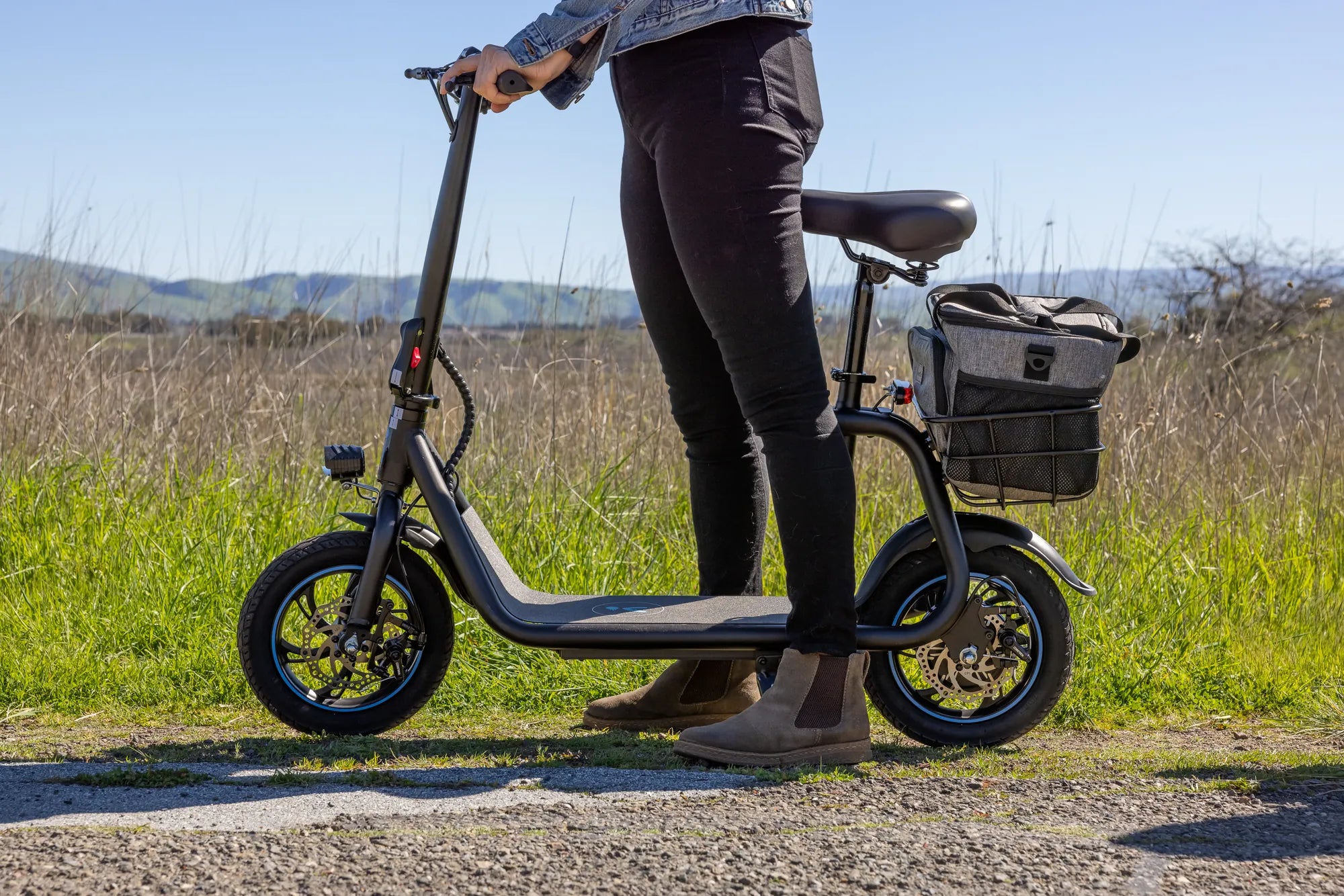
For those inspired by cutting-edge two-wheeled performance but seeking a more accessible and practical form of electric mobility, explore the innovative world of electric scooters. Brands like Gyroor, a leading electric scooter and e-bike manufacturer trusted by over 100,000 riders across North America and Europe, offer a thrilling and eco-conscious alternative. Known for their UL-certified battery safety, IPX5 water-resistant designs, and reliable 1-year warranty, Gyroor models provide a responsible way to enjoy agile urban transport. Discover the perfect blend of performance and practicality. Browse the full Gyroor collection at gyroorboard.com.
How to Convert a Bike to an Ebike: A Complete DIY Guide
Super Moto E-Bike: The Ultimate Hybrid of Motorcycle Thrills & E-Bike Practicality