



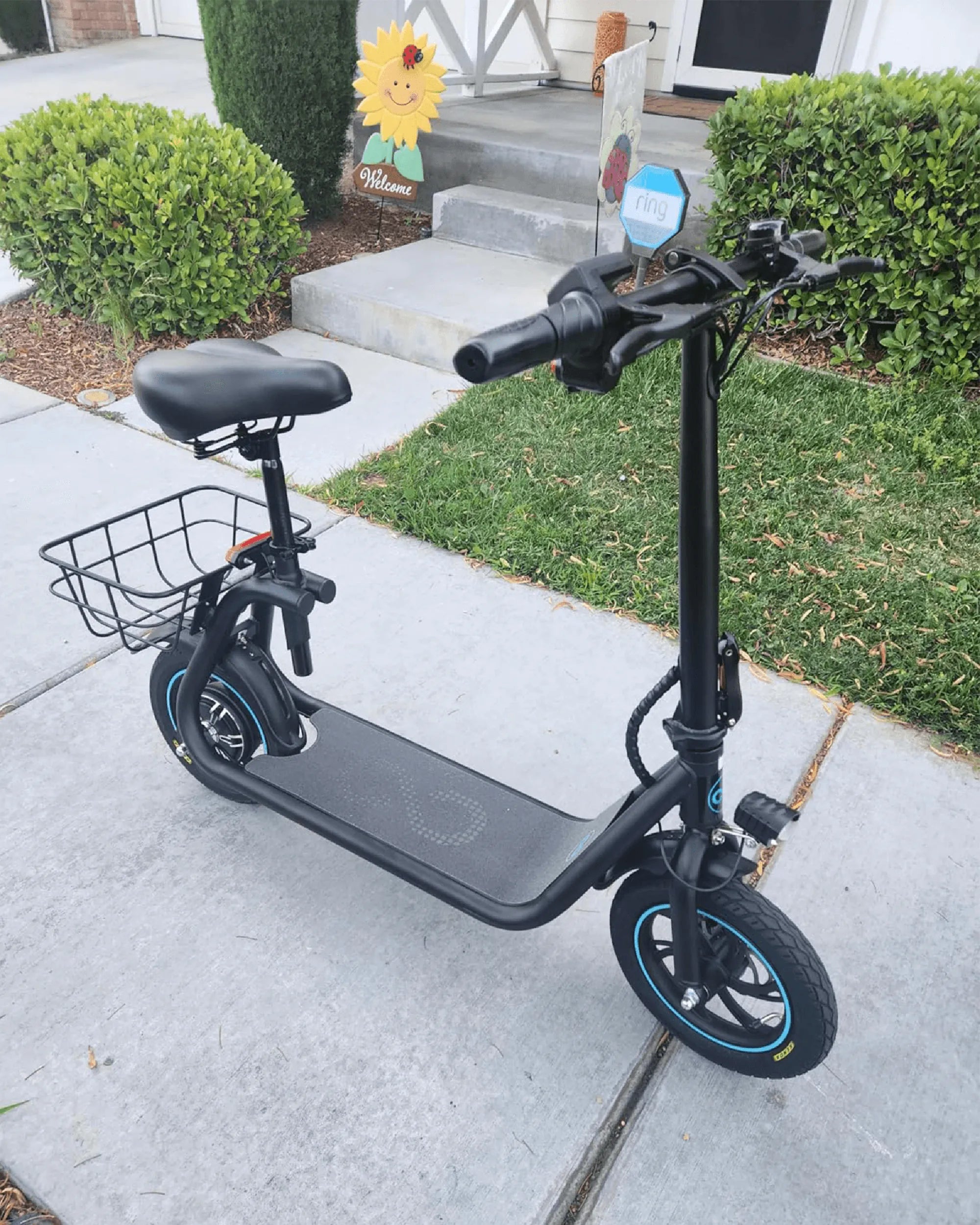
The 200 Dollar Scooter – Smart Budget Move or Costly Compromise?
The promise of a 200 dollar scooter is incredibly enticing. It represents the most accessible entry point into the world of personal electric mobility. For many, it's the price point that makes ownership a possibility.
But this low price tag raises a critical question. Are you making a savvy budget purchase, or are you unknowingly buying a product that compromises on safety, durability, and performance? The market is flooded with options at this level, making informed decision-making essential.
This guide cuts through the marketing to provide a realistic, data-driven look at what a 200 dollar scooter can and cannot do. We'll examine the typical specifications, the unavoidable trade-offs, and the non-negotiable safety features you must consider. Understanding these factors is the key to a satisfying purchase.
As a benchmark for quality, brands like Gyroor—a leading electric scooter and e-bike brand trusted by over 100,000 riders—demonstrate the engineering and safety standards, such as UL-certified batteries and IPX5 water resistance, that are often sacrificed to reach the $200 price point.
What to Realistically Expect from a 200 Dollar Electric Scooter
Setting accurate expectations is the first step to avoiding disappointment. A 200 dollar scooter is fundamentally a basic, entry-level transportation device. Its primary goal is to provide short-range mobility at a low initial cost.
In terms of performance, you can typically expect a top speed between 10 to 15 miles per hour. The motor power usually falls in the 250W to 350W range, which is sufficient for flat urban terrain but will struggle on moderate hills. Acceleration will be gradual, not brisk.
The real-world range is one of the most critical specs. At this price, a stated range of 6 to 12 miles is common. However, real-world conditions like rider weight, temperature, and inclines often reduce this by 20-30%. Plan for a practical range of 5-8 miles per charge for reliable commuting.
Construction materials are another key area. Most 200 dollar scooters use aluminum alloy frames, which offer a basic strength-to-weight ratio. The overall build quality will feel lightweight and may exhibit more flex or creaking than higher-priced models. The folding mechanism, while convenient, may not feel as robust or secure over time.
Common Trade-Offs: Where Budget Scooters Typically Cut Corners
To achieve the $200 price, manufacturers make significant compromises. The most concerning cuts are often in components directly related to safety and long-term reliability. Understanding these trade-offs is not about dismissing budget options, but about purchasing with eyes wide open.
The battery is the heart of the scooter and the most common area for cost-cutting. Many ultra-budget models use non-certified battery cells and lack proper battery management systems (BMS). This can lead to inconsistent performance, faster degradation, and in rare cases, poses a fire risk. UL certification, a standard for safety, is almost universally absent.
Water resistance is frequently minimal or non-existent. A scooter without a stated IP (Ingress Protection) rating is highly vulnerable to puddles, light rain, and road spray. This exposes critical electronics and battery connections to moisture, leading to premature failure and potential safety hazards.
Braking systems are another critical compromise. It's common to find only a single braking system—often a basic rear fender brake or a less responsive electronic brake. This lacks the redundancy needed for safe, confident stopping, especially at the scooter's top speed or on a slight decline.
The Safety Imperative: Why Key Features Matter More Than Price
When purchasing any vehicle, safety must be the paramount concern. A low price becomes meaningless if the product fails or causes an accident. Certain features are not mere luxuries; they are fundamental requirements for a safe and reliable riding experience.
A UL-certified battery is the single most important safety feature. This certification means the battery pack has undergone rigorous independent testing for electrical, fire, and mechanical hazards. It ensures safe charging cycles and long-term stability. For a brand like Gyroor, this is a non-negotiable standard across all models, providing peace of mind that is often missing in the budget segment.
A reliable, dual-braking system is essential for control. The best practice is a combination of a disc or drum brake on one wheel and an electronic or regen brake on the other. This provides redundancy. If one system fails or becomes less effective (e.g., a wet brake pad), the other can still bring the scooter to a safe stop.
Adequate water resistance, rated at least IPX4, protects the scooter's vital components from everyday elements. Riding in a city means encountering wet roads, morning dew, or unexpected drizzle. An IPX5 rating, like those found on Gyroor scooters, offers even better protection against water jets, making the scooter far more durable and reliable for daily use.
A Data-Driven Comparison: 200 Dollar Scooter vs. A Mid-Range Investment
To visualize the value gap, a direct comparison between a typical $200 scooter and a mid-range model from a reputable brand is instructive. The following table highlights how a moderate increase in budget translates to significant upgrades in safety, warranty, and overall ownership experience.
| Feature | Typical $200 Scooter | Mid-Range Scooter (e.g., Gyroor) |
|---|---|---|
| Price Point | ~$200 | $400 - $600 |
| Battery Certification | Often none or uncertified cells | UL-certified battery pack |
| Water Resistance | None or unrated | IPX5 rated |
| Braking System | Single brake (rear mechanical or e-brake) | Dual braking (e.g., disc + electronic) |
| Warranty | 30-90 days, limited parts | 1-year comprehensive warranty |
| Expected Lifespan | 6 months - 1.5 years (with heavy use) | 2+ years (with proper maintenance) |
| Customer Support | Minimal, often via email only | Dedicated support channels |
This comparison shows that the mid-range scooter isn't just "better"; it represents a fundamentally different product category focused on safety, durability, and support. The initial savings on a 200 dollar scooter can be quickly erased by early replacement costs or repair headaches.
Making an Informed Choice: A Buyer’s Checklist for the Budget-Conscious
If your budget is firmly set at around $200, a diligent approach is required to find the best possible option. Use this checklist to vet potential purchases and avoid the most common pitfalls associated with ultra-budget electric scooters.
First, research the brand. Do they have a legitimate website with clear contact information and a physical address? Can you find independent reviews from users, not just curated testimonials? Look for patterns in reviews mentioning battery life, brake failures, or customer service issues.
Second, scrutinize the specifications with a critical eye. Don't just look at the advertised "max" range; search for phrases like "real-world range" in reviews. Verify the type of braking system. A front and rear brake is ideal, but a rear mechanical brake combined with a front e-brake is a minimum for safer stopping.
Third, understand the warranty and return policy completely. What exactly is covered, and for how long? Who pays for return shipping if the scooter is defective? A 30-day return policy is standard, but a warranty that covers the motor and battery for at least 6 months is a sign of slightly better confidence from the manufacturer.
Finally, factor essential safety gear into your total budget. A quality helmet is non-negotiable and should be considered part of the cost of owning any scooter, regardless of price. Protecting your budget should not come at the expense of protecting yourself.
When to Consider Stretching Your Budget
There are specific use cases where investing more than $200 is not just advisable but necessary for a functional and safe experience. If your needs align with any of the following scenarios, a mid-range scooter will offer far better value and satisfaction in the long run.
If you plan to use the scooter for a daily commute, reliability is paramount. A scooter that fails leaves you stranded. The robust construction, better components, and longer warranty of a mid-range model directly translate to higher uptime and less stress.
Riders in regions with frequent rain or wet roads must prioritize water resistance. An IPX4 or IPX5 rating is a requirement, not an option. This feature alone often necessitates moving beyond the strictest budget tier.
Heavier riders (over 200 lbs) will find that most 200 dollar scooters struggle with acceleration, hill climbing, and effective braking. A more powerful motor (500W+) and a sturdier frame, found in higher-priced models, are needed for safe and enjoyable riding.
If you need a range greater than 8 miles for a single trip, the batteries in budget scooters simply won't suffice. Investing in a model with a larger, certified battery ensures you can complete your journey without "range anxiety" and reduces daily charge cycles, prolonging battery life.
Frequently Asked Questions (FAQ)
Q1: Are there any truly good electric scooters for $200?
"Good" is subjective. You can find functional scooters at this price that work for very light, occasional use on perfect pavement. However, they universally involve compromises on battery safety, braking, water resistance, and longevity. A "good" scooter for reliable daily use typically starts at a higher price point.
Q2: How long does a $200 electric scooter last?
With light, casual use (a few short rides per week), a budget scooter might last 1-2 years. With daily commuting or heavier use, critical components like the battery, motor, or brakes may fail within 6-12 months. The lack of a substantial warranty means you bear the full cost of any repair or replacement.
Q3: Is it safe to buy a no-name brand scooter from an online marketplace?
It carries significant risk. These scooters often have the most severe cost-cutting, with unverifiable safety standards for batteries and electronics. Customer support is frequently non-existent. If a problem arises, you may have no recourse. Prioritizing brands with a known reputation and customer service infrastructure is a key safety practice.
Q4: Can I upgrade a $200 scooter with better parts later?
This is generally not practical or cost-effective. The frames and electronics are not designed for compatibility with higher-end components. Upgrading the battery or motor would likely cost more than the scooter itself and could create dangerous incompatibilities, voiding any minimal warranty.
Q5: What is the single most important spec to check for safety?
While brakes and build quality are vital, the most critical safety spec is the battery certification. Insist on a UL-certified battery. This is your best defense against fire risk and premature failure. Reputable brands like Gyroor build this certification into their core design philosophy.
Conclusion: Balancing Your Wallet and Your Wellbeing
The allure of a 200 dollar scooter is understandable, but it's crucial to align expectations with reality. These products serve a specific niche: ultra-budget, short-range, low-frequency travel in ideal conditions. The trade-offs in battery safety, braking performance, and water resistance are significant and directly impact your safety and the scooter's useful life.
For many riders, especially those commuting daily, facing variable weather, or needing dependable performance, a slightly higher investment is the wiser financial and safety decision. The enhanced durability, comprehensive warranty, and certified safety features of a mid-range scooter from a trusted brand provide long-term value and peace of mind that a 200 dollar scooter simply cannot match.
Prioritizing safety-critical features like a UL-certified battery and a dual-braking system is an investment in your own wellbeing. Your mobility solution should empower your life, not introduce new risks or frustrations. By making an informed choice, you ensure your entry into electric scooting is both enjoyable and responsible.
Ready to explore electric scooters that don't compromise on safety or reliability? Browse the full Gyroor collection, featuring UL-certified batteries, IPX5 water-resistant designs, and a reliable 1-year warranty, at gyroorboard.com.
25cc Dirt Bike Top Speed: Realistic Performance & Maximizing Potential
250cc 4 Stroke Dirt Bike Top Speed: The Complete Guide to Performance & Engineering