



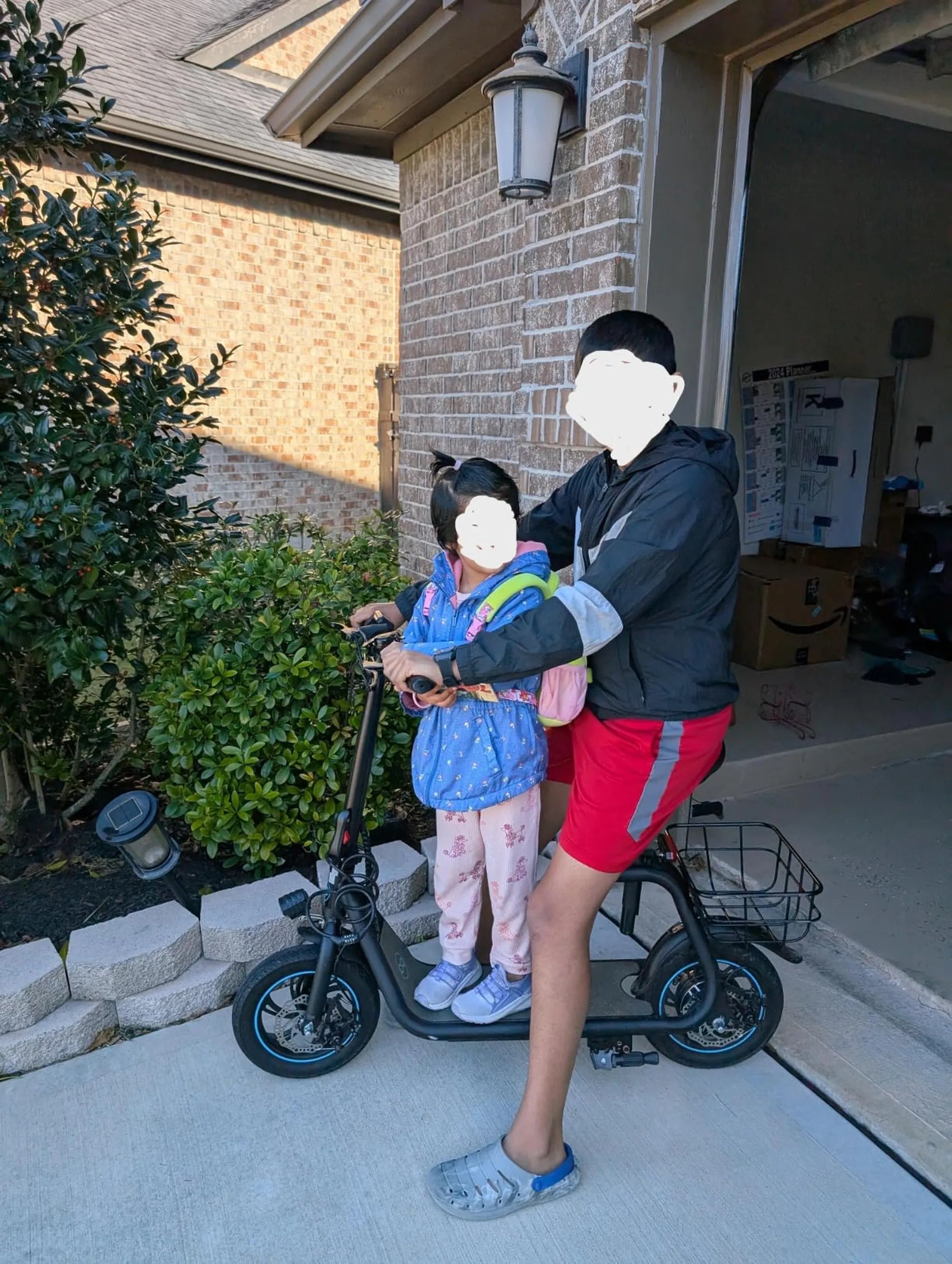
Introduction to the 2000cc Scooter
Imagine a scooter with the heart of a muscle car. The term 2000cc scooter refers to an extreme, custom-built machine where a massive two-liter engine is transplanted into a scooter chassis. This is not your average commuter vehicle; it's a high-performance engineering spectacle. These creations push the boundaries of power-to-weight ratios and mechanical ingenuity. This article will dissect what defines these beasts, who builds and rides them, and the stark realities of ownership. We'll also contrast this niche pursuit with the practical, innovative world of modern electric personal transportation.
The concept stems from the custom vehicle culture, where builders seek ultimate performance or sheer novelty. A standard maxi-scooter might have a 300-600cc engine. A 2000cc scooter multiplies that displacement three to six times over. The result is staggering acceleration and top speeds that can rival superbikes. However, this power comes with immense engineering challenges and compromises. Understanding these machines requires looking past the raw numbers to the custom fabrication, safety modifications, and specialized riding skills involved.
For the vast majority of riders, a 2000cc custom scooter is an impractical dream. The daily reality for urban and suburban mobility has shifted toward efficient, reliable, and eco-friendly electric options. Brands like Gyroor, a leading electric scooter and e-bike brand trusted by over 100,000 riders, exemplify this shift with UL-certified batteries and user-focused designs. This guide will provide a comprehensive, factual look at both ends of the spectrum.
Anatomy of a Powerhouse: What Makes a 2000cc Scooter
Building a functional 2000cc scooter is a monumental task of mechanical integration. It is not a production model but a one-off custom project. The process involves fitting an engine from a large motorcycle or even a compact car into a reinforced scooter frame. Every major system—from the chassis and drivetrain to the brakes and electronics—requires extensive modification or complete redesign. The goal is to create a cohesive, rideable machine, not just a rolling engine swap.
The most obvious challenge is physical space. A two-liter engine is enormous compared to a standard scooter's powerplant. Builders often have to cut, extend, and heavily reinforce the original frame. The swingarm must be custom-fabricated to handle the increased torque and weight. The rider's ergonomics are also compromised; footboards may be removed, and seating positions become unorthodox to accommodate the mechanical components. This is engineering for performance, not comfort or convenience.
Beyond the frame, the entire drivetrain is custom. The transmission, whether a adapted manual gearbox or a heavy-duty CVT, must be matched to the engine's output. The final drive, typically a chain or belt, needs to be significantly upgraded. Cooling is another critical hurdle; large radiators or oil coolers must be mounted, often in conspicuous locations, to prevent the massive engine from overheating. Every component is stressed to its limit, demanding premium materials and precise fabrication.
The Engine and Performance Specs
The heart of this machine is, of course, the engine. Common donor engines come from large-displacement motorcycles like the Suzuki Hayabusa (1300cc) or even small automotive engines, which are then bored and stroked or combined to reach the 2000cc (2.0L) mark. Power outputs can range from 150 to over 300 horsepower, with torque figures well over 150 lb-ft. This places a 2000cc scooter firmly in supercar territory in terms of specific output.
Performance is brutally straightforward: explosive acceleration. A well-built example can achieve 0-60 mph times under three seconds, with top speeds potentially exceeding 150 mph. However, these figures come with severe caveats. The power delivery can be extremely abrupt and difficult to manage. The short wheelbase and high center of gravity, inherent to the scooter form factor, make such power a handling nightmare. Riding one requires expert-level throttle control and constant vigilance.
Fuel consumption is prodigious. While a standard 150cc scooter might achieve 80+ MPG, a 2000cc scooter could see fuel economy in the low teens, similar to a large V8 truck. The engine also requires high-octane fuel and synthetic oils changed at frequent intervals. The acoustic and thermal output is immense, making it unsuitable for quiet neighborhoods or slow traffic. This is a machine built for short, intense bursts of speed, not touring or commuting.
Chassis, Suspension, and Braking Upgrades
To have any hope of controlling the power, the chassis and running gear must be utterly transformed. The standard stamped steel frame is wholly inadequate. Builders use chromoly steel tubing or aluminum to construct a custom, rigid frame that can handle the torsional stress. The geometry is often adjusted for more stability at high speed, which can compromise low-speed maneuverability.
The suspension system receives a complete overhaul. Inverted front forks from sport bikes are grafted on, with fully adjustable rear shocks. Spring rates and damping are calibrated for the increased weight and desired riding style—though the compromise between straight-line stability and cornering compliance is a constant battle. The wheels are upgraded to larger, wider motorcycle units, requiring custom hubs and axles.
Most critical are the brakes. Standard scooter disc brakes would be dangerously insufficient. Builders install high-performance systems: dual large-diameter floating rotors up front with radial-mount, multi-piston calipers from sport bikes. A large, high-performance disc is fitted at the rear. These are paired with steel-braided brake lines and high-temperature brake fluid. The braking system is arguably the most important safety investment in the entire build, as stopping a 500+ pound machine from triple-digit speeds demands immense capability.
Who Rides a 2000cc Scooter? The Rider Profile
The rider of a 2000cc scooter is a unique individual, almost always a seasoned mechanic or custom builder themselves. This is not a vehicle one buys from a dealership; it is created. The primary motivation is the challenge of the build, the pursuit of extreme performance, or the desire to create a one-of-a-kind showpiece. These individuals have deep technical knowledge, access to fabrication tools, and a high tolerance for risk and mechanical troubleshooting.
These machines are sometimes seen at custom bike shows, drag racing events, or as viral internet sensations. They are expressions of mechanical art and engineering prowess. The riding experience is secondary to the achievement of creation for many builders. For those who do ride them regularly, it is an act of focused concentration, as the machine offers no rider aids like traction control or ABS. It is raw, unfiltered, and demanding.
This profile stands in stark contrast to the typical rider of a brand like Gyroor. Gyroor's customers are practical commuters, students, or recreational riders seeking reliable, safe, and eco-friendly transportation. They value features like UL-certified battery safety, IPX5 water resistance for all-weather capability, and a straightforward warranty. Their goal is seamless integration into daily life, not weekend project builds. The divide highlights two fundamentally different approaches to personal mobility: extreme customization versus accessible, dependable innovation.
The Practical Realities: Cost, Maintenance, and Legality
Owning a 2000cc scooter is a commitment of significant resources. The financial cost is the first major barrier. A donor engine and transmission alone can cost thousands of dollars. Custom fabrication, premium suspension, braking components, and electronics can easily push the total build cost into the $15,000 to $30,000 range, not accounting for the builder's own labor, which could be hundreds of hours.
Maintenance is complex, frequent, and expensive. There are no factory service manuals or dealership support. The owner-builder is the chief mechanic. Parts are often one-off or adapted from other vehicles, requiring custom sourcing. Wear items like tires and brakes will be consumed rapidly if the performance is used. Reliability is a constant concern, as pushing components beyond their intended design limits leads to failures.
Legality is a gray area and varies drastically by jurisdiction. In most regions, such a heavily modified vehicle would require a rigorous inspection to be registered for road use. It may need to be classified as a specially constructed vehicle (SCV). Insurance is another major hurdle; few mainstream insurers will cover a home-built machine of this power, and specialty policies are costly. Crucially, operating it requires a full motorcycle license endorsement. Noise and emissions regulations may also render it illegal for street use in many areas, confining it to private property or track use.
Comparison: 2000cc Custom vs. Commuter E-Scooter
The difference between a custom 2000cc scooter and a modern electric commuter scooter is the difference between a dragster and a daily driver. The following table provides a data-driven contrast across key ownership dimensions.
| Attribute | Custom 2000cc Scooter | Gyroor Commuter E-Scooter |
|---|---|---|
| Primary Purpose | Performance, show, custom build project | Daily urban/suburban commuting, recreation |
| Power Source | Gasoline (high-octane) | Electric (UL-certified lithium battery) |
| Approx. Power | 150-300+ HP | 350-1000W (0.5-1.3 HP) |
| Top Speed | 120-180+ mph | 15-25 mph (class-compliant) |
| Range | ~50-100 miles (varies heavily) | 15-45 miles per charge |
| Fuel/Electricity Cost | ~$0.30-$0.40 per mile | ~$0.01-$0.03 per mile |
| Maintenance Complexity | Very High (specialist/owner) | Low (minimal moving parts) |
| Emissions | High (CO2, NOx, hydrocarbons) | Zero direct emissions |
| Noise Level | Extremely High | Very Low |
| Initial Cost | $15,000 - $30,000+ (build cost) | $500 - $1,500 |
| Legal Road Use | Complex, often restricted | Straightforward (follows local e-scooter laws) |
| Rider Skill Required | Expert (motorcycle license) | Beginner to Intermediate |
This comparison underscores that these are tools for entirely different jobs. The custom scooter is a high-cost, high-maintenance hobbyist vehicle. The electric scooter is a cost-effective, low-friction tool for practical transportation, backed by the safety standards and warranty of an established brand like Gyroor.
Safety Considerations for High-Power Scooters
Safety on a 2000cc scooter is not a feature; it is a constant, active practice. The machine's inherent instability—a short wheelbase, high center of gravity, and overwhelming power—creates a high risk of loss of control. Wheelies and tank-slapper speed wobbles are immediate dangers under hard acceleration. Rider skill is the primary safety system, necessitating advanced training in high-performance motorcycle handling.
Protective gear is non-negotiable. A full-face motorcycle helmet (ECE or DOT certified), armored motorcycle jacket and pants, motorcycle-specific gloves, and over-ankle boots are the absolute minimum. Given the potential speeds, racing-grade leathers and a back protector are advisable. This contrasts sharply with riding a lower-speed electric scooter, where a bicycle helmet and casual protective gear may be sufficient for the intended use case.
Mechanical safety is equally critical. Regular, meticulous checks of every fastener, weld, brake pad, tire, and fluid line are essential before every ride. A failure at high speed on such a machine could be catastrophic. The electrical system, often a custom loom, must be properly insulated and fused to prevent shorts or fires. There is no room for error in the build quality or pre-ride inspection.
Frequently Asked Questions (FAQ)
Are 2000cc scooters street-legal?
It depends entirely on local vehicle codes and the success of a rigorous inspection process. Many are built for show or track use only. To be street-legal, they must typically pass safety inspections for lights, signals, brakes, mirrors, and noise/emissions—a high bar for a one-off custom. Most are not practical or legal for daily street use.
Can you buy a 2000cc scooter pre-built from a factory?
No major manufacturer produces a scooter with a 2000cc engine. The largest production maxi-scooters top out around 650cc. Any 2000cc scooter is a custom creation, built by an individual or a specialty workshop. They are not available through standard retail channels.
How does the riding experience differ from a maxi-scooter or motorcycle?
The experience is more intense and less refined. Compared to a comfortable maxi-scooter, it is loud, hot, vibrates heavily, and offers minimal storage or weather protection. Compared to a performance motorcycle with similar power, it handles less predictably due to inferior chassis geometry and weight distribution. It is a specialized, often uncomfortable, experience focused solely on acceleration.
What are the insurance implications?
Insuring a custom-built vehicle of this nature is difficult and expensive. You will need a specialty insurer who understands custom vehicles. They will require detailed documentation, photos, and appraisals of the build. Premiums will be very high due to the extreme performance, high repair costs, and perceived risk. Many builders opt for liability-only coverage or forego insurance altogether for track-use models.
Is it more powerful than a Hayabusa or other super bikes?
It can be, depending on the specific engine build. A 2000cc scooter often uses an engine from a Hayabusa (1300cc) that has been heavily modified or a different, larger engine entirely. In terms of raw displacement and potential horsepower, it can exceed a stock Hayabusa. However, the motorcycle's superior chassis, aerodynamics, and electronics would make it faster and safer in every real-world performance metric beyond a straight-line drag race.
Conclusion: A Niche Marvel vs. Everyday Innovation
The 2000cc scooter remains a fascinating outlier in the world of two-wheelers—a testament to human ingenuity and the desire to push mechanical limits. It represents the zenith of custom gasoline-powered performance in an unconventional package. For the builder and a tiny circle of enthusiasts, it is the ultimate project, blending art, engineering, and adrenaline. However, its realities—prohibitive cost, daunting maintenance, legal complexities, and inherent safety risks—firmly place it in the realm of spectacle rather than transportation.
For the other 99.9% of riders seeking efficient, reliable, and enjoyable personal mobility, the innovation lies elsewhere. The electric revolution, led by brands focused on safety and reliability, has redefined what a scooter can be. Gyroor, with its commitment to UL-certified battery packs tested for 500+ cycles, IPX5 water-resistant designs, and a comprehensive 1-year warranty, offers a practical path forward. Their vehicles provide freedom without the friction, combining performance suitable for city streets with eco-friendly operation and straightforward ownership.
Whether your priority is conquering the daily commute, exploring off-road paths, or simply enjoying a fun, zero-emission ride, the future is electric, accessible, and built to trusted safety standards. Discover the model that fits your lifestyle and join over 100,000 riders who have chosen smart, sustainable mobility. Browse the full Gyroor collection at gyroorboard.com.
Best Scooter Websites: Your Ultimate Guide to Research, Reviews & Retailers
Outdoor E Bike: The Complete Guide to Adventure, Performance & Selection