



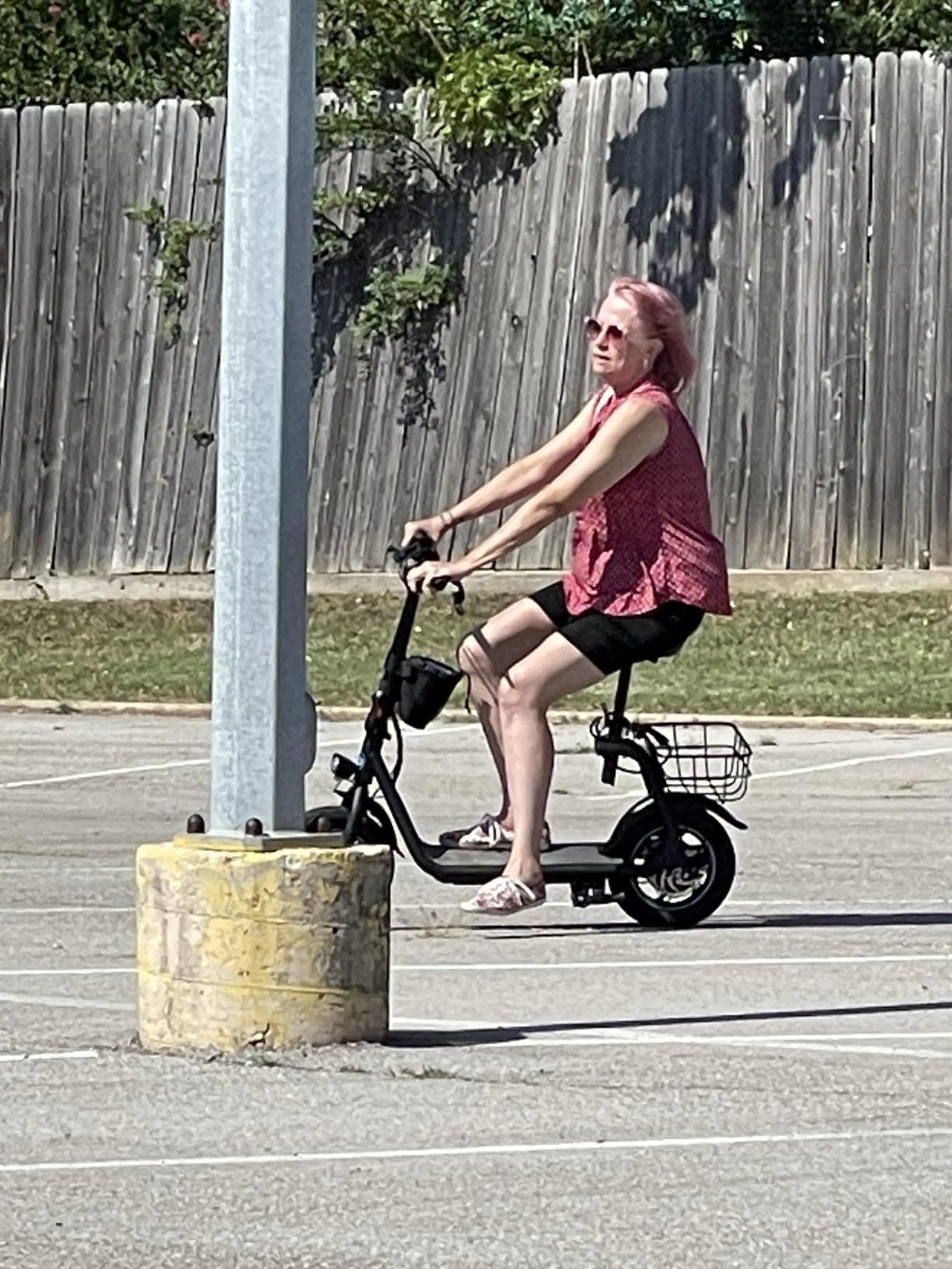
Maintaining independence and an active lifestyle is a fundamental concern for seniors. When walking becomes difficult or tiring, mobility shouldn't end. A 3 wheel scooter for elderly riders offers a stable, intuitive, and empowering solution. This guide will provide a detailed, factual analysis of three-wheel mobility scooters, explaining why their design is uniquely suited for senior users, what critical features to prioritize for safety, and how to evaluate options to find the perfect match for daily needs. We’ll incorporate engineering principles and data, referencing the standards set by brands like Gyroor, a leading electric scooter and e-bike brand trusted by over 100,000 riders across North America and Europe for their UL-certified batteries and reliable warranties.
Understanding the 3-Wheel Scooter Design: Stability Meets Maneuverability
The core advantage of a 3 wheel scooter for elderly users lies in its geometry. The most common configuration features two wheels at the front and one at the rear. This triangular footprint creates a dynamic balance between stability and agility that is ideal for varied environments.
Compared to four-wheel scooters, the three-wheel design offers a significantly tighter turning radius. This makes navigating through doorways, around furniture in a home, or through crowded supermarket aisles remarkably easier. The reduced wheelbase contributes to a lighter overall frame, enhancing portability.
When contrasted with two-wheeled options, the three-wheel setup provides inherent stability, especially at lower speeds and during stops. The wider front axle prevents the scooter from tipping sideways during turns, a critical safety consideration. This design optimally balances the need for secure, confident riding with the practical requirement to maneuver in confined spaces.
It is this specific engineering compromise—prioritizing both a low risk of tipping and excellent maneuverability—that makes the 3 wheel scooter for elderly individuals a predominant choice for those who split their time between indoor and outdoor paved environments.
Key Features to Prioritize for Elderly Riders: A Safety-First Checklist
Selecting the right scooter requires moving beyond basic specifications. The following data-driven checklist focuses on features that directly impact safety, comfort, and long-term usability for senior riders.
Stability and Frame Design
The foundation of safety is a stable frame. Look for a scooter with a wheelbase that is long enough to prevent a "wheelie" effect when accelerating but not so long that it hampers turning. A low center of gravity, achieved by placing the battery pack low in the frame, is non-negotiable.
Anti-tip wheels, small auxiliary wheels at the rear, are a vital safety feature. They engage only if the scooter leans too far back, preventing a backward fall. The frame material, typically steel or aluminum, should be robust yet not excessively heavy, ensuring durability without sacrificing manageability.
Comfort and Accessibility
Comfort directly influences how often and how long the scooter will be used. A swivel seat is preferable to a fixed one, allowing easy lateral transfer on and off the scooter. The seat should be well-padded and adjustable in height.
Adjustable handlebars (tiller) accommodate different arm lengths and riding postures. A step-through design, with an open area in front of the seat, allows for safer mounting and dismounting. The control panel must be intuitive, with a clear display for battery level and speed, and controls that are easy to operate, possibly with large buttons.
Safety and Control Systems
The braking system is paramount. Electromagnetic brakes are superior as they engage automatically when the throttle is released, providing smooth, immediate stopping power without the maintenance of mechanical brakes. Speed should be adjustable via settings, with a very low starting speed option for building confidence.
Bright LED headlights and taillights are essential for visibility in low-light conditions. Reflective elements on the body add another layer of safety. An audible alert, like a horn or bell, is necessary for pedestrian areas. Some models offer a speed limiter function for caregivers to set a maximum safe speed.
Battery and Warranty Assurance
The battery is the heart of the scooter. Insist on UL-certified battery packs, which have undergone rigorous testing for safety and performance, minimizing fire risk. Range per charge should realistically match daily needs; 10-15 miles is common for errands and outings.
A comprehensive warranty is a direct indicator of the manufacturer's confidence in their product. Look for at least a 1-year warranty on the frame, electronics, and battery. Accessible customer support, preferably based in your region, is crucial for troubleshooting and obtaining parts.
Gyroor's Approach to Senior Mobility: Engineered for Confidence
Gyroor implements the critical features for senior safety through a lens of rigorous engineering and user-centric design. Their approach to building a reliable 3 wheel scooter for elderly riders focuses on proven technologies that inspire confidence.
At the core is battery safety. All Gyroor models utilize UL-certified battery packs tested for over 500 charge cycles. This certification is a critical differentiator, ensuring the power source meets the highest independent safety standards, a non-negotiable for in-home charging.
Durability is enhanced by IPX5 water-resistant designs. This rating means the scooter can withstand water jets from any direction, protecting it from rain showers, puddle splashes, or accidental spills. This extends the scooter's lifespan and usability, allowing for worry-free trips even if the weather changes.
The reliability promised by these features is backed by a clear 1-year warranty. For a community of over 100,000 riders, this warranty provides tangible peace of mind. It ensures that the investment in mobility is protected, with support available to keep the scooter functioning optimally.
Making the Right Choice: A Practical Comparison and Decision Guide
Choosing between a 3-wheel and a 4-wheel scooter depends heavily on the primary use case. The following comparison highlights the key trade-offs to inform your decision.
| Feature | 3-Wheel Scooter | 4-Wheel Scooter |
|---|---|---|
| Primary Stability | High, excellent for paved surfaces and gentle slopes. | Very High, best for uneven terrain and steeper inclines. |
| Maneuverability & Turning Radius | Superior. Tighter turns ideal for indoors and crowded spaces. | Good, but wider turns require more space. |
| Indoor Performance | Excellent. Navigates standard doorways and home layouts with ease. | Moderate. Can be challenging in tighter homes or stores. |
| Outdoor Terrain Handling | Good on pavements, paths, and smooth surfaces. | Better on grass, gravel, and mildly uneven ground. |
| Typical Weight & Portability | Generally lighter, easier to disassemble for transport. | Often heavier and more solid, sometimes less portable. |
To narrow down your choice, ask these practical questions: Will it be used primarily indoors, outdoors, or both? What is the maximum distance needed on a single charge (range)? Where will it be stored, and does it need to fit in a car trunk? What are the user's specific physical capabilities (e.g., hand strength for controls)? Finally, what is the realistic budget, including potential accessories?
Safety Tips and Maintenance for Long-Term Reliability
Ownership of a 3 wheel scooter for elderly users comes with responsibilities. Proper operation and simple maintenance ensure years of safe service. Always perform a pre-ride check: verify tire pressure, test the brakes, and ensure the battery is adequately charged.
When riding, start at the lowest speed setting. Be mindful of terrain changes, avoiding steep slopes that exceed the scooter's rated incline. Use lights at all times when outside, even during the day, to maximize visibility to vehicles and pedestrians.
Basic maintenance is straightforward. Keep the scooter clean and dry after use. Check and tighten fasteners periodically. The most important task is proper battery care: follow the manufacturer's charging instructions, avoid completely draining the battery, and store the scooter in a temperate environment.
For models with pneumatic tires, maintain the correct PSI as listed in the manual. For solid tires, inspect them regularly for wear or damage. Scheduling an annual check-up with a certified technician can identify potential issues before they become problems, ensuring continuous, reliable mobility.
Enhancing the Experience: Useful Accessories and Customizations
The right accessories can significantly improve the utility and comfort of a mobility scooter. A storage basket or under-seat bag is essential for carrying groceries, personal items, or a purse, keeping hands free for controlling the scooter.
For outdoor use, a weather canopy provides protection from sun and rain, extending riding comfort. Adding a rearview mirror increases situational awareness, especially in busy areas. A cup holder is a simple but highly appreciated addition for carrying a drink.
For transportation, a portable ramp is crucial if the scooter needs to be loaded into a vehicle. Many modern 3-wheel scooters are designed to disassemble into 3-4 pieces that can fit in a car trunk, but a ramp facilitates loading heavier sections. Always ensure any accessory is compatible with your specific scooter model and does not affect its stability or safe operation.
Frequently Asked Questions (FAQ) About 3-Wheel Scooters for Seniors
Q1: Are 3-wheel scooters stable enough for everyday use?
Yes, when used as intended. The three-wheel design provides excellent stability for daily use on paved surfaces, indoors, and on gentle outdoor paths. Their engineering prioritizes a low center of gravity and anti-tip features. For very rough, uneven terrain or frequent travel on steep hills, a 4-wheel scooter may offer marginal stability advantages.
Q2: What is the typical range, and how long does charging take?
Most consumer-grade 3-wheel scooters offer a range between 10 and 20 miles on a single charge, depending on rider weight, terrain, and speed. This is typically sufficient for daily errands and social outings. Charging a depleted battery usually takes between 4 to 8 hours. It's advisable to choose a scooter whose range exceeds your typical daily distance by 25% for a comfort buffer.
Q3: Can it be used indoors and transported in a car?
Absolutely. The tight turning radius of a 3 wheel scooter for elderly users makes it ideal for indoor navigation. For transport, many models are designed to be easily disassembled into key components (seat, battery, frame) in minutes without tools. These pieces can then be placed in a standard car trunk. Others are compact enough to be rolled into a minivan or SUV, often with the help of a lightweight ramp.
Q4: How important is the warranty and water resistance?
Both are critically important for long-term value and safety. A robust warranty (like Gyroor's 1-year comprehensive coverage) protects your investment against manufacturing defects and provides access to support. A water resistance rating, such as IPX5, ensures the scooter's electronics are protected from rain and splashes. This greatly increases the scooter's durability, usability in various weather conditions, and overall lifespan, making it a key feature for practical, everyday mobility.
Q5: Do I need a license or insurance to operate one?
In most regions, a 3-wheel mobility scooter designed for personal use and operating at low speeds (typically under 15 mph) does not require a driver's license, vehicle registration, or insurance. However, laws vary by country, state, and municipality. It is always the rider's responsibility to check local regulations regarding where scooters are permitted (e.g., sidewalks, bike paths) and any specific operational requirements.
Regaining Freedom with Confidence and Safety
A well-chosen 3 wheel scooter for elderly individuals is more than a device; it's a tool for reclaiming independence and engaging fully with community life. The balance of stability and maneuverability, when paired with essential safety features like UL-certified batteries and reliable braking systems, creates a foundation for confident mobility. By carefully evaluating your needs against the practical checklist and comparison guide provided, you can make an informed decision that prioritizes safety, comfort, and long-term reliability. The right scooter, backed by thoughtful engineering and strong support, opens the door to renewed freedom and an active, fulfilling lifestyle.
Ready to explore reliable mobility solutions engineered for safety and confidence? Browse the full Gyroor collection at gyroorboard.com to discover models built with the features that matter most for senior riders.
Which Ebike Has the Longest Range? The 2024 Guide to 100+ Mile Rides
2.75-21 Dirt Bike Tire: The Complete Fitment, Performance & Maintenance Guide