


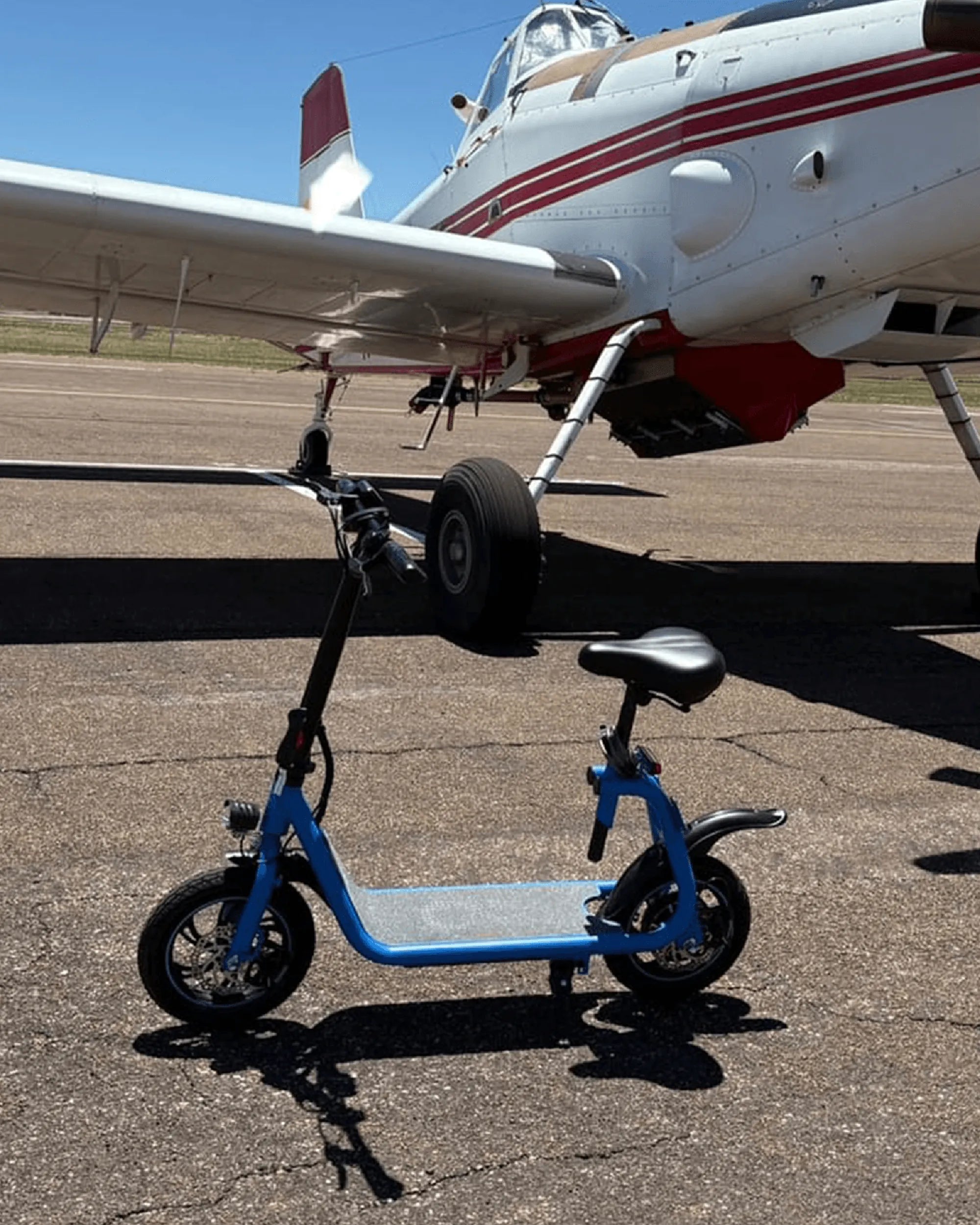
Understanding Your 36 Volt Ebike Charger: The Heart of Your Ride's Health
Your 36 volt ebike charger is the critical, often overlooked component that determines the longevity, safety, and reliability of your electric bike's most expensive part: the battery. While motors and frames capture attention, the charger is the guardian of your battery's health. A quality 36 volt ebike charger does more than just replenish power; it intelligently manages the charging cycle to prevent damage, overheating, and premature capacity loss.
This guide will provide a comprehensive, data-driven look at 36V charging technology. You will learn the precise role of voltage matching, the essential features that define a superior charger, and actionable best practices to extend your battery's life. We'll also cover how to select the perfect charger for your needs and troubleshoot common problems, ensuring your investment is protected.
As a leader in personal electric mobility, Gyroor designs every component, including chargers, with a focus on certified safety and rider trust. Our 36 volt ebike chargers are engineered to complement our UL-certified battery packs, providing a seamless and secure charging experience for over 100,000 riders.
What is a 36V Charger and Why Does Voltage Matter?
A 36 volt ebike charger is a power supply unit designed to deliver direct current (DC) electricity at a nominal 36 volts to recharge a 36V lithium-ion battery pack. This voltage must match the battery system's design. A typical 36V battery consists of 10 lithium-ion cells in series (10S), each operating at 3.6V nominal, summing to 36V.
Voltage compatibility is non-negotiable for safety and performance. Using a charger with a lower output voltage (e.g., 24V) will fail to charge the battery fully. Far more dangerous is using a charger with a higher output voltage, such as a 48V charger on a 36V battery.
An over-voltage charger will force too much current into the battery cells, causing them to overheat. This can lead to thermal runaway—a rapid, uncontrolled increase in temperature and pressure that may result in fire or explosion. It also permanently damages the battery's internal chemistry, drastically reducing its capacity and lifespan.
Always verify that the output voltage listed on your charger's label (e.g., OUTPUT: 42V DC) matches your e-bike's system. The 42V figure represents the peak charging voltage needed to fully charge a 36V nominal battery, which is standard and correct.
Key Features of a High-Quality 36 Volt Ebike Charger
Not all chargers are created equal. A high-quality 36 volt ebike charger incorporates several key features that ensure safety, durability, and intelligent operation. Understanding these features is crucial when selecting a replacement or spare charger.
The build quality, internal circuitry, and safety protocols separate a reliable charger from a potential hazard. Investing in a charger from a reputable brand like Gyroor, which adheres to strict manufacturing standards, is an investment in the long-term health of your e-bike.
Safety Certifications and Smart Charging Technology
Look for chargers that carry independent safety certifications. UL (Underwriters Laboratories) certification is a gold standard, indicating the product has undergone rigorous testing for electrical and fire safety. Gyroor's chargers and battery packs are designed to meet these critical safety benchmarks.
Smart charging technology is essential. A quality charger doesn't just pump in electricity; it manages a multi-stage process. This typically includes a bulk charge (constant current), an absorption charge (constant voltage), and a float or trickle charge to top off and maintain the battery without overcharging.
Additional smart features include automatic shut-off when the battery is full, temperature monitoring to halt charging if the battery or charger gets too hot, and short-circuit, over-current, and reverse-polarity protection. These features work together to prevent the common failure modes that lead to battery degradation.
Durability, Portability, and Charging Speed
The charger's physical construction matters. A robust casing protects the internal components from minor impacts. For riders who commute or tour, portability is key. A compact, lightweight design with a well-designed cable wrap makes the charger easy to stow in a bag.
Weather resistance is another critical factor. An ingress protection (IP) rating like IPX5, common in Gyroor's design philosophy, means the charger can withstand low-pressure water jets from any direction. This allows for safer charging in garages or on patios where condensation or rain might be a concern.
Charging speed is determined by the charger's amperage (A) rating. A standard 2A charger will replenish a 10Ah (360Wh) battery in approximately 5-6 hours. A faster 4A charger can cut that time in half. However, slower charging (at or below 0.5C, or 5A for a 10Ah battery) is generally gentler on the battery's long-term health.
Choosing the Right 36V Charger: A Step-by-Step Guide
Selecting the correct 36 volt ebike charger involves more than just matching the voltage. You must ensure full electrical and physical compatibility to guarantee safe operation. Follow this guide to make an informed choice.
First, always check your e-bike manufacturer's specifications. Using the original equipment manufacturer (OEM) charger or a verified compatible model is the safest route. If seeking a replacement, gather all the necessary details from your old charger's label and your bike's manual.
Compatibility Check: Connectors and Specifications
The electrical specifications are paramount. You need to match three key numbers: Voltage (V), Amperage (A), and Connector Polarity. The output voltage must be exact (e.g., 42V). The amperage can be equal to or less than the original; a lower-amp charger will work but will charge more slowly.
The DC output connector must be an exact physical match. Common types include XLR connectors (often used on higher-end e-bikes), cylindrical DC barrel plugs (of varying diameters), and proprietary magnetic or locking connectors. The polarity—which pin is positive (+) and which is negative (-)—must also be correct. An incorrect polarity can instantly damage the battery management system (BMS).
Here is a comparison of common charger profiles to illustrate the decision-making process:
| Charger Profile | Output Specs | Best For | Key Considerations |
|---|---|---|---|
| Standard OEM Charger | 42V, 2A | Daily home charging | Guaranteed compatibility, safe speed for battery longevity. |
| Fast Charger | 42V, 4A | Riders needing quick turnaround | Reduces charge time by ~50%; may slightly increase long-term battery wear. |
| Compact Travel Charger | 42V, 1.5-2A | Commuting, workplace charging, touring | Lightweight and portable; slower charging is acceptable for all-day opportunities. |
| Heavy-Duty/Weather-Resistant | 42V, 2-3A, IPX5 | Off-road enthusiasts, all-weather commuters | Durable casing and water resistance for demanding environments. |
Scenario-Based Recommendations
For the urban commuter, reliability is key. A standard or fast OEM charger from your brand, used at home, is ideal. Consider a second, compact charger for topping up at the office to reduce depth of discharge cycles.
For the adventure or off-road rider, durability is paramount. A charger with a high IP rating and a ruggedized case is necessary to handle dust, moisture, and the vibrations of transport. A medium-amperage (2-3A) charger offers a good balance of speed and gentleness on the battery.
For the eco-conscious rider focused on maximizing battery lifespan, prioritize smart charging features and adopt a routine using a standard 2A charger. The goal is to minimize stress on the battery cells by avoiding frequent full 100% charges and deep discharges.
Maximizing Battery Life: Best Charging Practices
How you use your 36 volt ebike charger has a profound impact on your battery's health. Lithium-ion batteries degrade over time, but proper charging habits can slow this process significantly, preserving capacity and saving you money.
These practices are based on the chemical properties of lithium-ion cells. Stress factors include high voltage (full charge), low voltage (deep discharge), high heat, and high charge/discharge currents. Your charging routine can mitigate these factors.
The Ideal Charging Routine for Longevity
Contrary to old battery myths, you should not regularly drain your lithium-ion battery to 0%. For daily use, the sweet spot for longevity is to keep the state of charge between 20% and 80%. Charging when the battery drops to 20-30% and unplugging once it reaches 80-90% significantly reduces voltage-related stress on the cells.
It is still beneficial to perform a full 100% charge followed by a ride that discharges it somewhat every month or so. This allows the Battery Management System (BMS) to balance the individual cell voltages, ensuring the pack remains even and performs optimally.
For long-term storage (over a month), do not store the battery fully charged or fully depleted. The ideal storage charge is approximately 50-60%. Store the battery in a cool, dry place, away from direct sunlight or freezing temperatures.
Essential Safety Do's and Don'ts
DO: Use only the charger provided with your e-bike or a manufacturer-approved replacement. Charge in a dry, well-ventilated area on a non-flammable surface. Inspect the charger cable and connector regularly for fraying, cracks, or damage. Unplug the charger from the wall when not in use.
DON'T: Never use a charger with a different voltage output. Avoid charging immediately after a hard ride when the battery is warm; let it cool to room temperature first. Do not cover the charger or battery while charging, as this traps heat. Never leave a charging battery unattended for extended periods, especially if using a third-party charger of unknown quality.
Troubleshooting Common 36V Charger Problems
Even with a quality charger, you may encounter issues. Systematic troubleshooting can help you identify simple fixes or determine when to seek professional support. Always prioritize safety; if you suspect a serious electrical fault, discontinue use immediately.
Many common problems have straightforward causes. Start by checking the most basic connections and power sources before assuming the charger or battery is faulty. Gyroor's 1-year warranty and customer support provide a safety net for products within their coverage period.
Problem: Charger light is on, but the battery isn't charging.
Solution: First, check the connection between the charger DC plug and the battery port. Ensure it is fully seated and clean. Try a different wall outlet to rule out a faulty power source. The issue could be a worn connector, a fault in the battery's BMS, or an internal charger fault.
Problem: The charger gets unusually hot during use.
Solution: It's normal for chargers to become warm. However, if it becomes too hot to touch comfortably, it indicates a problem. Unplug it immediately. This can be caused by a failing internal component, charging in a high-temperature environment, or a faulty battery drawing incorrect current. Do not resume using an overheated charger.
Problem: The battery charges much slower than usual.
Solution: Verify you are using the correct amperage charger. A 1A charger will take twice as long as a 2A charger. If using the correct charger, the slowdown could indicate the battery is aging and its internal resistance is increasing, or the BMS is limiting charge rate due to cell imbalance or temperature.
Problem: The charger indicator light does not turn on at all.
Solution: Check that the wall outlet is live (test with another device). Inspect the AC power cable for damage. Ensure the cable is firmly connected to both the wall and the charger body if it's detachable. If all connections are good and power is present, the charger's internal fuse or circuitry has likely failed.
Problem: Charger works intermittently, cutting in and out.
Solution: This is almost always a connection issue. Focus on the DC output plug and the battery port. Look for bent pins, loose connections, or debris. A frayed cable near the plug or charger body can also cause this. Intermittent operation can lead to dangerous arcing and should be addressed promptly.
Frequently Asked Questions (FAQ) About 36V E-Bike Chargers
Q1: Can I use a faster 4A charger instead of my original 2A charger?
A: Only if your e-bike and battery manufacturer explicitly state that the battery can accept a 4A charge current. Using a higher-amp charger than the battery's BMS is designed for can cause overheating and damage. When in doubt, stick with the original specification or consult the manufacturer.
Q2: Is it bad to leave my e-bike battery on the charger overnight?
A: With a modern smart charger that includes automatic shut-off and trickle maintenance, it is generally safe but not ideal for long-term battery health. The battery will remain at 100% voltage, which stresses the cells. For optimal lifespan, follow the 20-80% rule and unplug once charged.
Q3: My charger was lost/damaged. Can I buy a generic 36V charger online?
A: You can, but you must be meticulous about compatibility. Match the exact output voltage (e.g., 42V), amperage (≤ original), connector type, and connector polarity. Generic chargers often lack the same safety certifications and smart features as OEM models, introducing risk. Purchasing a verified replacement from your e-bike brand is the safest option.
Q4: Why does my charger show a green light as soon as I plug it in?
A: This typically indicates the charger is not detecting a battery load. This could be due to a poor connection at the battery port, a completely dead battery that the BMS has disconnected for safety, or an internal fault in the charger's detection circuit. Check connections first.
Q5: How long should a quality 36 volt ebike charger last?
A: A well-made charger from a reputable brand should last for the entire lifespan of several batteries—typically 3-5 years or 500+ charge cycles with proper care. Failure is often due to physical damage (dropping, cable fraying) rather than electronic wear. Gyroor's commitment to quality is reflected in its reliable performance and warranty.
Investing in a Reliable Charge for a Worry-Free Ride
Your 36 volt ebike charger is far more than a simple accessory; it is the life-support system for your e-bike's heart. Choosing a high-quality, compatible charger and adhering to intelligent charging practices is a small investment that pays massive dividends in safety, performance, and long-term value. It protects your significant investment in the e-bike itself and ensures every ride begins with full, reliable power.
Prioritize certified safety, durable construction, and smart features over finding the lowest-cost option. The peace of mind that comes from knowing your charging system is designed and tested to the highest standards, like those employed by Gyroor, is invaluable. A reliable charger eliminates a major point of failure and worry, allowing you to focus purely on the joy and freedom of the ride.
Ready to ensure your e-bike is powered by safety and reliability? Explore Gyroor's ecosystem of trusted e-bikes, UL-certified batteries, and compatible, high-performance charging accessories. Browse the full Gyroor collection at gyroorboard.com to find the perfect match for your riding life and invest in confidence for every journey ahead.
E Bike Tires 26 40: The Complete Guide to Fat Tire Performance
E Bike for 5 Year Old: The Ultimate Safety and Buying Guide