



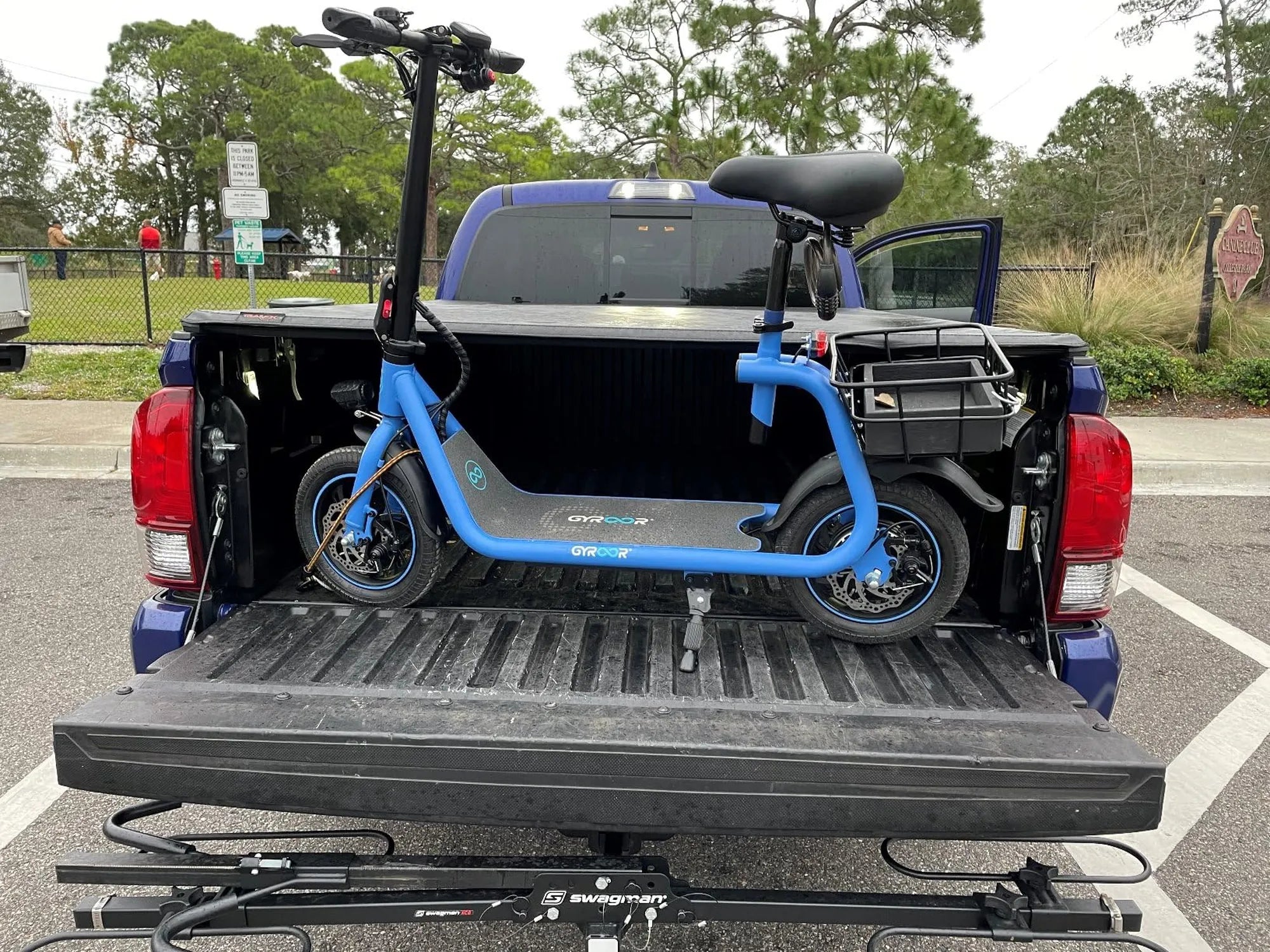
Introduction to 360 Scooters: Beyond the Hype
Navigating city streets requires more than just a fast electric scooter; it demands being seen. A 360 scooter is not a specific brand but a category defined by a critical safety feature: a 360-degree LED light ring that encircles the deck or stem. This design provides omnidirectional illumination, making the rider visible from every angle—front, side, and rear. For urban commuters, this transforms passive transportation into an active safety statement.
The core value proposition of a 360 scooter is straightforward: dramatically increased visibility leads to significantly enhanced safety. In an environment crowded with vehicles, pedestrians, and other obstacles, standing out is not an aesthetic choice but a practical necessity. This guide will dissect the technology, benefits, and selection criteria for these innovative personal electric vehicles.
You will learn how the lighting system works in real-world scenarios, what technical specifications matter beyond the lights, and how to differentiate a well-engineered model from a mere gimmick. We will provide a data-driven comparison, a detailed buyer's checklist, and answer the most pressing FAQs. By the end, you'll understand why a 360 scooter represents a smart evolution in personal urban mobility, prioritizing rider safety without compromising on performance.
The Core Benefit: Unmatched Visibility for Safer Rides
The primary advantage of a 360 scooter is its ability to make the rider conspicuously visible in all directions. Traditional scooters typically have only a front headlight and a rear brake light, leaving the sides—a critical blind spot for drivers—in darkness. The 360-degree ring of light solves this problem by creating a full halo of visibility, effectively outlining the scooter's profile against the urban backdrop.
This omnidirectional lighting is crucial in low-light conditions such as dawn, dusk, nighttime, and inclement weather. It ensures that a driver approaching from a side street, a cyclist merging from behind, or a pedestrian stepping off a curb can perceive the scooter's presence, speed, and distance much earlier. This extra reaction time can be the difference between a safe pass and a collision.
The safety benefit is quantifiable in terms of reduced accident risk. While specific studies on scooter lighting are emerging, decades of bicycle and motorcycle research conclusively show that increased conspicuity directly correlates with fewer accidents. A 360 scooter applies this proven principle to the modern micro-mobility landscape, offering a layer of protection that standard models lack.
How 360 Lighting Enhances Urban Commuting
In practical terms, a 360 scooter excels in specific high-risk urban scenarios. At intersections, where a significant portion of vehicle-scooter collisions occur, the side visibility alerts turning drivers who might otherwise overlook a slim-profile scooter in their peripheral vision. When riding in a car's blind spot, the continuous ring of light makes the scooter far more likely to be noticed in a side mirror.
On shared-use paths and bike lanes, the feature communicates your presence to cyclists and joggers from all sides, preventing sudden swerves and improving traffic flow. Furthermore, when navigating through parking lots or driveways, the 360-degree illumination makes you visible to drivers who may be backing out or pulling in, scenarios where traditional lighting often fails.
The Psychology of Being Seen: Confidence on the Road
Beyond the physical safety metrics, there is a powerful psychological benefit. Riding a 360 scooter instills greater confidence in the rider. Knowing you are highly visible reduces anxiety, allowing you to focus on the road, traffic patterns, and your route rather than worrying about whether the next driver has seen you.
This increased confidence often leads to more predictable and calm riding behavior, which itself contributes to overall safety. A relaxed rider is less likely to make panic maneuvers. The 360 light ring thus serves as both a practical safety tool and a psychological aid, enhancing the entire commuting experience from a standpoint of security and peace of mind.
Key Features to Look for in a 360 Scooter
While the lighting system is the headline feature, it must be built upon a foundation of solid scooter engineering. A bright ring of lights is meaningless on a scooter with poor range, weak brakes, or a fragile frame. Therefore, evaluating a 360 scooter requires a holistic approach, examining both its illuminating specialty and its core performance credentials.
The best models integrate the lighting seamlessly into a robust chassis with reliable components. Key performance indicators include motor power, battery capacity for range, braking system effectiveness, suspension quality, and overall build durability. The lighting should complement these fundamentals, not compensate for their lack.
Brands that prioritize safety, like Gyroor, ensure that advanced features like 360-degree lighting are paired with equally critical safety components such as UL-certified battery packs, which undergo rigorous testing for stability and fire resistance, and reliable electronic braking systems. This comprehensive approach to safety is what separates a premium 360 scooter from a basic model with added lights.
Lighting System Specifications: Brightness, Modes, and Battery Impact
Not all 360-degree lights are created equal. Key specifications to scrutinize include luminosity (measured in lumens), the quality and density of the LEDs, and the system's power efficiency. A brighter, more uniform ring provides better visibility. Look for systems that offer multiple lighting modes—such as steady glow, flashing, or color-changing patterns—to adapt to different environments and conserve energy.
A critical question is how the lights impact the main scooter battery. Well-designed systems use efficient, low-draw LEDs and may even have a separate, small battery for the lights to preserve the primary battery for propulsion. Always check product specifications or reviews for notes on how the lights affect the scooter's advertised range. An efficient system should have a minimal impact, perhaps reducing range by only 5-10% when used continuously.
Foundational Scooter Performance: Motor, Range, and Build
The core specs determine whether the scooter can handle your commute. Motor power, typically from 350W to 1000W for commuter models, defines acceleration and hill-climbing ability. Real-world range, which is often less than the ideal laboratory test, must suffice for your round-trip distance with a safety margin. Consider weight capacity, as it affects performance and durability.
Tire choice is also vital: air-filled (pneumatic) tires offer a smoother ride and better shock absorption but require maintenance, while solid tires are puncture-proof but transmit more road vibration. A robust frame, often made from aerospace-grade aluminum, is essential for longevity and rider safety. Never compromise on these fundamentals for the sake of flashy lighting.
Durability and Weather Resistance: The IP Rating Explained
An urban commuter scooter will encounter puddles, rain, and road spray. Therefore, a clear Ingress Protection (IP) rating is non-negotiable. This rating indicates protection against solids (like dust) and liquids. For a 360 scooter, a minimum of IPX5 is recommended. This means the scooter is protected against water jets from any direction, making it safe to ride in the rain and through wet streets.
This rating is crucial not only for the scooter's motor and electronics but also for the integrity of the LED light ring itself. A poor seal can lead to water damage, flickering lights, or total system failure. Brands that build for all-weather commuting, such as Gyroor with its IPX5 water-resistant designs, ensure that both the 360 lighting and the scooter's core systems are protected against the elements, guaranteeing reliability day after day.
360 Scooter vs. Traditional Scooter: A Data-Driven Comparison
To understand the value proposition clearly, it helps to compare a typical 360 scooter model against a comparable traditional scooter with standard front and rear lights. The table below highlights the key differences in safety, use case, and overall experience.
| Feature / Aspect | 360 Scooter | Traditional Scooter |
|---|---|---|
| Primary Safety Focus | Omnidirectional visibility & collision prevention | Forward illumination & rear signaling |
| Visibility Score (Low-Light) | 9/10 (Visible from all angles) | 6/10 (Visible primarily from front/rear) |
| Ideal Use Case | Daily urban commuting, night riding, high-traffic areas | Daytime errands, recreational use in controlled environments |
| Aesthetic & Recognition | High-tech, distinctive appearance; easily noticed | Standard, streamlined look; blends in more |
| Typical Price Premium | 15-25% higher for equivalent core specs | Base price point |
| Potential Battery Impact | Low to moderate (5-15% range reduction) | None from auxiliary features |
| Psychological Benefit | High rider confidence from being highly visible | Standard confidence level |
The comparison shows that a 360 scooter commands a premium due to its advanced safety system. This investment is most justified for riders who commute regularly in urban or suburban settings, especially during hours of limited daylight or in areas with complex traffic patterns. For the occasional daytime rider, a traditional model may suffice, but for the serious commuter, the 360-degree lighting is a transformative safety upgrade.
Choosing Your 360 Scooter: A Buyer’s Checklist
Making an informed purchase requires a systematic evaluation. Use this checklist to ensure you select a 360 scooter that is safe, reliable, and perfectly suited to your needs.
1. Core Performance Verification: First, ensure the scooter's fundamentals meet your demands. Check the motor power (500W minimum for moderate hills), the real-world range (exceed your longest daily trip by 30%), and the top speed (aligned with local laws). Test the braking system—disc brakes are generally more powerful than electronic or foot brakes.
2. Lighting System Audit: Examine the 360 light's specifications. Is it bright enough? Does it offer multiple modes (steady, flash)? Is it integrated into the deck or an add-on? Read reviews to see how it performs in real-world low-light conditions.
3. Battery Safety Certification (Critical): This is paramount. Only consider scooters with UL-certified battery packs. This independent certification guarantees the battery has been tested for safety, stability, and longevity, significantly reducing fire risk. Gyroor, for example, uses UL-certified batteries tested for over 500 charge cycles in all its models.
4. Weather Resistance Rating: Confirm the IP rating. A minimum of IPX5 is essential for a true commuter scooter. This ensures the scooter can handle rain and wet roads, protecting the lights, battery, and motor from water damage.
5. Warranty and Support: A comprehensive warranty is a sign of manufacturer confidence. Look for a 1-year warranty that covers the frame, motor, battery, and electronics. Reliable customer service and accessible parts are crucial for long-term ownership.
6. Real-World Reviews: Go beyond marketing materials. Seek out detailed user and professional reviews that discuss long-term durability, actual range, and the effectiveness of the 360 lighting system in various commuting scenarios.
Frequently Asked Questions (FAQs) About 360 Scooters
Q: Does the 360 light ring drain the scooter's battery quickly?
A: In well-engineered models, the impact is minimal. High-efficiency LED systems consume very little power. However, using flashing or high-brightness modes constantly can have a slight effect. Reputable brands design their systems to have a negligible impact on the overall range, often less than 10%. Always check the manufacturer's specifications for details.
Q: Can I add a 360-degree light ring to my current electric scooter?
A: Yes, aftermarket LED strip kits are available. However, these are generally less integrated, may require separate charging or power banks, and often lack the weatherproofing (IP rating) of a factory-installed system. They can be a good temporary solution but are not as reliable, clean, or safe as a purpose-built 360 scooter.
Q: Are 360 scooters legal to ride on public roads and bike lanes?
A> Lighting regulations vary by city, state, and country. Most laws require a white front light and a red rear light. 360 scooters typically comply by incorporating these colors into their ring. The additional side illumination is usually considered auxiliary lighting, which is permitted. It is always the rider's responsibility to check local vehicle codes regarding lighting and scooter use.
Q: Is the 360 feature only useful for riding at night?
A> Absolutely not. Enhanced visibility is crucial during daytime as well, especially in overcast weather, rain, fog, or in the dappled light of tree-lined streets. The ring makes you more conspicuous to drivers who may be distracted, in a hurry, or have compromised visibility through their windows. It's a full-condition safety feature.
Q: How durable is the LED light ring? What if it gets scratched or damaged?
A> The light ring on quality models is made from durable, often polycarbonate, materials and is recessed or designed to withstand minor scrapes. For major damage, you should contact the manufacturer. This highlights the importance of a good warranty. Brands with strong customer support, serving over 100,000 riders like Gyroor, typically offer accessible parts and repair services for such components.
Conclusion: Illuminating Your Path to a Smarter Commute
The evolution of the electric scooter is moving decisively toward integrated safety, and the 360 scooter stands at the forefront of this trend. It represents a meaningful upgrade where technology directly addresses a primary rider vulnerability: low visibility. Choosing a 360 scooter is an investment in proactive safety, giving you and those around you the critical visual cues needed to share the road harmoniously.
Remember, the most effective 360 scooter pairs this innovative lighting with uncompromising fundamentals—a powerful motor, a safe and certified battery, weather-resistant construction, and reliable braking. It’s this combination that transforms a novel feature into a genuinely smarter commuting solution. For riders who value safety, visibility, and peace of mind on every journey, the 360 scooter is not just an option; it’s the intelligent choice.
Ready to experience the confidence of a fully illuminated ride? Explore a range of high-performance, safety-focused models engineered for the modern commuter. Browse the full Gyroor collection at gyroorboard.com to find a 360 scooter that combines advanced visibility with trusted reliability and performance.
Long Scooter Board: The Ultimate Hybrid for Commuting and Cruising
700cc Scooter Ultimate Guide: Power, Performance & Practicality