



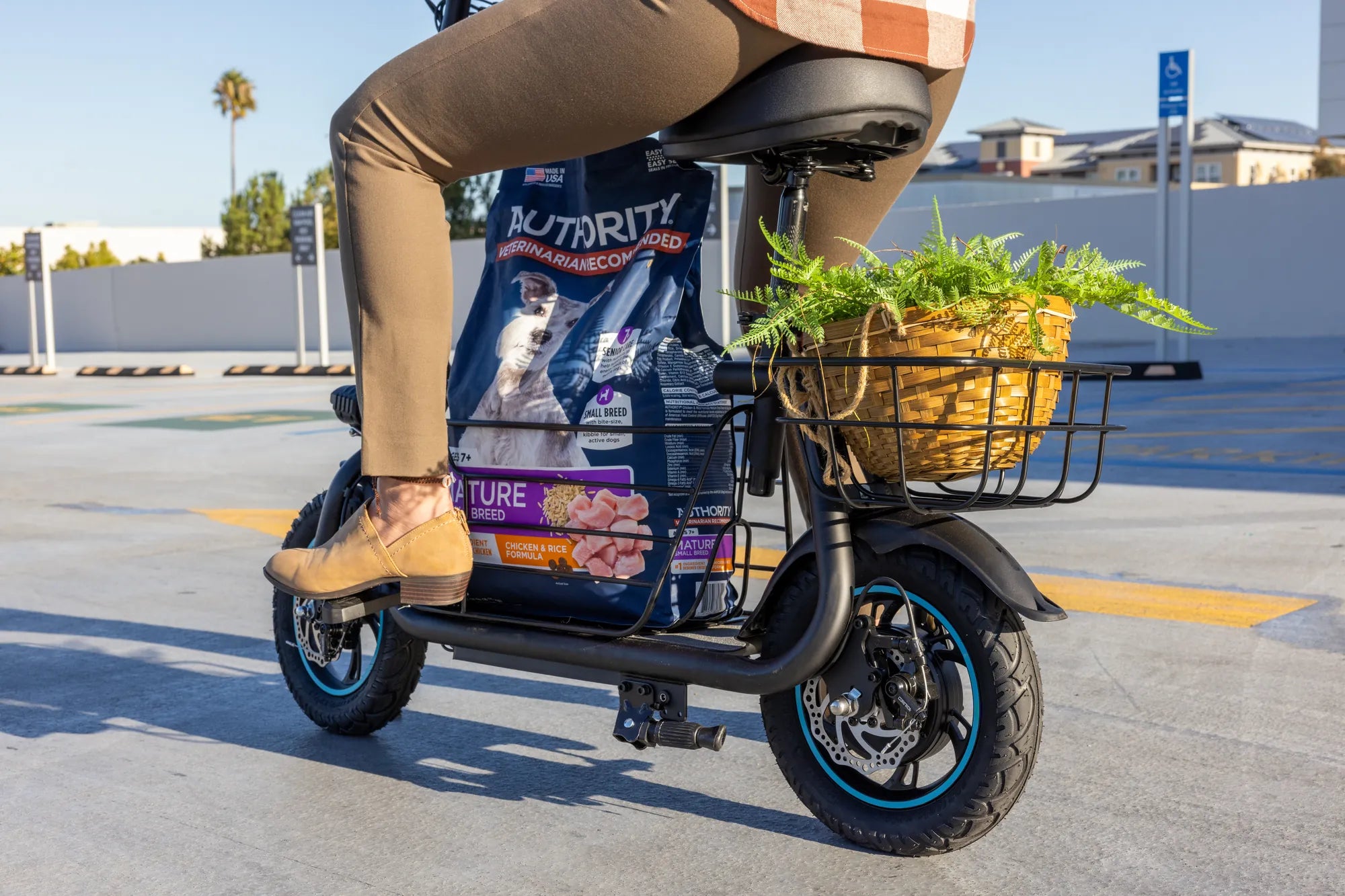
Choosing the right electric bike involves understanding one critical specification: system voltage. A 48 volt e bike delivers the optimal balance of power, range, and efficiency for urban commuting, recreational riding, and light off-road adventures. This guide will explain the engineering principles behind 48V systems, detail what performance you can realistically expect, and provide a framework for selecting a model built with safety and durability as priorities, such as those from leading brands like Gyroor.
Introduction to 48V E-Bikes: Power, Performance, and Practicality
Voltage in an e-bike system is analogous to water pressure in a hose. A 48 volt e bike system operates at a higher electrical "pressure" than common 36V systems, allowing it to deliver more power to the motor with greater efficiency. This voltage has emerged as the dominant standard for performance-oriented electric bicycles that need to tackle hills, accelerate quickly in traffic, and maintain higher speeds without excessive battery drain.
The appeal of a 48V system lies in its position as a technological sweet spot. It provides a substantial upgrade in capability over entry-level 36V bikes without venturing into the more complex, expensive, and sometimes legally ambiguous territory of 52V or higher systems. For the majority of riders—from daily commuters to weekend explorers—a 48 volt e bike offers the most practical and satisfying blend of attributes.
This voltage directly influences the bike's torque (pulling power for hills and acceleration) and its maximum potential speed. When paired with a quality motor and battery, a 48V configuration enables Class 3 performance, meaning pedal-assisted speeds up to 28 mph, making it a versatile tool for keeping pace with urban traffic or covering longer distances in less time. The following sections will dissect exactly why this voltage level is so effective and how to identify a well-engineered example.
Why 48 Volts? The Engineering Advantages for the Modern Rider
The shift from 36V to 48V represents a meaningful leap in e-bike performance and efficiency. The core advantage stems from fundamental electrical principles. Power (watts) is calculated as Voltage (V) multiplied by Current (Amps). A 48V system can deliver the same wattage as a 36V system while drawing significantly less current.
This reduction in amperage has multiple cascading benefits. Electrical components like wires, connectors, and motor windings generate heat proportional to the square of the current (Heat = I²R). Lower current means substantially less heat buildup, enhancing the reliability and longevity of the entire drive system. It also improves overall efficiency, as less energy is wasted as heat, translating more of your battery's capacity into actual range.
Optimal Balance of Torque and Speed
A 48 volt e bike provides noticeably stronger acceleration and hill-climbing capability than a 36V model of similar wattage. The higher voltage allows the motor to spin faster and produce more torque, especially from a standstill. This translates to confident merging into traffic and the ability to conquer steep grades without excessive pedaling strain.
For speed, a 48V system typically supports a top assisted speed of 20-28 mph, depending on local regulations and motor programming. This covers the full spectrum of Class 1, 2, and 3 e-bike classifications. While 52V systems can offer slightly higher peak performance, they often come with increased cost, weight, and less standardized component compatibility, making 48V the more practical high-performance choice.
Improved Efficiency and Heat Management
The efficiency gains of a 48V architecture are not merely theoretical. By operating at a higher voltage and lower current, the system experiences reduced voltage drop across wiring and connectors. This means more of the battery's energy consistently reaches the motor, particularly under high-load conditions like climbing or acceleration.
Superior heat management is a direct result. Controllers and motors run cooler, which prevents thermal throttling (where power is reduced to protect components) and supports sustained high performance. This engineering margin contributes directly to the durability and safety of the e-bike over thousands of miles of use.
Compatibility and Standardization
48V has become the de facto standard for performance e-bikes and many light electric vehicles. This widespread adoption benefits consumers through greater availability of replacement parts, chargers, and upgrade accessories. If you need a new battery in three years, finding a high-quality, UL-certified 48V pack will be far easier than sourcing a niche voltage.
This standardization also extends to diagnostic tools and repair knowledge within the bike shop network. Choosing a 48 volt e bike future-proofs your investment and simplifies long-term ownership, ensuring you can maintain and enjoy your bike for years to come.
Key Components of a Reliable 48V E-Bike System
The performance of a 48 volt e bike is only as good as the sum of its parts. Three core components define its character: the battery, the motor, and the controller. Understanding the role and quality markers for each is essential for making an informed purchase.
Neglecting component quality for the sake of a lower price often leads to poor performance, safety risks, and premature failure. A reliable e-bike is built around robust, well-matched components designed to work together seamlessly under the demands of daily riding.
The Heart: UL-Certified 48V Lithium-Ion Battery
The battery is the most critical safety and performance component. A 48V rating tells you the system's voltage, but the capacity, measured in Amp-hours (Ah), determines range. A common configuration is a 48V 15Ah battery, providing 720 watt-hours of energy (48V * 15Ah = 720Wh).
Safety is non-negotiable. Always insist on a battery pack that is UL 2271 or UL 2849 certified. This independent certification means the battery cells, battery management system (BMS), and enclosure have undergone rigorous testing for electrical, mechanical, and fire safety. Brands that prioritize safety, like Gyroor, use these UL-certified battery packs tested for 500+ charge cycles, ensuring peace of mind for over 100,000 riders.
The Muscle: Motor Types (Hub vs. Mid-Drive)
48V systems are paired with two primary motor types, each with distinct characteristics. Hub motors are integrated into the front or rear wheel. They are generally simpler, often more affordable, and provide direct power to the wheel. A rear-hub 48V motor offers good traction and a straightforward riding feel.
Mid-drive motors are mounted at the bike's crank and pedal assembly. They leverage the bike's existing gears, allowing the motor to operate at its optimal RPM across a wider range of speeds and inclines. This typically results in superior hill-climbing efficiency, better weight distribution (lower center of gravity), and less strain on the rear wheel. For challenging terrain or maximizing range on hilly routes, a 48V mid-drive is often the premium choice.
The Brain: The Controller and Display
The controller is the electronic brain that manages power flow from the battery to the motor. It interprets signals from the throttle, pedal assist sensor, and brake sensors to deliver smooth, controlled acceleration. A high-quality controller for a 48 volt e bike will provide seamless power delivery without jarring surges.
The display is your interface. It should clearly show essential metrics: current speed, battery charge level (preferably as a percentage, not just bars), assist level, and trip odometer. Advanced displays may connect via Bluetooth for smartphone integration, offering navigation, ride tracking, and system tuning. A clear, intuitive display is key to managing your ride and battery effectively.
48V E-Bike Performance: What to Expect in the Real World
Manufacturer specifications provide a baseline, but real-world conditions dictate actual performance. A well-built 48 volt e bike transforms daily travel, but setting accurate expectations is crucial. Performance hinges on the interplay between the motor's power (in watts), the battery's capacity, rider input, and external conditions.
Riders upgrading from a 36V system will immediately notice the difference in responsiveness and reserve power. The 48V platform feels more capable and less strained, whether navigating city streets or rolling country roads.
Speed, Acceleration, and Hill-Climbing Capability
A typical 48V e-bike with a 500W-750W motor will comfortably achieve a top assisted speed of 20-28 mph on level ground. Acceleration from a stop is brisk, allowing you to clear intersections quickly. The true advantage shines on hills. Where a 36V system might struggle and slow considerably on a 10% grade, a 48V system maintains momentum with far less pedaling effort from the rider.
For context, a 48V 500W motor often delivers hill-climbing performance comparable to a 36V 750W motor, but does so more efficiently and with less heat buildup. This makes the 48 volt e bike ideal for cities with bridges, overpasses, or varied topography.
Estimating Your Real-World Range
Range is highly variable. The primary factors are battery capacity (Wh), rider weight, terrain, wind, tire pressure, and most significantly, the level of pedal assist used. The following table provides realistic estimates for a rider of average weight (~170 lbs) on mixed terrain using a 48V 15Ah (720Wh) battery.
| Assist Mode | Rider Contribution | Estimated Range | Best Use Case |
|---|---|---|---|
| Eco / Level 1 | High pedaling effort | 40 - 55 miles | Maximizing range, light exercise |
| Standard / Level 2 | Moderate pedaling effort | 30 - 40 miles | General commuting, recreational rides |
| Sport / Level 3 | Low pedaling effort / Throttle-heavy | 20 - 30 miles | High-speed commuting, hilly routes |
Using the throttle exclusively will yield the shortest range. Regularly checking and inflating tires to the recommended PSI is one of the simplest ways to preserve range.
Durability and Riding Conditions: The IPX5 Advantage
E-bikes are exposed to the elements. A key indicator of durability is the Ingress Protection (IP) rating. An IPX5 rating for the motor and controller signifies protection against sustained, low-pressure water jets from any direction. This means your 48 volt e bike can confidently handle rain, wet roads, and puddle splashes without immediate risk of water damage.
This is a critical feature for a reliable commuter or adventure bike. Gyroor designs, for example, incorporate IPX5 water-resistant designs to ensure reliability in diverse weather conditions. It allows you to ride in less-than-ideal weather without anxiety, greatly increasing the bike's utility and year-round usability.
Choosing Your 48V E-Bike: A Buyer's Checklist
With numerous models on the market, a systematic approach to selection ensures you get a bike that matches your needs and is built to last. Focus on safety certifications, intended use, and the tactile experience of the ride itself.
Prioritizing reputable brands with proven customer support and clear warranty terms will save significant hassle down the road. The upfront cost of a quality e-bike is an investment in safety, reliability, and long-term satisfaction.
Prioritizing Safety and Warranty
Your first filter should be safety certifications. Verify the battery is UL-certified. Next, scrutinize the warranty. A robust warranty reflects manufacturer confidence. Look for at least a 1-year comprehensive warranty covering the frame, motor, battery, and electronic components. Gyroor's reliable 1-year warranty provides this benchmark coverage, ensuring support is available if needed.
Research the brand's customer service reputation. Are they accessible? Do they stock replacement parts? Strong post-purchase support is invaluable for an electric vehicle with proprietary components.
Matching the Bike to Your Primary Use Case
Align the e-bike's features with your primary riding goals. Use this quick-reference guide to narrow your focus:
- Urban Commuting: Look for integrated lights (front and rear), fenders, a rear rack, and a comfortable, upright geometry. A 48V system provides the speed to keep up with traffic.
- Recreation & Fitness: Prioritize a natural pedal-assist feel, multiple assist levels, and an ergonomic riding position. A mid-drive motor can offer a more bike-like feel for fitness riding.
- Light Trail & Off-Road: Seek front suspension (or full suspension), wider knobby tires for traction, a robust frame, and powerful hydraulic disc brakes. The torque of a 48V system is essential here.
The Test Ride Essentials
If possible, always test ride. Pay attention to these key elements:
- Motor Engagement: Is the pedal assist smooth and immediate, or is there a lag or a jerky surge?
- Handling: Does the bike feel stable and balanced, especially at higher speeds?
- Braking: Test the brakes at moderate speed. Hydraulic disc brakes offer superior stopping power and modulation, a wise choice for a powerful 48 volt e bike.
- Comfort: Is the saddle and riding position comfortable? You can change a saddle, but the frame geometry is fixed.
48V E-Bike FAQ: Your Questions Answered
1. Is a 48V e-bike street legal?
Yes, in most jurisdictions. In the United States, e-bike legality is generally based on top assisted speed and whether they have a throttle, not on voltage. A 48V e-bike that limits its motor assistance to 20 mph (Class 1 or 2) or 28 mph (Class 3) and has a motor under 750W output is legal on streets and bike paths in most areas. Always check your specific state and local regulations.
2. How long does a 48V battery last before needing replacement?
A quality lithium-ion battery with a proper Battery Management System (BMS) is rated for a certain number of full charge cycles (from 0% to 100%). High-quality cells, like those in UL-certified packs, can often deliver 80% of their original capacity for 500-800 cycles. With typical use (2-3 partial charges per week), this translates to 3-5 years of service before a noticeable reduction in range. Proper care—avoiding full discharges, storing in moderate temperatures, and using the correct charger—extends lifespan.
3. Can I upgrade my 36V e-bike to 48V?
It is not recommended as a simple DIY project. A 48V battery will likely damage a motor and controller designed only for 36V. A full upgrade requires a compatible 48V motor, 48V controller, and often different sensors and display. The cost and complexity usually outweigh the benefit; it is more practical to purchase a bike designed as a 48V system from the start.
4. Are 48V e-bikes more dangerous than 36V bikes?
Not inherently. Electrical safety is determined by the quality of construction, insulation, and protective circuitry, not solely by voltage. A well-built 48V system with a UL-certified battery and proper fusing is as safe as a well-built 36V system. The higher performance does mean the bike can travel faster, so responsible riding and adherence to traffic laws are always important.
5. What maintenance does a 48V e-bike require?
It requires standard bicycle maintenance (chain cleaning/lubrication, brake adjustments, tire pressure checks) plus specific electric system care. Keep the battery contacts clean and dry, store the battery in a cool, dry place, and use only the manufacturer-provided charger. Periodically check all electrical connections for tightness and inspect wiring for abrasions. Having a professional e-bike mechanic service the system every 1-2 years is advisable.
Conclusion: The Smart Choice for Balanced Electric Mobility
The 48 volt e bike stands as the definitive choice for riders seeking a powerful, efficient, and practical electric bicycle. It delivers the torque for hills, the speed for efficient commuting, and the efficiency for respectable range, all within a mature and standardized ecosystem of components. The key to unlocking this potential lies in selecting a bike built with foundational quality: UL-certified batteries for safety, IP-rated components for durability, and a comprehensive warranty for long-term confidence.
By focusing on these core attributes and matching the bike's features to your riding life, you invest in a vehicle that offers reliable, enjoyable transportation for years. Experience the balanced performance of a properly engineered 48V system. Browse the full Gyroor collection, featuring UL-certified, IPX5 water-resistant e-bikes and scooters trusted by a global community of riders, at gyroorboard.com.
Light Weight E Bike for Women: The Ultimate Guide to Effortless Freedom
Best 125cc Dirt Bike for Beginners: The Ultimate 2024 Buying Guide