



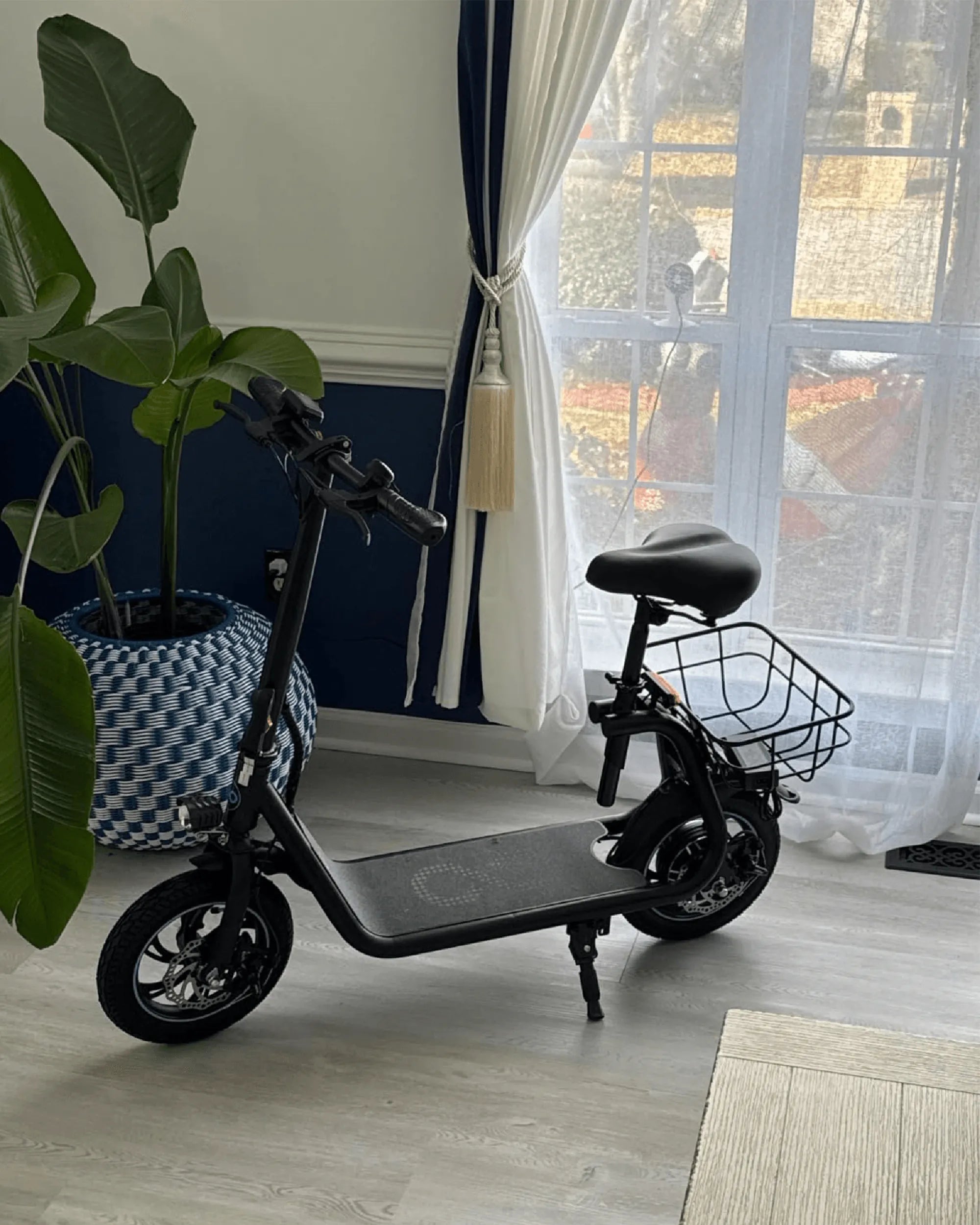
Understanding the 48V 50Ah E-Bike Battery: A Powerhouse Explained
The 48V 50Ah e-bike battery represents a significant leap in electric bicycle energy storage, offering riders unprecedented range and sustained power. This configuration combines higher voltage for improved performance with substantial amp-hour capacity for extended travel distances. For demanding riders who regularly tackle long commutes, steep hills, or cargo hauling, this battery specification eliminates range anxiety while delivering consistent power output.
At its core, a 48V 50Ah battery stores 2,400 watt-hours of energy (48V × 50Ah = 2,400Wh). This massive capacity translates to potentially 70-120 miles of riding range depending on conditions, motor efficiency, and riding style. Unlike standard e-bike batteries that typically range from 10Ah to 20Ah, this high-capacity unit provides endurance previously unavailable to most e-bike enthusiasts.
Gyroor's approach to such high-capacity power sources emphasizes safety and reliability above all else. With over 100,000 riders trusting their electric mobility solutions across North America and Europe, the company understands that powerful batteries require exceptional engineering. Their commitment to UL-certified battery packs tested for 500+ charge cycles ensures that even at 50Ah capacity, riders receive dependable performance without compromising safety.
This article will explore every aspect of the 48V 50Ah e-bike battery, from technical specifications to practical applications. You'll learn how to determine if this battery suits your needs, what compatibility factors to consider, and why safety certifications matter most with high-capacity energy storage systems.
The Technical Breakdown: What 48V and 50Ah Really Mean for Your Ride
Understanding battery specifications requires demystifying two key measurements: voltage and amp-hours. Voltage (V) represents electrical pressure, similar to water pressure in a hose. A 48V system provides more "push" to the motor than lower voltage alternatives, resulting in better acceleration, hill-climbing capability, and potential top speed. This higher voltage allows motors to operate more efficiently, particularly under heavy loads or challenging terrain.
Amp-hours (Ah) measure capacity, analogous to the size of a water tank. A 50Ah rating indicates the battery can deliver 50 amps of current for one hour, 25 amps for two hours, or proportional combinations. This substantial capacity directly translates to extended range between charges. While voltage determines how hard your motor can work, amp-hours determine how long it can work at that level.
The combination of 48V and 50Ah creates a synergistic effect on performance. The higher voltage ensures the motor receives adequate power for demanding situations, while the substantial capacity maintains that performance over extended periods. This is particularly valuable for riders who need consistent power delivery throughout their entire journey, not just in short bursts.
It's important to distinguish between nominal and actual voltage. A "48V" battery typically operates between approximately 42V when nearly depleted to 54.6V when fully charged. The 48V designation represents the nominal or average voltage during discharge. Understanding this range helps explain why performance might vary slightly as the battery discharges throughout your ride.
Calculating Your Potential Range: From Specs to Real-World Miles
Estimating actual riding range requires converting battery specifications into practical distance measurements. The fundamental calculation involves watt-hours: Voltage × Amp-hours = Watt-hours. For a 48V 50Ah battery, this equals 2,400 watt-hours (48 × 50 = 2,400). This total energy capacity serves as your starting point for range estimation.
Real-world range depends heavily on riding conditions and style. A general rule of thumb suggests e-bikes consume 15-35 watt-hours per mile. Conservative riding on flat terrain with pedal assist might achieve 20 Wh/mi, while aggressive throttle-only riding in hilly areas could consume 30+ Wh/mi. Using these figures, a 48V 50Ah battery could provide approximately 80-160 miles of range.
The following table illustrates estimated ranges under different riding conditions compared to common battery capacities:
| Battery Capacity | Total Energy | Conservative Riding (20 Wh/mi) | Moderate Riding (25 Wh/mi) | Aggressive Riding (30 Wh/mi) |
|---|---|---|---|---|
| 48V 15Ah | 720 Wh | 36 miles | 29 miles | 24 miles |
| 48V 20Ah | 960 Wh | 48 miles | 38 miles | 32 miles |
| 48V 30Ah | 1,440 Wh | 72 miles | 58 miles | 48 miles |
| 48V 50Ah | 2,400 Wh | 120 miles | 96 miles | 80 miles |
These estimates assume proper tire inflation, well-maintained drivetrain, and moderate rider weight. Actual results may vary based on specific conditions, but the table clearly demonstrates the substantial range advantage of a 48V 50Ah e-bike battery across all riding styles.
Key Considerations Before Upgrading to a 48V 50Ah Battery
While the extended range of a 48V 50Ah e-bike battery is appealing, several practical considerations must precede any upgrade decision. This high-capacity power source represents a significant investment and requires compatible equipment to function safely and effectively. Riders should evaluate their specific needs against the battery's characteristics before committing to this substantial energy storage solution.
The physical dimensions and weight of a 48V 50Ah battery substantially exceed standard e-bike batteries. Typically weighing 25-35 pounds (11-16 kg) and measuring significantly larger than common 10-20Ah packs, this battery will affect your bike's handling characteristics. The added mass, usually mounted on the downtube or rear rack, raises the center of gravity and changes the bike's balance.
Charging infrastructure represents another crucial consideration. A completely depleted 48V 50Ah battery requires substantial time to recharge—typically 15-25 hours with a standard 2-3 amp charger. Riders must plan charging schedules accordingly and may need to invest in faster charging equipment (with appropriate safety considerations) if frequent, full-range utilization is planned.
Cost represents a significant factor, as high-quality 48V 50Ah batteries command premium prices due to their extensive cell count and sophisticated battery management systems. However, when calculated as cost per watt-hour or cost per mile of range, these batteries often provide excellent value for riders who genuinely require extended range capabilities.
Compatibility Check: Motor, Controller, and BMS
Voltage compatibility represents the most fundamental requirement. Your e-bike's motor must be designed for 48V operation. While some motors tolerate a range of voltages, operating outside their designed specifications can damage components or create safety hazards. Consult your bike's specifications or manufacturer before considering any battery upgrade.
The controller serves as the intermediary between battery and motor, regulating power delivery. A 48V 50Ah battery can deliver substantial current, potentially exceeding the capabilities of controllers designed for smaller batteries. Verify that your controller can handle the maximum continuous discharge current specified by the battery's battery management system (BMS).
The battery management system represents the brain of any lithium-ion battery pack, but its importance magnifies with high-capacity units like a 48V 50Ah battery. A quality BMS monitors individual cell voltages, manages charging and discharging limits, provides temperature protection, and ensures balanced charging across all cells. For a battery of this size, a robust BMS is non-negotiable for safety and longevity.
Physical compatibility extends beyond electrical connections. The battery's dimensions, mounting system, and connector type must match your e-bike's frame and existing wiring. Some bikes may require modification or adapter plates, while others might not accommodate such a large battery at all. Always verify physical fitment before purchase.
Why Battery Quality and Safety Are Non-Negotiable (Especially at 50Ah)
With great power capacity comes great responsibility for safety. A 48V 50Ah battery stores substantial energy—equivalent to approximately 86,400 kilojoules or the kinetic energy of a small car traveling at highway speed. This energy density demands exceptional engineering, quality components, and rigorous testing to ensure safe operation across thousands of charge cycles and varying environmental conditions.
Compromising on quality with high-capacity batteries introduces multiple risks. Inferior cells may overheat during charging or discharging, potentially leading to thermal runaway—a dangerous chain reaction where increasing temperature causes further temperature increases. Poor construction can result in internal short circuits, while inadequate protection circuits might allow over-discharge or over-charge conditions that permanently damage cells.
Gyroor addresses these concerns through multiple layers of protection. Their batteries incorporate premium cells from reputable manufacturers, sophisticated battery management systems with multiple protection features, and robust physical construction. This comprehensive approach ensures that even their highest-capacity batteries meet stringent safety standards while delivering reliable performance.
Riders should prioritize safety certifications over price when selecting any e-bike battery, but especially with high-capacity options. The potential consequences of battery failure increase with capacity, making certified safety features not just desirable but essential for protecting both rider and property.
The Critical Importance of UL-Certified Cells and Packs
UL certification represents the gold standard for electrical safety in North America. For e-bike batteries, this certification involves rigorous testing of both individual cells and complete battery packs. Tests evaluate performance under normal conditions, foreseeable misuse scenarios, and extreme circumstances to verify safe operation throughout the product's lifecycle.
UL 2271 certification specifically addresses electrical systems for personal e-mobility devices, including e-bikes. This standard evaluates numerous safety aspects including electrical spacing, insulation resistance, overcharge protection, short circuit protection, temperature monitoring, and mechanical integrity. Batteries that pass these tests demonstrate robust safety engineering.
For a 48V 50Ah battery, UL certification provides independent verification that the pack can safely manage its substantial energy storage. The certification process evaluates how the battery behaves during fault conditions, ensuring protective systems activate appropriately to prevent hazardous situations. This third-party validation offers peace of mind that internal components and safety systems meet recognized safety standards.
Gyroor's commitment to UL-certified battery packs reflects their prioritization of rider safety. Their batteries undergo testing for 500+ charge cycles while maintaining safety margins, ensuring long-term reliability alongside initial safety. This certification distinguishes quality batteries from potentially hazardous alternatives that might lack proper safety engineering.
How IPX5 Water Resistance Protects Your Investment
Water exposure represents a significant threat to e-bike batteries, potentially causing short circuits, corrosion, and catastrophic failure. The IPX5 rating indicates protection against low-pressure water jets from any direction, making it suitable for riding in rain, through puddles, or in conditions where road spray might contact the battery.
An IPX5-rated battery enclosure prevents water ingress that could bridge electrical connections or damage internal components. This protection extends battery lifespan by preventing corrosion on circuit boards, connectors, and cell terminals. For riders who commute daily or adventure in varying weather conditions, this rating provides essential protection for their substantial battery investment.
Proper sealing requires careful engineering of seams, connectors, and ventilation systems. Batteries generate heat during operation and charging, necessitating thermal management while maintaining water resistance. Quality manufacturers like Gyroor design their IPX5-rated battery cases to balance these competing requirements, ensuring safe operation in real-world conditions.
It's important to understand rating limitations—IPX5 doesn't indicate submersion protection. While it withstands heavy rain and direct spray, riders should avoid intentionally submerging batteries or exposing them to high-pressure washing. Proper care combined with appropriate water resistance ratings maximizes battery longevity and safety.
Is a 48V 50Ah E-Bike Battery Right for You?
Determining whether a 48V 50Ah e-bike battery suits your needs requires honest assessment of your riding patterns, physical requirements, and practical constraints. This high-capacity solution excels in specific scenarios but may represent overkill for casual riders or those with limited storage space. Evaluating both advantages and limitations helps identify the ideal user profile for this substantial power source.
The primary advantage remains extended range—riders who regularly travel 40+ miles between charging opportunities benefit tremendously. Secondary advantages include sustained power delivery throughout the discharge cycle and reduced charge frequency, which extends overall battery lifespan by reducing cycle count. For certain applications, these benefits justify the additional weight, size, and cost.
Limitations include substantial weight affecting handling, significant charging time requirements, higher initial cost, and potential compatibility issues with existing equipment. Riders who prioritize agile handling, have limited storage space, or rarely exceed 30 miles per ride might find smaller batteries more suitable. The decision ultimately balances range requirements against practical considerations.
Consider creating a riding log before deciding. Document your typical distances, terrain, cargo loads, and available charging opportunities for several weeks. This data-driven approach reveals whether your current battery limitations are occasional inconveniences or regular constraints that justify upgrading to a 48V 50Ah solution.
Ideal Rider Profiles: Who Needs This Much Power?
Long-distance commuters represent prime candidates for 48V 50Ah batteries. Riders traveling 30+ miles each way to work benefit from the extended range that eliminates range anxiety and ensures reliable transportation. The ability to complete round trips without charging at work provides flexibility and convenience that smaller batteries cannot match.
Delivery professionals and commercial users operating e-bikes throughout the day require sustained power delivery. The 48V 50Ah configuration supports full-day operation without midday charging, increasing productivity and reducing operational complexity. The consistent voltage throughout discharge maintains performance even as the battery depletes, unlike smaller batteries that may experience voltage sag under load.
Adventure riders and bikepackers exploring remote areas benefit from the extended range between civilization stops. When combined with efficient riding techniques, this battery capacity enables multi-day excursions without access to charging infrastructure. The reliability of quality cells and robust construction becomes particularly valuable in isolated locations where failure would be problematic.
Heavy cargo haulers and riders in extremely hilly terrain appreciate the sustained power delivery. Towing trailers, carrying substantial loads, or climbing prolonged gradients demands consistent current delivery that smaller batteries might struggle to maintain. The 50Ah capacity ensures voltage remains stable under heavy loads throughout the discharge cycle.
Alternatives and Trade-offs for Different Needs
Riders who value power but not extreme range might consider 48V 20-30Ah batteries. These provide substantial performance with more manageable weight and size. The reduced capacity still offers 40-70 mile ranges under moderate conditions while improving handling characteristics and reducing cost. This represents an excellent balance for many performance-oriented riders.
Those prioritizing lightweight agility might prefer lower voltage systems with moderate capacity. A 36V 15Ah battery weighs significantly less than a 48V 50Ah unit while still providing adequate range for shorter commutes or recreational rides. The reduced power output may limit hill-climbing ability and top speed but enhances the bicycle-like feel of the riding experience.
Dual battery systems offer modular flexibility for riders with varying needs. Some e-bikes support connecting two smaller batteries in parallel, effectively creating a high-capacity system when needed while allowing single-battery operation for shorter rides. This approach provides versatility but requires compatible mounting systems and proper wiring for safe parallel operation.
Battery technology continues advancing, with emerging options offering higher energy density. Lithium iron phosphate (LiFePO4) cells provide exceptional cycle life and thermal stability, while newer lithium-ion formulations offer improved energy-to-weight ratios. Researching current technology helps identify the optimal balance of capacity, weight, lifespan, and safety for your specific requirements.
Maximizing Your 48V 50Ah Battery's Lifespan and Performance
Proper care and maintenance significantly extend the service life of any e-bike battery, but particularly for high-capacity investments like a 48V 50Ah unit. Following best practices preserves capacity, maintains safety margins, and ensures reliable performance throughout the battery's lifespan. These guidelines apply universally but become increasingly important with larger, more expensive battery systems.
Charging practices profoundly impact longevity. Avoid regularly discharging below 20% capacity or charging above 80% for daily use—keeping batteries in the middle range reduces stress on cells. Complete full charge cycles (0-100%) once monthly helps balance cells but shouldn't be standard practice. Using the manufacturer-recommended charger prevents over-voltage conditions that degrade cells.
Temperature management protects both performance and safety. Avoid charging in extreme temperatures (below 32°F/0°C or above 113°F/45°C), as this can damage cells or create hazardous conditions. Similarly, avoid exposing batteries to direct sunlight for extended periods during rides or storage. Moderate temperatures maximize both immediate performance and long-term lifespan.
Storage protocols preserve capacity during periods of non-use. For long-term storage (30+ days), charge batteries to approximately 60% capacity and store in a cool, dry location. Check voltage monthly and recharge to 60% if dropping below storage thresholds. Proper storage prevents capacity loss and maintains cell balance during inactive periods.
Monitoring Health and Recognizing Warning Signs
Regular voltage checks provide early indicators of potential issues. A healthy 48V battery should read approximately 54.6V when fully charged and not drop below 42V under moderate load. Significant voltage sag under load or inability to reach full charge voltage may indicate aging cells or balance issues requiring attention.
Range monitoring offers practical performance assessment. Note your typical watt-hour consumption per mile under consistent conditions, then track any increases over time. Gradual range reduction indicates normal aging, while sudden significant drops may signal developing problems. Documenting range alongside riding conditions creates valuable performance baselines.
Physical inspection identifies potential hazards. Regularly check battery casing for cracks, swelling, or deformation—any of these warrant immediate discontinuation of use. Inspect electrical connections for corrosion, looseness, or signs of overheating (discoloration or melting). Address any physical concerns before further use to prevent safety incidents.
Unusual behavior during charging or operation signals potential problems. Excessive heat generation, unusual sounds (hissing or popping), or strange odors indicate serious issues requiring immediate attention. Discontinue use and consult the manufacturer if any abnormal behavior occurs. Early intervention prevents minor issues from developing into hazardous situations.
Frequently Asked Questions (FAQ)
Q: How much does a 48V 50Ah e-bike battery typically weigh?
A: Expect 25-35 pounds (11-16 kg) depending on cell chemistry and casing materials. Lithium-ion configurations typically weigh 28-30 pounds, while lithium iron phosphate (LiFePO4) versions may exceed 35 pounds due to lower energy density but offer longer cycle life.
Q: Can I put a 48V 50Ah battery on any 48V e-bike?
A: Not automatically. You must verify physical mounting compatibility, connector type, and that your bike's controller can handle the battery's maximum discharge current. Additionally, ensure the battery management system communicates properly with your e-bike's electronics for optimal performance and safety.
Q: How long does it take to charge a fully depleted 48V 50Ah battery?
A: With a standard 2-3 amp charger: 15-25 hours. A 5-6 amp "fast" charger reduces this to 8-12 hours, but consistent fast charging may slightly reduce long-term battery health. Always use chargers specifically designed for your battery to prevent damage or safety issues.
Q: What's the primary benefit of Gyroor's UL certification for a battery like this?
A: Independent verification that the battery pack has passed stringent safety tests for electrical, mechanical, and thermal hazards. This certification is particularly important for high-capacity batteries where energy density increases potential risks if safety systems fail or components are substandard.
Q: How many charge cycles can I expect from a quality 48V 50Ah battery?
A: Properly maintained UL-certified batteries typically deliver 500-800 full charge cycles while maintaining 80% of original capacity. Following best practices (avoiding extreme discharges, excessive heat, and regular fast charging) can extend this to 1,000+ cycles for some premium cell types.
Q: Is a 48V 50Ah battery too powerful for casual riders?
A: For casual riders traveling under 20 miles per ride, this capacity represents significant overkill. The added weight, cost, and charging time likely outweigh benefits. Casual riders typically find 48V 10-20Ah batteries more suitable, providing adequate range with better handling characteristics.
Conclusion: Empowering Your Journey with Confidence
The 48V 50Ah e-bike battery represents a specialized solution for riders demanding maximum range and sustained power delivery. Its substantial energy capacity enables adventures, commutes, and commercial applications previously limited by battery technology. When properly matched to compatible equipment and riding needs, this configuration unlocks new possibilities for electric bicycle utilization.
Success with high-capacity batteries depends on prioritizing safety and quality above all else. Certifications like UL 2271 provide independent verification of safety engineering, while features like IPX5 water resistance protect your investment from environmental hazards. These considerations become increasingly critical as battery capacity increases, making manufacturer reputation and commitment to safety paramount selection criteria.
Gyroor's approach to high-capacity batteries reflects their commitment to rider safety and reliable performance. With UL-certified packs tested for 500+ charge cycles, IPX5 water-resistant designs, and comprehensive warranties backed by accessible support, their batteries transform raw power potential into dependable transportation solutions. This combination of performance and protection defines the standard for high-capacity e-bike energy storage.
Explore Gyroor's collection of reliable e-bike batteries and complete electric bicycles designed for performance and safety. Their range includes options for various riding needs, all incorporating the safety features and quality construction that have earned trust from over 100,000 riders. Browse the full Gyroor collection at gyroorboard.com to find the perfect power solution for your electric mobility journey.
Kids Dirt Bike 50cc: The Ultimate Starter Guide for Young Riders
Mini Dirt Bike for 10-Year-Old: The Ultimate 2024 Parent's Guide