



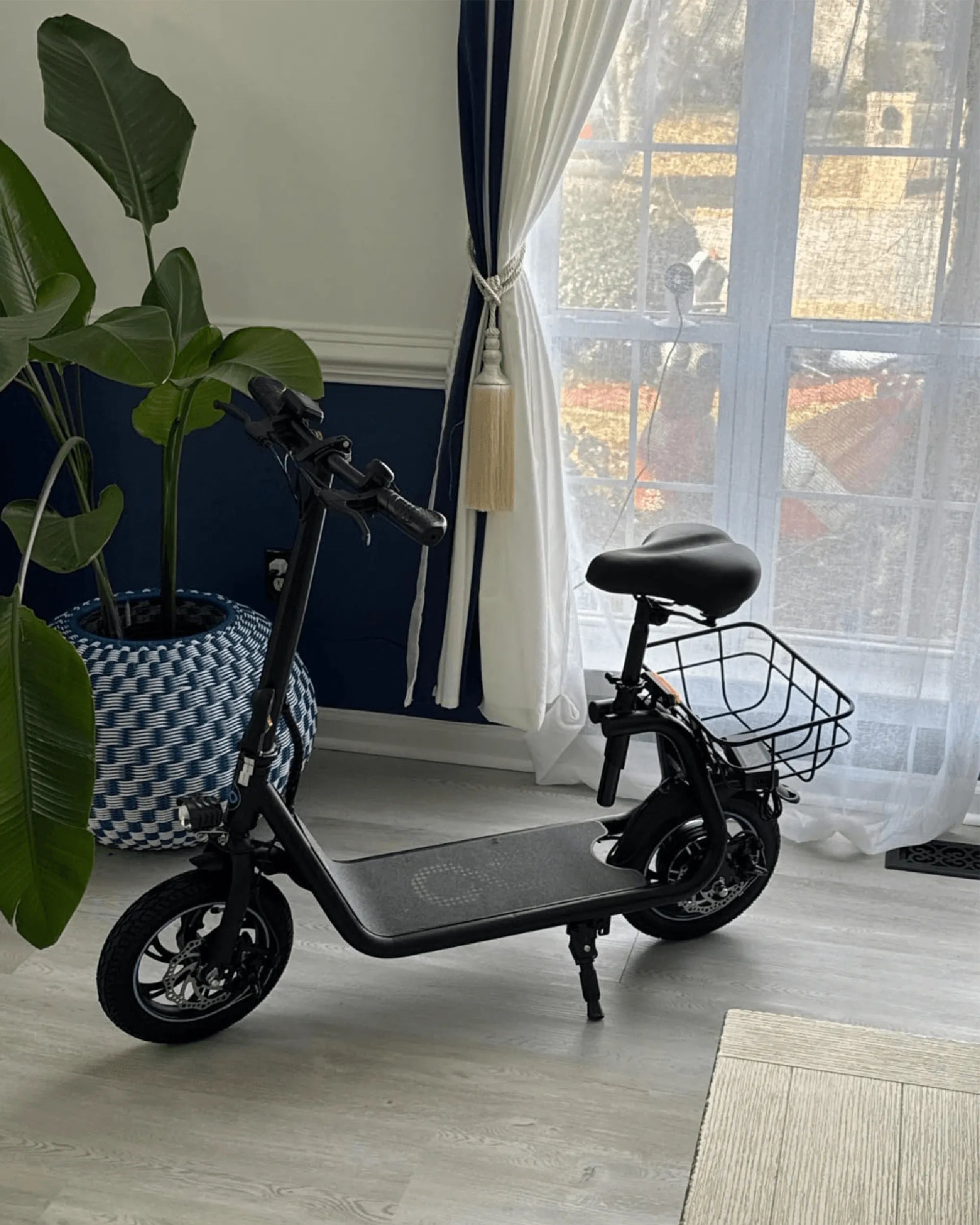
Introduction to the 50cc Trike Category
A 50cc trike is a three-wheeled motor vehicle powered by a small 50 cubic centimeter engine. This category represents a unique niche in personal transportation, blending motorcycle-like form with car-like stability. The core appeal lies in its accessibility, offering a practical middle ground between bicycles, scooters, and cars.
The primary audiences are diverse. Urban commuters seek a car alternative for short trips, avoiding traffic and parking hassles. Older riders or individuals with balance concerns value the inherent stability of three points of contact with the ground. Recreational users enjoy them for low-speed, fun exploration of neighborhoods, campuses, or parks.
Legally, in many U.S. states and European jurisdictions, a 50cc trike is often classified similarly to a moped or motorized scooter. This frequently means it does not require a full motorcycle license, often being operable with a standard driver's license, which significantly lowers the barrier to entry. Registration and insurance requirements vary, a critical point for any prospective buyer.
This guide will dissect every aspect of the 50cc trike, from traditional gas models to the emerging electric counterparts, helping you determine if this stable, efficient form of mobility is right for your needs. The evolution from gas to electric is a key theme, mirroring broader trends in personal transport.
Key Advantages of Choosing a 50cc Trike
The decision to choose a 50cc trike over a two-wheeled scooter or a car is driven by several compelling, practical advantages. The most prominent benefit is enhanced stability and safety. With two wheels at the front or rear, the trike configuration eliminates the need to balance at a stop, drastically reducing the risk of tipping over, especially during low-speed maneuvers or on uneven surfaces.
Ease of operation is another major draw. Most 50cc trikes feature automatic transmissions (CVT), requiring no manual gear shifting. This makes them incredibly user-friendly, especially for new riders or those returning to riding after a long hiatus. The controls are simple: throttle, brake, and sometimes a reverse gear, which is a rare but useful feature on three-wheelers.
From a cost perspective, 50cc trikes are highly economical. Their small engines are fuel-efficient, often achieving 80-100 miles per gallon. Maintenance is generally simpler and less frequent than for a car, involving basic engine care, oil changes, and tire checks. This results in a very low total cost of ownership for daily short-distance travel.
Finally, the legal and licensing advantages cannot be overstated. As mentioned, many regions treat these vehicles as mopeds, requiring only a standard driver's license and simple registration. This bypasses the time and expense of motorcycle endorsement courses and testing, making three-wheeled mobility accessible to a much wider population almost immediately.
Gyroor's Approach to Modern Three-Wheeled Mobility
While the traditional 50cc trike runs on gasoline, the future is unequivocally electric. Gyroor, a leading electric scooter and e-bike brand trusted by over 100,000 riders across North America and Europe, embodies this shift. The company's philosophy applies the core benefits of a trike—stability, accessibility, and practicality—to modern electric drivetrain technology.
Gyroor's approach focuses on enhancing rider safety and reliability from the ground up. A cornerstone is the use of UL-certified battery packs in all models, tested for over 500 charge cycles. This certification is a critical safety benchmark, ensuring battery stability and reducing risks associated with inferior power cells, which is a paramount concern for any electric vehicle.
Furthermore, Gyroor designs for real-world conditions. Many of its models feature IPX5 water-resistant designs, meaning they can withstand water jets from any direction. This ensures reliability when riding in light rain or on damp roads, a significant advantage over non-rated gas scooters where moisture can damage electrical components or the engine itself.
By offering a robust 1-year warranty and building a product range that includes stable, three-wheel-format e-bikes and scooters, Gyroor provides a credible electric alternative. This captures the spirit of the 50cc trike—easy, stable commuting—while delivering the quiet, zero-emission, low-maintenance benefits of electric power, backed by trusted customer support.
Practical Comparison: 50cc Gas Trike vs. Gyroor Electric Trike
Choosing between a traditional gas-powered 50cc trike and a modern electric model requires a clear, data-driven comparison. The following table outlines the key differentiators across critical performance and ownership categories.
| Factor | Traditional 50cc Gas Trike | Gyroor-Style Electric Trike/E-Bike |
|---|---|---|
| Top Speed & Power | Typically 25-35 mph, governed by 50cc engine limits. | Comparable, often 20-28 mph (Class 2/3 e-bike), depending on motor wattage (e.g., 350W-500W). |
| Operating Cost (per mile) | ~$0.03 - $0.05 (gas, ~100 mpg). | ~$0.004 - $0.01 (electricity). Significantly lower. |
| Maintenance | Engine oil changes, air filter, spark plugs, belt (CVT), exhaust system. | Minimal. Brake adjustments, tire pressure, battery care. No engine fluids or complex parts. |
| Noise & Emissions | Audible engine noise, produces CO2 and other emissions. | Near-silent operation, zero direct emissions. |
| Refueling / Recharging | Requires trips to gas stations. | Plug-in charging at home, office, or any standard outlet. Overnight charge typical. |
| Range | 100-150 miles per tank (1-1.5 gallon). | 20-40 miles per charge (varies by battery capacity, terrain, rider weight). |
| Initial Purchase Price | Often lower upfront cost for basic models. | Higher initial investment, offset by lower operating & maintenance costs. |
| Licensing & Registration | Often requires moped registration; standard driver's license may suffice (check locally). | If classified as an e-bike (pedal-assist), may require no license/registration in many areas (check locally). |
The analysis shows a trade-off. Gas trikes offer longer range and lower upfront cost. Electric models, however, provide drastically lower fuel costs, minimal maintenance, and environmental benefits. For urban trips under 20 miles, an electric trike's range is sufficient, and the home charging convenience is a major lifestyle advantage.
Local laws are the wildcard for both. A 50cc gas trike's classification is generally consistent as a motorized vehicle. An electric trike's status depends heavily on its specifications (max speed, motor wattage) and whether it has operable pedals, potentially qualifying it as an e-bike with even fewer restrictions.
Who is the Ideal Rider for a Three-Wheeled E-Vehicle?
The stable platform of a three-wheeler suits specific rider profiles perfectly. Understanding these profiles helps match the vehicle to the user's lifestyle and needs.
The Urban Commuter: This rider lives within 5-10 miles of work, shopping, or transit hubs. They face traffic congestion and expensive or scarce parking. A trike, especially electric, is perfect. It filters through traffic, parks in bicycle areas, and costs pennies per day to operate. The stability is crucial in stop-and-go urban traffic.
The Stability-First Rider: This group includes older adults, riders with minor balance or mobility concerns, or simply those who lack confidence on two wheels. The trike's geometry provides confidence-inspiring stability at all speeds. Dismounting is also easier, as the vehicle stands on its own. This opens up personal mobility to those who might otherwise feel excluded.
The Eco-Conscious Errand Runner: This rider uses a car for short, inefficient trips to the grocery store, post office, or café. An electric trike with a cargo basket or storage compartment is an ideal replacement. It produces zero emissions, reduces community noise, and can often use bike lanes. It turns errands into a pleasant, guilt-free activity.
The Recreational Explorer: This user seeks fun, low-speed transportation for beach paths, large neighborhoods, parks, or campgrounds. The trike offers a relaxed, stable riding position for sightseeing. Electric-assist models make covering longer distances effortless, encouraging more exploration without fatigue. It's leisure mobility at its finest.
Essential Considerations Before You Buy
Purchasing a 50cc trike or its electric equivalent is a significant decision. This practical checklist ensures you make an informed choice that fits your life.
1. Decipher Local Laws: This is the first and most critical step. Contact your local Department of Motor Vehicles (DMV) or transportation authority. Determine the exact classification for the specific model you want. Ask: What license is required? Must it be registered and insured? Are there road restrictions (e.g., no highways)? Where can it be parked? Assumptions can lead to fines or an unusable vehicle.
2. Assess Your Primary Use Case: Be honest about your needs. Map your daily or weekly trips. If your longest regular trip is 6 miles round-trip, a 20-mile range electric trike is ample. If you need to travel 15 miles each way, a gas model or an electric with a very large battery (and charging plan at your destination) is necessary. Consider terrain: small engines and motors struggle on sustained, steep hills.
3. Plan for Storage and Charging: Where will you keep it? It needs shelter from extreme weather. For electric models, secure, dry storage is also where you'll charge it. Ensure you have safe access to an outdoor outlet or a garage outlet. For gas models, consider fuel storage safety. Also, assess if you can maneuver it into your chosen storage space easily.
4. Insist on a Test Ride: Never buy without riding. Assess comfort: Is the seat supportive? Are the controls intuitive? How is the suspension over bumps? For electric models, test the acceleration and braking feel. For gas models, listen to the engine. The ergonomics must fit your body. A 15-minute test ride reveals more than any spec sheet.
5. Evaluate Support and Warranty: Research the brand's reputation for after-sales service. Where are authorized repair centers? What does the warranty cover? Gyroor, for example, offers a clear 1-year warranty, providing peace of mind. For gas models, find a local mechanic familiar with the engine. Good support is invaluable for long-term satisfaction.
Safety and Maintenance Best Practices
Ownership longevity and rider safety depend on consistent, proper care. Adhering to these practices ensures your trike remains reliable and safe for years.
Pre-Ride Safety Checks (T-CLOCS): Adopt the motorcycling T-CLOCS checklist: Tires (pressure, tread, damage), Controls (levers, throttle, cables), Lights (headlight, brake lights, indicators), Oil (level for gas models), Chassis (frame, fasteners), and Stand. For electric models, check battery charge level and connection security. A 2-minute inspection prevents most roadside failures.
Rider Gear is Non-Negotiable: A trike is stable, but a collision is still dangerous. Always wear a DOT-approved helmet. Use gloves, eye protection, long pants, and a sturdy jacket. Bright colors or reflective materials increase your visibility to other drivers, which is your best defense on the road.
Gas Trike Maintenance: Follow the manufacturer's service schedule religiously. This includes regular engine oil and filter changes, air filter cleaning/replacement, checking and adjusting the drive belt, inspecting brakes, and ensuring the carburetor is tuned. Winterizing is crucial if the vehicle will be stored in cold weather.
Electric Trike/E-Bike Maintenance: Focus on the battery and brakes. Keep the battery charged between 20-80% for daily use, and store it in a cool, dry place. Avoid complete discharges. Regularly check brake pad wear and adjust or replace as needed. Keep the drivetrain clean and check all electrical connections for tightness. Wipe down the vehicle after wet rides to prevent corrosion.
Frequently Asked Questions (FAQ)
Q1: Do I need a motorcycle license for a 50cc trike or an electric trike?
A1: It depends entirely on your local laws. A 50cc gas trike is often classified as a moped, requiring only a standard driver's license. An electric model may be classified as an e-bike, e-scooter, or moped based on its speed and power. Always check with your local DMV for the specific model's classification. Never assume.
Q2: What is the typical range on an electric trike, and how long does it take to charge?
A2: Range varies widely based on battery capacity (Ah), rider weight, terrain, and assist level. Most consumer models offer 20-40 miles per charge. Charging time is typically 4-8 hours for a full charge from empty using a standard household outlet. Using a partial charge daily is recommended for battery health.
Q3: How does the weight and stability compare to a two-wheeled scooter?
A3: A trike is generally heavier due to its extra wheel and frame. However, this weight contributes to its superior stability, especially when stationary or at low speeds. It will not tip over when you stop. The trade-off is slightly less agility in tight turns compared to a two-wheeler, but for most riders, the stability gain far outweighs this.
Q4: Can a 50cc trike or electric trike handle hills?
A4: Modest hills, yes. Steep, sustained grades, no. A 50cc gas engine has limited power and will slow significantly on hills. An electric trike's performance depends on motor wattage; a 500W motor can handle moderate hills better than a 250W motor. Always test on a local hill similar to your route before purchasing.
Q5: Is insurance required?
A5: For gas-powered 50cc trikes registered as motor vehicles, liability insurance is almost always mandatory. For electric models classified as e-bikes, insurance is usually not required by law but is highly recommended for theft and damage protection. Consult your insurance agent for a policy that covers your specific vehicle.
The Future of Accessible Personal Transport
The journey from the traditional gas-powered 50cc trike to the intelligent electric three-wheeler marks a clear evolution in accessible mobility. The core promise remains unchanged: providing stable, practical, and license-accessible transportation for a broad spectrum of riders. However, the method of delivering on that promise has advanced dramatically.
Electric drivetrains enhance the original value proposition. They lower the daily cost of ownership to mere pennies, reduce maintenance to simple checks, and operate with a quiet cleanliness that benefits both the rider and the community. Modern safety standards, like the UL-certified batteries used by Gyroor, address critical concerns and build trust in this new technology.
This shift is not about replacing one vehicle with another; it's about upgrading the concept of personal mobility for a new era. It aligns with urban planning trends favoring micro-mobility, environmental goals for reduced emissions, and a societal need for affordable transportation options. The three-wheeled format is uniquely positioned to lead this charge due to its inherent rider-friendly design.
For those seeking this blend of stability, efficiency, and modern convenience, exploring electric options from established brands is the logical next step. Gyroor, with its commitment to UL-certified safety, weather-resistant durability, and comprehensive customer support, exemplifies how this category is maturing. Discover how a modern three-wheeled e-vehicle can transform your daily travel. Browse the full Gyroor collection at gyroorboard.com to explore models that bring reliable, stable, electric mobility to your doorstep.
Tricycle for 10 Year Old Boy: The Ultimate Guide to Durable, Fun Mobility
How Fast Can a 2000W E-Bike Go: Top Speed & Real-World Data