



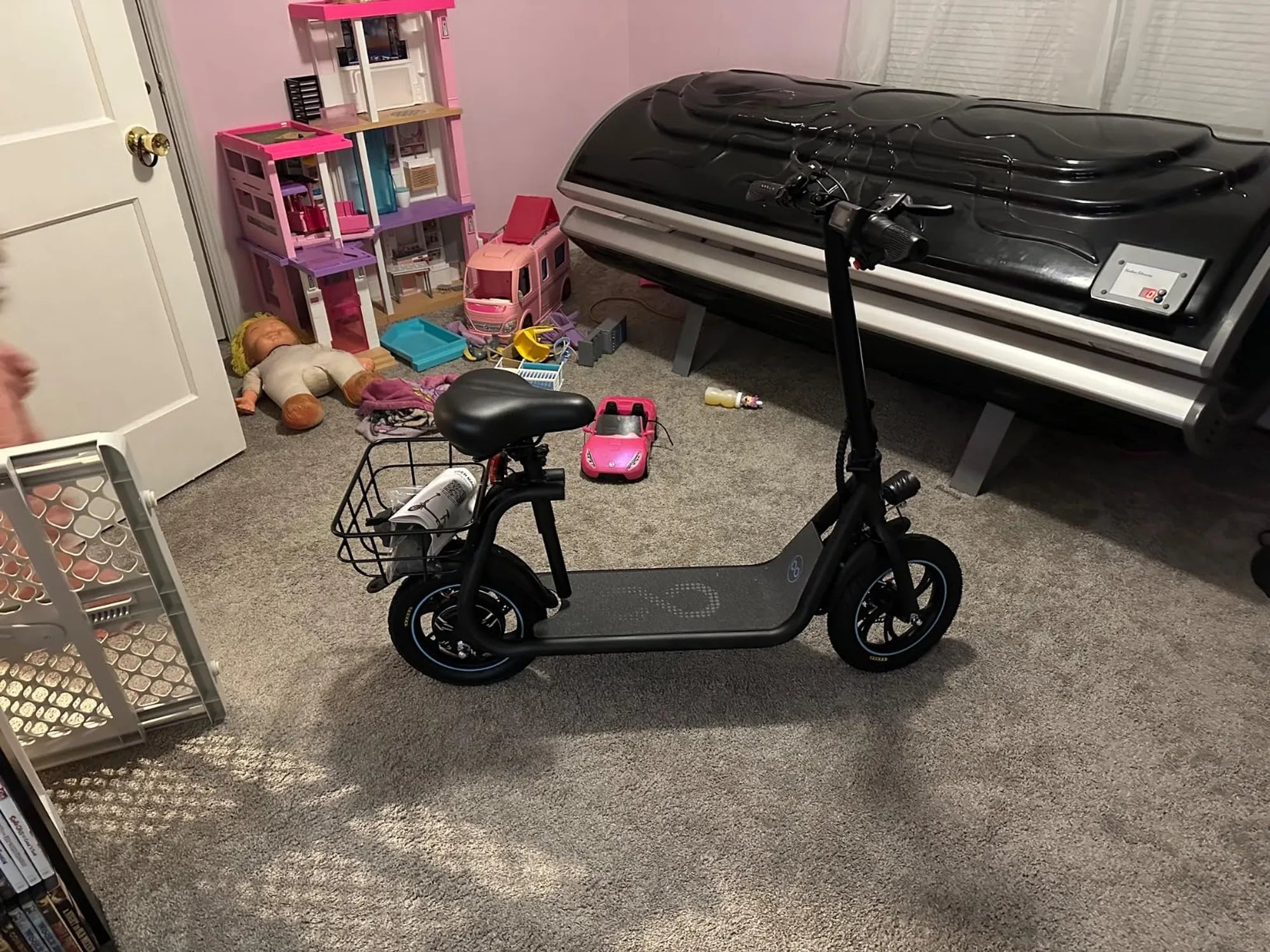
Introduction to 500W Electric Bikes
Choosing an electric bike often centers on one critical specification: motor power. A 500 watt e bike represents a powerful sweet spot in the market, offering a compelling blend of acceleration, hill-climbing capability, and efficient range that suits a wide array of riders. This motor rating refers to the nominal, or continuous, power output, which is a key factor in performance and how the bike is classified under local regulations. For commuters navigating city streets, recreational riders exploring paved paths, and those tackling moderate inclines, a 500W system provides ample assist without the excessive weight or legal complexities of higher-powered models.
Brands like Gyroor have built their reputation on delivering this balanced performance with a steadfast commitment to safety and reliability. As a leading electric mobility brand trusted by over 100,000 riders across North America and Europe, Gyroor integrates UL-certified battery packs and robust, IPX5 water-resistant designs into its e-bikes. This foundational focus on certified safety and a reliable 1-year warranty ensures that the 500W power advantage is delivered consistently and securely ride after ride.
This article will serve as your comprehensive guide to understanding the 500 watt e bike. You will learn exactly what performance to expect in terms of speed and hill climbing, how to maximize your riding range, and the essential features that distinguish a quality build. We will compare this power level to both weaker and stronger alternatives and provide a practical checklist to guide your purchase. By the end, you will know precisely why a 500W motor is a top choice for modern riders and how to select a model that delivers lasting value and enjoyment.
The 500W Advantage: Performance Meets Practicality
The core appeal of a 500 watt e bike lies in its versatile equilibrium. It delivers substantially more torque and pep than a standard 250W commuter bike, making stop-and-go traffic and urban hills far less daunting. Yet, it typically remains more energy-efficient and lighter than 750W or 1000W models, which translates to better battery life and easier handling. This balance makes it an exceptionally practical choice for the majority of e-bike use cases.
From a regulatory standpoint, the 500W motor is a key player. In many regions across North America, a 500W motor aligns perfectly with Class 1 and Class 2 e-bike definitions, which limit motor power to 750W and top assisted speeds to 20 mph. This means a well-designed 500 watt e bike often operates fully within legal boundaries for bicycle paths and lanes, requiring no special license, registration, or insurance. This regulatory friendliness removes a significant barrier to entry for new riders.
For the rider, the advantage is felt immediately. The extra power provides a confident boost from a standstill, allowing you to merge with traffic smoothly and safely. It also ensures that maintaining a cruising speed of 15-20 mph requires minimal pedaling effort, reducing sweat and fatigue on your commute. This combination of accessible power and everyday usability is why the 500W category continues to grow in popularity among both new and experienced cyclists.
Power and Speed: What to Expect
Real-world performance for a 500 watt e bike is influenced by several factors, but you can expect consistent benchmarks. On flat terrain with moderate pedal assist, most 500W hub-drive e-bikes will achieve a top assisted speed between 20 mph (32 km/h) and 28 mph (45 km/h), with the lower end being more common for street-legal Class 1/2 models. The motor's true strength is revealed in acceleration and hill climbing rather than pure top speed.
When confronting hills, a quality 500W motor can comfortably assist a rider up grades of 10-15%, depending on the total weight of the rider and bike. This capability transforms a strenuous climb into a manageable, even enjoyable, part of the ride. It's crucial to understand that performance varies with rider input, terrain, wind, and tire pressure. A heavier rider on a steep hill will draw more power from the battery to maintain speed compared to a lighter rider on flat ground.
Gyroor's engineering focuses on delivering this power smoothly and reliably. By pairing a robust 500W motor with intelligent pedal-assist sensors and UL-certified battery packs, their e-bikes provide predictable and consistent power delivery. This ensures that the promised performance is available throughout your ride, not just when the battery is fully charged, giving riders dependable confidence in their bike's capabilities.
Efficiency and Range: Maximizing Your Ride
The relationship between motor power and battery range is not linear; a more powerful motor can drain a battery quickly if used aggressively. However, the 500W motor excels by offering substantial power while still operating efficiently at lower assist levels. This efficiency is the key to achieving impressive range from a reasonably sized battery. Most 500 watt e bike models offer a range of 25 to 50 miles on a single charge under ideal conditions.
Maximizing that range involves understanding how you ride. Using a lower level of pedal assist (e.g., Eco or Level 1) on flat stretches or downhill can dramatically extend your distance. Conversely, constant use of the highest assist level or throttle on steep hills will consume the battery more rapidly. The battery's capacity, measured in watt-hours (Wh), is the ultimate determinant. A typical 48V 10Ah battery provides 480Wh of energy, which is well-matched to a 500W motor for balanced performance and range.
Gyroor's use of high-quality, UL-certified lithium-ion cells is a critical factor in achieving and maintaining this advertised range. These premium cells offer higher energy density and more consistent discharge curves than uncertified alternatives. This means your 500 watt e bike will not only go farther on a charge when new but will also better retain its range over hundreds of charge cycles, protecting your investment and ensuring long-term satisfaction.
Key Features to Look for in a 500W E-Bike
While the motor wattage is a headline figure, the overall quality and design of an e-bike determine the riding experience. A well-built 500 watt e bike integrates several key components that work in harmony. Beyond the motor, you should prioritize the battery system's safety certification, the frame's durability and geometry, the braking system's reliability, and the quality of the display and controls. These elements separate a premium product from a merely functional one.
Durability features like integrated wiring, sturdy racks, and puncture-resistant tires add significant value for daily use. For commuters, practical additions such as integrated lights, fenders, and a rear rack are not just accessories but essential components for a complete transportation solution. A brand's attention to these details often reflects a deeper commitment to rider safety and convenience, hallmarks of customer-centric design.
Gyroor models exemplify this holistic approach. By combining their 500W motor systems with IPX5 water-resistant construction, mechanical or hydraulic disc brakes, and intuitive control interfaces, they create e-bikes that are capable, comfortable, and built to handle daily use. This focus on the complete package, backed by a clear 1-year warranty, ensures that riders invest in a vehicle, not just a motor with wheels.
Motor Type and Placement (Hub vs. Mid-Drive)
The two primary motor configurations for a 500 watt e bike are hub-drive and mid-drive. A hub-drive motor is located within the center of the front or rear wheel. This design is simpler, often more affordable, and requires less maintenance. It provides direct power to the wheel, which can feel like a gentle push, making it very intuitive for new riders. Rear hub motors also offer better traction, especially when climbing.
A mid-drive motor is positioned at the bike's crank and bottom bracket. It powers the bike by turning the chainring, working through the bike's existing gears. This placement offers significant advantages: it provides more natural, bike-like handling by centralizing weight, and it leverages the bicycle's gears to deliver optimal torque for climbing steep hills efficiently. For riders who frequently encounter varied, hilly terrain, a mid-drive 500W system can feel more powerful and responsive than a hub-drive system of the same wattage.
Your choice depends on priority. For flat to moderately hilly urban commuting and value, a hub-drive 500 watt e bike is an excellent choice. For serious hill climbing, off-road trail use, or a more traditional cycling feel where you want the motor to amplify your pedaling effort intelligently, a mid-drive system is worth the typically higher investment. Gyroor offers models with both configurations, catering to these distinct rider preferences.
Battery and Build Quality: Safety & Durability
The battery is the heart of your e-bike, and its quality is non-negotiable for safety and longevity. Always look for a battery pack that is UL-certified. This independent certification means the battery has passed rigorous tests for electrical, mechanical, and fire safety—a critical safeguard often overlooked in cheaper models. A quality battery from a brand like Gyroor uses name-brand lithium-ion cells and features a robust Battery Management System (BMS) to prevent overcharging, overheating, and deep discharge.
Build quality extends to the bike's ability to withstand the elements. An IP rating for water and dust resistance is essential for a vehicle used daily. An IPX5 rating, as found on Gyroor e-bikes, means the electrical components can withstand low-pressure water jets from any direction, making the bike fully capable of riding in the rain or through puddles. This protection is crucial for preventing corrosion and electrical failures, ensuring your 500 watt e bike remains reliable through seasons of use.
The frame material, weld quality, and component spec (brakes, drivetrain, tires) round out the durability picture. A sturdy aluminum alloy frame provides a light yet strong foundation. Reliable disc brakes, whether mechanical or hydraulic, are a must for safely controlling the added weight and speed of an e-bike. Investing in a model with these proven quality components from the start prevents costly repairs and safety issues down the line.
500W E-Bikes vs. Other Power Levels
Understanding where the 500 watt e bike fits in the broader spectrum of motor powers helps clarify its ideal use case. It sits as the versatile middle ground, offering more capability than entry-level models while avoiding the excess weight, cost, and potential legal restrictions of high-performance bikes. This comparison is vital for aligning your expectations with reality and ensuring you purchase a bike that matches your actual needs, not just perceived ones.
The following table provides a clear, data-driven comparison of the three most common e-bike motor power categories, highlighting their typical performance, best uses, and regulatory considerations.
| Feature | 250W E-Bike | 500W E-Bike | 750W/1000W E-Bike |
|---|---|---|---|
| Typical Top Assisted Speed | 15-20 mph (25-32 km/h) | 20-28 mph (32-45 km/h) | 28+ mph (45+ km/h) |
| Hill Climbing Ability | Low to Moderate | Moderate to Strong | Very Strong |
| Best For | Flat urban commuting, light recreation, regions with strict power limits (e.g., EU) | Versatile commuting, moderate hills, light trail riding, mixed terrain | Steep hill climbing, heavy cargo hauling, off-road use, maximum speed |
| Battery Efficiency | Very High | High | Moderate (can drain quickly at high power) |
| Average Weight | Lighter | Moderate | Heavier |
| Common Regulatory Class (US) | Class 1, some Class 2 | Class 1, Class 2, some Class 3 | Often exceeds Class 3, may be classified as a moped |
250W vs. 500W: Urban Commuter Showdown
The choice between a 250W and a 500 watt e bike is common for city riders. A 250W bike is often lighter and can be supremely efficient, offering very long range on flat ground. It is the standard in many European countries due to strict power regulations. However, its limitations become apparent on hills or when battling strong headwinds, where the rider must contribute significantly more effort.
A 500W motor decisively wins in providing a more confident and less strenuous urban experience. The extra power ensures you can maintain a comfortable speed up moderate inclines without arriving at your destination sweaty or fatigued. It offers a valuable margin of power for accelerating quickly away from intersections, enhancing safety in traffic. For most North American cities with varied topography, the 500 watt e bike is the more practical and enjoyable choice, providing assist that feels substantial and reliable in nearly all commuting scenarios.
500W vs. 750W/1000W: When More Isn't Always Necessary
It's easy to assume that more power is always better, but for the average rider, a 750W or 1000W motor can be overkill. These high-powered bikes deliver exhilarating acceleration and torque, making them ideal for riders who regularly carry heavy loads, tackle extremely steep, sustained grades, or seek off-road performance. However, this comes with trade-offs: faster battery depletion, increased weight, higher cost, and often more restrictive legal classifications that may bar them from bike paths.
The 500 watt e bike provides more than adequate power for over 90% of riding situations. It climbs hills effectively, handles cargo with ease (especially when paired with a mid-drive motor), and offers a thrilling ride without the legal gray areas. Its superior efficiency means you can often travel farther on a similarly sized battery compared to a 750W bike used in the same conditions. For the rider seeking a do-it-all electric bicycle that is powerful, practical, and path-legal, the 500W category is frequently the optimal and most sensible choice.
Choosing Your 500W E-Bike: A Buyer's Checklist
Armed with knowledge about performance and features, selecting your ideal model becomes a structured process. This checklist is designed to guide you through the critical decision points, ensuring you invest in a 500 watt e bike that perfectly aligns with your lifestyle, terrain, and budget. Start by defining your primary use case, as this will influence almost every other specification.
Consider where and how you will ride most often. Is your commute on smooth pavement with bike lanes, or do you need to navigate potholes and curbs? Will the bike be used for weekend adventures on packed gravel trails? Your answers will determine the ideal frame style (step-through for easy mounting, traditional for stiffness), tire width and tread (slick for efficiency, knobby for traction), and the necessity of accessories like fenders and a rear rack from the outset.
Finally, set a realistic budget that accounts for the total cost of ownership. While upfront price is important, factor in the long-term value of a warranty, the availability of replacement parts, and the quality of customer support. A slightly higher initial investment in a well-supported brand like Gyroor can save significant money and frustration over years of ownership compared to a bargain model with no service network.
Assessing Your Riding Needs (Commute, Recreation, Terrain)
Begin with a clear self-assessment. For the pure urban commuter, prioritize features that enhance practicality and safety: integrated lighting for visibility, full-length fenders for weather protection, a rear rack for bags, and a comfortable, upright riding position. A step-through frame can be invaluable if you wear work clothes or need to frequently mount and dismount. For these riders, a hub-drive 500 watt e bike with a focus on comfort and utility is ideal.
If recreation and light trail riding are your goals, your priorities shift. Look for a model with front suspension (or full suspension for rougher trails), wider, knobbier tires for off-pavement grip, and a more rugged frame. A mid-drive motor becomes highly advantageous here, as it provides better weight distribution and more controlled power delivery on uneven terrain. The versatility of a 500W motor shines in this context, offering enough power for trail climbs without the excessive weight of a dedicated off-road machine.
Honestly evaluate the terrain. If your route includes long, steep hills (over 10% grade regularly), a mid-drive 500W or even a 750W model may be worth considering. For rolling hills and moderate inclines, a quality 500W hub-drive motor with a geared design will perform admirably. Matching the bike's capabilities to your actual environment prevents under-buying (struggling on hills) or over-buying (carrying unnecessary weight and cost on flat rides).
Verifying Specifications and Warranty
Once you've identified potential models, scrutinize the specifications. Ensure the advertised motor power is the nominal or continuous wattage, not a peak rating. Verify the battery's voltage (V) and amp-hour (Ah) rating to calculate its capacity in watt-hours (V x Ah = Wh); a higher Wh number generally means more range. Check the claimed weight limit to ensure it accommodates you and any cargo you plan to carry.
The warranty and support structure are your safety net. A comprehensive warranty should cover the frame, motor, and battery for a significant period. Gyroor's standard 1-year warranty on the electric system and frame is a benchmark of confidence. Crucially, investigate where support is located. Brands with responsive, US-based customer service teams, like Gyroor, can resolve issues much faster than those with only overseas support, turning a potential headache into a quick solution.
Before purchasing, read independent reviews and, if possible, test-ride the bike. Feel how the power is delivered, test the brakes, and assess the comfort. This hands-on verification is the final step in confirming that the 500 watt e bike you've chosen based on specs and features also delivers the riding experience you desire. It bridges the gap between theory and practice.
Frequently Asked Questions About 500W E-Bikes
Prospective riders often have specific, practical questions about owning and operating a 500 watt e bike. This section addresses the most common queries with clear, authoritative answers to dispel myths and provide the confidence needed to move forward with a purchase.
1. Is a 500W e-bike powerful enough for hills?
Yes, absolutely. A quality 500W motor provides ample power for most moderate urban and recreational hills. When combined with pedal assist, it can comfortably handle grades of 10-15%. For very steep or sustained mountain climbs, a mid-drive 500W system or a higher-wattage motor might be preferable, but for the vast majority of riders, 500W is more than sufficient.
2. How fast can a 500W e-bike go?
The top speed varies by design and local law. Most Class 1 and Class 2 500 watt e bike models are limited by their software to 20 mph of motor-assisted speed. Class 3 models can assist up to 28 mph. The bike's actual maximum speed can be higher if the rider pedals beyond the motor's cut-off point. The motor's primary role is to make reaching and maintaining these speeds much easier.
3. Do I need a license or insurance for a 500W e-bike?
In most U.S. states and Canadian provinces, a 500W e-bike that qualifies as a Class 1, 2, or 3 is treated as a bicycle. This means no driver's license, vehicle registration, or insurance is required. However, laws vary by municipality and country (especially in Europe, where 250W is often the legal limit). It is essential to check your specific local and state regulations before riding.
4. What is the average range on a single charge?
You can expect an average range of 25 to 50 miles on a single charge for a typical 500 watt e bike. This depends heavily on factors like battery capacity (measured in Wh), rider weight, terrain, wind, tire pressure, and the level of pedal assist or throttle use. Using lower assist levels on flat ground can maximize range toward the higher end of this spectrum.
5. How long does the battery last, and what is the replacement cost?
A high-quality, UL-certified lithium-ion battery, like those used by Gyroor, is rated for 500+ full charge cycles while retaining most of its capacity. With typical use, this translates to 3-5 years of service before a noticeable reduction in range. Replacement battery costs vary but typically range from $300 to $600. Investing in a bike from a reputable brand ensures you can source a compatible, safe replacement when the time comes.
Conclusion: The Balanced Choice for Modern Riders
The 500 watt e bike stands out as the quintessential balanced choice in the electric bicycle market. It successfully bridges the gap between the adequate assist of a 250W bike and the raw power of 750W+ models, delivering a versatile performance profile that meets the needs of commuters, recreational riders, and light adventurers alike. Its power is tangible enough to transform your ride, making hills disappear and distances shrink, yet it remains efficient, relatively lightweight, and compliant with a broad swath of local regulations.
This balance is only fully realized when paired with quality construction and certified safety features. A focus on UL-certified batteries, water-resistant design, reliable brakes, and a strong warranty—exemplified by brands like Gyroor—ensures that your investment is protected and your riding experience is consistently safe and enjoyable. The 500W motor is the engine, but these supporting components are the foundation of a trustworthy and long-lasting vehicle.
For anyone considering an electric bike to enhance their daily commute, explore their community, or simply rediscover the joy of cycling with a boost, a well-chosen 500W model is an exceptionally smart starting point. It offers a compelling introduction to e-mobility without compromise, providing all the power most riders will ever need in a practical, reliable, and legally-friendly package.
Ready to experience the perfect balance of power and practicality for yourself? Explore Gyroor's range of thoughtfully designed, safety-focused electric bikes engineered to deliver reliable 500W performance. Browse the full Gyroor collection at gyroorboard.com to find the model that matches your ride.
Best Ebike Motorcycle: The Ultimate Guide to High-Power Electric Rides
Little eBike: The Ultimate Guide to Compact Electric Bikes