



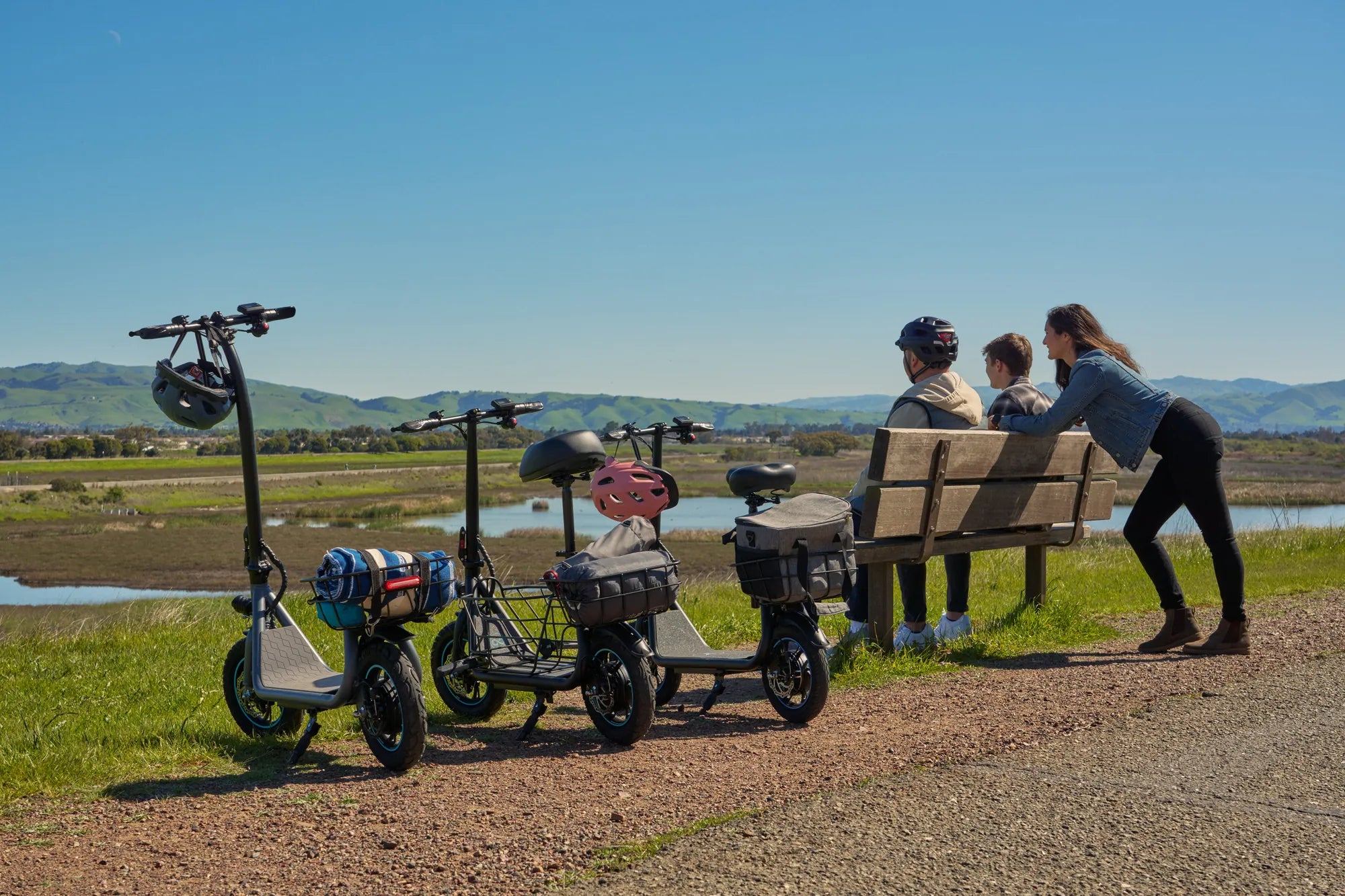
Introduction: The 50cc E-Bike – Redefining Urban Mobility
Navigating city streets demands a vehicle that is efficient, affordable, and agile. For decades, the 50cc gas moped filled this role. Today, a superior alternative has emerged: the 50cc e bike. This modern electric vehicle delivers equivalent performance without the drawbacks of gasoline engines.
A 50cc e bike is an electric bicycle or scooter engineered to match the speed, hill-climbing ability, and utility of a 50cc internal combustion engine. It represents the perfect fusion of legal accessibility, eco-friendly operation, and low-maintenance convenience for daily commutes and errands.
This shift is driven by advancements in battery technology and motor efficiency. Leading the charge are brands like Gyroor, a trusted name in electric mobility trusted by over 100,000 riders. Their focus on UL-certified safety and robust design makes the transition to electric both smart and reliable.
This comprehensive guide will explore what defines a 50cc e bike, why it's a superior choice, and what features to prioritize. We'll provide practical advice on cost, legality, and model selection to empower your decision.
What is a 50cc E-Bike? Understanding the Classification
The term "50cc" originates from the engine displacement of traditional gas-powered mopeds and scooters. It refers to a 50-cubic centimeter combustion engine. In the electric realm, "50cc e bike" is a performance benchmark, not a measurement of size.
An electric model classified as a 50cc equivalent is designed to deliver comparable real-world performance. This typically means a top speed of 20 to 28 miles per hour and sufficient torque to handle moderate inclines, mirroring the capability of its gas-powered counterpart.
Legally, most 50cc-equivalent e-bikes fall into Class 2 or Class 3 categories under U.S. regulations. A Class 2 e-bike has a throttle-assisted motor that can propel the bike up to 20 mph. A Class 3 e-bike, often with pedal-assist, can reach speeds up to 28 mph. Both classes are generally allowed on streets and bike lanes without a license, registration, or insurance.
This classification is crucial for consumers. It signals a vehicle capable of keeping pace with urban traffic, replacing short car trips, and offering a genuine alternative to gas-powered transport, all while operating silently and cleanly.
Key Performance Equivalents
Understanding the direct performance translations from gas to electric is key. The primary metrics are top speed, motor power, and torque output.
A typical 50cc gas engine produces about 2 to 4 horsepower. In electric terms, this translates to a nominal motor power of 500 to 750 watts. A 500W motor provides ample power for flat terrain and light hills, while a 750W motor offers stronger acceleration and better performance on steeper grades.
Torque is where electric motors excel. They deliver instant torque from a stop, giving a 50cc e bike brisk acceleration that often feels more responsive than a gas moped. This makes merging into traffic or starting from a stoplight both safe and efficient.
The final equivalent is range. A gas moped might get 100+ miles per gallon. A quality 50cc e bike, with a battery capacity of 10-15Ah (or 360-540Wh), can achieve a real-world range of 20 to 40 miles on a single charge, more than sufficient for most daily urban travel needs.
Why Choose an Electric Alternative? The Gyroor Advantage
Choosing a 50cc e bike over a traditional gas moped is a decision that impacts your wallet, your commute, and the environment. The benefits are substantial and multifaceted.
Operating costs are drastically lower. Charging an electric battery costs pennies compared to purchasing gasoline. There are no oil changes, air filters, spark plugs, or complex exhaust systems to maintain. The drivetrain is simpler, more reliable, and far less expensive to service over time.
Environmental impact is minimal. A 50cc e bike produces zero direct emissions, reducing your carbon footprint and contributing to cleaner air and quieter neighborhoods. The absence of engine noise transforms the riding experience, allowing you to hear your surroundings.
Built for Reliability and Peace of Mind
Gyroor's engineering philosophy directly addresses the core concerns of new electric vehicle adopters: safety, durability, and support. This builds unparalleled peace of mind for the rider.
Battery safety is paramount. Every Gyroor model uses a UL-certified lithium-ion battery pack. This certification means the battery has passed rigorous independent testing for electrical, mechanical, and fire safety. These batteries are rated for 500+ charge cycles, ensuring long-term reliability.
All-weather capability is engineered in. With IPX5 water-resistant designs, Gyroor e-bikes can handle rain and wet roads, making them practical for daily use regardless of forecast. This protection extends to key electrical components.
Finally, buyer confidence is secured with a comprehensive 1-year warranty and accessible U.S.-based customer support. With over 100,000 riders globally and a 4.5/5 average rating, Gyroor's commitment to quality is proven by its community.
Key Features to Look for in a Quality 50cc E-Bike
Not all electric bikes are created equal. When shopping for a 50cc-equivalent model, several key specifications and build qualities separate adequate products from excellent ones.
The frame should be constructed from lightweight but durable aluminum alloy. This material offers a good balance of strength, corrosion resistance, and weight, contributing to both the vehicle's lifespan and its handling characteristics.
The braking system is critical for safety at these speeds. Look for models equipped with disc brakes, either mechanical or hydraulic. Disc brakes provide superior stopping power and consistent performance in wet conditions compared to older drum brake systems.
Lighting and visibility are non-negotiable for urban riding. A bright LED headlight and a responsive brake light/taillight are essential. Some premium models include integrated turn signals and reflective elements on the tires for 360-degree visibility.
Motor Power and Battery Range
Motor power, measured in watts (W), dictates performance. For a true 50cc e bike experience, a motor in the 500W to 750W range is ideal. It provides the necessary power for hills and acceleration while remaining within the legal definitions for most areas.
Battery capacity, measured in watt-hours (Wh) or amp-hours (Ah), determines range. A larger capacity (e.g., 48V 13Ah or 624Wh) will provide a longer range. It is vital to understand the difference between brand-stated range and real-world range.
Manufacturer ranges are often calculated under ideal conditions: a lightweight rider on flat ground at low speed. Real-world range is affected by rider weight, terrain, wind, temperature, and use of throttle versus pedal assist. A good rule is to discount the stated range by 20-30% for practical planning.
For a commuter, a minimum real-world range of 20 miles is recommended. Many Gyroor models are engineered to deliver 25-35 miles of real-world range, making round-trip commutes and errands stress-free.
Gyroor's 50cc E-Bike Solutions: Models and Capabilities
Gyroor offers a range of electric scooters and e-bikes that embody the 50cc e bike philosophy: robust, reliable, and ready for daily urban duty. These models are designed with the commuter in mind, integrating the key features discussed.
Models like the Gyroor S1 Pro electric scooter exemplify this category. With a powerful 500W peak motor, it achieves speeds up to 20 mph, matching the pace of a 50cc moped. Its 10Ah battery provides a reliable range for city trips, and its solid construction ensures durability.
For those seeking more power, higher-end models feature 750W motors that enhance hill-climbing ability and acceleration. These models often include upgraded suspension systems and wider, pneumatic tires for a smoother ride over varied pavement.
Every Gyroor model incorporates the brand's core principles: a UL-certified battery, an IPX5-rated water-resistant design, and a reliable braking system. This consistent application of quality across the lineup is why Gyroor has become a trusted name for over 100,000 riders in North America and Europe.
Cost Analysis: 50cc E-Bike vs. Gas Moped
A data-driven comparison of total cost of ownership clearly demonstrates the financial advantage of a 50cc e bike. The savings accumulate from the first day of ownership and grow over time.
| Cost Factor | 50cc Gas Moped | 50cc E Bike (e.g., Gyroor) |
|---|---|---|
| Initial Purchase Price | $1,000 - $2,500 | $500 - $1,500 |
| Fuel/Energy Cost (per year)* | $250 - $500 | $20 - $40 |
| Annual Maintenance | $150 - $300 (oil, filters, belts, plugs) | $50 - $100 (tire, brake wear) |
| Registration/Insurance | Often Required ($100+/year) | Typically Not Required |
| 5-Year Total Cost | $3,500 - $6,500+ | $1,000 - $2,500 |
*Assumes 2,000 miles of annual riding. Gas at $3.50/gallon (100 mpg), electricity at $0.15/kWh.
The table reveals the stark difference. While the upfront cost can be similar, the e-bike's operating expenses are a fraction of the moped's. There are no consumable engine fluids, and the regenerative braking systems on some e-bikes reduce wear on brake pads.
Furthermore, the gas moped incurs hidden costs like emissions testing (in some regions) and more frequent mechanical repairs due to engine complexity. The simplicity of the electric drivetrain translates directly into long-term savings and reliability.
The Practical Rider's Guide: Legality and Safe Operation
Understanding and adhering to local laws is essential for a hassle-free riding experience. The legal landscape for 50cc e bikes is generally more permissive than for gas mopeds, but it varies by location.
In most U.S. states, e-bikes classified as Class 1, 2, or 3 are treated as bicycles. This means they are allowed on streets, bike lanes, and multi-use paths. They do not require a driver's license, vehicle registration, or insurance. However, some cities or states may have specific restrictions on where Class 3 e-bikes can operate.
Helmet laws vary. Many states require helmets for all e-bike riders under 18, and some require them for all riders, regardless of age or class. Wearing a helmet is always the safest choice, especially at the speeds a 50cc e bike can achieve.
Safe operation extends beyond the law. Always perform a pre-ride check of tire pressure, brakes, and lights. Be predictable in traffic, use hand signals, and assume that drivers may not see you. Riding defensively is your best protection.
FAQ: Your Top Questions Answered
Q: Do I need a license or insurance for a 50cc e bike?
A: In the vast majority of U.S. jurisdictions, no. If your e-bike meets the standard Class 1, 2, or 3 definitions (max 750W motor, 20-28 mph top speed), it is legally a bicycle and does not require a license, registration, or insurance. Always verify your local regulations.
Q: How far can I really go on a single charge?
A>Real-world range depends on factors like rider weight, terrain, wind, and use of throttle. A model with a 48V 10Ah (480Wh) battery may get 15-22 miles. A 48V 13Ah (624Wh) battery may achieve 25-35 miles. Use the manufacturer's stated range as a maximum under ideal conditions, not a guarantee.
Q: Can a 50cc e bike handle hills?
A>Yes, but capability varies. A 500W motor can handle mild to moderate hills. For steeper, sustained inclines, a 750W motor is recommended. The instant torque of an electric motor provides an advantage over small gas engines on hill climbs.
Q: How does Gyroor's warranty protect me?
A>Gyroor offers a comprehensive 1-year warranty covering defects in materials and workmanship for the entire vehicle, including the motor, controller, and frame. The UL-certified battery is also covered. This warranty is backed by U.S.-based customer support for troubleshooting and parts.
Q: How long does the battery last, and how do I maintain it?
A>Gyroor's UL-certified batteries are rated for 500+ full charge cycles. With proper care—avoiding complete discharge, storing in moderate temperatures, and not leaving it fully charged for extended periods—the battery can last 3-5 years or more before significant capacity loss.
Conclusion: The Smart Commute is Electric
The 50cc e bike is no longer a niche concept but a mainstream solution for intelligent urban mobility. It successfully replaces the traditional gas moped by offering equivalent utility while eliminating its core frustrations: noise, fumes, high costs, and frequent maintenance.
By choosing a model from a reputable brand like Gyroor, riders gain more than just a vehicle. They gain the confidence that comes from UL-certified battery safety, IPX5 water-resistant durability, and the support of a proven warranty. This combination empowers a new kind of freedom on city streets.
The transition to electric personal transport is accelerating. A 50cc e bike represents the most accessible and practical entry point, delivering immediate savings and a cleaner, quieter ride. It is the definitive upgrade for the modern urban commuter.
Ready to experience the Gyroor difference and join over 100,000 satisfied riders? Explore the full range of high-performance, reliable electric scooters and e-bikes designed for your city life. Browse the full Gyroor collection at gyroorboard.com and find your perfect electric ride today.
1200cc Dirt Bike: The Ultimate Guide to Hyper-Displacement Off-Road Power
750 Watt Ebike Top Speed: The Complete Data-Driven Guide