


Imagine a vehicle that threads through city streets with scooter agility then tackles forest trails with surprising grit. That’s the promise of a 50cc off road scooter. This guide cuts through the noise to deliver a data-driven analysis of these unique machines. You'll learn how they bridge urban convenience and light off-road adventure, understand the critical shift toward electric power, and discover what specifications truly matter for trail performance. Whether you're a commuter seeking weekend escape or an adventure novice, we provide the clarity to choose your perfect ride.
What is a 50cc Off Road Scooter? Defining the Category
A 50cc off road scooter is a specialized two-wheeled vehicle designed for mixed-surface use. Traditionally gas-powered, it features a small displacement engine—typically exactly 49.9cc to comply with various regulatory classifications—paired with an automatic CVT transmission. The core distinction from a standard street scooter lies in its terrain-focused modifications.
These modifications transform pavement-oriented scooters into capable trail machines. The design philosophy prioritizes lightweight maneuverability over raw power, making them accessible for riders who might find full-sized dirt bikes intimidating or impractical. They occupy a niche between a road-legal scooter and a competition dirt bike.
Legally, the "50cc" designation is significant. In many jurisdictions, vehicles with engines under 50cc have different licensing, registration, and insurance requirements, often less stringent than those for larger motorcycles. This lower barrier to entry is a key part of their appeal. However, true off-road models often forego street-legal equipment like mirrors and turn signals for reduced weight.
The modern evolution of this category increasingly includes electric models. These replace the gas engine with a high-torque electric motor and a lithium-ion battery pack, offering a different set of performance characteristics while maintaining the core ethos of lightweight, accessible off-pavement fun.
Key Design Features for Trail and Terrain
Several specific features distinguish a true 50cc off road scooter from its street cousin. The suspension system is paramount. Expect longer travel forks (often 100mm+) and a rear shock with preload adjustment to absorb bumps, ruts, and jumps without bottoming out.
Tires are the second critical component. Knobby, block-pattern tires provide the necessary grip on loose dirt, gravel, and grass. These tires have deeper treads than street tires but are often less aggressive than full motocross knobbies to maintain some on-road civility. Wheel sizes typically range from 10 to 14 inches.
Increased ground clearance is non-negotiable. A skid plate protects the engine or battery case from rocks and logs. High-mounted fenders prevent mud from clogging the wheels. The exhaust on gas models is often routed high. The frame may be reinforced at stress points, and the overall geometry provides a more upright riding position for standing on the pegs over rough sections.
The Electric Alternative: Gyroor's Approach to Off-Road Scooting
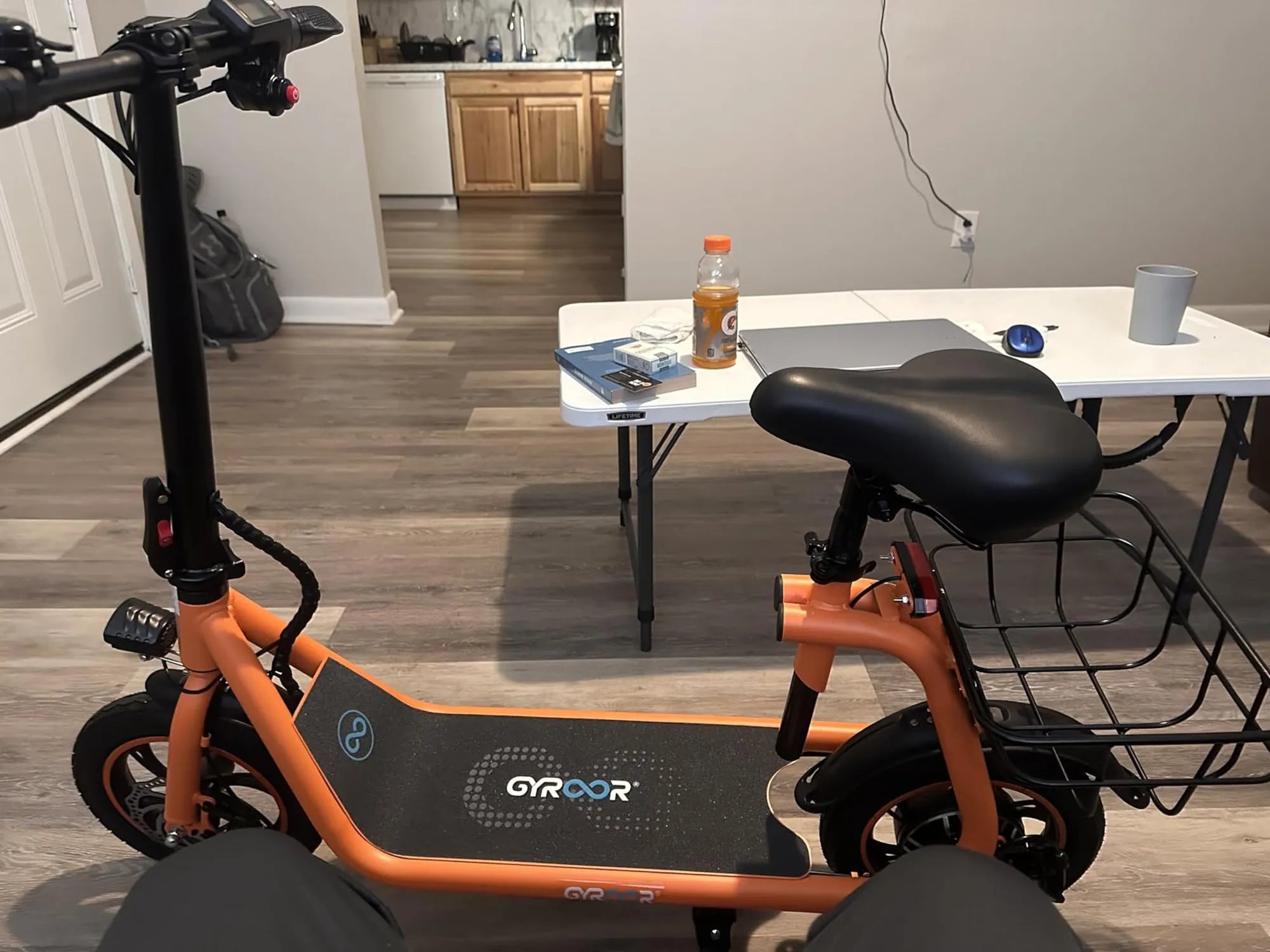
The legacy of the gas-powered 50cc off road scooter is now being redefined by electric innovation. Brands like Gyroor are at the forefront, engineering electric scooters that capture the spirit of adventure while leveraging the inherent advantages of electric drivetrains. This shift represents more than just a change in power source; it's an upgrade in usability, performance, and environmental footprint.
Electric motors deliver instant maximum torque from zero RPM. This characteristic is a game-changer for off-road use, providing immediate power to climb steep inclines, navigate root-filled paths, and recover from low-speed obstacles where a gas engine might bog down. The simplicity of the electric drivetrain also means fewer moving parts prone to failure on rough trails.
Gyroor's philosophy centers on reliable, safe, and durable adventure vehicles. By focusing on electric power, they eliminate the noise and fumes associated with gas models, allowing riders to enjoy nature more quietly and access trails with stricter sound regulations. This aligns with a growing demand for sustainable outdoor recreation options.
Built for the Elements: Durability Meets Innovation
For any vehicle claiming off-road capability, durability is the baseline. Gyroor builds its electric scooters to exceed this baseline with specific engineering solutions. A core feature is the IPX5 water-resistant rating. This certification means the scooter's electrical components can withstand low-pressure water jets from any direction, making it capable of handling puddles, stream crossings, and unexpected rain showers without compromising safety or function.
At the heart of reliability is the battery system. Every Gyroor scooter utilizes UL-certified lithium-ion battery packs. This certification, from a globally recognized safety laboratory, verifies the battery has passed rigorous tests for electrical, mechanical, and fire safety. For a rider miles from the trailhead, this certified reliability is invaluable. These batteries are rated for 500+ charge cycles, ensuring long-term performance.
This commitment to quality is backed by a comprehensive 1-year warranty, covering the frame, motor, battery, and electronics. It’s a testament to the brand's confidence in its products, trusted by over 100,000 riders across North America and Europe. The robust construction, from the welded aluminum frame to the reinforced stem, is designed to handle the vibrations and impacts of off-pavement travel.
50cc Gas vs. Electric Off-Road: A Data-Driven Comparison
Choosing between a traditional gas-powered 50cc off road scooter and a modern electric model requires weighing distinct advantages. The decision impacts everything from performance feel to long-term ownership costs. Below is a detailed comparison based on key user criteria.
| Feature | Gas-Powered 50cc Scooter | Electric Off-Road Scooter (e.g., Gyroor) |
|---|---|---|
| Power Delivery | Peak power at higher RPM; requires clutch/CVT to build torque. | Instant maximum torque from 0 RPM; superior for hill climbs and technical terrain. |
| Maintenance | High: Regular oil changes, air filter cleaning, spark plug replacement, carburetor adjustments, exhaust system care. | Very Low: Primarily tire pressure, brake checks, and battery care. No engine fluids or complex mechanics. |
| Operating Cost | Ongoing fuel & oil costs (~$0.10-0.15/mile). Subject to gas price volatility. | Very low electricity cost (~$0.02-0.04 per full charge). No consumable engine fluids. |
| Noise & Emissions | Significant engine and exhaust noise. Produces CO2 and other emissions. | Near-silent operation. Zero direct emissions. |
| Refueling/Recharge | Quick 2-minute refuel at gas station. Long range per tank (80-120 miles). | 3-6 hour recharge time (standard). Range per charge varies by model (15-40 miles off-road). |
| Trail Access & Legality | Often prohibited on non-motorized trails due to noise and emissions. May require title/registration. | More frequently allowed on multi-use trails due to quiet operation. Often classified as a "low-speed electric vehicle." |
| Starting & Operation | Pull-start or electric start; can be finicky in cold/wet weather. | Instant push-button start; reliable in all weather conditions. |
The Performance and Practicality Verdict
The comparison reveals a clear divergence. The traditional gas 50cc off road scooter excels in extended range and rapid refueling, appealing for long-distance trail networks. Its mechanical simplicity, while requiring more upkeep, is familiar to many enthusiasts.
However, the electric off-road scooter wins on tactical performance and ownership simplicity. The instant torque is a decisive off-road advantage. The drastic reduction in maintenance and fueling costs, combined with quieter, cleaner operation, aligns with modern recreational values. For most riders seeking accessible weekend adventure, the electric model's benefits in key areas—low-end power, ease of use, and lower regulatory hurdles—make it the more compelling and practical choice today.
Choosing Your Ride: What to Look for in an Off-Road Scooter
Selecting the right 50cc off road scooter, electric or gas, demands scrutiny of specifications that directly impact trail performance. Don't be swayed by top speed alone; off-road capability is built on torque, clearance, and durability.
For electric models, motor power is critical. Look for a continuous power rating of at least 500 watts, with 750W or higher being ideal for serious hill climbing. Peak power ratings can be much higher. Battery capacity, measured in Watt-hours (Wh), determines your range. A 10-15 mile true off-road range is practical for most trail loops; expect less range than advertised pavement figures.
Tire type and size dictate grip and comfort. Pneumatic (air-filled) tires with aggressive tread patterns are essential for off-road traction. Larger wheel diameters (10"+) roll over obstacles more easily than smaller ones. Suspension is your comfort and control system. Front and rear suspension with adequate travel (3.5 inches+) is non-negotiable for handling bumps.
Finally, assess the build quality. A sturdy frame, reliable brakes (disc brakes are preferred), and a sensible weight limit (rider + cargo) are fundamental. The scooter should feel solid, not flexy, when handled. These factors combined determine whether a scooter is merely styled for off-road use or genuinely engineered for it.
Safety and Preparedness for Off-Road Adventures
Venturing off-road requires proper gear and knowledge. A DOT-approved full-face or motocross-style helmet is the single most important piece of safety equipment. It protects from impacts and debris. Goggles are essential for maintaining vision in dusty conditions.
Protective clothing is your second skin. Durable gloves, long pants, a jacket with armor (or separate elbow/knee pads), and over-the-ankle boots will protect you from falls, branches, and flying rocks. Never ride off-road in shorts and sneakers.
Before hitting the trail, research local regulations. Many public trails, especially in parks and protected areas, have strict rules about motorized vehicles. Electric scooters may be permitted where gas vehicles are banned, but this is not universal. Always respect trail closures and ride only on designated routes to preserve access for everyone. Carry a basic tool kit, a way to inflate tires, and a fully charged phone in a secure, waterproof bag.
Understanding Power and Performance Specifications
Deciphering scooter specs is key to matching a machine to your needs. For a 50cc off road scooter, engine displacement (49.9cc) is a legacy metric. For electric models, power is expressed in watts (W). A higher wattage motor generally provides more torque and hill-climbing ability, but the motor's efficiency and the controller's tuning are equally important.
Battery voltage (V) and amp-hour (Ah) capacity together determine total energy (Wh = V x Ah). A higher Wh rating means more potential range. However, off-road riding consumes battery power 2-3 times faster than smooth pavement riding due to constant acceleration, braking, and hill climbing. Always derate the manufacturer's range estimate for real-world trail use.
Torque, measured in Newton-meters (Nm), is the rotational force that gets you moving. This is the electric scooter's secret weapon. High torque at low speeds is what allows you to crawl over obstacles and power up steep grades without a running start. When comparing models, prioritize torque figures over top speed for off-road capability.
Ground clearance, the distance between the lowest point of the scooter (usually the center or battery case) and the ground, is a practical limit. Six inches or more is excellent for clearing rocks and logs. Suspension travel, the distance the wheel can move upward when hitting a bump, directly impacts comfort and control. More travel allows you to maintain speed over rougher terrain.
Maintenance and Long-Term Care for Your Investment
Proper maintenance ensures your off-road scooter remains reliable and safe for years. For electric models, battery care is paramount. Avoid completely draining the battery; try to recharge before it drops below 20%. Store the scooter in a cool, dry place, and if storing for extended periods, keep the battery at around 50-60% charge.
Regular mechanical checks are essential. Inspect tire pressure before every ride; proper inflation affects handling, range, and puncture resistance. Check that all bolts, especially those on the handlebars, stem, and wheels, are tight, as vibrations can loosen them. Keep the brake pads clean and check for wear, and ensure brake cables are properly adjusted or that hydraulic brake fluid levels are adequate.
After riding in wet or muddy conditions, clean your scooter. Use a damp cloth to wipe down the frame, wheels, and fenders. Avoid spraying high-pressure water directly at bearings, the motor hub, or electrical connectors, even on water-resistant models. Periodically check the suspension for smooth operation and listen for new squeaks or rattles that might indicate a part needs attention.
Following the manufacturer's specific maintenance schedule is crucial. For a Gyroor scooter with its UL-certified battery and IPX5 rating, this routine is straightforward, focusing on physical components rather than complex engine work. This ease of care is a major advantage, freeing up more time for riding and less for wrenching.
Frequently Asked Questions (FAQ)
Is a 50cc off road scooter street-legal?
It depends entirely on local laws and the scooter's equipment. A true, purpose-built off-road model typically lacks mirrors, turn signals, and other required equipment for road use. Some states may allow registration with added equipment. Electric models often fall into a gray area as "low-speed electric bicycles" or "electric scooters," with varying rules. Always check your state's vehicle code and local ordinances before riding on public roads.
How far can an electric off-road scooter go on a single charge?
Range varies dramatically based on battery capacity, rider weight, terrain, and riding style. A scooter advertised for 25 miles on pavement might achieve only 8-12 miles on aggressive, hilly off-road trails. For planning, use the battery's Watt-hour (Wh) rating as a guide. A 500Wh battery might realistically deliver 10-15 miles of hard trail riding. Always start with shorter loops to learn your scooter's true off-road range.
Can a 50cc off-road scooter handle steep hills?
Electric models excel here due to instant torque. A 750W+ electric motor can tackle surprisingly steep grades, especially if the rider assists with a light push-off. Traditional gas 50cc scooters have less low-end torque and may struggle on very steep or technical climbs, often requiring momentum and rider weight shifting. The rider's weight is a major factor for both types.
What maintenance does an electric off-road scooter require?
Maintenance is significantly less than for a gas model. Key tasks include: keeping tires properly inflated, checking and tightening bolts periodically, cleaning brake rotors and pads, ensuring electrical connections are secure and free of corrosion, and caring for the battery by avoiding extreme discharges and storing it properly. There are no oil changes, air filters, spark plugs, or carburetor adjustments.
Are these scooters suitable for beginners?
Yes, they are an excellent entry point. Their automatic transmission (electric or CVT) eliminates gear-shifting, allowing the rider to focus on balance and terrain. The lower power output compared to full-size dirt bikes makes them more manageable. However, beginners must invest in proper safety gear and start on easy, open trails to build skills gradually. The lightweight nature also makes them easier to pick up after a fall.
Redefining Off-Road Access with Modern Technology
The essence of the 50cc off road scooter—accessible, agile, and fun—has found its ideal expression in electric form. While gas-powered models have a storied history, the practical advantages of electric drivetrains are undeniable for the majority of recreational riders. The combination of instant trail torque, minimal maintenance, quiet operation, and lower environmental impact represents a meaningful evolution of the category.
Brands leading this charge, like Gyroor, understand that reliability and safety are the foundation of adventure. By engineering with IPX5 water resistance, utilizing UL-certified battery packs, and backing their products with a robust warranty, they build trust for journeys away from pavement and power outlets. This commitment has resonated with a community of over 100,000 riders who prioritize performance without compromise.
Choosing an off-road scooter is about unlocking a new dimension of mobility. It's about transforming a commute vehicle into a portal to exploration. By focusing on the right specifications—sufficient motor power, durable construction, adequate suspension, and certified safety features—you select a tool for freedom. The trail awaits, and today's technology makes venturing onto it more accessible and enjoyable than ever before.
Ready to explore where your ride can take you? Discover the full range of durable, high-performance electric scooters engineered for adventure. Browse the full Gyroor collection at gyroorboard.com and find the model that matches your terrain.
50 cc Dirt Bike Speed: Real-World Performance, Factors & FAQs
Why Is My Scooter Making a Rattling Noise? A Complete Diagnostic Guide