

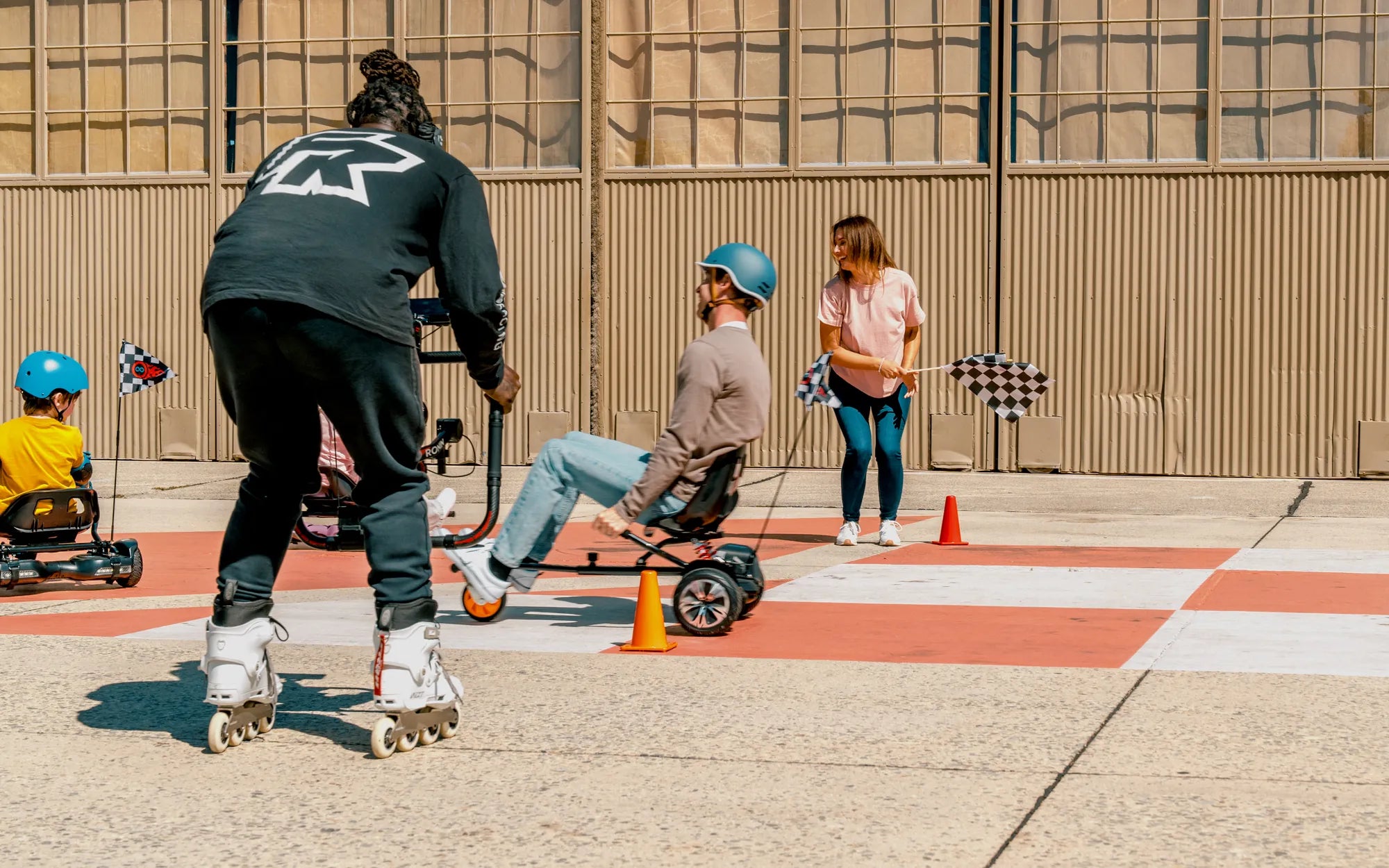
Introduction: Why the 6-Inch Hoverboard is a Game-Changer
Forget bulky, hard-to-transport rides. The 6-inch hoverboard, defined by its wheel diameter, represents the pinnacle of compact, agile personal transportation. It’s engineered for ultra-portability, effortless maneuverability, and is particularly well-suited for younger riders, commuters navigating crowded sidewalks, or anyone with limited storage space. This guide dives deep into why this specific size category has carved out a dedicated following.
Unlike larger models, a 6-inch hoverboard prioritizes a low center of gravity and lightweight design. This translates to a more intuitive and confidence-boosting riding experience, especially for beginners. The core appeal lies in its ability to blend fun with practical utility in dense urban environments.
As a leading brand in electric mobility, Gyroor has committed to advancing this category by integrating top-tier safety and performance features into compact frames. Trusted by over 100,000 riders, Gyroor’s approach ensures that ‘small’ does not mean ‘compromised’ when it comes to build quality or ride enjoyment.
Understanding the 6-Inch Wheel Advantage: Agility Meets Portability
The primary benefit of a 6-inch wheel is a significant reduction in overall weight and size. A typical 6-inch model can weigh 20-25% less than its 10-inch counterpart, making it easy to carry up stairs, onto public transit, or tuck under a desk. This portability is its defining characteristic.
Maneuverability sees a dramatic improvement with smaller wheels. The shorter wheelbase and reduced turning radius allow for incredibly tight spins and precise control in crowded areas. This agility makes it perfect for navigating through indoor spaces, busy park paths, or packed campus quads where larger boards would feel cumbersome.
A lower ride height is another critical advantage. Being closer to the ground inherently feels safer, particularly for new or younger riders. It reduces the fear of falling and makes mounting and dismounting much simpler, lowering the barrier to entry for personal electric vehicles.
It’s important to contrast this with larger models. An 8-inch or 10-inch hoverboard offers greater stability at higher speeds and can handle slightly rougher terrain like packed dirt or gravel paths better. The 6-inch model excels on smooth, paved surfaces and in scenarios where carrying and storing the board is a frequent necessity.
Key Features to Look for in a Quality 6-Inch Hoverboard
Not all compact hoverboards are created equal. Prioritizing safety and durability is non-negotiable. The foremost feature is UL 2272 certification. This rigorous standard tests the entire electrical system, including the battery, charger, and circuitry, for fire and electrical safety. Never purchase a board without this certification.
Motor power directly impacts performance. Look for dual motors, typically in the 250W to 300W range each. This provides adequate torque for quick starts, the ability to climb moderate inclines (around 15 degrees), and a smooth, responsive ride. A single motor or underpowered dual motors will struggle with basic tasks.
The frame construction dictates longevity. A high-quality, lightweight yet robust alloy frame can withstand the bumps and vibrations of daily use without adding excessive weight. Cheaper plastic shells are prone to cracking and offer poor protection for internal components.
Finally, consider the learning modes. A quality board will offer a beginner mode that limits speed and softens acceleration, allowing new riders to build confidence safely. This feature, combined with intuitive gyroscopic sensors, is crucial for a positive first experience.
The Importance of IPX5 Water Resistance for Real-World Riding
An IPX5 water resistance rating transforms a hoverboard from a fair-weather toy into a practical daily transporter. This rating certifies that the unit can withstand water jets from any direction, making it resistant to puddles, wet sidewalks, and light rain.
This protection is vital for the electronics inside. Moisture ingress is a leading cause of failure in personal electric vehicles. An IPX5-rated housing seals the battery compartment, control board, and motor connections, dramatically improving long-term reliability and rider safety.
For the rider, it means peace of mind. You won’t have to anxiously avoid every damp patch on the pavement or end your ride abruptly at the first sign of drizzle. Brands like Gyroor build IPX5 resistance into their designs, recognizing that real-world use is rarely perfectly dry.
It’s a key differentiator from basic models. While no hoverboard should be submerged or ridden through deep standing water, IPX5 rating is the benchmark for a durable, all-conditions compact vehicle that you can depend on.
Performance and Practicality: What to Expect
Setting realistic expectations is key to satisfaction. A 6-inch hoverboard is designed for agility and portability, not for highway speeds or cross-country touring. Its performance envelope is perfectly tailored to its use case.
Speed is typically capped between 7 and 10 miles per hour. This is fast enough to be fun and efficient for short trips but slow enough to maintain control in pedestrian-heavy areas. The lower top speed is a direct result of the smaller wheel size, which rotates more times per mile than a larger wheel.
Range per charge varies by battery capacity but generally falls between 6 and 9 miles on a single charge. This is sufficient for a typical commute to school or work, a long session at the park, or running multiple local errands. Factors like rider weight, terrain, and temperature can affect this range.
Weight capacity is crucial to check. Most quality 6-inch models support riders between 44 lbs and 220 lbs. It’s essential to choose a board rated for your weight to ensure optimal performance, battery life, and motor longevity. Exceeding the limit stresses components and is unsafe.
Charge time is another practical consideration. Using the included UL-certified charger, a full charge from empty usually takes 3 to 4 hours. This makes it convenient to recharge overnight or during a work or school day.
| Specification | Typical 6-Inch Hoverboard | 8-Inch or 10-Inch Hoverboard |
|---|---|---|
| Primary Advantage | Ultra-Portability & Agility | Stability & Rough Terrain |
| Top Speed | 7-10 mph | 10-12 mph |
| Typical Range | 6-9 miles | 8-12 miles |
| Ideal Terrain | Smooth Pavement, Indoors | Pavement, Packed Dirt, Grass |
| Best For | Younger Riders, Tight Spaces, Carrying Frequently | Older Riders, Longer Commutes, Variable Surfaces |
Safety First: Riding Tips and Essential Gear
Safety is the foundation of fun. Always start in the designated beginner or training mode. This mode limits the board’s speed and responsiveness, allowing you to master balance, acceleration, and braking in a controlled environment before progressing to higher speeds.
Protective gear is non-negotiable. A properly fitted helmet is essential. Wrist guards, knee pads, and elbow pads are highly recommended, especially during the learning phase. This gear can prevent the most common injuries associated with falls from personal transport devices.
Practice in a safe, open, and smooth area free of traffic, pedestrians, and obstacles. An empty parking lot, basketball court, or quiet cul-de-sac is ideal. Focus on mounting, dismounting, gentle turns, and controlled stops before attempting to ride in more complex environments.
Regular maintenance ensures ongoing safety. Keep tires properly inflated (for air-filled models) and clean debris from the wheel wells. Store and charge the board in a dry, temperate place. Only use the manufacturer-provided charger, and inspect the board periodically for any signs of damage, loose parts, or unusual battery behavior.
This disciplined approach is complemented by the security of a strong warranty. A comprehensive 1-year warranty on parts and labor, like that offered by Gyroor, provides peace of mind that any manufacturing defects will be addressed, allowing you to focus on enjoying the ride.
Gyroor's Commitment: Your Trusted Partner in Personal Transport
Gyroor’s 6-inch hoverboards embody the brand’s core philosophy: innovative design backed by uncompromising safety standards. Each model is built around a UL 2272 certified system, utilizing battery packs tested for over 500 charge cycles to ensure long-term reliability and eliminate fire risk.
The IPX5 water-resistant construction is not an afterthought but a integral part of the design. This ensures the board can handle the realities of daily use, from morning dew to unexpected sprinklers, protecting your investment and ensuring it’s ready to ride when you are.
Beyond the hardware, Gyroor supports riders with accessible customer service and a clear, reliable 1-year warranty. This commitment has earned the trust of a community of over 100,000 riders across North America and Europe, who consistently rate their experience highly for both product quality and support.
By choosing a brand with these credentials, you’re not just buying a product; you’re investing in a safe, durable, and enjoyable mobility solution. Gyroor’s focus on certified safety and real-world durability makes their 6-inch hoverboard a standout choice in the compact personal transport market.
Frequently Asked Questions (FAQs)
Q: Is a 6-inch hoverboard good for adults?
A: Yes, provided the specific model’s weight capacity supports the rider. Many quality 6-inch hoverboards support riders up to 220 lbs. The compact size is excellent for adults who prioritize portability and plan to ride primarily on smooth surfaces.
Q: Can a 6-inch hoverboard handle rough terrain like grass or gravel?
A: It is not ideal for consistently rough terrain. The small wheels have less surface area and suspension, making them best suited for smooth pavement, tile, or hardwood floors. For grass, dirt paths, or uneven surfaces, an 8-inch or 10-inch model is a better choice.
Q: How do I maintain the battery for maximum lifespan?
A> Avoid completely draining the battery. Try to recharge when it reaches 20-30% capacity. Store the board in a cool, dry place, and avoid leaving it fully charged or fully depleted for extended periods (weeks or months). Always use the manufacturer’s provided charger.
Q: What’s the difference between UL 2271 and UL 2272 certification?
A: UL 2271 applies only to the battery pack itself. UL 2272 is the comprehensive safety standard for the entire self-balancing scooter (hoverboard) system, including the battery, charger, and all electronics. UL 2272 is the critical certification to look for.
Q: How long does it take to learn to ride a 6-inch hoverboard?
A> Most people can achieve basic competency—mounting, riding straight, and gentle turning—within 15 to 30 minutes of practice in beginner mode. Mastering tighter turns, riding backwards, and handling slight inclines may take a few hours of total practice over several days.
Finding Your Perfect Compact Ride
The 6-inch hoverboard stands as the definitive choice for anyone seeking a blend of portability, agile fun, and practical urban mobility. Its lightweight design and easy maneuverability make it uniquely suited for younger riders, commuters, and those with active lifestyles in crowded spaces.
Your purchasing decision should prioritize certified safety features, durable construction, and reliable brand support. By focusing on UL 2272 certification, IPX5 water resistance, and robust motor power, you ensure your investment is both safe and built to last.
Brands that transparently commit to these standards, like Gyroor with its UL-certified batteries and comprehensive warranty, offer more than just a product—they provide a trustworthy foundation for your riding experience. The compact 6-inch hoverboard proves that the most fun often comes in the most portable packages.
Ready to experience the agility and convenience of a premium compact hoverboard? Explore Gyroor’s range of safe, durable, and high-performance models designed for riders who value quality. Browse the full Gyroor collection at gyroorboard.com and find the perfect ride for your next adventure.
Best Scooter for Little Kids: A Parent's Guide to Safe and Fun Rides
Electric Scooter vs Hoverboard for Kids: Which Is the Better Choice?