


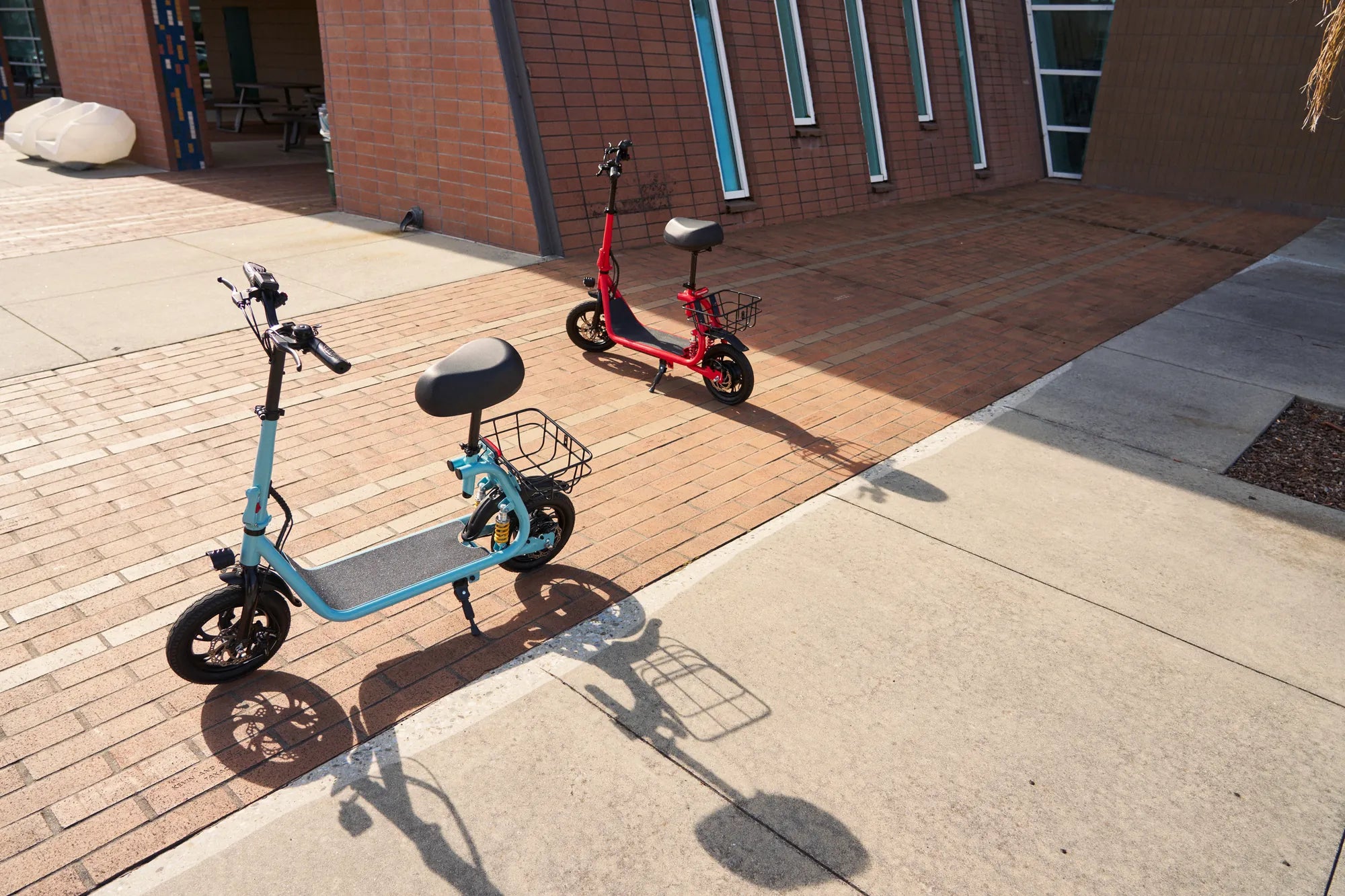
Introduction: The 8-Inch Tire – The Sweet Spot for Urban Mobility?
If you're shopping for an electric scooter, you've likely noticed a dominant trend: 8 inch scooter tires are everywhere. This specific wheel size has become the de facto standard for a vast majority of commuter-focused models for compelling reasons. They represent a calculated engineering compromise, balancing the critical needs of the modern urban rider.
This comprehensive guide will dissect everything you need to know about 8-inch scooter tires. We'll explore their inherent advantages in maneuverability and portability, honestly address their limitations in comfort, and compare them directly to larger and smaller alternatives. You'll learn how to choose between solid and pneumatic versions, understand critical maintenance practices, and finally determine if this popular size is the optimal choice for your daily commute or recreational rides. Let's roll into the details.
Understanding Tire Size: What Does "8-Inch" Really Mean?
The designation "8-inch" refers specifically to the diameter of the wheel, measured from one edge of the tire to the opposite edge, passing through the center. It's the most critical dimension affecting a scooter's ride characteristics. However, it's not the only number that matters. You'll often see a second figure, such as 2.125 inches, which indicates the tire's width.
A wider tire, like a 2.125-inch versus a 1.95-inch, provides a larger contact patch with the ground. This generally translates to better stability and slightly improved shock absorption, as the tire can deform more over imperfections. The trade-off is a minor increase in rolling resistance and weight.
It's crucial to understand that 8 inch scooter tires come in two fundamental constructions: pneumatic (air-filled) and solid (airless). Both types share the same outer diameter to fit the same scooter models, but their internal composition and ride quality differ dramatically. This size is particularly well-suited for both constructions, making it a versatile platform for manufacturers.
When a brand like Gyroor designs a scooter around 8-inch wheels, they are engineering the entire frame, motor power, and suspension (if present) around this specific rolling diameter. The wheel size directly influences the scooter's geometry, deck height, and overall center of gravity, making it a foundational design choice.
The Core Advantages of 8-Inch Scooter Tires
The widespread adoption of 8-inch tires in the electric scooter market is no accident. They deliver a combination of benefits that align perfectly with the primary use case: efficient, convenient urban transportation. For the rider navigating cityscapes, these advantages are tangible every time they ride.
Agility and Maneuverability for City Streets
The smaller diameter of an 8-inch wheel gives the scooter a lower center of gravity compared to models with 10-inch or larger tires. This inherently makes the scooter feel more planted during low-speed turns and easier to handle. The steering response is notably quicker, allowing riders to deftly navigate through tight bike lanes, weave around pedestrians on shared paths, and execute sharp turns at intersections.
This agility is a significant safety feature in dense environments. The ability to make quick, controlled adjustments to your line is invaluable when avoiding road debris, potholes, or unexpected obstacles. For the stop-and-go nature of city commuting, where constant micro-adjustments are needed, the nimbleness offered by 8 inch scooter tires is a major asset.
Portability and Compact Design
Smaller wheels directly contribute to a more compact and lightweight scooter design. When folded, a scooter with 8-inch wheels typically has a smaller overall footprint than one with 10-inch wheels. This makes it significantly easier to carry onto public buses or trains, store under an office desk, or lift into the trunk of a car.
The weight savings, often a pound or more per wheel compared to larger sizes, is a key factor for last-mile commuters who need to carry their scooter for part of their journey. This emphasis on portability is a hallmark of consumer-focused brands like Gyroor, whose commuter models prioritize a balance of performance and easy transportability, understanding that a scooter that's a hassle to carry is a scooter that gets left at home.
Durability and Puncture Resistance (Especially Solids)
For many riders, the fear of a flat tire is a primary concern. This is where 8-inch solid (airless) tires shine. Constructed from a single piece of dense polyurethane or similar polymer, these tires are completely immune to punctures from nails, glass, or thorns. They offer true set-and-forget reliability, which is priceless for ensuring you arrive at your destination on time.
Even the pneumatic (air-filled) 8 inch scooter tires benefit from a robust construction. Their smaller size means the tire's sidewall and tread are under less structural stress than on a larger wheel traveling at the same speed, potentially leading to longer tread life. Furthermore, the compact size makes them inherently more resistant to pinch flats ("snake bites") that can occur when a tire bottoms out on a curb or pothole, as there's less air volume to compress dramatically.
Performance Trade-offs: The Limitations to Consider
To make an informed decision, it's essential to understand the engineering compromises that come with the 8-inch form factor. No single tire size is perfect for all conditions, and the very features that make these tires great for the city can become drawbacks in other scenarios.
Ride Comfort and Shock Absorption
This is the most cited limitation of smaller wheels. Physics dictates that a smaller wheel will encounter an obstacle, like a crack or pebble, more frequently than a larger wheel covering the same distance. Each impact is also more direct, as the tire has a smaller radius to "roll over" the obstruction.
With solid tires, this effect is pronounced, as the rigid polymer transmits nearly all road vibrations directly to the deck and the rider's feet. Even pneumatic 8-inch tires have less air volume to cushion impacts compared to their larger counterparts. The result can be a noticeably rougher ride on poorly maintained streets, brick roads, or surfaces with frequent expansion joints. Quality manufacturers address this by integrating front or dual suspension systems and using deck materials with some flex to dampen vibrations.
Stability at Higher Speeds and Over Obstacles
While agile at low speeds, 8 inch scooter tires can feel less stable at higher speeds (typically above 20 mph) compared to scooters with 10-inch or 12-inch wheels. The smaller contact patch and shorter wheelbase can make the scooter feel more sensitive to rider weight shifts and crosswinds.
Furthermore, their ability to roll over larger obstacles is limited. A deep pothole, a tall curb, or a substantial road seam that a 10-inch wheel might roll over can stop an 8-inch wheel dead, potentially throwing the rider. This requires a more vigilant riding style, constantly scanning the pavement ahead for significant hazards that need to be avoided rather than rolled over. This trade-off underscores their design purpose: they are optimized for paved urban environments, not for off-road or severely degraded terrain.
8-Inch Tires vs. The Competition: A Quick Comparison
Context is key. To truly appreciate where 8-inch tires excel, it helps to compare them directly to other common sizes on the market. The table below outlines the primary differentiators.
| Tire Size | Best For | Key Advantage | Primary Compromise |
|---|---|---|---|
| 8-inch Tires | Urban commuting, portability, agility | Nimble handling, compact fold, puncture-proof (solids) | Ride comfort on rough surfaces |
| 10-inch Tires | Balanced commuting, longer ranges | Superior comfort & stability to 8", good speed stability | Heavier, less portable, higher cost |
| 12-inch+ / Small E-Bike Tires | Off-road trails, maximum comfort | Excellent obstacle clearance, plush ride, high-speed stability | Heavy, bulky, expensive, poor portability |
As the table illustrates, 8 inch scooter tires occupy the strategic middle ground of maximum practicality for the city dweller. They are not the ultimate comfort choice, nor are they the off-road champions. They are the specialized tool for the job of efficient, reliable, and portable urban transit.
Choosing the Right 8-Inch Tire for Your Ride
Once you've decided that the 8-inch size fits your lifestyle, the next decision point is tire type and quality. This choice will have a daily impact on your riding experience and maintenance routine.
Solid vs. Pneumatic: The Eternal Debate
The choice between solid and pneumatic 8 inch scooter tires boils down to a direct trade-off between maintenance and comfort.
Solid Tires: Offer zero maintenance regarding air pressure and are completely puncture-proof. This is the definition of reliability. The downside is a firmer, less forgiving ride, as previously discussed. They are ideal for riders who prioritize absolute hassle-free operation, ride primarily on smooth pavement, and whose scooter may have a suspension system to help absorb shocks.
Pneumatic (Air-Filled) Tires: Provide a noticeably smoother, more comfortable, and often grippier ride due to the cushioning effect of the air. They better conform to road imperfections. The cost is the need for periodic pressure checks (usually weekly) and the ever-present, though small, risk of a puncture. They are best for riders who encounter varied pavement conditions and are willing to perform minimal maintenance for increased comfort.
Tread Patterns and What They Signal
Tread design on 8-inch tires is generally minimalist but functional. Most urban tires feature a slick or nearly slick center with slight grooves on the sides. This design maximizes the contact patch on smooth asphalt for optimal braking and acceleration traction, while the side grooves help channel water away to prevent hydroplaning in wet conditions.
Some models may have a more defined, all-around pattern with small blocks or grooves. This indicates a slightly more all-weather or multi-surface orientation, offering marginally better grip on loose gravel, wet leaves, or dusty paths. However, true off-road knobby tires are almost never found in the 8-inch size, as that application demands larger diameters.
The Importance of Brand and Warranty (Featuring Gyroor)
Not all 8-inch tires are created equal. The quality of the rubber compound, the precision of the molding, and the durability of the construction vary widely. A cheap, poorly formulated solid tire can become brittle and crack, while a low-quality pneumatic tire may have weak sidewalls prone to failure.
This is where choosing a reputable brand with a commitment to quality and safety pays dividends. For instance, Gyroor equips its scooters with durable tires designed to match the performance of their motors and batteries. More importantly, they back the entire vehicle with robust safety features. Their use of UL-certified lithium-ion battery packs ensures safe, reliable power delivery that complements a stable ride. An IPX5 water-resistant rating protects the scooter's vital electronics from rain and splashes, allowing you to ride confidently in damp conditions. Finally, a comprehensive 1-year warranty with accessible customer support provides peace of mind, ensuring that any manufacturing defects are covered. This holistic approach to quality means you can trust the tires as part of a well-engineered system.
Maintenance and Safety Tips for 8-Inch Tires
Proper care extends the life of your tires and, most importantly, keeps you safe. Follow these straightforward guidelines.
For Pneumatic Tires:
1. Check air pressure weekly. Use a bicycle pump with a pressure gauge. Most 8-inch scooter tires require 40-50 PSI, but always check your owner's manual for the exact specification. Under-inflation causes poor handling, increased wear, and pinch flats. Over-inflation makes the ride harsh and reduces grip.
2. Inspect tread and sidewalls regularly. Look for embedded debris (glass, small stones), cuts, or bulges in the sidewall. Remove debris carefully with a pick.
3. Monitor tread wear. Worn tread reduces wet-weather traction. Most tires have wear indicators (small holes in the tread grooves). When the tread is flush with these indicators, it's time for replacement.
For Solid Tires:
1. Visual inspection is key. While they can't go flat, they can still wear down or become damaged. Regularly check for deep cuts, chunks missing from the tread, or excessive wear that has flattened the once-rounded profile of the tire.
2. Listen and feel. A damaged solid tire can develop a flat spot or deformity, causing a rhythmic thumping sound or vibration while riding.
General Riding Safety Advice:
* Actively scan the road ahead for potholes, deep cracks, and raised manhole covers. With 8-inch wheels, avoidance is the best strategy.
* Reduce speed when approaching unavoidable obstacles like tram tracks or drainage grates. Approach them as close to a perpendicular (90-degree) angle as possible.
* After riding through wet conditions, dirt, or sand, wipe down your tires with a damp cloth to prevent premature wear from abrasive materials stuck to the surface.
Conclusion: Are 8-Inch Scooter Tires Right for You?
8 inch scooter tires have earned their dominance in the urban mobility landscape by mastering a specific formula. They deliver exceptional agility for navigating tight spaces, enable compact and portable scooter designs, and—especially in solid form—offer unparalleled, maintenance-free durability. The trade-off comes in ride comfort over rough surfaces and a need for more vigilant obstacle avoidance.
Your decision should hinge on your primary riding environment and personal priorities. If your commute is on relatively smooth city pavement, you value the ability to easily carry and store your scooter, and you want minimal mechanical hassle, then an 8-inch tire, particularly on a well-designed scooter from a brand like Gyroor, is an outstanding choice. It is the tire of the pragmatic city commuter. If your routes are consistently bumpy or you frequently venture onto packed dirt trails, you may want to consider a model with larger, pneumatic tires.
Ready to experience the perfect blend of agility and reliability? Explore Gyroor's range of high-performance electric scooters, many featuring optimized 8-inch tire setups, robust UL-certified batteries, and IPX5 weather resistance, all backed by a trusted 1-year warranty. Browse the full Gyroor collection at gyroorboard.com to find the ideal ride for your urban journey.
Frequently Asked Questions (FAQ)
Q: Are 8-inch scooter tires good for rough roads?
A: They are designed for typical urban pavement. On consistently rough roads, cobblestones, or brick, the ride can be harsh. A scooter with 8-inch pneumatic tires and a front suspension system, like some Gyroor models offer, will significantly improve comfort on uneven surfaces compared to solid tires.
Q: How often do I need to replace 8-inch solid tires?
A: With normal urban commuting, high-quality solid tires can last between 1,000 and 2,000 miles. Replacement frequency depends on rider weight, riding style (hard braking accelerates wear), and road surface abrasiveness. Regular visual inspection for deep cuts or extreme wear is the best indicator.
Q: Can I upgrade my scooter from 8-inch to 10-inch tires?
A: Almost always, no. The scooter's frame, fork, fenders, and sometimes brake calipers are specifically designed to accommodate the 8-inch diameter. Attempting such a modification would likely cause parts to rub or not fit at all, compromising safety. Always consult the manufacturer before considering any wheel modification.
Q: What is the correct tire pressure for my 8-inch pneumatic tires?
A: The exact PSI (pounds per square inch) varies by model and is printed on the tire's sidewall. For most 8-inch scooter tires, the range is 40-50 PSI. Always use a gauge to check and inflate to the manufacturer's recommended pressure when the tires are cold (before riding) for the most accurate reading.
Q: Do 8-inch tires affect the top speed or range of my electric scooter?
A: Indirectly, yes. Smaller wheels have less rotational mass, which can allow for slightly quicker acceleration. However, they also rotate more times per mile than larger wheels, which can place slightly more constant load on the motor. In practical terms, the difference in range or top speed due solely to wheel size is minimal compared to the effects of rider weight, terrain, tire pressure, and battery capacity.
Battery Trike: The Ultimate Guide to Electric Tricycles for Stability & Utility
Best Rated Mobility Scooter: The 2024 Guide to Independent Living