



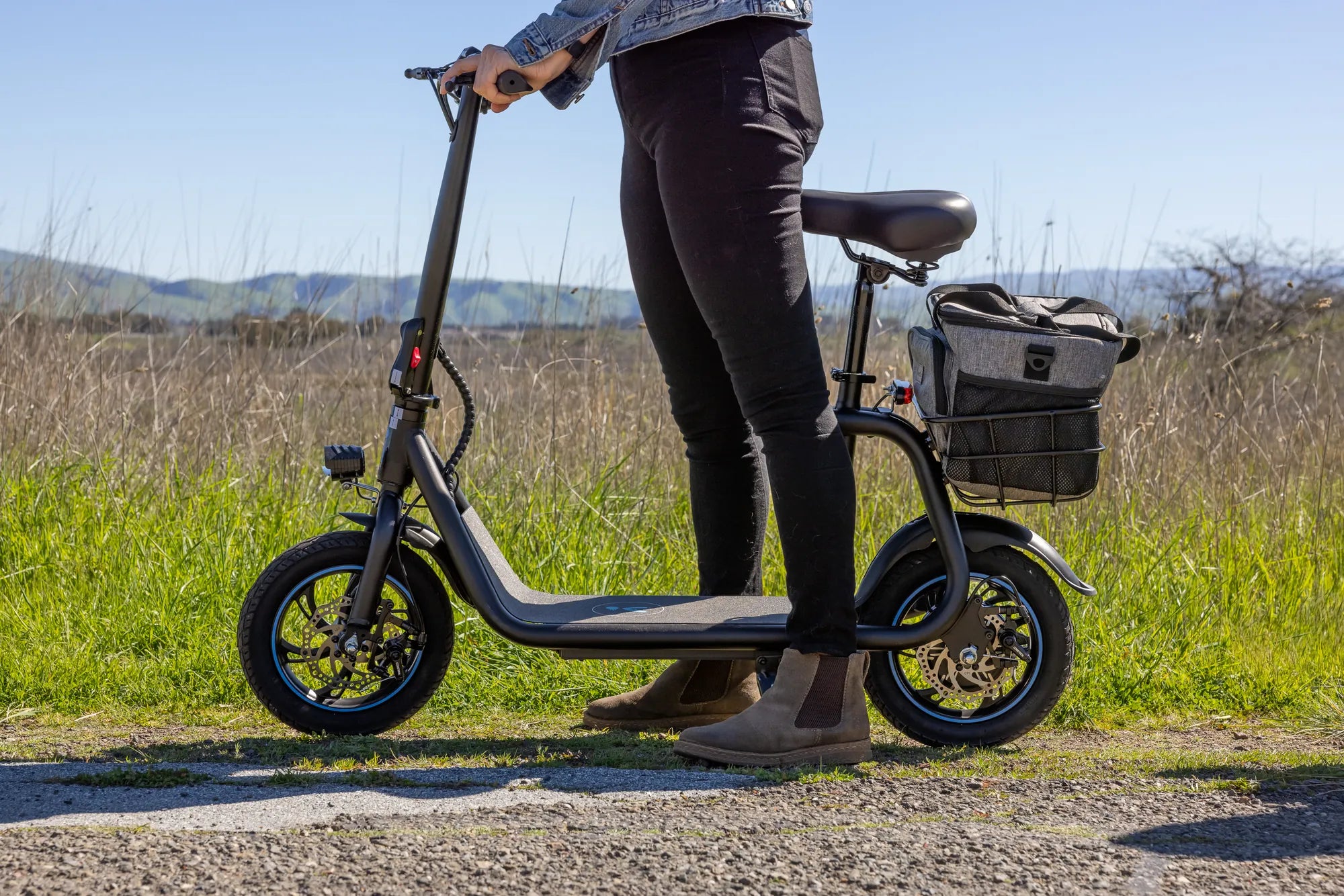
Introduction to the 80 km Mileage Scooter
An 80 km mileage scooter represents a fundamental shift in electric personal transportation. This range, equating to approximately 50 miles on a single charge, moves the category beyond last-mile solutions into the realm of legitimate car replacement for urban and suburban commuters. The core promise is 'range confidence'—the freedom to complete multiple days of typical commuting, run errands, and explore without the constant anxiety of a depleting battery.
For the average rider, an 80 km range translates to over a week of typical use between charges. This capability is powered by significant advancements in battery energy density, motor efficiency, and intelligent power management. It's not just about a bigger battery; it's about smarter integration of all components to deliver reliable, repeatable distance.
This guide will dissect what makes an 80 km mileage scooter possible, how real-world conditions affect performance, and what you should look for in a model designed for this level of endurance. We'll focus on factual engineering and user-centric data to help you make an informed decision.
The Technology Behind the 80 km Range
Achieving a consistent 80 km range is an engineering challenge that requires optimization across several key systems. It begins with a high-capacity battery pack, but equally depends on a highly efficient motor, regenerative braking capabilities, and sophisticated software that manages power delivery based on riding conditions.
The synergy between these components determines whether the scooter can deliver on its range promise in varied environments. Leading manufacturers invest heavily in proprietary management systems that balance performance with endurance, ensuring the scooter doesn't just have a large 'fuel tank' but also uses that fuel intelligently.
Battery Packs: The Heart of Long-Distance Riding
The foundation of any long-range electric scooter is its battery. Capacity is measured in watt-hours (Wh), and an 80 km range typically requires a battery pack of 700Wh to 1000Wh or more, depending on other efficiency factors. The chemistry, almost universally Lithium-ion, must be of high quality to ensure stability over hundreds of charge cycles.
Safety is paramount with these high-capacity packs. UL 2271 certification, as used in all Gyroor scooter batteries, is a critical benchmark. It involves rigorous testing for electrical, mechanical, and environmental safety, ensuring the battery will not overheat, short-circuit, or catch fire under normal or fault conditions. A certified pack is essential for a vehicle you'll rely on daily.
Motor Efficiency & Power Management
The motor must convert electrical energy from the battery into motion with minimal losses. Modern long-range scooters use brushless DC hub motors known for their reliability and efficiency. The controller acts as the brain, regulating power based on throttle input, speed, and load.
Advanced power management systems offer multiple riding modes (e.g., Eco, Standard, Sport). Eco mode limits top speed and acceleration to conserve energy, potentially extending range by 20-30% compared to constant Sport mode use. This software intelligence is what allows a rider to choose between maximum distance or maximum performance for a given trip.
Real-World Factors That Affect Your Scooter's Range
The advertised 80 km range is established under ideal laboratory conditions: a flat surface, moderate temperature, and a lightweight rider maintaining a steady, moderate speed. In the real world, numerous variables can increase or decrease your actual mileage. Understanding these factors is key to setting accurate expectations and planning your journeys.
Manufacturers like Gyroor provide these ideal range figures as a benchmark for comparison between models. Your personal experience will form a unique equation based on the following elements. A savvy rider who manages these variables can often meet or exceed the stated range.
Rider Weight and Cargo
Payload is one of the most significant factors. The scooter's motor must work harder to accelerate and maintain the speed of a heavier load. As a general rule, every additional 10kg (22 lbs) of rider or cargo weight can reduce range by approximately 5-8%. This is why manufacturer tests often use a standard 75kg rider.
If you regularly carry a backpack, briefcase, or groceries, factor this into your range calculations. For commuters, this means your ride home with a laptop might have slightly less range than your morning ride without it.
Terrain and Elevation Changes
Riding on flat, smooth pavement is the most efficient condition. Inclines drastically increase energy consumption. Climbing a moderate hill can consume as much power as riding several kilometers on flat ground. Conversely, downhill sections with regenerative braking can recapture some energy.
Surface type also matters. Riding on rough asphalt, brick, or light gravel creates more rolling resistance than smooth concrete, subtly draining the battery faster. Route planning to minimize steep hills can significantly preserve your range.
Riding Style and Speed
Aggressive riding is the enemy of range. Rapid, full-throttle acceleration from every stop sign uses a burst of energy. Similarly, maintaining a constant speed at the scooter's maximum limit creates high wind resistance and keeps the motor at peak power draw.
A steady, moderate pace with smooth acceleration and deceleration is the most efficient. Using the scooter's Eco mode enforces this style. Frequent stops and starts in city traffic will always yield lower range than a steady cruise on a bike path.
Weather and Temperature
Lithium-ion batteries operate optimally at room temperature (around 20°C or 68°F). In cold weather (below 10°C/50°F), chemical reactions within the battery slow down, reducing its effective capacity and voltage output. You may see a 20-30% range reduction on a cold day.
Wind is another external factor. A strong headwind acts like a constant incline, forcing the motor to expend more energy. Riding at higher speeds also increases aerodynamic drag exponentially, making speed a major range limiter in windy conditions.
Gyroor's 80 km Range Models: A Comparative Overview
Gyroor integrates its core technologies—UL-certified batteries, IPX5 water-resistant designs, and robust motors—into scooters built for real-world endurance. The following overview highlights how different models within their lineup approach the challenge of delivering a reliable 80 km mileage scooter experience for different types of riders.
| Model Feature | Gyroor C1S (Urban Commuter) | Gyroor C1X (Adventure Explorer) |
|---|---|---|
| Target Range | Up to 80 km | Up to 80 km |
| Battery Capacity | 48V 15.6Ah (749Wh) UL-Certified | 48V 20Ah (960Wh) UL-Certified |
| Motor Power | 500W Nominal (Peak 800W) | 500W Nominal (Peak 800W) |
| Key Range Tech | Dual braking with E-ABS, 3 Speed Modes | Regenerative Braking, 3 Speed Modes, Off-road Tires |
| Ideal Use Case | Daily city commuting, smooth pavements | Mixed terrain, light trails, suburban exploration |
| Weight & Portability | Lighter frame, foldable for easy carry | Heavier, rugged build for stability off-road |
Model A: The Ultimate Urban Commuter
The Gyroor C1S is engineered for the daily urban warrior. Its design prioritizes a balance of range, portability, and comfort. The 749Wh UL-certified battery pack is integrated into the deck for a low center of gravity, contributing to stable handling which promotes efficient riding.
Features like a bright headlight, responsive disc brakes, and a clear digital display enhance safety during long commutes. The folding mechanism allows for easy storage in an office or on public transit, making it a true multi-modal solution. For the rider navigating city streets daily, this model turns an 80 km range into a week of worry-free commuting.
Model B: The Adventure-Ready Explorer
The Gyroor C1X is built for those who venture beyond the pavement. It pairs a larger 960Wh battery with features designed to maintain efficiency on variable terrain. The inclusion of regenerative braking is crucial here; on long downhill sections common in hilly areas, it can recapture energy, directly boosting real-world range.
Its wider, air-filled tires and enhanced suspension absorb bumps from uneven surfaces, reducing the need for constant speed adjustments that waste energy. The rugged frame, while heavier, provides the stability needed for confident riding on gravel paths or park trails, ensuring the 80 km potential is accessible even when the road ends.
Maximizing Your Scooter's Range: Practical Tips & Best Practices
Unlocking the full potential of your 80 km mileage scooter requires a combination of proper maintenance, smart riding, and battery care. These actionable strategies directly counter the range-reducing factors discussed earlier, putting you in control of your distance.
Pre-Ride Preparation and Maintenance
Simple checks can have a profound impact on efficiency. Ensure your tire pressure is at the manufacturer's recommended PSI. Under-inflated tires create massive rolling resistance, which can slash your range by 10% or more. Keep your brakes properly adjusted; dragging brakes create constant friction.
Regularly clean your scooter, especially the wheel bearings and motor area, to prevent grime buildup that can cause mechanical drag. A well-lubricated folding mechanism also ensures parts move smoothly without wasting energy.
Smart Riding Techniques for Efficiency
Adopt a 'pulse and glide' technique where possible: accelerate smoothly to your desired cruising speed, then slightly back off the throttle to maintain it. Use the scooter's Eco mode for the majority of your trip, reserving Sport mode only when necessary for safety (e.g., merging into traffic).
Plan your route to minimize stops and steep hills. Use momentum to your advantage—coast to stops rather than braking at the last second. If your scooter has regenerative braking, use it deliberately by applying the brake gently and early to maximize energy recovery.
Optimal Battery Charging and Care
For long-term battery health, avoid regularly draining the battery to 0%. Try to recharge when it drops to 20-30%. Similarly, for storage, don't leave it fully charged for weeks; a 50-60% charge is ideal for battery longevity. Use only the manufacturer-provided charger.
Store your scooter in a temperate environment. Avoid leaving it in direct sunlight on a hot day or in an unheated garage during freezing winters, as extreme temperatures accelerate battery degradation, permanently reducing its capacity and your future range.
Is an 80 km Range Scooter Right for You? (FAQ)
Q: Can I really travel 80 km on a single charge?
A: The 80 km figure is a benchmark under ideal test conditions. Your actual range will be a function of rider weight, terrain, speed, and temperature. For a lightweight rider on flat ground in Eco mode, achieving 80 km is possible. For most, a realistic expectation is 55-70 km, which still represents exceptional range for an electric scooter.
Q: How does an 80 km range translate to my daily commute?
A: Calculate your round-trip commute distance. An 80 km range scooter means you could likely commute for 3-5 days without needing a charge. For a 15 km round-trip, that's a full work week plus extra for errands. This eliminates daily charging and provides a significant buffer for unexpected detours.
Q: What about charging time and infrastructure?
A: A large-capacity (e.g., 960Wh) battery may take 8-10 hours to charge from empty with a standard charger. The convenience is that you charge at home overnight, like a smartphone. For most users, plugging in once or twice a week is sufficient. Public charging infrastructure is growing, but home charging remains the primary method for these vehicles.
Q: Are long-range scooters significantly heavier and less portable?
A: Yes, there is a trade-off. The larger battery adds weight. A scooter with an 80 km range will typically weigh 22-28 kg (48-62 lbs). While most are still foldable, they are less convenient to carry up multiple flights of stairs. The design priority shifts from ultra-portability to stable, long-distance comfort.
Q: Why is Gyroor's UL-certified battery and warranty important for a long-range scooter?
A> Safety and reliability are non-negotiable with high-capacity batteries. UL 2271 certification is the highest standard for fire and electrical safety, giving peace of mind. Coupled with a comprehensive 1-year warranty, it protects your investment. A long-range scooter is a significant purchase; knowing the core system is certified and backed by a strong warranty is crucial for long-term satisfaction.
Conclusion: Embracing Freedom with Confidence
The 80 km mileage scooter is more than a product; it's a key to a new level of urban mobility. It represents the point where electric scooters transition from fun gadgets or last-mile connectors into legitimate primary vehicles for a wide range of commuters and explorers. The technology has matured to deliver not just distance, but the reliability and safety needed for daily dependence.
Success hinges on choosing a scooter built with quality components, like UL-certified battery packs, and backed by a brand with a proven track record. By understanding the real-world factors that affect range and adopting efficient riding and maintenance habits, you can confidently unlock the full potential of long-distance electric riding.
Ready to experience the freedom of an 80 km range? Explore engineering-focused models designed for endurance and safety. Browse the full Gyroor collection, trusted by over 100,000 riders, at gyroorboard.com to find the long-range scooter that matches your journey.
1000W Scooter Motor: The Ultimate Guide to Power, Performance & Practicality
Mobility Scooter: The Ultimate Guide to Features, Safety, and Choosing the Right Model