



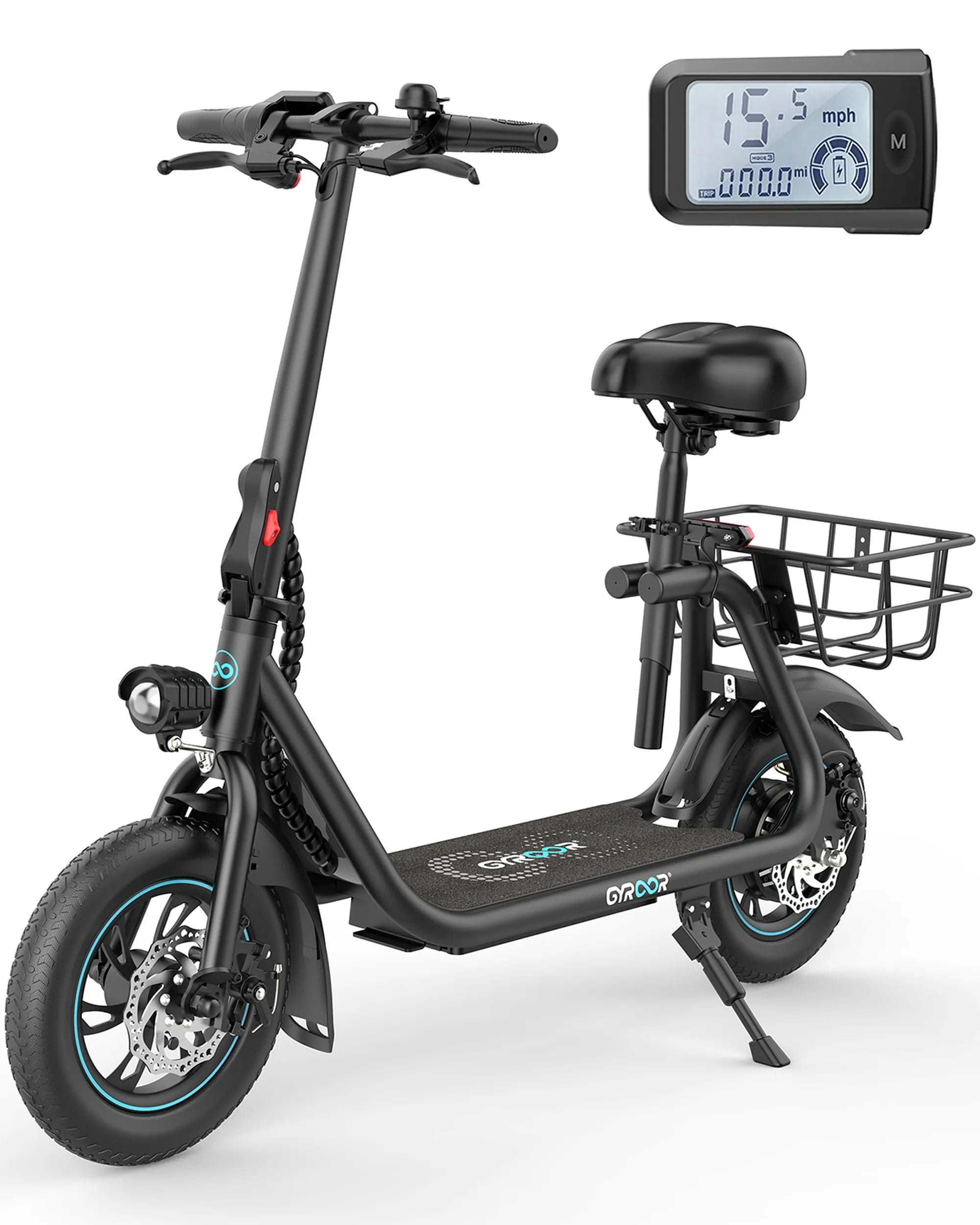
Navigating the Road with Electric Mobility Scooters
Electric mobility scooters have become a transformative solution for personal transport, offering independence and convenience for a wide range of users. Their growing popularity, however, is met with a patchwork of regulations that can confuse even the most diligent rider. The central question for many is straightforward yet complex: Are electric mobility scooters allowed on the road? The answer is not a simple yes or no; it depends entirely on a nexus of local laws, scooter specifications, and intended use.
This guide provides a definitive, data-driven exploration of the rules and regulations governing electric mobility scooter use across the United States. You will learn the critical legal classifications, understand the key factors that determine road legality, and discover practical safety protocols. Whether you're considering a purchase or are already a rider, knowing these regulations is essential for safe, legal, and confident mobility.
Understanding the Legal Classification: Scooter vs. Vehicle
The first and most critical step is understanding how the law categorizes your device. This classification is the primary determinant of where you can legally operate. Electric mobility scooters are distinct from electric stand-up scooters and e-bikes, though they are often incorrectly grouped together.
Many states use the term "Electric Personal Assistive Mobility Device" (EPAMD) to define a device with a maximum speed of 15-20 mph, designed to transport a single person. Other common classifications include "motorized mobility device" or "motorized wheelchair." These classifications often grant access to sidewalks and bike paths, but road access is more restricted.
If a scooter exceeds certain thresholds in speed, power, or weight, it may be reclassified as a "motor vehicle" or "motorized scooter," subjecting it to registration, licensing, and insurance requirements. This is a crucial distinction. For example, a device intended for therapeutic mobility is treated differently from one marketed for general recreation or commuting.
Riders must consult their state's specific vehicle code for the exact definition. Misclassification can lead to fines, confiscation of the device, or liability in the event of an accident. Always start by verifying your scooter's legal identity under local law.
Key Factors Determining Road Legality
Transportation authorities evaluate several technical specifications to determine where an electric mobility scooter can operate. These factors create a framework that separates sidewalk-legal devices from those potentially permitted on roadways.
Maximum Speed and Power Output
Speed is the most significant regulator. Devices capped at 4-8 mph are almost universally restricted to sidewalk use, prioritizing pedestrian safety. Scooters capable of 15-25 mph may be considered for low-speed road use, provided they meet other criteria. Power, measured in watts, often correlates with speed; many jurisdictions set a maximum wattage (e.g., 750W or 1000W) for devices allowed in bike lanes or on streets.
Weight, Dimensions, and Safety Features
The physical profile of the scooter matters. Lighter, smaller models are deemed more suitable for shared pedestrian spaces. Required safety features for road-adjacent use are non-negotiable and typically include: a front headlight and rear taillight, side reflectors, a functioning horn or bell, and a rearview mirror. Some localities may also require turn signals and brake lights.
Operator Requirements and Local Ordinances
Beyond the machine, the operator may face rules. While a driver's license is rarely required for Class 1 or 2 EPAMDs, a minimum age (often 14-16) is common. Crucially, even if state law permits road use, county or city ordinances can override these permissions, banning scooters from certain roads, downtown districts, or parks entirely.
Where Can You Ride? Road, Sidewalk, and Bike Lane Rules
Understanding the typical zoning for electric mobility scooter operation provides a practical map for daily use. Permissions generally fall into three categories: sidewalk, road, and bicycle infrastructure.
Sidewalk Use: This is the most common default for lower-speed mobility scooters. Riders must yield the right-of-way to pedestrians, travel at a safe speed (often "walking pace"), and give an audible signal before passing. Some cities, however, explicitly ban any motorized device from sidewalks.
Road Use: Operating on the roadway is typically restricted to local streets with speed limits of 25-35 mph or less. Scooters are generally prohibited on highways, freeways, and roads with high-speed traffic. When on the road, the scooter and rider are often required to follow all standard traffic laws, including riding in the direction of traffic and obeying signals.
Bike Lanes and Multi-Use Paths: Designated bicycle lanes and paved multi-use trails are frequently a legal and safe compromise. Many state laws explicitly permit EPAMDs in bike lanes. Always check local signage, as some paths may prohibit motorized vehicles to preserve the experience for cyclists and pedestrians.
State-by-State and Local Municipality Variations
There is no single U.S. federal law governing electric mobility scooters; regulation is a mosaic of state and local rules. This makes hyper-local research imperative.
For instance, California's Vehicle Code classifies EPAMDs and allows them on sidewalks, bike paths, and roads with speed limits up to 25 mph, provided they have the required safety equipment. Conversely, New York State law is less defined, leading to stricter local rules in New York City, where their use on sidewalks and streets is heavily restricted.
States like Florida and Texas have enacted laws explicitly addressing "motorized scooters" and "neighborhood electric vehicles," creating specific tiers of regulation based on speed. The table below highlights key differences in a sample of state approaches.
| State | Common Classification | Max Speed for Road/Bike Lane | Sidewalk Allowed? | Key Notes |
|---|---|---|---|---|
| California | EPAMD | 15 mph | Yes, at safe speed | Requires helmet for riders under 18. Explicitly allowed in bike lanes. |
| Florida | Motorized Scooter | 30 mph (on roads ≤ 35 mph) | No | Helmet required for riders under 16. Must have brake lights, turn signals for road use. |
| Texas | Neighborhood Electric Vehicle (NEV) / Motor Assisted Scooter | 25-35 mph (NEV) / 20 mph (Scooter) | Varies by city | NEVs require registration/insurance. Scooter rules are city-specific. |
| New York | Not uniformly defined | Often restricted | Often prohibited in NYC | Heavy local control. NYC effectively bans from sidewalks and streets without DMV registration. |
| Illinois | Motorized Pedalcycle / EPAMD | 20 mph | Yes, unless prohibited locally | Helmet required under 18. Cannot be used on roads with speed limits > 30 mph. |
The takeaway is absolute: before riding, you must check your specific state vehicle code and then your city or county ordinances. A call to the local police non-emergency line or department of transportation can provide clarity.
Safety First: Essential Gear and Riding Best Practices
Legal compliance is only half the equation; proactive safety is paramount. Adopting best practices protects you, pedestrians, and other road users.
Essential Protective Gear: A properly fitted bicycle helmet is non-negotiable, regardless of local law. For road or bike lane use, high-visibility clothing, reflective vests, and active lighting (even during the day) dramatically increase your visibility to drivers.
Defensive Riding Techniques: Always assume you are not seen. Make eye contact with drivers at intersections. Signal your intentions clearly, using hand signals if your scooter lacks turn indicators. Maintain a safe distance from parked cars to avoid "dooring" incidents. Practice braking and maneuvering in a safe, empty area to understand your scooter's handling limits.
Pre-Ride Checks and Maintenance: Conduct a quick pre-ride inspection: check tire pressure, test brakes, ensure lights are functional, and verify the battery has sufficient charge for your trip. Regular maintenance, as outlined in your owner's manual, is crucial for safety and longevity.
Gyroor's Commitment to Compliant and Safe Mobility
Choosing a reputable brand that prioritizes regulatory compliance and safety engineering is a critical first step for any rider. As a leading electric scooter and e-bike brand trusted by over 100,000 riders across North America and Europe, Gyroor designs its products with these complex legal landscapes in mind.
Every Gyroor mobility scooter is engineered to meet or exceed common regulatory benchmarks. This includes precise speed settings that can be adjusted to comply with local limits, integrated lighting systems (headlight, taillight, brake light) for road visibility, and robust horn or bell assemblies. Our focus is on creating reliable vehicles that fit within legal frameworks without sacrificing performance.
Safety is rooted in our core technology. All Gyroor models use UL-certified battery packs, tested for 500+ charge cycles, to ensure unmatched electrical safety and reduce fire risk. Our IPX5 water-resistant designs provide all-weather reliability, ensuring components are protected from rain and splashes. Coupled with a reliable 1-year warranty and US-based customer support, we provide the peace of mind that comes from owning a scooter built for real-world, compliant use.
Frequently Asked Questions (FAQ)
Q1: Do I need a driver's license, registration, or insurance for my electric mobility scooter?
A: In the vast majority of states, for devices classified as EPAMDs or similar (typically under 20 mph), no driver's license, vehicle registration, or insurance is required. However, if your scooter is classified as a motor vehicle or NEV due to higher speed/power, all three may be mandatory. Always verify with your local DMV.
Q2: Can I use my mobility scooter on all public roads?
A: No. Use is almost always prohibited on highways, interstates, and roads with high-speed limits (usually over 35 mph). Legality is typically confined to local residential streets, roads with designated bike lanes, and those with posted speed limits that match your scooter's capability (often 25-30 mph max).
Q3: What is the penalty for riding an electric mobility scooter illegally?
A: Penalties vary by jurisdiction but can include fines (from $50 to several hundred dollars), citations, and in some cases, confiscation of the scooter. Riding illegally can also severely impact liability in the event of an accident.
Q4: Are there age restrictions for riding?
A: Yes, most states impose a minimum age, commonly between 14 and 16 years old, to operate an electric mobility scooter on public property. Some cities may have stricter age limits. Supervision requirements often apply to younger riders.
Q5: How can I find the specific laws for my city?
A> Start by searching online for "[Your State] vehicle code electric personal assistive mobility device" or "[Your City] municipal code scooters." The most reliable method is to contact your local city clerk's office, police department's traffic division, or public works/transportation department directly for written ordinances.
Empower Your Ride with Knowledge and the Right Partner
The freedom offered by an electric mobility scooter is immense, but it is a freedom bound by responsibility. Navigating the question, "Are electric mobility scooters allowed on the road?" requires a commitment to understanding your local regulations, honestly assessing your scooter's capabilities, and prioritizing safety above all else. The rules exist not as barriers, but as frameworks to ensure safe coexistence on our shared pathways and roads.
Investing in a well-built, compliant scooter from a trusted brand is the foundation of a positive experience. Gyroor's commitment to UL-certified safety, regulatory-aware design, and robust customer support provides riders with a dependable platform for exploration and daily travel. Your journey begins with research and is sustained by choosing equipment you can trust.
Ready to explore a range of electric mobility scooters designed for compliance, safety, and reliability? Browse the full Gyroor collection at gyroorboard.com to find the model that matches your mobility needs and local legal requirements.
Scooter City Electric Scooters: The Future of Urban Mobility
Best Electric Scooters Under $150: Your Guide to Affordable Commutes