



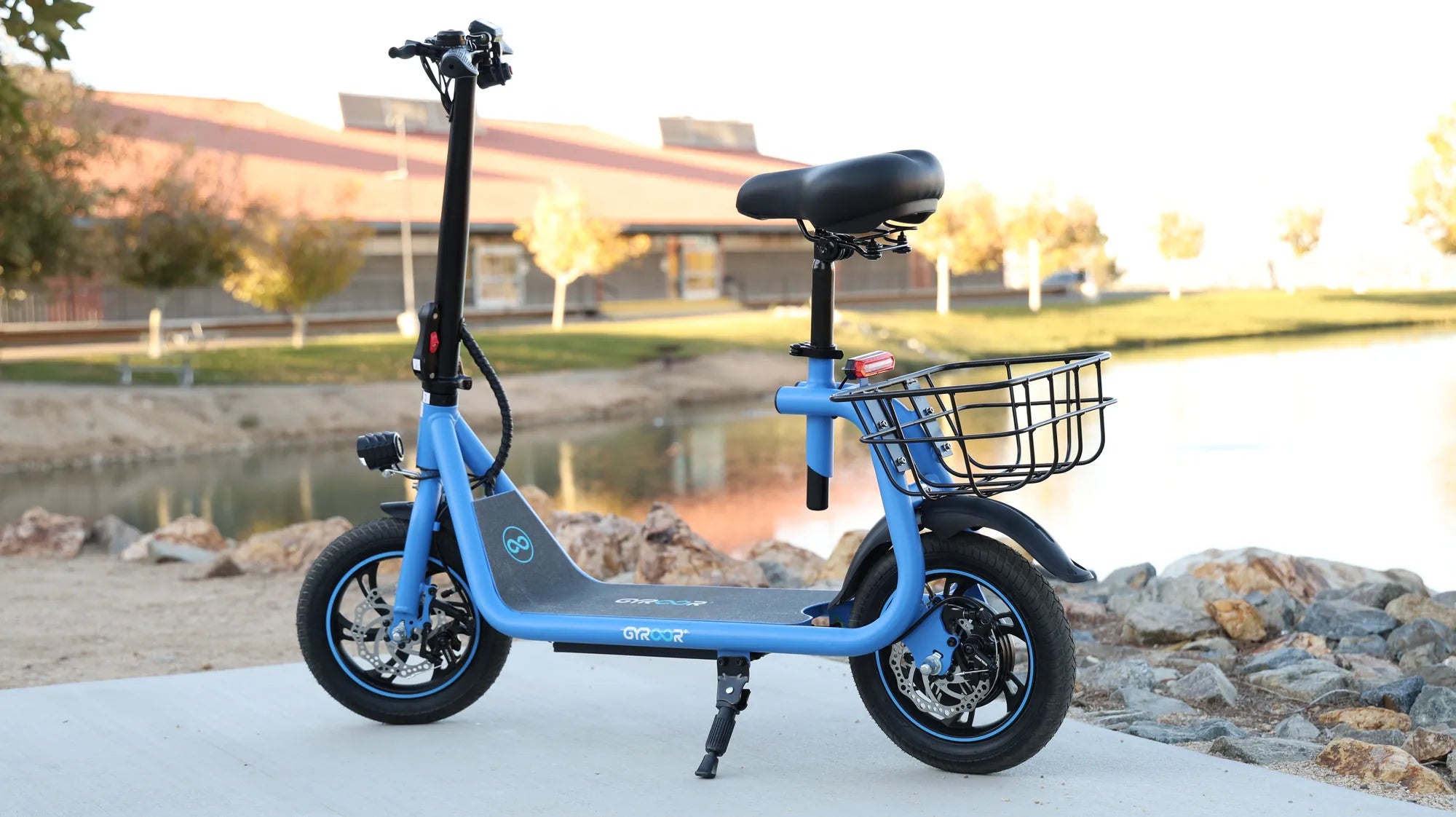
Navigating the Park Path with Your Electric Scooter
You've got your helmet, a fully charged battery, and a beautiful park in mind. But before you zip off, a crucial question arises: Are electric scooters allowed in parks? The answer is rarely a simple yes or no. It's a complex landscape shaped by overlapping jurisdictions, evolving policies, and a focus on safety and preservation.
This guide provides a comprehensive, data-driven exploration of the rules and regulations governing e-scooter use in public parks across North America. We'll dissect the regulatory framework from federal guidelines down to specific park district policies, outline common rule classifications, and provide actionable steps for compliance. The goal is to equip you with the knowledge to ride confidently and respectfully, ensuring you and others can continue to enjoy these shared green spaces.
Understanding the Regulatory Landscape: It's a Multi-Layered System
The legality of riding an electric scooter in a park is not governed by a single, universal law. Instead, it's determined by a hierarchy of regulations. Ignorance of these rules is not a valid defense and can lead to fines or confiscation, making due diligence essential for every rider.
At the highest level, broad classifications are made regarding motorized vehicles on non-motorized trails. These definitions trickle down, influencing state legislation and, most importantly, local ordinances. The most critical rules for any individual rider are those enacted by the city or specific park district managing the land you wish to ride on.
This multi-layered approach means that rules can change dramatically just by crossing a municipal boundary. A scooter legal in a city's downtown may be prohibited in its historic central park, while a neighboring town might welcome them on all paved pathways.
Federal & State Guidelines: Setting the Broad Framework
Federal agencies, primarily the U.S. Department of the Interior through the National Park Service (NPS), set a strong precedent. The NPS generally defines electric scooters as motorized vehicles. Consequently, they are typically prohibited on park trails, boardwalks, and natural surface paths to protect resources and ensure visitor safety.
State laws primarily govern the use of e-scooters on public roads, defining them as vehicles, toys, or personal mobility devices. These definitions can influence how local parks treat them. For instance, a state that classifies e-scooters similarly to bicycles may make it easier for local parks to permit them on bike paths. However, state parks often have their own separate administrative rules that can be more restrictive.
City Ordinances & Park District Rules: Your Essential Local Blueprint
This is where your research must focus. City councils and independent park districts have the authority to create specific rules for the properties they manage. These rules are found in municipal codes, often under sections titled "Parks and Recreation," "Traffic," or "Personal Mobility Devices."
Rules can vary not just by city, but by park within a city. A large, scenic park with pedestrian-heavy walkways might have a full ban, while a linear park with a dedicated bike lane might allow scooters. The only way to know for sure is to consult the official source. A responsible rider always checks the specific regulations for their intended destination.
Common Rule Classifications You Will Encounter
When researching, you'll find park policies generally fall into three broad categories. Understanding these classifications helps you quickly assess the likelihood of permission and plan your ride accordingly.
1. Full Prohibition: Off-Limits Areas
Many parks, especially nature preserves, wildlife areas, and parks with narrow, historic, or congested pathways, implement a full ban on all motorized vehicles, which includes electric scooters. This is primarily for pedestrian safety, noise reduction, and environmental protection.
Natural surface trails (dirt, gravel) are particularly sensitive. Motorized wheels can cause erosion, disturb wildlife habitats, and create conflicts with hikers and equestrians seeking a non-motorized experience. Signs at park entrances will typically display prohibited items, often with a pictogram of a motorized vehicle.
2. Designated Pathways: Where Riding is Explicitly Permitted
An increasing number of urban and suburban parks are designating specific infrastructure for mixed use. This typically includes paved, shared-use paths (often called "multi-use paths" or "greenways") and clearly marked bike lanes within park boundaries.
When allowed, strict conditions almost always apply. These universally include a mandate to yield to all pedestrians and often enforce a speed limit, commonly between 10-15 mph. Riding is expected to be predictable and courteous. Parks with this designation represent the best opportunity for enjoyable e-scooter recreation.
3. Conditional Use: Navigating Restrictions
Some parks allow e-scooters under a specific set of conditions. These can include time-based restrictions (e.g., no riding after dusk), equipment requirements (e.g., helmet, front light, and rear reflector mandatory), or technical specifications.
A growing trend is the adoption of class-based regulations, similar to those for e-bikes. A park may only allow scooters with a motor under 750W (Class 2) that are capable of being propelled without motor power (kick-start). Others may restrict motor assistance to a specific speed, like 20 mph. Knowing your scooter's specifications is key to complying with conditional use rules.
The Gyroor Rider's Guide to Proactive Park Compliance
Being a responsible e-scooter ambassador starts before you even leave home. Following a systematic approach ensures your ride is legal, safe, and respectful, helping to maintain access for all riders.
Pre-Ride Checklist: Verifying Local Rules
First, conduct an online search using precise terms: "[City Name] park electric scooter ordinance" or "[Park District Name] rules and regulations." Look for official .gov or .org websites. Second, if information is unclear, call the parks and recreation department directly. Third, upon arrival at the park, scan for posted signage at all main entrances and trailheads.
Document your findings. A note on your phone confirming the rule and its source can be helpful if you need to clarify with park staff. This proactive step takes minutes but prevents potential headaches and supports the positive image of the e-scooter community.
Responsible Riding Etiquette in Shared Spaces
When riding on a permitted path, your behavior dictates long-term access. Always control your speed, especially around blind corners and crowded areas. Use an audible signal—a bell or a polite verbal cue like "passing on your left"—well before overtaking pedestrians or cyclists. In dense crowds, the safest and most courteous action is to simply dismount and walk.
Stay strictly on paved surfaces. Do not cut across grass, flower beds, or natural areas. Respect all wildlife by maintaining a quiet, slow pace and keeping your distance. This etiquette is non-negotiable for preserving both the park environment and riding privileges.
Why Gyroor Engineering Supports Compliant and Safe Park Use
Choosing a scooter from a reputable brand like Gyroor is a foundational step in responsible riding. Gyroor's commitment to quality and safety directly aligns with the requirements of many park regulations. For instance, all Gyroor models feature UL-certified battery packs, addressing a core safety concern for parks and public spaces regarding fire risk from substandard electronics.
Furthermore, models with IPX5 water-resistant construction allow you to safely navigate damp morning paths or recover from a sudden drizzle without damaging sensitive components, ensuring reliability. The reliable speed control and braking systems on Gyroor scooters give riders predictable performance essential for adhering to path speed limits. With a robust 1-year warranty and a reputation trusted by over 100,000 riders, a Gyroor scooter provides the dependable performance needed for rule-compliant park exploration.
Potential Consequences of Non-Compliance
Ignoring park regulations is not a minor infraction. Enforcement is increasing as e-scooter popularity grows. Consequences are designed to deter behavior that threatens safety and park integrity.
The most common outcome is a citation and fine, which can range from $50 to several hundred dollars depending on the jurisdiction and severity. In more stringent parks or for repeat offenses, park authorities or law enforcement have the right to confiscate your scooter. You would then have to pay additional fees to reclaim it.
Beyond legal penalties, irresponsible riding damages the reputation of all e-scooter users. It can lead to stricter bans, closing off beautiful parks to the entire community of riders. The stakes extend beyond a single fine to the future of the activity itself.
Comparison of Common Park Pathway User Rules
| Pathway Type | Typical E-Scooter Status | Common Stipulations | Primary Concern |
|---|---|---|---|
| Natural Surface Hiking Trail | Almost Always Prohibited | Full ban on motorized vehicles. | Erosion, wildlife disturbance, user safety conflict. |
| Paved Multi-Use Path (Greenway) | Often Permitted with Conditions | Must yield to pedestrians; speed limit (e.g., 15 mph); helmet may be required. | Managing speed differentials between user groups. |
| Designated Bike Lane within Park | Frequently Permitted | Follow bicycle rules; no riding on sidewalk adjacent to lane. | Integration with cycling traffic. |
| Park Sidewalk/Congested Plaza | Usually Prohibited | Dismount and walk zones. | Pedestrian safety and right-of-way. |
| Boardwalk or Pier | Typically Prohibited | Ban on wheels or motorized devices. | Preservation of structure, noise, and congestion. |
How to Advocate for Sensible E-Scooter Park Policies
If your local parks have restrictive bans, constructive advocacy can help. Engage with your park district or city council during public comment periods for master plan updates or ordinance revisions. Present data-driven arguments: cite studies on e-scooters reducing car trips to parks, emphasize their role in equitable mobility, and highlight model rules from other cities that successfully integrate scooters.
Propose pilot programs for specific, suitable pathways. Demonstrate the responsible rider community by organizing clean-up rides or safety education events. Advocacy grounded in responsibility and collaboration is far more effective than opposition.
Planning Your Perfect Park Ride: A Step-by-Step Summary
Start by identifying parks in your area with paved, multi-use pathway infrastructure. Research their official rules online and note any speed or class restrictions. Charge your Gyroor scooter fully and perform a quick safety check (tires, brakes, lights). Plan your route within the park to stay on permitted paths.
Time your visit for off-peak hours, like weekday mornings, for a more relaxed ride. Pack water, use your helmet, and ensure your phone is charged. Once there, double-check signage, ride with utmost courtesy, and be prepared to dismount in busy sections. Following this process guarantees a fun, stress-free, and lawful experience.
Frequently Asked Questions (FAQ)
Q: Are electric scooters allowed in U.S. National Parks?
A: Generally, no. The National Park Service typically classifies e-scooters as motorized vehicles, prohibiting them on trails and in wilderness areas. They are usually restricted to paved roads open to public vehicle traffic. Always check the specific park's website before your visit.
Q: Can I ride my e-scooter on a park's bike trail?
A: It depends entirely on the local managing agency's definition. Some parks explicitly include "electric scooters" in the list of devices allowed on bike trails, while others do not. Never assume; always verify with the official source.
Q: Does the speed or wattage of my scooter affect its legality in a park?
A: Yes, increasingly so. Some jurisdictions adopting class systems may only allow lower-speed, lower-wattage devices (e.g., under 20 mph and 750W) on multi-use paths. High-performance scooters may be restricted to roadways only.
Q: What's the single best way to find the rules for my local park?
A: Search for the official website of the city or park district that owns and operates the park. Look for a "Code of Ordinances," "Park Rules," or "Recreation" section. A direct phone call to the parks department office is also a highly reliable method.
Q: Why are e-scooters often banned from park sidewalks?
A> Sidewalks are designed for pedestrian travel at walking speeds. E-scooters traveling at 15+ mph create a significant speed differential, increasing the risk and severity of collisions. The ban prioritizes pedestrian safety and comfort in high-foot-traffic areas.
Your Park Adventure Awaits—Ride Informed and Ride Right
The question "Are electric scooters allowed in parks?" opens the door to responsible and joyful exploration. While the regulatory map is complex, it is navigable with careful research and a commitment to courteous conduct. By understanding the layered rules, preparing before you ride, and choosing a reliable, well-engineered scooter, you unlock the potential to experience parks in a vibrant new way.
Embrace your role as an ambassador for the riding community. Your actions on the path directly influence how parks are shared today and how policies may evolve tomorrow. The freedom to glide through a scenic park is a privilege maintained through collective responsibility. Now that you're equipped with the knowledge, it's time to plan your next outing. For a scooter built with the safety, reliability, and performance that responsible park riding demands, explore the range of UL-certified, feature-rich models designed for real-world adventures.
Ready to explore with confidence? Browse the full Gyroor collection of electric scooters and e-bikes, trusted by over 100,000 riders, at gyroorboard.com.
Top Range Electric Scooters: The Ultimate Guide to High-Performance Rides
Why Are Electric Scooters Illegal in Scotland? Exploring Legal & Safety Concerns