



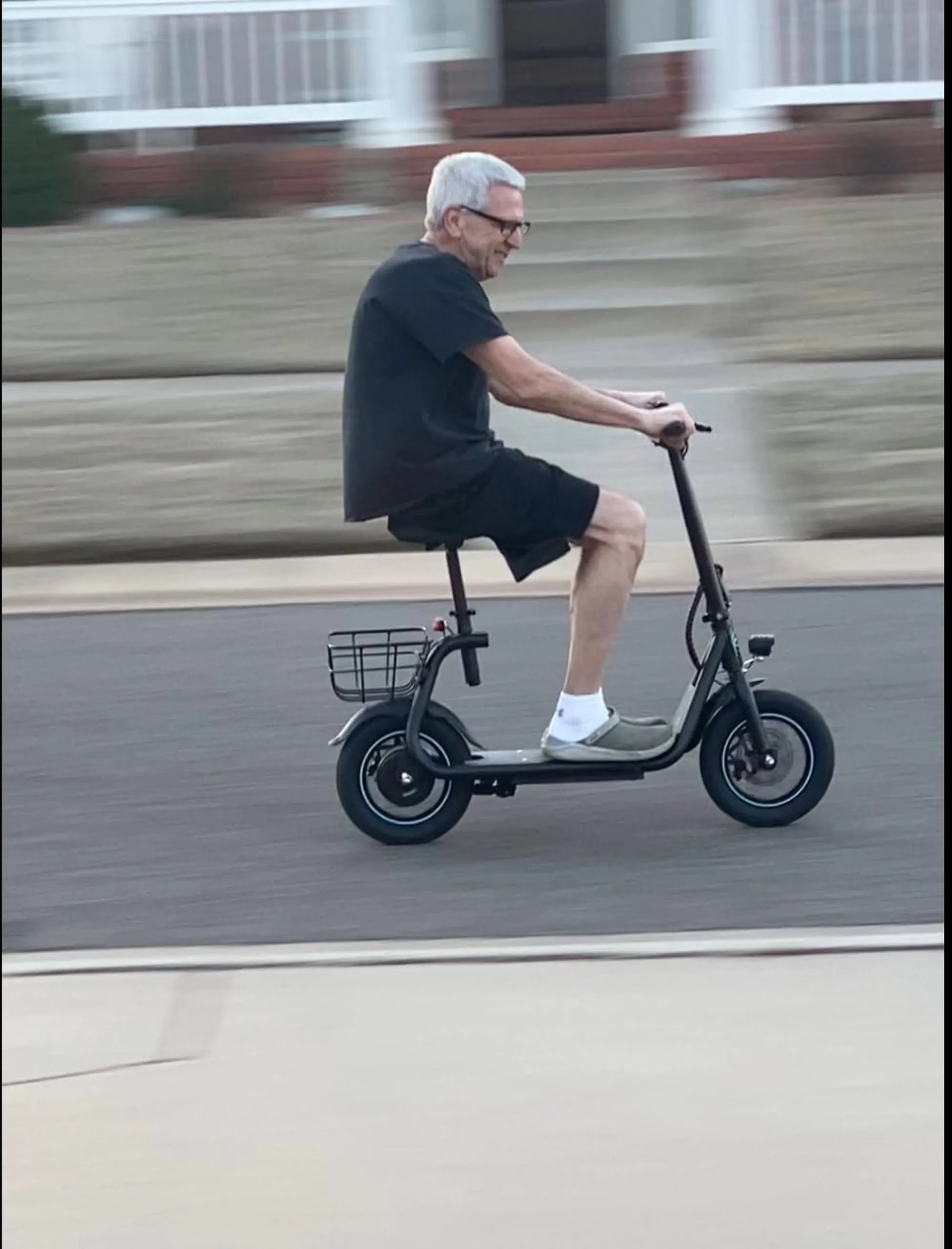
Navigating NYC's Multi-Modal Commute: Scooters and Buses
For countless New Yorkers, the daily commute involves a puzzle of transportation modes. The bus gets you close, but that final half-mile to your office, apartment, or subway station can feel like a chasm. This is where the electric scooter has emerged as a transformative last-mile solution. But a critical question remains for efficient trip planning: Are electric scooters allowed on buses NYC? The answer is nuanced, governed by specific Metropolitan Transportation Authority (MTA) regulations that every rider must understand. This guide provides the definitive, rule-based breakdown you need to combine your e-scooter with the city's extensive bus network legally and courteously.
Navigating the city's rules requires clarity, not guesswork. The core policy hinges on one key characteristic: foldability. Understanding this distinction is the difference between a smooth, integrated journey and being denied boarding. We will dissect the official MTA and DOT regulations, translate them into practical boarding etiquette, and examine the scooter specifications that ensure compliance. With over 100,000 riders trusting brands like Gyroor for urban mobility, selecting the right tool for a multi-modal commute has never been more important.
The Official Rules: MTA and DOT Regulations Explained
The authority governing New York City's public buses is the Metropolitan Transportation Authority. Their rules explicitly address personal mobility devices. Contrary to popular belief, there is no blanket "yes" or "no." The regulation is specifically designed to ensure safety and prevent obstruction in the confined space of a bus.
The overarching principle is that any personal conveyance must not block aisles, doors, or seating areas. This is a non-negotiable safety mandate. The policy differentiates sharply between devices based on their design and portability when not in use. It's essential to know where your device falls within these categories before you attempt to board.
The MTA's Foldable Device Policy
The MTA's official stance permits foldable bicycles and foldable electric scooters on all local and Select Bus Service buses. This permission is granted at the discretion of the bus operator (driver). The key condition is that the device must be folded and stored so it does not block pathways or inconvenience other passengers.
This means the answer to are electric scooters allowed on buses NYC is a conditional "yes," provided your scooter is foldable. The driver has the final say, and their primary concern is maintaining a safe, accessible environment for all. A scooter that is merely leaned against a seat or partially folded will not meet this standard.
What About Non-Foldable E-Scooters and E-Bikes?
Non-foldable electric scooters and electric bicycles are not permitted on MTA buses. Their size and rigid structure make it impossible to store them safely without obstructing the aisle, even if they are powered off. This rule exists purely for safety and operational efficiency.
This prohibition aligns with NYC Department of Transportation (DOT) rules for where these devices can operate. Non-foldable e-scooters and Class 1, 2, and 3 e-bikes are legal on city streets and in bike lanes, but they cannot transition to the bus portion of your trip. This separation underscores the importance of choosing a truly portable, foldable design if you plan to integrate with public transit.
A Practical Guide to Boarding the Bus with Your E-Scooter
Knowing the rule is only half the battle; practicing proper etiquette ensures a smooth experience for you, the driver, and your fellow passengers. Following an unwritten protocol dramatically increases the likelihood of a hassle-free boarding every time.
The goal is to transform your scooter from a vehicle into a compact, manageable package before you even step onto the bus curb. Your actions should communicate to the driver that you understand the rules and prioritize everyone's safety and comfort.
Before You Board: The "Fold and Secure" Protocol
As you approach the bus stop, begin your preparation. First, power off your electric scooter completely. Engage any electronic locks or parking brakes if your model has them. This prevents accidental throttle engagement.
Next, execute the fold. Deploy your scooter's folding mechanism fully so that it is in its most compact state. Secure any collapsible handlebars or stems. If your scooter has a latch or safety lock for its folded position, engage it. The device should be a single, tidy unit—not something with parts that could snag or swing open.
During the Ride: Courtesy and Safety
Once onboard, your folded scooter is your responsibility. The ideal placement is on your lap, if space allows. Alternatively, you can place it vertically between your legs on the floor, ensuring it's tucked fully under your seat or within your immediate footspace.
Never place your scooter on a separate seat, especially during peak hours. Do not let it block the aisle, wheelchair area, or doors. Be mindful of other passengers when moving or adjusting it. Your scooter should be invisible to the bus's operation, creating no additional burden for the driver or riders.
Why a Foldable Design is Non-Negotiable for NYC Transit
The MTA's rule makes foldability the critical differentiator for a transit-compatible scooter. But not all folding mechanisms are created equal. The design must be fast, secure, and result in a genuinely portable form factor.
A good folding mechanism should be a one-step or two-step process that doesn't require tools. It should also feature a reliable locking pin or latch that prevents the scooter from accidentally unfolding while carried. The folded dimensions should be compact enough to be manageable in a crowded space.
Weight is another crucial factor. You will need to carry the folded scooter for short distances—up bus steps, down aisles, and potentially through a subway station. A scooter weighing over 40 lbs can become a significant burden, making a lightweight, durable frame constructed from aluminum alloys a key feature to seek.
Choosing the Right E-Scooter: Features That Matter for NYC
Selecting an e-scooter for a New York commute involves more than just foldability. The urban environment demands durability, safety, and all-weather capability. Your scooter must handle potholes, bridge grates, rain puddles, and daily wear and tear.
Battery safety is paramount, especially when bringing the device into shared public spaces. Look for scooters equipped with UL-certified battery packs. This independent certification means the battery has passed rigorous tests for electrical, mechanical, and fire safety, offering peace of mind on a crowded bus.
Water resistance is equally important. A rating of IPX5 or higher means the scooter's electronics can withstand low-pressure water jets from any direction, protecting it from rainy commutes and street spray. Never compromise on this for a city where the weather changes in an instant.
Gyroor: Engineered for the NYC Multi-Modal Commuter
As a leading electric scooter and e-bike brand trusted by over 100,000 riders across North America and Europe, Gyroor designs its products with real-world urban challenges in mind. Their models directly address the specific needs of an NYC bus rider.
Gyroor scooters feature intuitive one-step folding systems that create a compact, carryable package in seconds, directly satisfying the MTA's foldability requirement. They utilize UL-certified battery packs tested for 500+ charge cycles, ensuring safety and longevity. With IPX5 water-resistant designs, they're built for the city's unpredictable weather.
Furthermore, their robust construction—featuring reinforced stems and wide, air-filled tires—absorbs the shocks of rough pavement, while the reliable 1-year warranty provides long-term security. For a commuter asking are electric scooters allowed on buses NYC, choosing a brand that prioritizes compliant design, safety, and durability is the first step to a seamless journey.
Comparison: Top Scooter Features for Bus Integration
This table compares the essential specifications that determine how well an electric scooter integrates with NYC's bus system and urban environment.
| Feature | Why It Matters for NYC Buses | Ideal Specification |
|---|---|---|
| Folding Mechanism | MTA compliance; ease of carrying and storage. | One-step, tool-free fold with secure locking latch. |
| Folded Dimensions | Must be manageable in a confined bus aisle. | Under 45" in length; compact and balanced. |
| Weight | You must carry it up bus steps and hold it. | Under 35 lbs for optimal portability. |
| Battery Certification | Safety for you and others on public transit. | UL 2271 or UL 2843 certification. |
| Water Resistance Rating | Protection from rain and street spray. | IPX5 or higher. |
| Tire Type | Comfort and traction on rough city streets. | Pneumatic (air-filled) or hybrid tires. |
| Warranty & Support | Peace of mind for daily heavy use. | Minimum 1-year comprehensive warranty. |
Beyond the Bus: Subways, Trains, and Final Mile Tips
The same MTA foldable device policy generally applies to the New York City Subway. Folded bicycles and scooters are allowed at all times, though it's considerate to avoid peak rush hours (7-10 AM, 4-7 PM) if possible. On Metro-North and LIRR trains, policies can vary; always check the specific carrier's website, but folded devices are typically permitted in designated areas.
For the true last mile, remember riding etiquette. Do not unfold and start riding your scooter while still on bus property or directly in front of bus doors. Move to a safe area on the sidewalk first. Always obey local traffic laws, ride in bike lanes where available, and yield to pedestrians. Your scooter is a powerful tool for efficiency, but it must be used responsibly.
FAQ: Your Electric Scooter and NYC Bus Questions Answered
1. Can I bring my e-scooter on the subway?
Yes, the MTA's policy for foldable devices extends to the subway system. Your electric scooter must be fully folded, and it's courteous to avoid the most crowded rush-hour trains.
2. What if the bus driver says I cannot board with my folded scooter?
The driver's discretion is final. If denied, do not argue. It may be due to exceptional crowding or a specific safety concern. Have a backup plan, such as a nearby Citi Bike station or the willingness to complete your trip solely by scooter.
3. Are there official size or weight limits?
The MTA does not publish explicit numerical limits. The practical limit is the "does it block the aisle?" test. A scooter that is overly bulky or heavy when folded may be denied. Aim for a model under 40 lbs with compact folded dimensions.
4. Does this policy apply to express buses?
Yes, the policy applies to all MTA-operated local and express buses (e.g., the SIM, BM, QM series). The same rules of discretion and non-obstruction apply.
5. Can I charge my scooter on the bus?
Absolutely not. Do not use any public bus or subway outlet to charge personal devices. This is a safety hazard and is prohibited. Ensure your scooter is charged before beginning your journey.
6. Is a helmet required to ride an e-sooter in NYC?
For riders under 16, a helmet is legally required. For adults, it is not mandated by law but is strongly recommended as a critical safety measure by the NYC DOT and all responsible brands.
Your Ticket to a Seamless, Connected Commute
Successfully integrating an electric scooter with NYC's bus system is a straightforward process when you know the rules and choose the right equipment. The central question—are electric scooters allowed on buses NYC—boils down to a simple formula: a fully foldable scooter plus considerate rider etiquette equals a green light for multi-modal travel. This combination unlocks unprecedented flexibility, allowing you to bypass traffic, reduce your carbon footprint, and conquer the last-mile gap with ease.
Investing in a reliable, compliant scooter from a reputable brand is the foundation of this strategy. With features like UL-certified batteries, robust water resistance, and a trustworthy warranty, you gain not just a vehicle, but a dependable commuting partner. Embrace the freedom of connected travel, where your journey is limited only by your imagination, not by the constraints of a single mode of transport.
Ready to transform your NYC commute? Explore a range of high-performance, transit-ready electric scooters designed for the demands of the city. Browse the full Gyroor collection, featuring UL-certified, IPX5 water-resistant models with intuitive folding systems, at gyroorboard.com and find the perfect partner for your journey.
Gainesville Electric Scooters: The Future of Urban Mobility
Cheap Good Quality Electric Scooters: The Ultimate Guide to Affordable Rides