



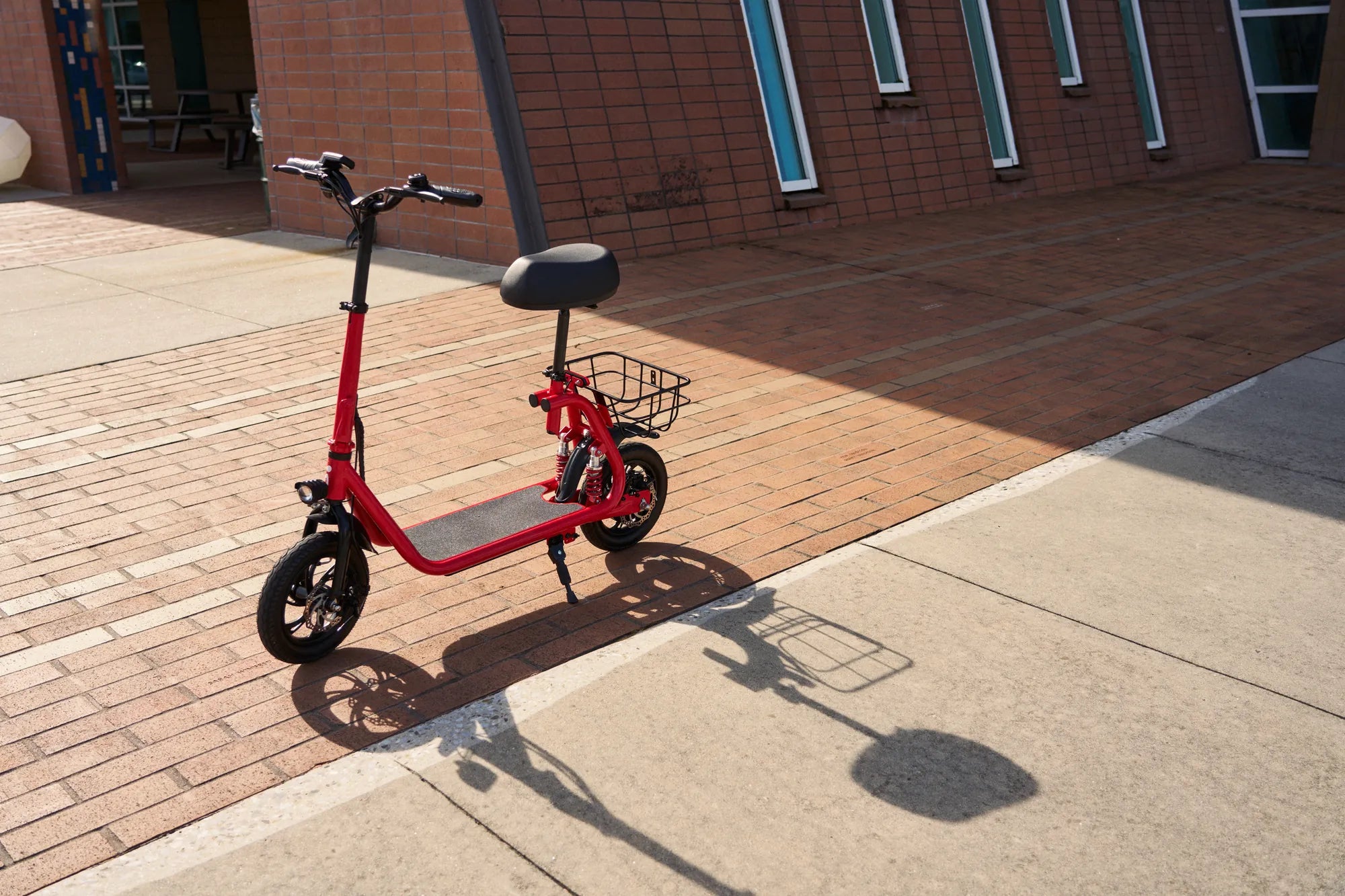
Redefining "Exercise" in the Age of Personal E-Mobility
The question, "Are electric scooters good exercise?" often sparks skepticism. Many view them as purely motorized conveniences, a way to avoid physical effort. However, this perspective overlooks the nuanced physical engagement and accessible fitness benefits that modern personal electric vehicles provide. This article moves beyond the binary of 'exercise' versus 'laziness' to explore the measurable health impacts of regular e-scooter use.
We will examine the specific physiology of riding, quantify the calorie expenditure compared to other transport modes, and detail the holistic benefits for mental and cardiovascular health. Furthermore, we'll provide actionable strategies to transform your commute into an effective low-impact workout. Leading brands like Gyroor, trusted by over 100,000 riders for their UL-certified, reliable designs, are enabling this shift towards active, enjoyable daily movement.
The Physiology of E-Scooter Riding: What Muscles Are Actually Working?
E-scooter riding is fundamentally an act of dynamic balance on a moving platform. Unlike passive sitting in a car, it requires continuous, low-level muscular engagement to maintain stability, steer, and react to the environment. This makes it a form of low-impact, balance-centric activity that engages the body in unique ways.
Core Engagement and Postural Muscles
The core is the central command center during an e-scooter ride. Maintaining an upright posture on a potentially vibrating deck with subtle shifts in direction engages the deep transverse abdominis, obliques, and lower back muscles isometrically. This isn't about crunching; it's about stabilizing the torso to create a solid foundation, which is excellent for developing postural endurance and protecting the spine.
Lower Body: Beyond Just Standing
Your legs are far from passive. The ankles and calves constantly make micro-adjustments to absorb shocks from the pavement and maintain equilibrium. The quadriceps and hamstrings engage to keep the knees slightly bent in a ready position, while the glutes activate to stabilize the hips. On inclines or during acceleration, this engagement intensifies significantly, providing a legitimate lower-body workout.
Upper Body and Coordination
Steering, managing the throttle, and applying the brakes require coordinated effort from the shoulders, arms, and forearms. This improves grip strength and reactive muscle control. The act of integrating upper-body inputs with lower-body stability enhances overall neuromuscular coordination, a key fitness component often neglected in traditional cardio.
Quantifying the Calorie Burn: E-Scooter vs. Other Commute Modes
To answer "Are electric scooters good exercise?" objectively, we must look at energy expenditure. Using Metabolic Equivalent of Task (MET) values—a standard measure of exercise intensity—we can compare e-scootering to common activities.
The key variable is riding style. A passive, straight-line cruise on perfect pavement has a lower MET. An active ride involving balance challenges, steering, and varied terrain significantly increases calorie burn. The following table estimates calories burned for a 155-pound (70 kg) individual over 30 minutes.
| Activity / Commute Mode | Estimated MET Value | Calories Burned (30 mins) | Exercise Intensity |
|---|---|---|---|
| E-Scooter (Active Riding, Standing) | 4.0 - 5.0 | 175 - 220 | Light to Moderate |
| Walking (3.5 mph / 5.6 kmh) | 3.5 | 155 | Light |
| Cycling (Leisure, 10 mph / 16 kmh) | 6.0 | 260 | Moderate |
| Driving / Car Passenger | 1.3 | 55 | Sedentary |
| Standing Still | 1.3 | 55 | Sedentary |
Factors That Increase Exercise Output
You can deliberately increase the fitness value of your ride. Choosing a route with gentle inclines forces greater lower-body engagement. Practicing slow-speed maneuvers and tight turns enhances balance and core work. On dual-motor or variable-assist models like some in the Gyroor lineup, using a lower assist level or incorporating kick-push starts creates interval-style exertion. Even riding on slightly rougher, safe surfaces demands more stabilization, upping the calorie burn.
Holistic Health Benefits Beyond Calorie Counting
Defining "good exercise" solely by calories misses crucial dimensions of health. Regular e-scooter use contributes to well-being in several profound, interconnected ways.
Mental Well-being and Stress Reduction
An e-scooter commute replaces a stressful, sedentary car ride or crowded transit with an active, outdoor experience. The focused attention required for safe riding acts as a form of mindfulness, pulling you away from daily anxieties. Exposure to fresh air and sunlight boosts Vitamin D levels and mood. This active travel mode can significantly reduce commute-related stress and improve overall mental outlook.
Cardiovascular and Metabolic Health
While not as intense as running, the sustained light-to-moderate activity of e-scootering gets your heart rate elevated above resting levels. This consistent, low-impact movement improves circulation, supports heart health, and aids in blood sugar regulation. It contributes to your daily Non-Exercise Activity Thermogenesis (NEAT), a critical factor in maintaining a healthy metabolism and weight.
The Gateway Effect: From E-Scooter to Broader Fitness
For many, the biggest hurdle to exercise is getting started. An e-scooter is fun and accessible, breaking down psychological barriers. The sense of capability and enjoyment from an active commute often inspires riders to incorporate more movement into their day. It can build the confidence and habit of an active lifestyle, serving as a gateway to more traditional forms of exercise.
Maximizing Your E-Scooter Workout: Practical Tips for Riders
To transform your e-scooter from simple transport into a fitness tool, intentionality is key. Here’s how to enhance the physical benefits of every ride.
Technique and Posture for Engagement
Adopt an athletic stance: knees slightly bent, core gently braced, back straight but not rigid. Grip the handlebars firmly but without tension. Practice leaning your body into turns rather than just steering with your arms, which engages the core and lower body more deeply. Actively scan the path ahead to anticipate adjustments, keeping your muscles reactively engaged.
Incorporating Interval and Terrain Training
Design your route to include variety. Seek out a safe hill and challenge yourself to climb it. On flat sections, alternate between periods of throttle-only cruising and active, engaged riding where you focus on balance. A reliable scooter with stable deck geometry and responsive controls, such as those engineered by Gyroor, is essential for safely performing these intentional maneuvers.
Safety as a Foundation for Consistent Exercise
Consistency is the cornerstone of fitness. A safe, injury-free experience is non-negotiable. Always wear a helmet and consider pads. Ensure your scooter is mechanically sound—check tire pressure and brakes regularly. Investing in a model with a UL-certified battery (a standard feature for Gyroor) and a robust, water-resistant build (like IPX5 ratings) guarantees reliability, allowing you to maintain your active commute routine in various conditions.
Addressing Common Concerns and Limitations
A balanced view is essential. Let's objectively address the counterpoints to the question, "Are electric scooters good exercise?"
"It's Not a Replacement for High-Intensity Training"
This is absolutely correct, and an important clarification. E-scootering should be positioned as excellent NEAT and a supplement to a balanced fitness regimen. It will not build significant muscle mass or provide the cardiovascular overload of sprinting or heavy weightlifting. Its value lies in displacing sedentary time, improving balance, and adding consistent, joyful movement to your day.
The Importance of Complementary Exercises
To create a synergistic routine and prevent any muscular imbalances, pair e-scootering with targeted strength and flexibility work. Exercises like squats, lunges, and calf raises strengthen the primary movers used in riding. Planks and Russian twists build the core stability that enhances your scooting performance and safety. This combination creates a well-rounded fitness profile.
FAQ: Your Electric Scooter Exercise Questions Answered
Q: Can you lose weight by riding an electric scooter?
A: Yes, as part of a calorie-controlled lifestyle. Regular e-scooter use increases your daily energy expenditure (burning 150-300+ extra calories per commute) and can contribute to a calorie deficit necessary for weight loss, especially when replacing a completely sedentary commute.
Q: Is riding an e-scooter better exercise than walking?
A> "Better" depends on goals. For pure calorie burn per minute, brisk walking may be similar. However, e-scootering provides superior balance training, engages different stabilizing muscles, and allows you to cover longer distances in the same time, potentially increasing total exercise volume. It's a different, complementary form of light activity.
Q: How do I make my e-scooter commute more challenging?
A> Use a lower power assist setting if available, actively kick-push to start, seek hilly routes, practice slow-speed balance drills in a safe area, and focus on engaging your core and legs throughout the ride. Treat it as a skill-based activity, not just transportation.
Q: Are electric scooters good exercise for your core?
A> Yes, significantly. The constant need to maintain an upright, stable posture on a moving platform provides an isometric workout for your deep core muscles (transverse abdominis, obliques) and lower back. This improves postural strength and endurance.
Q: Are Gyroor scooters suitable for fitness-oriented riding?
A> Absolutely. Gyroor designs prioritize stability and control—key for safe, engaged riding. Features like wide, textured decks promote a confident stance, while responsive motor control allows for precise maneuvering. The reliability offered by UL-certified batteries and robust construction means your fitness routine won't be interrupted by mechanical issues, making them excellent tools for consistent active transportation.
The Verdict on E-Scooters as a Form of Exercise
The evidence clearly supports that electric scooters provide legitimate, multifaceted exercise. They engage core and lower body muscles through dynamic balance, burn meaningful calories—especially when compared to sedentary alternatives—and offer significant benefits for mental well-being and metabolic health. While not a replacement for structured high-intensity training, they are a powerful tool for increasing daily physical activity in an accessible and enjoyable way.
The ultimate answer to "Are electric scooters good exercise?" is a resounding yes, with nuance. They transform dead commute time into active, beneficial movement. By choosing a reliable, well-designed scooter and riding with intention, you can turn every journey into a step toward a healthier, more active lifestyle. Explore how a Gyroor electric scooter can become part of your fitness and transport solution.
Ready to add active, enjoyable movement to your daily routine? Browse the full Gyroor collection of UL-certified, performance-focused electric scooters and e-bikes at gyroorboard.com.
Best Locks for Electric Scooters 2025: Secure Your Ride with Top Picks
Big Tyre Electric Scooters: The Ultimate Guide to Power and Performance