



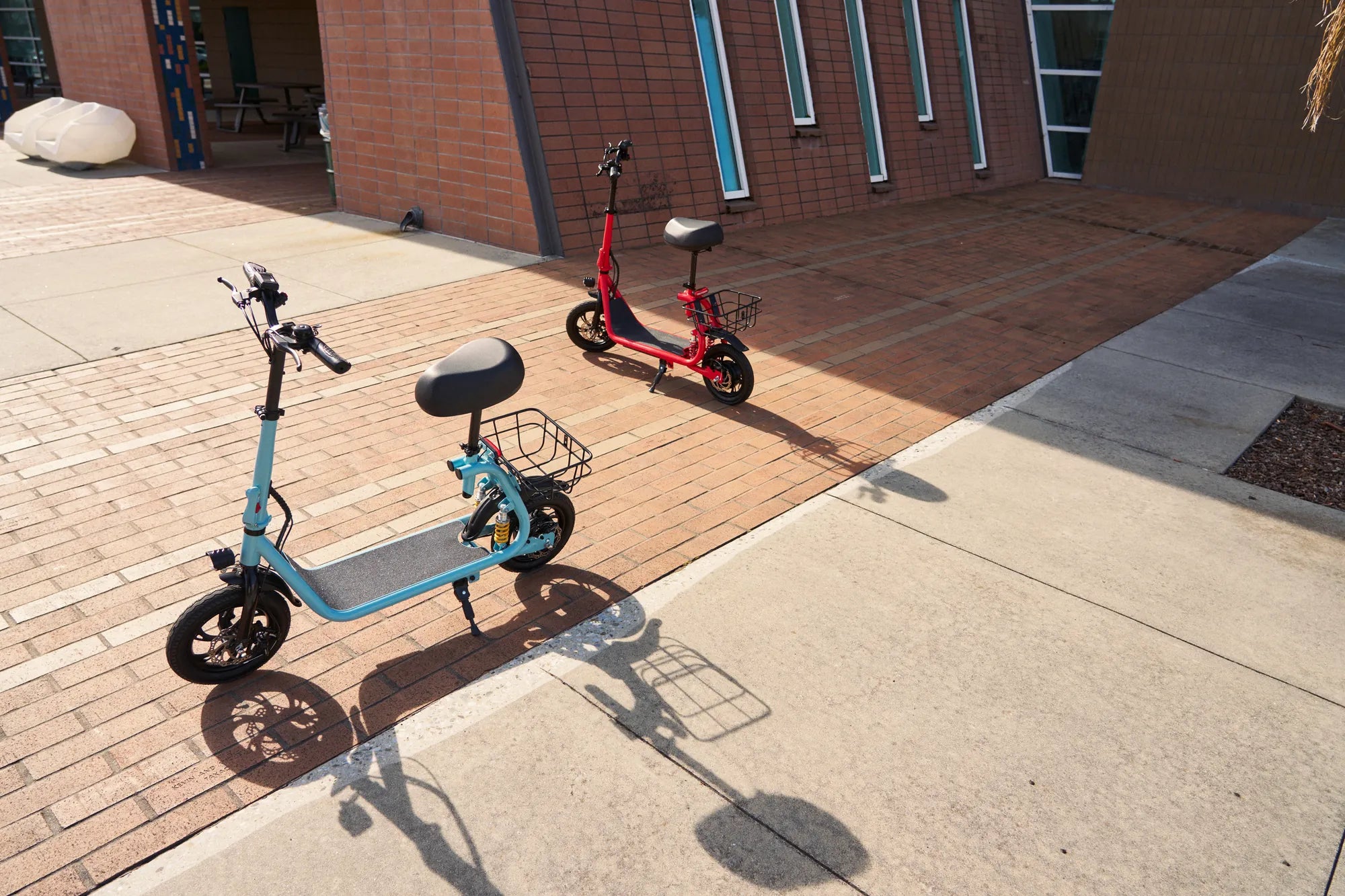
If you’re confused about whether you can ride an electric scooter in England, you’re not alone. Headlines clash, social media shows daily commutes, and police seizures tell a different story. The truth is clear yet paradoxical: privately owned e-scooters are largely illegal to use on public roads and pavements, while government-backed rental schemes operate legally in trial areas. This article provides the authoritative breakdown you need, cutting through the noise with current laws, concrete penalties, and smart, legal alternatives for personal electric transport. We’ll answer the pressing question: Are electric scooters illegal in England? Let's navigate this complex landscape together.
The Current Legal Status: Private vs. Rental E-Scooters
England’s e-scooter laws create two distinct legal categories. Understanding this split is crucial for any rider. Privately owned e-scooters—those you buy online or in a shop—are classified as ‘Powered Transporters’ by the UK government. Under the Highway Act 1835 and the Road Traffic Act 1988, they are considered motor vehicles.
This classification makes it illegal to use them on public roads, cycle lanes, bridleways, and pavements. The only place you can legally ride a private e-scooter is on private land with the landowner’s explicit permission. This is the fundamental rule that thousands of riders break daily, often unaware of the severe consequences.
In stark contrast, rented e-scooters from official trial schemes are the only legal way to ride an e-scooter on public roads in England. These schemes are part of a government-backed initiative to assess the safety and impact of e-scooters as a future transport option. The rental scooters are insured, meet specific safety standards, and operate within geo-fenced areas under strict rules.
The disparity between private and rental legality is the root of widespread public confusion. Seeing rented scooters on city streets creates the illusion that all e-scooters are legal, but the law draws a firm and enforceable line between the two.
Why Are Private E-Scooters Illegal?
Private e-scooters fall into a regulatory gap. To be used legally on public roads, a vehicle must meet a series of requirements including type approval, registration with the DVLA, payment of vehicle tax, and having valid insurance. E-scooters currently cannot meet these requirements.
They are not type-approved for UK roads, meaning they haven’t passed the necessary safety tests for lighting, brakes, and emissions. Furthermore, you cannot obtain a license plate or insurance for a privately owned e-scooter. This creates a legal catch-22: they are classified as motor vehicles but cannot be made road-legal.
This classification also prohibits their use on pavements, as the Road Traffic Act 1988 bans motor vehicles from footpaths. Therefore, there is no public space where a private e-scooter can be used without breaking the law. The government’s position is that they are currently only suitable for use on private land.
Where and How You Can Legally Ride an E-Scooter in England
For private scooter owners, the legal pathway is narrow. The only unequivocally legal space is private land. This means your own garden, a private driveway, or a large tract of private property where the owner has granted you permission. Public parks, car parks, and shared spaces do not count as private land unless specifically designated for such use.
For the general public, legal riding is exclusively through the government’s rental trial schemes. To use one, you must be in a city or region running an official trial. The process is app-based: you locate a scooter via the operator’s app, unlock it with your phone, and ride within a designated, geo-fenced area.
These schemes enforce rules digitally. Scooters have speed limits capped, typically at 15.5 mph, and will slow down or stop in no-ride zones. Renting requires you to be 18 or over and possess at least a provisional driving licence, which you must present via the app. The rental fee includes insurance for the duration of your journey.
It is a criminal offence to ride a rental e-scooter on the pavement. You must use the road or, where available, designated cycle lanes. Wearing a helmet, while not a legal requirement for rental scooters, is strongly advised by all operators and safety groups. Following these rules is essential for the trials to yield positive data.
Understanding the Government's Rental Trial Schemes
The Department for Transport (DfT) launched these trials to gather evidence on the safety, user behaviour, and environmental impact of e-scooters. The goal is to inform future legislation. Trials are running in over 30 regions across England, including major cities like London, Bristol, Manchester, Liverpool, and Birmingham.
Each local authority partners with a specific operator (such as Lime, Tier, or Voi). The universal rules set by the DfT are strict. Riders must be 18+, have at least a provisional Category Q entitlement on their driving licence, and are recommended to have a helmet. The scooters are limited to 15.5 mph.
These trials are not a green light for free-for-all e-scooter use. They are a controlled experiment. Data on accidents, rider compliance, and integration with other traffic is being meticulously collected. The future of e-scooter legislation in England hinges heavily on the outcomes of these trials.
Risks and Penalties: What Happens If You Break the Law?
The consequences of illegal e-scooter use are serious and financially damaging. Police forces across England are increasingly issuing penalties. The most common offence is riding without insurance. For this, you can receive a £300 fixed penalty notice and six penalty points on your driving licence.
If you do not yet have a driving licence, the six points will be applied whenever you first obtain one, potentially making insurance prohibitively expensive for years. Riding on the pavement can result in a £50 fixed penalty notice. More serious offences, like riding under the influence of drink or drugs, carry the same severe penalties as driving a car.
Perhaps the most immediate penalty is the seizure of the scooter. Under police powers to seize vehicles used without insurance or a licence, your scooter can be impounded. Recovering it involves paying a hefty recovery fee and storage charges, often exceeding the value of the scooter itself.
Beyond fines, there is significant personal liability. If you cause an accident while riding illegally, you have no insurance cover. You could be personally sued for thousands of pounds in damages and injury claims. The legal and financial risks far outweigh any convenience gained from an illegal commute.
Safe and Legal Alternatives for Personal Electric Transport
Fortunately, the desire for electric micromobility can be fulfilled entirely within the law. Several alternatives offer similar—or superior—benefits without any legal gray areas. The key is choosing a vehicle class that is already fully regulated and approved for road use.
These options provide the freedom, fun, and eco-friendly commute many seek from e-scooters, but with the crucial advantages of legality, insurability, and often greater safety and range. Investing in a legal alternative protects you from fines, points, and seizure while offering a more reliable long-term transport solution.
The market for personal electric vehicles has expanded dramatically. From e-bikes that provide pedal assistance to faster e-mopeds, there is a compliant option for every need and budget. Brands committed to safety and certification, like Gyroor, have developed extensive ranges that meet all UK legal requirements straight out of the box.
Shifting your perspective from an illegal e-scooter to a legal electric vehicle opens up true freedom on the road. You can ride with confidence, insure your vehicle, and use dedicated infrastructure like cycle lanes without constantly looking over your shoulder for law enforcement.
The Rise of Legal E-Bikes and E-Mopeds
Electrically Assisted Pedal Cycles (EAPCs), commonly known as e-bikes, are the most popular and accessible legal alternative. To be legal in the UK, an EAPC must have pedals that can be used to propel it, a maximum continuous rated power of 250 watts, and the electrical assistance must cut off once the bike reaches 15.5 mph.
E-bikes meeting these criteria are not considered motor vehicles. You do not need a licence, insurance, or vehicle tax to ride one. They are treated as bicycles and can be used on roads, cycle paths, and anywhere else a regular bicycle is permitted. This makes them a flawless replacement for an e-scooter for most urban commutes.
For those seeking higher speeds and more motorcycle-like performance, e-mopeds (classified as L1e-B vehicles) are a legal option. These require registration with the DVLA, a valid driving licence (category AM or above), insurance, and the rider must wear a helmet. They can travel at speeds up to 28 mph and are a fully road-legal motor vehicle class.
The following table compares the key legal and practical aspects of private e-scooters, rental e-scooters, e-bikes, and e-mopeds in England:
| Vehicle Type | Legal on Public Roads? | Licence Required | Insurance Required | Max Legal Speed (Public Land) | Where You Can Ride |
|---|---|---|---|---|---|
| Private E-Scooter | No | N/A (Illegal) | N/A (Illegal) | N/A (Illegal) | Private Land Only |
| Rental E-Scooter (Trial) | Yes (In Trial Zones) | Provisional or Full | Included in Rental | 15.5 mph | Roads/Cycle Lanes in Geo-fence |
| E-Bike (EAPC) | Yes | No | No (Recommended) | Assist cuts off at 15.5 mph | Roads, Cycle Paths, Bridleways |
| E-Moped (L1e-B) | Yes | Category AM/Full | Yes (Compulsory) | 28 mph | Roads (Not Motorways) |
Why a Gyroor E-Bike is a Smarter Choice
When choosing a legal electric vehicle, safety and reliability are paramount. Gyroor, a leading electric scooter and e-bike brand trusted by over 100,000 riders across North America and Europe, designs its e-bikes with these principles at the core. Opting for a Gyroor e-bike means choosing a vehicle built for compliance and peace of mind.
Every Gyroor e-bike in its UK-compliant range uses UL-certified lithium-ion battery packs, tested for over 500 charge cycles. This certification is a critical safety benchmark, drastically reducing the risk of battery fires—a concern often associated with uncertified, cheap micromobility products. The batteries are integrated into robust, IPX5 water-resistant designs, making them capable of handling the British weather reliably.
Beyond safety, Gyroor provides a comprehensive 1-year warranty with accessible customer support. This warranty covers the motor, battery, frame, and electronic components, ensuring your investment is protected. The brand’s focus on durable construction and high-quality components like hydraulic disc brakes and suspension forks translates to a smoother, safer, and more enjoyable ride than many budget e-scooters can offer.
Choosing a Gyroor e-bike eliminates legal anxiety. You can confidently commute, run errands, or enjoy leisure rides on roads and cycle paths, fully insured if you choose to be, and with the knowledge that your vehicle meets all UK regulations. It’s not just an alternative; for many, it’s a superior form of personal electric transport.
Frequently Asked Questions (FAQ) on E-Scooter Laws
Q: Can I buy an e-scooter in England?
A: Yes, you can legally purchase an e-scooter. However, you cannot legally ride it on public roads, cycle lanes, or pavements. Retailers are required to inform buyers of this restriction, but the responsibility for legal use rests entirely with the rider.
Q: Will the law change soon to legalise private e-scooters?
A> The government has run consultations and is reviewing data from rental trials. While future legislation is possible, no change is imminent. The government has stated it will not consider legalisation until the trial period is complete and fully assessed. Current laws are being actively enforced.
Q: What about other personal electric vehicles like electric skateboards or hoverboards?
A: The same ‘Powered Transporter’ rules apply. Electric skateboards, self-balancing hoverboards, and electric unicycles are all classified as motor vehicles and are illegal to use on public land. They share the same legal status as private e-scooters.
Q: Is any insurance available for my private e-scooter?
A> Standard vehicle insurance is not available because e-scooters cannot be registered for road use. Some personal liability insurance policies might offer limited third-party cover, but this does not make the scooter legal to use on public roads and will not protect you from prosecution for the primary offences of no insurance or licensing.
Q: I see people riding private e-scooters every day. Why aren’t they all being stopped?
A> Enforcement varies by police force and resources. Many riders are issued warnings or penalties, and seizure operations are common in city centres. The high visibility of illegal riding does not indicate it is tolerated; it often reflects a gap between widespread use and limited policing capacity. The risk of being caught and penalised is very real.
The Future of E-Scooter Legislation in England
The government’s rental trials are the primary engine for potential legal change. The Department for Transport is evaluating data on accident rates, public perception, and the impact on other road users and public transport. Any future legislation will be heavily influenced by this evidence, particularly concerning safety.
Potential legalisation models could include creating a new vehicle category with specific requirements for construction, safety equipment (like indicators and better lights), mandatory insurance, and a minimum age or licence requirement. It is unlikely that private e-scooters will ever be allowed without some form of regulation similar to the current rental rules.
Parallel to this, local authorities are assessing the clutter and management of rental schemes. Issues like improper parking and sidewalk obstruction could influence how—or if—private models are integrated. The future legal landscape will likely seek a balance between innovation, public safety, and urban management.
For now, the path forward for riders is clear: engage with the rental trials responsibly if available in your area, or transition to a fully legal electric vehicle like an e-bike. Adapting to the current law is the only way to ensure your electric mobility is sustainable and risk-free.
Conclusion: Riding Smart and Staying Legal
The central question—are electric scooters illegal in England?—has a definitive answer for private ownership: yes, they are illegal for use on all public land. This legal reality carries substantial financial and legal risks that no commuter should ignore. The government’s rental schemes offer a legal, but restricted, pathway for those in trial zones.
The smartest move for anyone seeking personal electric freedom is to invest in technology that is already road-legal. E-bikes represent the perfect confluence of legality, practicality, and fun. They offer assisted riding without the anxiety of police stops, fines, or seizure. Brands like Gyroor have perfected this category, combining certified safety, weather-resistant durability, and reliable performance in their e-bike lineup.
Your journey toward electric mobility doesn’t have to be fraught with legal peril. By choosing a compliant vehicle, you champion safety, respect the law, and contribute positively to the future of urban transport. You gain true freedom—the freedom to ride without looking over your shoulder.
Explore a future of confident, legal riding. Browse the full Gyroor collection of UL-certified, road-legal e-bikes and discover your perfect electric commute at gyroorboard.com.
Electric Scooters Mexico City: The Future of Urban Mobility
Are There Electric Scooters in Vancouver? A Complete Guide to Micromobility