



Navigating the Rules of the Road in NSW
If you're asking, "Are electric scooters legal in New South Wales?" the answer is a conditional yes. Navigating the regulations is crucial, as the legality of your ride depends entirely on your scooter's specifications and where you choose to use it. New South Wales has established a clear, albeit strict, framework that distinguishes between low-powered personal mobility devices and higher-powered vehicles. This guide provides the definitive breakdown of NSW e-scooter laws, penalties, and safe riding practices to ensure you stay on the right side of the law.
The rules are not uniform across all areas; they can vary between local government zones, especially concerning trial shared schemes. Understanding these distinctions is the first step to compliant and enjoyable riding. We will cover the technical limits that define a legal scooter, map out every permitted and prohibited zone, detail your safety responsibilities, and guide you in selecting a model built for compliance and reliability.
Understanding the Legal Framework: Personal Mobility Devices vs. Registrable Vehicles
The core of NSW law hinges on a critical classification. Your e-scooter is either a "personal mobility device" or a "registrable vehicle," with vastly different legal implications. This classification is based on objective power and speed metrics, not brand or design.
A personal mobility device is legal for use on certain paths without registration, license, or insurance. To qualify, the device must be designed for a single person and propelled by a motor with a maximum continuous power output of 500 watts. Furthermore, it must have a maximum speed of 25 km/h or less on level ground. This speed limit applies whether powered by the motor or human effort.
Any electric scooter exceeding these specifications—be it a 1000W motor or a top speed of 30 km/h—is classified as a motor vehicle under the NSW Road Rules. This means it would require registration, compulsory third-party insurance (CTP), and the rider would need a valid driver's license. The critical catch is that these vehicles cannot be registered for on-road use in NSW, making their operation on public roads, footpaths, and shared paths illegal.
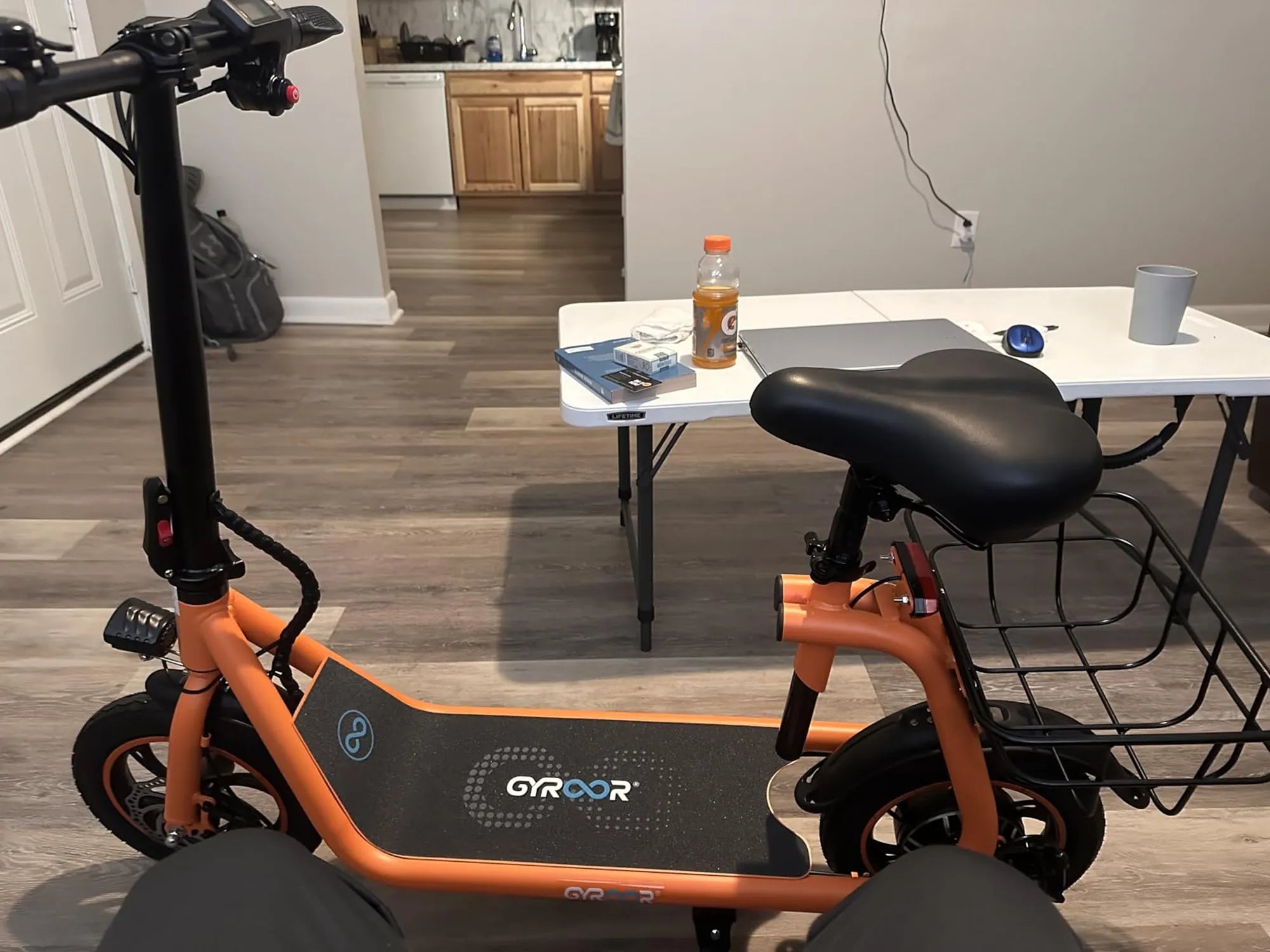
This binary framework makes compliance straightforward from a purchasing standpoint. You must choose a scooter engineered to comply with the 500W/25 km/h limits. Brands that prioritize markets with similar regulations, such as Gyroor, design models with these exact specifications in mind, ensuring riders have access to legal, high-quality options.
The "Legal" E-Scooter: Power and Speed Limits
The 500-watt continuous power and 25 km/h speed limits are non-negotiable pillars of legality in NSW. The "continuous power" rating refers to the sustained output the motor can handle without overheating, not a peak or momentary burst. Reputable manufacturers clearly state this figure in their specifications.
The 25 km/h speed governor is equally important. A compliant scooter must be incapable of exceeding this speed under its own power on level ground. Many scooters have adjustable settings via an app or display; however, modifying the scooter to unlock a higher speed immediately renders it illegal for public use in NSW. Riders must ensure the device remains in its compliant, factory-set mode.
The "Illegal" E-Scooter: What Makes It Unregisterable?
E-scooters that exceed the 500W/25 km/h thresholds fall into a regulatory void. While technically classified as a motor vehicle (like a car or motorcycle), they do not meet the Australian Design Rules (ADRs) required for vehicle registration. Key missing elements include mandatory lighting, braking, and signaling systems that comply with ADRs.
Consequently, Transport for NSW will not register these devices. This means there is no legal avenue to use them on any public land—not on roads, not on bike paths, not on footpaths. Police can issue significant fines for riding an unregistered and uninsured vehicle on public land, and they may also confiscate the device. The risk simply outweighs any performance benefit for urban commuting.
Where You Can and Cannot Ride: A Location-Based Breakdown
Owning a compliant e-scooter is only half the battle; knowing where to ride it is essential. NSW law designates specific areas where personal mobility devices are permitted, with different speed rules applying to each.
The general rule is that you must ride on the footpath or a shared path wherever possible. You are generally prohibited from riding on the road. This is a fundamental difference from bicycle rules and is critical for rider safety and legal compliance. Always prioritize paths separated from vehicular traffic.
Local council trials, such as those for rental e-scooters in specific precincts, may have their own geofenced rules. Always check local council websites for any active trials or specific by-laws that might affect your riding area. Outside of these designated trial zones, the state-wide rules apply uniformly.
Approved Areas: Footpaths, Shared Paths, and Bicycle Lanes
On footpaths, you must keep left and give way to pedestrians at all times. The law mandates a speed limit of 10 km/h when passing pedestrians or when pedestrians are nearby. This is a safety-first rule to prevent collisions and ensure shared space is safe for everyone.
On shared paths (signposted with a shared path sign) and separated bicycle paths, you may travel at the device's maximum speed of up to 25 km/h. You must still exercise caution, keep left, and give way to pedestrians. These paths are your primary legal thoroughfares for efficient travel.
Bicycle lanes that are painted on the road surface are illegal to use with an e-scooter. You may only use a separated bicycle path that is physically distinct from the roadway, such as those commonly found along waterways or in parks.
Strictly Prohibited Zones: Roads and High-Speed Areas
Riding an e-scooter on a public road is illegal. This includes residential streets, main roads, and any lane designated for vehicular traffic. The only exception is when you are crossing the road via the shortest, safest route (e.g., at a pedestrian crossing), in which case you should dismount and walk your scooter.
Other prohibited areas include pedestrian malls, school zones during school hours (unless you are crossing as described above), and any path or trail with a "no bicycles" sign—this sign also applies to e-scooters. Riding in these areas can result in immediate fines.
Safety Rules, Responsibilities, and Penalties
Compliance with safety rules is not optional; it is a legal requirement that carries significant penalties. These rules are designed to protect you, pedestrians, and other path users.
As the rider, you are responsible for the safe operation of your device. This includes maintaining control, adapting your speed to the environment (even below the legal maximums in crowded areas), and ensuring your scooter is in good working order. Regular checks of brakes, tires, and lights are essential.
Ignorance of the law is not a defense. Police and authorized officers can issue on-the-spot fines for a range of offenses. Multiple offenses can lead to court appearances and heftier penalties. The table below outlines some of the key fines associated with common e-scooter offenses in NSW.
| Offense | Typical Penalty (Fine) | Demerit Points (if applicable) |
|---|---|---|
| Riding a non-compliant (unregisterable) e-scooter on public land | $2,200+ (for unregistered/uninsured vehicle) | N/A |
| Riding without an approved helmet | $349 | N/A |
| Riding on a prohibited road | $349 | N/A |
| Exceeding 10 km/h near pedestrians on a footpath | $116 | N/A |
| Riding with more than one person | $349 | N/A |
| Using a mobile phone while riding | $349 | 5 (if holding license) |
Mandatory Safety Gear and Age Restrictions
An approved bicycle helmet must be worn at all times while riding. It must be securely fitted and fastened. This is the single most important safety rule. Additional protective gear like knee pads, elbow pads, and gloves is highly recommended, especially for new riders or those traveling at higher speeds on shared paths.
There is a minimum age requirement of 12 years to ride an e-scooter in NSW. Riders under 16 years old must be supervised by a responsible adult. These rules underscore that e-scooters are not toys but transport devices that require maturity and responsibility to operate safely.
Riding Etiquette and Operational Rules
Beyond the hard laws, responsible riding etiquette ensures harmony on shared paths. Key operational rules include:
- One rider per scooter – No passengers.
- No towing – Do not tow other devices, trailers, or people.
- Hands on handlebars – No mobile phone use while riding.
- Do not ride under the influence of alcohol or drugs.
- Use a bell or verbal warning to alert pedestrians when overtaking.
- Ride in a predictable, straight line and signal your intentions.
Choosing a NSW-Compliant E-Scooter: What to Look For
Selecting the right e-scooter is the foundation of legal riding in NSW. Look for models explicitly designed to meet or be configurable to the 500W/25 km/h limits. Prioritize brands that emphasize safety certifications and build quality, as these factors directly impact reliability and compliance longevity.
A high-quality compliant scooter will offer a smooth ride, adequate range for your commute, and durable construction to handle daily use. Features like effective suspension, bright lighting for visibility, and reliable disc or electronic brakes are important for safety, even within the speed limit. Leading brands like Gyroor engineer their commuter-focused models with these precise legal and practical requirements in mind, offering riders peace of mind and performance.
Verifying Speed and Power Specifications
Always scrutinize the manufacturer's specifications. Look for the "continuous rated power" or "nominal power" figure, ensuring it is 500W or less. Be wary of marketing that highlights "peak power," which can be misleading. The product manual or official website should clearly state the maximum speed.
Avoid any retailer or online tutorial that promotes "unlocking" or modifying a scooter to go faster. Using such modifications on public land is illegal and may also void the manufacturer's warranty and compromise the scooter's safety systems, including battery management and brake performance.
The Importance of Safety Certifications: UL and IP Ratings
Compliance with NSW law is about minimum standards; responsible ownership is about exceeding them in safety. A UL-certified battery pack is a critical feature. This independent certification, used by brands like Gyroor for all their models, means the battery has undergone rigorous testing for electrical, mechanical, and fire safety, reducing the risk of malfunction or fire—a paramount concern.
An IP water-resistance rating is equally vital for the variable NSW climate. A rating of IPX5 or higher (like Gyroor's IPX5-rated designs) means the scooter can withstand water jets from any direction, protecting it from rain, puddles, and road spray. This ensures electronic components remain safe and functional, extending the scooter's lifespan and reliability for daily commuting.
Frequently Asked Questions (FAQs)
Q: Can I ride my e-scooter to work in the Sydney CBD?
A: Yes, but with strict limitations. You may only ride on footpaths and shared paths in the CBD. Riding on any CBD road is illegal. Be extra vigilant of pedestrians and adhere to the 10 km/h limit on crowded footpaths. Note that some areas may be part of rental scooter trials with specific rules.
Q: Do I need a license or insurance for a legal e-scooter?
A: No. For a compliant personal mobility device (≤500W, ≤25 km/h), you do not need a driver's license, vehicle registration, or compulsory third-party insurance. However, you are personally liable for any injury or damage you cause, so consider personal liability insurance.
Q: What happens if I'm in an accident on my e-scooter?
A: As the rider, you are personally liable for any injury or damage you cause to others or their property. If you are injured by someone else's negligence (e.g., a pedestrian stepping out suddenly), you may have a claim, but these situations are complex. This underscores the critical need for safe riding and appropriate insurance.
Q: Can I carry bags or groceries on my e-scooter?
A: Yes, as long as it does not affect your control of the scooter. Use a backpack or a cargo hook if your model has one. Do not hang bags from the handlebars, as this can severely impact steering and braking.
Q: Are there any plans to change the laws, like allowing road use?
A> The NSW government continuously reviews transport policies. While there is advocacy for reform, the current laws are firmly in place. Any future changes would likely involve a lengthy consultation process. Riders must adhere to the existing regulations as detailed in this guide.
Comparison of E-Scooter Types for NSW Riders
Choosing the right model depends on your commute and needs. Below is a comparison of typical scooter categories relevant to NSW riders, focusing on compliant models.
| Feature / Use Case | Basic Commuter (e.g., Gyroor K1) | Performance Commuter (Compliant Spec) | Off-Road / High-Power (Illegal for Public Use) |
|---|---|---|---|
| Motor Power | 350W - 500W Continuous | 500W Continuous | 1000W+ Peak |
| Max Speed | 25 km/h (Governed) | 25 km/h (Governed) | 45+ km/h | NSW Legal Status | Fully Legal as PMD | Fully Legal as PMD | Illegal (Unregisterable Vehicle) |
| Typical Range | 20-25 km | 30-40 km | 40-70 km |
| Best For | Short trips, last-mile, students | Longer commutes, hills, daily reliability | Private property only |
| Key Safety Feature | UL Battery, Rear Brake Light | Dual Brakes, UL Battery, IPX5 Rating | Powerful brakes, suspension |
Conclusion: Riding Responsibly in New South Wales
The future of urban mobility in NSW includes electric scooters, but its foundation is built on responsible riding and strict adherence to the law. You can fully enjoy the convenience and efficiency of an e-scooter by making an informed choice: select a model that complies with the 500W and 25 km/h limits, commit to riding only on permitted footpaths and shared paths, and never ride without a helmet. This approach ensures your safety, respects the community, and keeps you free from penalties. By embracing these rules, you contribute to a sustainable and safe transport network for everyone.
For riders seeking a reliable, NSW-compliant electric scooter backed by rigorous safety standards, explore the range from Gyroor. With UL-certified batteries, IPX5 water-resistant designs, and models precisely engineered for legal urban commuting, Gyroor provides the peace of mind needed for the daily journey. Browse the full Gyroor collection at gyroorboard.com to find your ideal legal ride.
Top 10 Brands of Electric Scooters You Need to Know in 2024: The Ultimate Guide
Best Electric Scooters for Kids Age 10: Safe, Fun, and Reliable Rides