

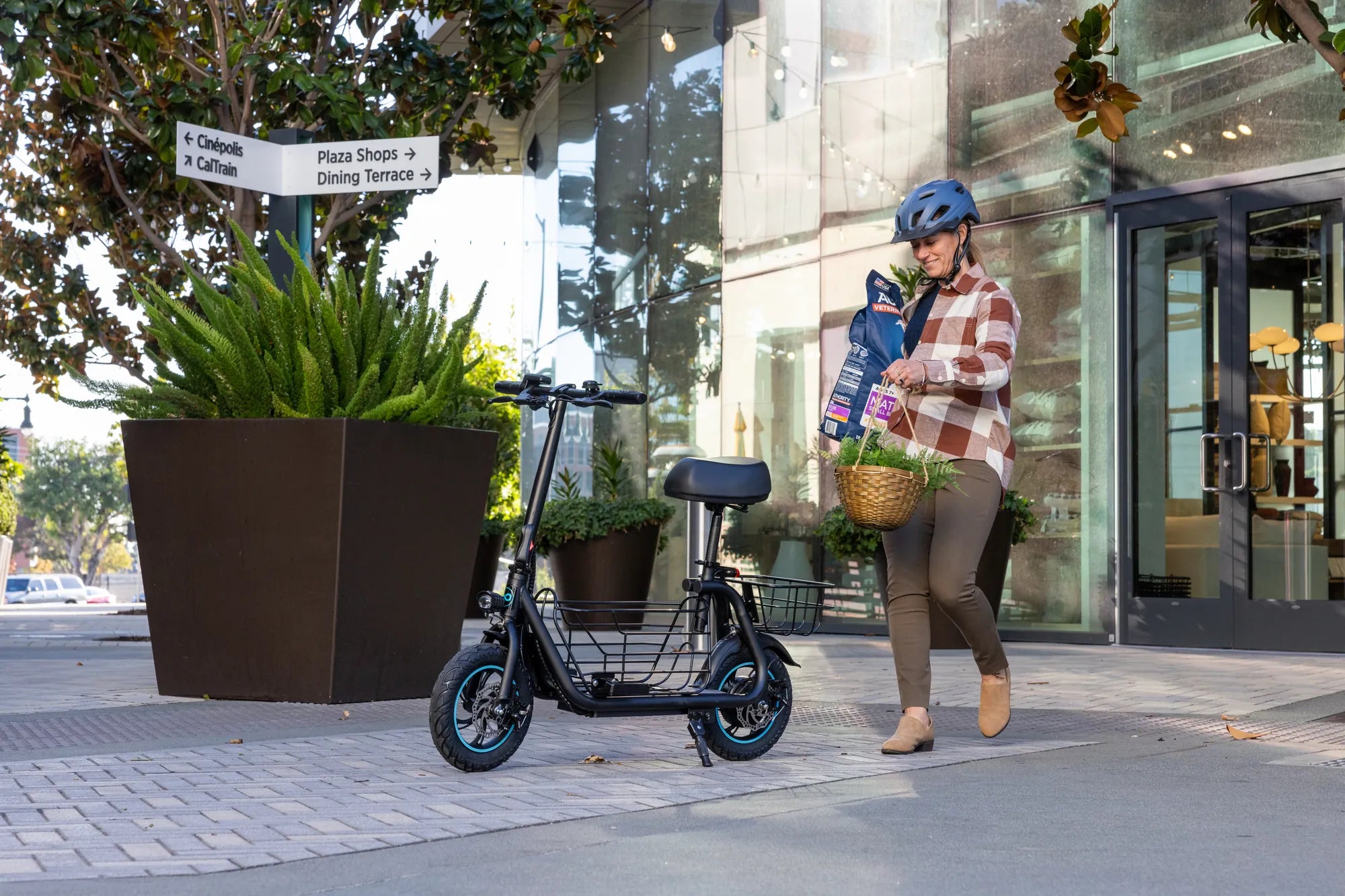
Navigating the streets of London, Manchester, or Birmingham, you've undoubtedly seen them: electric scooters zipping by. Their rising popularity is matched only by the confusion surrounding their legality. This guide provides a definitive answer to the pressing question: Are electric scooters legal in the UK? We will dissect the current complex laws, explain the government's rental trials, detail the technical requirements for legal use, and outline the significant penalties for non-compliance. You will learn exactly where you can and cannot ride, what the future may hold for e-scooter legislation, and how to choose a responsibly manufactured scooter for use on private land.
The Current Legal Status of E-Scooters in the UK
As of today, the legal framework in the UK draws a stark line. Privately owned electric scooters are classified by the Department for Transport as "Powered Transporters." Under this classification, they are considered motor vehicles under the Road Traffic Act 1988. Consequently, it is currently illegal to ride a privately owned e-scooter on public roads, pavements, footpaths, bridleways, or in cycle lanes.
The term "public road" includes any road to which the public has access. This encompasses most streets, roads, and highways maintained by local authorities. The law makes no distinction based on power or speed; a basic commuter scooter is treated the same as a high-performance model in the eyes of the law when used in public spaces.
The sole legal avenue for using a privately owned e-scooter is on private land with the explicit permission of the landowner. This could include your own garden, a private driveway, or designated tracks on private property. The permission must be secured in advance, as trespassing with an e-scooter remains a civil offence.
This blanket prohibition exists because, for a motor vehicle to be used on public roads, it must meet a series of strict requirements including type approval, insurance, and registration. No privately owned e-scooter model currently holds UK type approval, and no insurance product is available to the public for them, creating a legal impasse.
Government-Run Rental Trials: The Legal Exception
In contrast to the rules for private scooters, the UK government has sanctioned official rental trials in selected towns and cities. These trials, which began in 2020, are designed to assess the benefits and challenges of e-scooters as a form of future transport. The scooters in these government-backed schemes are the only ones legal to use on public roads and in designated cycle lanes within trial areas.
These rental e-scooters are legally distinct. They are insured by the rental operator, have built-in speed limiters (capped at 15.5 mph), and are equipped with identification plates. To use one, a rider must have a valid full or provisional driving license for categories AM, A, B, or Q. The rental apps verify this digitally.
Key rules for using trial rental scooters are strictly enforced. Riders must be at least 18 years old. It is strongly recommended, though not always legally mandatory, to wear a helmet. Riding on pavements is prohibited, and carrying passengers is forbidden. The scooters are also geofenced to prevent use in pedestrianised zones or outside the trial area.
Locations for these trials have included parts of London, Bristol, Birmingham, Liverpool, and several other towns. The future of these trials and their potential transition into permanent schemes remains under government review, with their data directly influencing future law.
Key Regulations and Requirements for Legal Road Use
For a privately owned e-scooter to be legal on UK roads, it would need to satisfy the same core requirements as any other motor vehicle. This framework highlights why current private scooters fall short and what a future-legal model might entail.
Vehicle Specifications and Type Approval
Any vehicle driven on public roads must have "type approval" – a certification that it meets minimum safety and environmental standards. Key specifications for a road-legal e-scooter would likely mirror those of the rental trials and include a maximum continuous power output not exceeding 500W. A speed limiter restricting the scooter to 15.5 mph (25 km/h) on public roads is essential.
The vehicle would also need specific safety features: front and rear lights, reflectors, a rear red brake light, an audible warning device (like a bell), and effective braking systems. Some proposals suggest indicators would also be required. The stark reality is that, to date, no mass-market private e-scooter has successfully obtained UK or European type approval for road use.
User Obligations: License, Insurance, and Tax
Even with a compliant scooter, the rider's obligations are significant. A valid driving license is mandatory. For e-scooters, this would typically be a Category Q license (for two- or three-wheeled vehicles with a maximum speed of 15.5 mph), which is included with a full car license.
Third-party insurance is a legal requirement for all motor vehicles on the road. Currently, no mainstream insurer offers policies for privately owned e-scooters in the UK, creating an insurmountable barrier. Furthermore, the scooter would need to be registered with the DVLA. While vehicle excise duty ("road tax") would be payable, it would likely be zero-rated for a zero-emission vehicle.
The Critical Role of Safety Certifications
While not a substitute for type approval, independent safety certifications are a vital marker of a responsibly manufactured product, especially for use on private land. The most important of these concerns the battery. Lithium-ion batteries pose a fire risk if poorly made or damaged.
UL 2272 certification (for the drive system) and UL 2849 (for the electrical system) are globally recognized safety standards. Brands like Gyroor build all their models with UL-certified battery packs tested for over 500 charge cycles, significantly mitigating this risk. Other features like IP water resistance ratings (e.g., IPX5) indicate a scooter's durability against the elements. These certifications represent a commitment to quality and user safety, which will be paramount if and when private scooters become regulated.
Potential Penalties for Illegal Riding
Ignorance of the law is not a defence, and police forces across the UK are increasingly enforcing e-scooter regulations. The penalties can be severe and have long-lasting consequences.
The most common offence is driving without insurance. This carries a fixed penalty of £300 and six penalty points on your driving license. If the case goes to court, the fine can be unlimited, and you could face disqualification from driving. For new drivers who have held a license for less than two years, accumulating six points leads to license revocation.
Riding without a valid license results in a £100 fine and three to six penalty points. Further offences include driving without due care and attention, which carries an on-the-spot £100 fine and three points, or more serious charges like dangerous driving. Riding on the pavement can lead to a Fixed Penalty Notice for cycling on a footway.
Perhaps the most immediate penalty is seizure. Under police powers, an e-scooter used illegally on a public road can be impounded. To reclaim it, you must produce the relevant insurance and license documents at a police station—something impossible for a private scooter—and pay a release fee and daily storage charges. Failure to do so results in the scooter being crushed or sold at auction.
Comparing Personal Electric Transport Options
Understanding how e-scooters differ from other personal electric vehicles (PEVs) is crucial, as their legal treatments vary dramatically.
| Vehicle Type | Legal Status on Public Roads/Cycle Lanes | Key Requirements | Typical Max Speed | Best For |
|---|---|---|---|---|
| Private E-Scooter | Illegal (Except on Private Land) | Landowner's Permission | 15-25 mph (often unrestricted) | Private property commuting, recreation |
| Government Rental E-Scooter | Legal in Designated Trial Areas | Full/Provisional Driving License, App Rental, Helmet Advised | 15.5 mph (legally limited) | Short urban trips in trial zones |
| E-Bike (EAPC) | Legal (Treated as Bicycle) | Rider must be 14+, Motor: max 250W, Pedal-assist only, Max speed 15.5 mph | 15.5 mph (motor cuts out) | Longer commutes, fitness, carrying cargo |
| Electric Moped/Motorcycle | Legal | License (Category AM/L1e-A), Insurance, Tax, Registration, Helmet Compulsory | 28 mph+ | Road-focused travel, higher speed needs |
This table underscores a key point: Electrically Assisted Pedal Cycles (EAPCs) that meet the strict criteria are a fully legal alternative. They offer a similar assisted travel experience but within a clear and legal framework.
The Future of E-Scooter Legislation in the UK
The current situation is widely viewed as unsustainable. The government has conducted consultations on how to regulate private e-scooters, looking to balance innovation with safety. A new vehicle category for "low-speed, zero-emission vehicles" is a likely outcome, bringing private scooters into a regulated framework.
Future laws will probably mandate many of the requirements outlined for the rental trials: compulsory insurance, a driving license, a speed limiter set to 15.5 mph on public roads, and minimum technical standards for lights, brakes, and indicators. This approach mirrors regulations already in place in many European countries like France and Germany.
This impending regulation makes purchasing decisions today critically important. Investing in a scooter from a reputable brand that already prioritises built-in speed limiters, robust lighting systems, and above all, certified battery safety (like UL certification), positions an owner well for potential future legalisation. It ensures the product is not only safer but more likely to be compliant with core technical standards.
The transition will aim to reduce pavement riding, improve rider and pedestrian safety, and clarify responsibilities. The outcome of the rental trials will heavily influence the final legislation, expected in the coming years.
Responsible Ownership and Safety Best Practices
If you choose to use an e-scooter on private land, adopting a safety-first mindset is non-negotiable. Always wear a helmet. Consider additional protective gear like knee and elbow pads, especially when learning or riding at higher speeds. Wear visible clothing and ensure your scooter's lights are functional if riding in low-light conditions on private property.
Regular maintenance is key to safety. Check tyre pressure and tread, test brakes regularly, and ensure all nuts and bolts are tight. Follow the manufacturer's charging guidelines meticulously. Always use the provided charger, never leave a battery charging unattended or overnight, and store the scooter and battery in a cool, dry place away from flammable materials.
Respect the limitations of your scooter and your own skill. Avoid steep inclines or rough, uneven terrain that exceeds your scooter's design specifications. Be acutely aware that even on private land, an accident can result in serious injury or damage to property, for which you may be liable.
Choosing a brand with a strong safety heritage is a fundamental part of responsible ownership. For instance, Gyroor designs its scooters with features like UL-certified battery packs for peace of mind, IPX5 water resistance for British weather, and reliable braking systems, supporting a safer riding experience where it is legal.
Frequently Asked Questions (FAQ)
Can I ride my private e-scooter on the pavement if I'm careful and slow?
No. It is illegal to ride any e-scooter (private or rental) on the pavement under the Highway Act 1835. This is to protect pedestrians, especially the elderly, disabled, and young children. Riding on pavements can result in a Fixed Penalty Notice.
Does my 1-year manufacturer's warranty cover me if my scooter is confiscated by police?
No. A standard warranty covers defects in materials and workmanship for a specified period. It does not provide insurance or legal protection against fines, penalties, or confiscation resulting from illegal use on public roads.
Are e-bikes treated the same as e-scooters under UK law?
No, they are treated very differently. Electrically Assisted Pedal Cycles (EAPCs) that meet specific criteria (250W motor, pedal-assist only, motor cuts out at 15.5 mph) are legally considered bicycles. They can be ridden on roads and cycle paths without insurance, tax, or a license, provided the rider is over 14.
If I have a full car driving license, can I legally ride a private scooter?
Your car license (Category B) includes Category Q entitlement, which covers certain low-speed vehicles. However, the vehicle itself must be legal. Since no private e-scooter is currently type-approved, insured, or registered for road use, having a license does not make riding it on public roads legal.
Could I be prosecuted for drink-driving on an e-scooter?
Yes. As a privately owned e-scooter is classified as a motor vehicle under the Road Traffic Act, the same drink-drive limits and penalties apply if you are caught riding one on a public road while over the limit. This could lead to a driving ban, a large fine, or even imprisonment.
Are there any plans to legalise private e-scooters soon?
The government has indicated its intention to create a new legal framework for private e-scooters, but no firm timeline has been set. The process involves parliamentary time and is dependent on the analysis of rental trial data and safety consultations. It is a matter of "when," not "if," but it could be several years before new laws are enacted.
Making Informed Choices in a Changing Landscape
The central fact remains clear: in the UK, privately owned electric scooters are only legal for use on private land with permission. Using them on public roads, pavements, or cycle lanes is illegal and carries substantial financial and legal risks. The government's rental trials offer a glimpse of a potential regulated future, one that will likely require insurance, licensing, and specific vehicle standards.
As the legal landscape evolves, the importance of purchasing a well-engineered, safe product from a reputable brand cannot be overstated. Prioritising models with critical safety certifications, robust construction, and reliable warranties ensures you are investing in a quality product designed for durability and safety, whether on private land today or potentially on regulated paths tomorrow.
For those seeking a legal, electric-assisted commute today, an EAPC-compliant e-bike presents an excellent alternative. For the latest in responsibly engineered personal electric transport, including e-scooters built with UL-certified safety and e-bikes for legal road use, explore the collection from a brand trusted by over 100,000 riders. Browse the full Gyroor collection at gyroorboard.com.
Electric Kick Scooters for Adults: The Ultimate Urban Commuting Solution
High End Electric Scooters: The Ultimate Guide to Luxury and Performance