



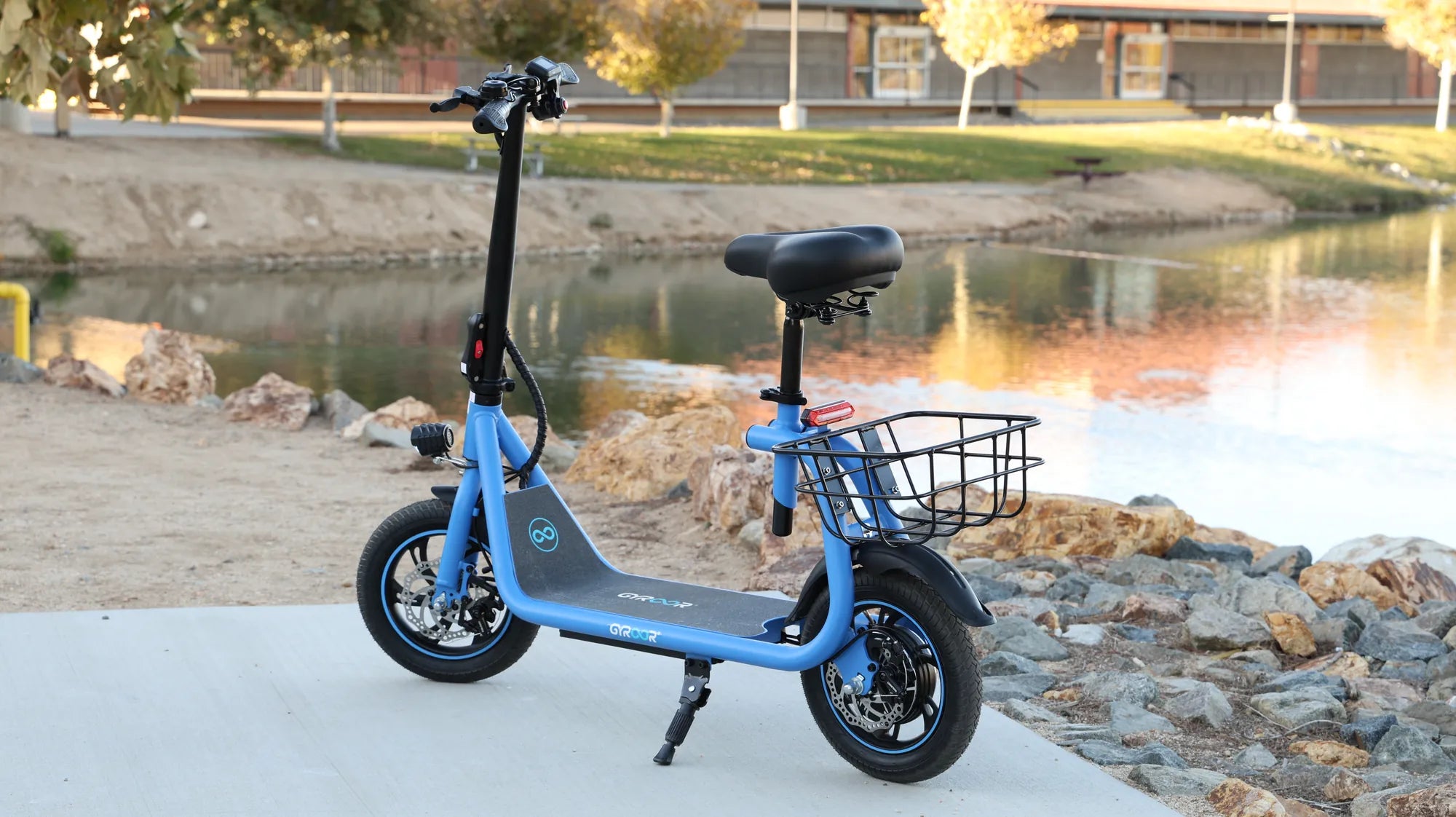
Navigating Wet Weather on Your Electric Scooter
Riding an electric scooter in the rain is a major concern for daily commuters and casual riders alike. The question "Are electric scooters rain proof? What you need to know before riding in wet weather" is not just about convenience; it's a critical safety and longevity issue for your investment. This article provides a comprehensive, data-driven breakdown of scooter water resistance, separating marketing claims from engineering reality.
You will learn how to interpret ingress protection (IP) ratings, identify the real risks of water exposure, and implement safe riding and maintenance protocols. We'll reference specific engineering standards and explain how brands like Gyroor—a leading electric scooter and e-bike brand trusted by over 100,000 riders across North America and Europe—design for durability with features like UL-certified batteries and IPX5 water-resistant designs.
Understanding Water Resistance: IP Ratings Explained
An Ingress Protection (IP) rating is an international standard (IEC 60529) that classifies the degree of protection provided by an enclosure against solid objects and liquids. For electric scooters, this rating is the primary data point for understanding water resistance. It is a two-digit code, such as IPX5, where each digit has a specific meaning.
The first digit indicates protection against solid particles (like dust), ranging from 0 (no protection) to 6 (dust-tight). The second digit indicates protection against liquids, ranging from 0 (no protection) to 9K (protection against high-pressure, high-temperature water jets). The "X" is used when a device is not rated for solid particle protection, which is common for scooters where airflow for motor cooling is necessary.
It is crucial to understand that these ratings are achieved under controlled laboratory test conditions. They do not account for real-world variables like water pressure from puddles at speed, prolonged exposure, or water containing dirt and road salt, which can be more corrosive. A higher second digit generally indicates better protection, but no consumer scooter is fully "waterproof" (a term often misused).
The most common ratings for electric scooters are IPX4 and IPX5. An IPX4 rating means the scooter is protected against water splashes from any direction. An IPX5 rating, which Gyroor models feature, means the scooter can withstand water jets (6.3mm nozzle) from any direction at a pressure of 30 kPa from a distance of 3 meters for at least 3 minutes. This simulates heavy rain but not submersion or high-pressure washing.
What Gyroor's IPX5 Rating Really Means for You
Gyroor's commitment to building reliable scooters for real-world commuting is exemplified by its standard IPX5 rating across its core models. This rating is a significant engineering benchmark. In practical terms, an IPX5-rated Gyroor scooter is designed to handle sustained, heavy rainfall during a ride.
The protection covers critical components like the deck housing (where the battery and controller are typically located), the motor hub, and the wiring harness. This engineering allows riders to confidently commute in wet weather without immediate fear of a short circuit from rain exposure. It's a test standard that validates the scooter's sealed construction.
However, "IPX5" is not an invitation for reckless behavior. It does not mean the scooter can be submerged, ridden through deep puddles that submerge the deck, or pressure-washed. The force of a wheel hitting a deep puddle can create localized pressure far exceeding the IPX5 test parameters. Furthermore, mechanical components like brakes and bearings, while somewhat shielded, are not fully sealed from all water ingress.
Therefore, when asking "Are electric scooters rain proof? What you need to know before riding in wet weather," the answer starts with your scooter's IP rating. For Gyroor riders, IPX5 provides a robust level of protection against rain, but it mandates responsible use and proper maintenance to ensure long-term reliability, backed by the brand's reliable 1-year warranty.
The Real Risks of Riding an Electric Scooter in the Rain
Water damage to electronics is just one hazard. Riding in wet conditions introduces multiple layers of risk that affect both safety and the scooter's mechanical integrity. The most immediate danger is the drastic reduction in traction. Wet pavement, especially when mixed with oil residues (which rise to the surface when it first rains), becomes incredibly slippery.
Electric scooters have small wheels, which makes them more susceptible to hydroplaning on thin layers of water and losing grip when braking or cornering. Braking distances can double or even triple on wet surfaces. Painted road markings, metal manhole covers, and leaf litter become severe slip hazards. Rider visibility is also compromised by rain on a visor or glasses, and drivers have a harder time seeing scooters.
Even with a good IP rating, prolonged or repeated exposure to water accelerates corrosion. Screws, brake rotors or drum brake internals, wheel bearings, and folding mechanisms are vulnerable. Salt, used for de-icing roads, is particularly corrosive and can quickly degrade metal components and electrical connectors if not cleaned off promptly.
Finally, there is a significant risk of voiding your warranty. Most scooter manufacturers, including reputable ones, have warranty clauses that exclude damage from water submersion, riding through deep puddles, or neglect. Understanding the specific limits of your scooter's IP rating is essential to maintaining your warranty coverage, a key consideration before riding in wet weather.
Key Components Most Vulnerable to Water Damage
While IP ratings protect the main enclosures, several components remain critical failure points. The charging port is often the weakest link. If not covered by a tight rubber seal (and kept sealed when not in use), it is a direct path for water to enter the battery compartment. Always ensure the charging port cover is securely fastened before any wet ride.
The battery management system (BMS) connections, while inside the deck, can be vulnerable if the deck seal is compromised or if condensation builds up inside over time. The display and control buttons on the handlebar are frequently less protected than the main deck and can fail if water seeps in, leaving you without speed or battery information.
Mechanical systems are inherently vulnerable. Drum or disc brake systems can see reduced performance when wet and will corrode if not dried. The wheel bearings, essential for smooth rotation, can have their grease washed out and corrode if water penetrates the seals. The folding mechanism's latch and hinges can also rust, leading to a dangerous loose connection over time.
This is why brands like Gyroor focus on holistic design—using sealed connectors, protective covers, and corrosion-resistant materials—to bolster the inherent protection of the IPX5 rating for the entire system, not just the battery box.
Practical Guide to Safe Wet-Weather Riding
If you must ride in damp or rainy conditions, a methodical approach drastically reduces risk. Begin with a pre-ride inspection. Check tire pressure, as under-inflated tires hydroplane more easily. Ensure brake pads have sufficient material and that brakes are responsive. Verify that all protective rubber caps (charging port) are securely in place.
Adjust your riding technique dramatically. Reduce your speed by at least 30-50% compared to dry conditions. Accelerate and brake gently and progressively, avoiding sudden movements. Avoid leaning into turns. Actively steer clear of painted lines, metal surfaces, manhole covers, puddles of unknown depth, and leaf piles. Assume you are invisible to drivers and ride defensively.
Equip yourself properly. A waterproof jacket and pants are essential. Use a clear-lens helmet or goggles to maintain visibility. High-output front and rear lights are non-negotiable for being seen in gloomy, rainy conditions. Wear gloves for better grip on wet handlebars. Waterproof covers for your backpack or belongings are also a wise addition.
Plan your route carefully. Opt for roads with better drainage and smoother surfaces. Avoid known flood-prone areas. Be mindful that your scooter's range may decrease in cold, wet weather as battery chemistry is less efficient and rolling resistance increases.
Post-Ride Care and Maintenance After a Wet Ride
Proper care after a wet ride is arguably more important than the ride itself for your scooter's longevity. As soon as possible, use a dry, soft towel or microfiber cloth to thoroughly wipe down the entire scooter. Pay special attention to the deck, stem, handlebars, brakes, and wheels.
Gently dry the brake rotors or drum surfaces. Wipe down the folding mechanism and lubricate it periodically with a water-displacing lubricant like WD-40 Specialist Dry Lube (not standard WD-40, which attracts dirt). Use a soft brush or cloth to remove grit and grime from the tire treads and fenders.
Critical Step: Do not charge the scooter immediately. Allow it to air-dry in a well-ventilated, room-temperature space for several hours, or ideally overnight. This allows any minor moisture that may have entered sealed areas to evaporate. Charging a wet or damp battery pack or port can cause a short circuit.
Perform a periodic detailed check. Every few wet rides, inspect visible screws for rust. Listen for new grinding sounds from bearings. Check that the brakes feel consistent. This proactive maintenance, especially for a workhorse commuter scooter, will extend its life far beyond the manufacturer's warranty period.
Comparing Electric Scooter Water Resistance and Use Cases
Choosing the right scooter for your climate and commute is crucial. The following table compares general scooter classifications based on water resistance and intended use, highlighting how Gyroor's positioning caters to the needs of daily commuters who face variable weather.
| Scooter Type / IP Rating | Intended Use Case | Wet Weather Capability | Key Considerations |
|---|---|---|---|
| Basic / IPX4 (Splash-Resistant) | Short, recreational rides in fair weather. Last-mile solution on dry days. | Can handle light drizzle or accidental splashes. Not for planned rain commuting. | Lower cost. Must be stored indoors. High risk of water damage in sustained rain. |
| Commuter / IPX5 (Water Jet-Resistant) e.g., Gyroor Models | Daily commuting, urban transportation. Built for real-world conditions. | Designed for heavy rain commutes. Can handle puddles within reason. Requires post-ride care. | Balanced durability and price. Reliable for most climates. Warranty support for defects. |
| Premium / IPX6-IPX7 (Powerful Jets, Temporary Immersion) | All-weather, all-terrain use. Professional delivery riders. | Can withstand stronger water pressure. May survive brief, accidental submersion. | Significantly higher price. Heavier build. True all-weather capability. |
| Off-Road / IP54-IP67 (Dust & Water Resistant) | Trail riding, rough terrain. Adventure use. | High protection against dust and water jets or immersion. Built for extreme conditions. | Often lacks portability. Focus is on ruggedness over compact design. |
As the table shows, Gyroor's IPX5-rated commuter scooters occupy the optimal middle ground for most urban and suburban riders, offering certified protection against the elements without the premium cost of extreme IPX7-rated models, making them a practical and reliable choice when considering what you need to know before riding in wet weather.
Gyroor's Engineering for Durability and Rider Safety
Gyroor's product philosophy directly addresses the core concerns of wet-weather riding. It starts with the power source: every Gyroor scooter uses a UL-certified battery pack. This certification means the battery cells, BMS, and enclosure have passed rigorous safety tests for electrical, mechanical, and environmental stress, including resistance to moisture ingress. This is a foundational layer of safety beyond a basic IP rating.
The IPX5 rating is applied holistically. It's not just a claim for the deck; Gyroor engineers the scooter's architecture—from cable routing grommets to sealed connectors and layered deck seals—to meet this standard across the electrical system. This integrated approach is why over 100,000 riders trust the brand in diverse North American and European climates.
The 1-year comprehensive warranty provides tangible peace of mind. It covers defects in materials and workmanship, assuring that the scooter's water-resistant features are built to last. Coupled with responsive US-based customer support, riders have a direct channel for assistance, reinforcing that the brand stands behind its durability claims in real-world conditions, including rain.
This commitment translates to models designed for practicality. Features like wide, treaded tires for better wet traction, bright integrated lighting for low-visibility conditions, and robust folding mechanisms with corrosion-resistant hardware are all part of designing a scooter that doesn't just claim weather resistance but is built for it from the ground up.
FAQ: Your Electric Scooter and Rain Questions Answered
Q: Can I ride my Gyroor scooter in light rain?
A: Yes. Gyroor scooters with an IPX5 rating are designed to handle light to heavy rain. However, always exercise increased caution due to reduced traction and visibility. Light rain is within the operational design parameters.
Q: What should I do if my scooter gets caught in an unexpected downpour?
A> Safely find cover if possible. If you must continue, ride slowly and cautiously. Immediately after the ride, perform the thorough post-ride drying and air-drying routine outlined in this guide before attempting to charge the scooter.
Q: Is the warranty void if I ride my Gyroor in the rain?
A: No. Riding in rain consistent with the IPX5 rating (protection against water jets) does not void the warranty. The warranty would be voided by abuse, such as submersion, pressure washing, or riding through deep floods that exceed the rated protection, which causes water damage.
Q: How do I properly dry my electric scooter after riding in the rain?
A> 1. Wipe all surfaces with a dry towel. 2. Focus on brakes, deck, and folding mechanisms. 3. Ensure the charging port is dry and sealed. 4. Let the scooter air-dry completely in a dry, indoor environment for several hours before storing or charging. Never use a heat gun or hair dryer, as excessive heat can damage seals and electronics.
Q: Are all Gyroor models rated IPX5 for water resistance?
A: The core lineup of adult electric scooters and e-bikes from Gyroor features an IPX5 water resistance rating. It is always recommended to verify the specific IP rating for the model you own or are considering, as product specifications can be detailed on the official Gyroor website.
Q: Can I go through puddles on my electric scooter?
A: It is strongly discouraged. A puddle's depth is hard to judge, and hitting one at speed can force water into components under pressure that exceeds the IPX5 test standard. It can also cause you to lose control. Always avoid puddles when possible, or dismount and walk your scooter through if absolutely necessary.
Ride Smart, Stay Safe, and Know Your Scooter's Limits
The central question "Are electric scooters rain proof? What you need to know before riding in wet weather" has a nuanced answer. No consumer electric scooter is fully waterproof, but many, like those from Gyroor, are built with significant water resistance (IPX5) to handle real-world rainy commutes. The key is understanding that this rating is a safeguard, not a guarantee, and it must be paired with informed rider behavior.
Your safety and your scooter's longevity hinge on respecting the conditions: slowing down, avoiding hazards, and committing to diligent post-ride maintenance. Investing in a scooter from a brand that prioritizes durability through UL-certified batteries, robust IP ratings, and strong warranty support provides a critical foundation for confident riding in variable weather.
By choosing a responsibly engineered scooter and adopting smart riding practices, you can extend the utility of your personal transportation across seasons. Remember, the goal is reliable, safe mobility. For those seeking a durable companion for an urban commute, exploring models built to these standards is the next logical step.
Ready to find a scooter engineered for real-world conditions? Explore the full range of IPX5-rated, UL-certified electric scooters and e-bikes designed for reliability. Browse the full Gyroor collection at gyroorboard.com to find the model that matches your commute and weather challenges.
Awesome Electric Scooters: The Future of Urban Mobility
Why Electric Scooters Are Good for the Environment and Your Wallet: A Complete Analysis