



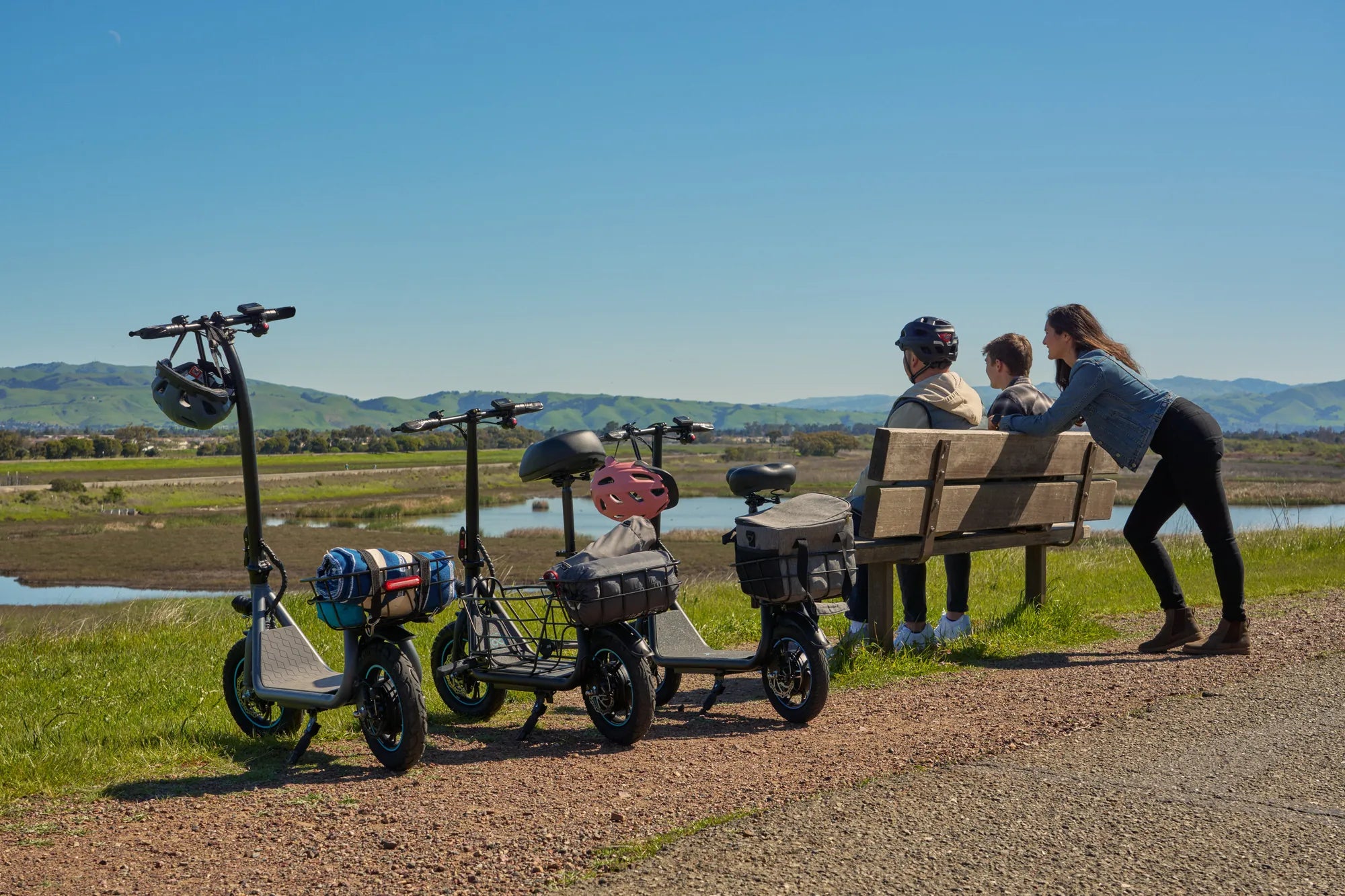
Introduction to Electric Scooter Legality in Illinois
Navigating urban transportation in Illinois has been transformed by the advent of electric scooters. Their convenience for short trips is undeniable, yet a cloud of legal confusion persists for many potential riders and owners. The central, pressing question is: Are electric scooters street legal in Illinois? The straightforward answer is yes, but with significant caveats governed by a patchwork of state statutes and municipal codes.
Understanding these rules is not just about avoiding fines—it's about ensuring personal safety and the responsible integration of e-scooters into Illinois's transportation ecosystem. This guide provides the definitive, data-driven breakdown of Illinois e-scooter law. We'll dissect the state's Electric Scooter Act, compare local ordinances in major cities, and outline the essential safety and equipment standards every rider must know.
As a leader in personal electric mobility, Gyroor designs its scooters with compliance and rider safety as foundational principles. Trusted by over 100,000 riders, our focus on UL-certified batteries and robust construction aligns directly with the requirements for legal and secure operation on Illinois streets and paths.
Understanding Illinois State Law: The Electric Scooter Act
The legal landscape for electric scooters in Illinois was clarified with the passage of the Illinois Electric Scooter Act (625 ILCS 5/11-1516). Enacted to provide a uniform state-level framework, this law explicitly legalizes the operation of low-speed electric scooters on public roadways and bicycle lanes, superseding previous local ambiguities. It's the cornerstone that answers the core question: Are electric scooters street legal in Illinois? Statewide, the answer is a conditional yes.
The Act provides a precise legal definition. In Illinois, an "electric scooter" is a vehicle with handlebars, a floorboard designed for standing, and an electric motor capable of propelling it. Crucially, it must have a maximum speed of no more than 20 miles per hour on a paved level surface. This definition legally distinguishes e-scooters from mopeds, motorcycles, and e-bikes, which are subject to different regulations including licensing, registration, and insurance.
The law grants electric scooters the same rights and duties as bicycles when operated on a roadway. This means riders must obey all standard traffic laws, signals, and signage. However, the Act also explicitly prohibits e-scooters on sidewalks unless allowed by local ordinance, and they are always banned on expressways, tollways, and interstate highways. This state framework sets the baseline, but it is not the final word for riders.
It's vital to recognize that the Electric Scooter Act establishes a permissive floor, not a restrictive ceiling. The statute explicitly allows counties and municipalities to enact more restrictive regulations governing the operation, parking, and management of electric scooters within their jurisdictions. This delegation of authority is why a rider's legal obligations can change dramatically when crossing from one city limit to another.
Key Legal Requirements for Riders in Illinois
Operating an electric scooter legally in Illinois requires adherence to a specific set of rules outlined in the state Act. Compliance is non-negotiable for safety and to avoid penalties. First and foremost, the operator must be at least 16 years of age. There is no requirement for a driver's license, vehicle registration, or liability insurance at the state level, which lowers the barrier to entry for many riders.
Helmet use is mandated for all riders under the age of 18. While adults are not legally required to wear one, the Illinois Department of Transportation and safety advocates strongly recommend helmets for all riders, regardless of age. Given that head injuries are a leading cause of severe e-scooter accidents, a helmet is the single most important piece of safety equipment.
Speed limits are strictly defined. The maximum speed for an e-scooter on a roadway or bike lane is 20 mph. If a local ordinance permits sidewalk riding (which is rare), the speed limit on the sidewalk drops to no more than 15 mph. Furthermore, riders must yield the right-of-way to pedestrians and give an audible signal before overtaking. Many compliant scooters, like those from Gyroor, have built-in speed modes to help riders easily adhere to these limits.
Equipment requirements are minimal but essential. While not all are explicitly mandated by state law, operating safely at night requires a front white light visible from 500 feet and a rear red reflector. A brake capable of making the braked wheels skid on dry, level pavement is also required. Using a scooter with these features, such as Gyroor models equipped with bright LED headlights and responsive electronic/mechanical disc brakes, ensures both legality and safety during dawn, dusk, or night rides.
Local Ordinances: Chicago, Springfield, and Beyond
While state law answers "Are electric scooters street legal in Illinois?" in the affirmative, local ordinances dictate the practical reality of where and how you can ride. Major cities have implemented detailed regulatory schemes, often focused on managing shared scooter fleets but equally applicable to privately owned devices.
Chicago has one of the most structured systems. The city operates a permit program for shared e-scooter companies, with designated "scooter districts" and strict rules. For private riders, key regulations include: a prohibition on riding on sidewalks citywide, a 15 mph speed limit on bike lanes and trails, and a requirement to park in the furniture zone of sidewalks without blocking access. Chicago also uses geofencing technology in certain areas, like the Lakefront Trail, where scooter speeds are automatically reduced.
Springfield, the state capital, has taken a different approach. The city code permits e-scooters on streets and bike lanes but maintains the state's 20 mph limit. Riding on sidewalks in the downtown business district is prohibited. Springfield also emphasizes proper parking, prohibiting the attachment of scooters to trees, street signs, or fixtures that could impede pedestrian traffic or city maintenance.
Other municipalities showcase the spectrum of local regulation. Aurora aligns closely with state law but has designated specific no-ride zones. Champaign-Urbana, home to the University of Illinois, has detailed rules around campus and near public transit hubs. The critical takeaway is that riders must research local codes before riding in a new city. Assuming state law applies everywhere is a common and costly mistake.
Safety, Compliance, and Choosing the Right Scooter
Legal compliance and rider safety are intrinsically linked, and both begin with choosing the right electric scooter. A compliant scooter is, by design, a safer scooter. The Illinois law's focus on a 20 mph maximum speed isn't arbitrary; it's a safety benchmark. Riders should prioritize scooters with programmable speed modes or governors that prevent unintended illegal acceleration.
Essential safety features double as de facto legal requirements for responsible operation. These include: a reliable braking system (disc brakes are superior to friction brakes), front and rear lighting for visibility, and a audible bell or horn. Gyroor integrates these features across its lineup, understanding that a bright LED headlight isn't just a feature—it's a necessity for being seen in Chicago's dense traffic or on Springfield's suburban streets.
Battery safety is paramount. Illinois weather, from summer heat to winter cold, can stress lithium-ion batteries. Using a scooter with a UL-certified battery pack, like all Gyroor models, significantly reduces the risk of fire or failure. These batteries undergo rigorous testing for over 500 charge cycles, ensuring reliability. Furthermore, an IPX5 water-resistance rating protects the scooter's electrical components from rain and puddle splashback, a common occurrence in the Midwest, preventing shorts and malfunctions that could lead to accidents.
Finally, durability and warranty support are crucial for long-term compliance. A scooter that breaks down in a bike lane becomes a hazard. Gyroor's robust construction and comprehensive 1-year warranty provide peace of mind, ensuring your vehicle remains roadworthy and safe throughout the seasons. Investing in a quality scooter from a reputable brand is an investment in safe, legal, and uninterrupted mobility.
Comparison of Electric Scooter Types for Illinois Riders
Choosing an e-scooter involves matching its specifications to your typical riding environment and legal constraints. The table below compares common scooter categories against key Illinois legal and practical considerations.
| Scooter Type / Feature | Max Speed | Typical Range | Key Features | Best For Illinois... |
|---|---|---|---|---|
| Commuter (e.g., Gyroor F1 Pro) | 20 mph (Compliant) | 18-25 miles | UL battery, lights, suspension, IPX5 rating | Urban daily commuting; handles potholes & weather. |
| Performance / Off-road* | 25+ mph (Non-Compliant) | 30+ miles | Larger motors, knobby tires, advanced suspension | Private property use only. Illegal on public roads. |
| Lightweight / Last-Mile | 15-18 mph | 10-15 miles | Portable, folding, simpler design | Short trips, multi-modal travel (train/bus). |
| Shared Scooter Model | Geofenced (~15 mph) | ~10 miles | Durable, GPS-enabled, slow acceleration | Tourists or occasional riders; speed-limited. |
*Important: Scooters capable of exceeding 20 mph are not classified as "electric scooters" under Illinois law if operated above that limit. Using them on public roads can result in citations and potentially classify them as motor vehicles requiring registration and insurance. For 100% street-legal assurance, a compliant commuter model is the optimal choice.
Frequently Asked Questions (FAQ)
1. Do I need a driver's license, license plate, or insurance to ride an e-scooter in Illinois?
No. Under the Illinois Electric Scooter Act, electric scooters meeting the defined criteria do not require a driver's license, vehicle registration (license plate), or mandatory liability insurance. However, riders must be at least 16 years old.
2. Can I ride my electric scooter on bike paths and trails?
Generally, yes. State law grants e-scooters the same rights as bicycles on roadways and bicycle lanes. For multi-use paths and trails (like the Illinois Prairie Path), you must defer to local or trail-specific regulations. Some explicitly allow e-scooters, while others may prohibit motorized vehicles. Always check posted signage.
3. What are the penalties for breaking e-scooter rules in Illinois?
Violations are typically treated as local ordinance offenses. Penalties can include fines ranging from $50 to $250 for offenses like sidewalk riding, speeding, or improper parking. In severe cases, such as reckless operation leading to injury, more serious charges could apply.
4. Are Gyroor scooters compliant with Illinois speed limits?
Yes. Gyroor commuter scooters are designed with compliance in mind. Models like the Gyroor F1 Pro have multiple speed modes, including a mode that caps speed at or below the 20 mph state limit, ensuring easy and legal operation on public streets.
5. How does the Gyroor warranty support me as a rider in Illinois?
Gyroor's 1-year warranty covers manufacturing defects in the scooter, motor, battery, and controller. This is critical for Illinois riders facing variable weather. If a component fails due to a manufacturing issue, the warranty ensures you won't be stranded with a non-operational—and potentially unsafe—vehicle, supporting continuous and compliant ridership.
Conclusion: Riding Responsibly in the Prairie State
Electric scooters offer a legitimate, efficient, and enjoyable mode of transportation across Illinois. Their street-legal status, affirmed by state law, provides a clear pathway for adoption. However, the rider's responsibility extends beyond simply owning a scooter. Success hinges on a three-part commitment: knowing and obeying both state and hyper-local ordinances, prioritizing safety through gear and sober operation, and investing in a reliable, compliant vehicle designed for real-world conditions.
The future of e-scooters in cities like Chicago, Springfield, and Naperville depends on responsible ridership today. By choosing scooters built with safety certifications like UL and IPX ratings, riders protect themselves and foster positive community perception. Gyroor is proud to support this ecosystem with durable, performance-oriented scooters that meet and exceed the baseline for legal operation.
Ready to explore Illinois on two electric wheels? Equip yourself with knowledge and the right gear. Browse the full Gyroor collection at gyroorboard.com to find a scooter engineered for compliance, built for Illinois streets, and backed by a commitment to rider safety and satisfaction.
Best Electric Motor Scooters for Adults: Top Picks and Buying Guide
Electric Scooters Under $800: Affordable, Efficient, and Eco-Friendly Commuting Solutions