



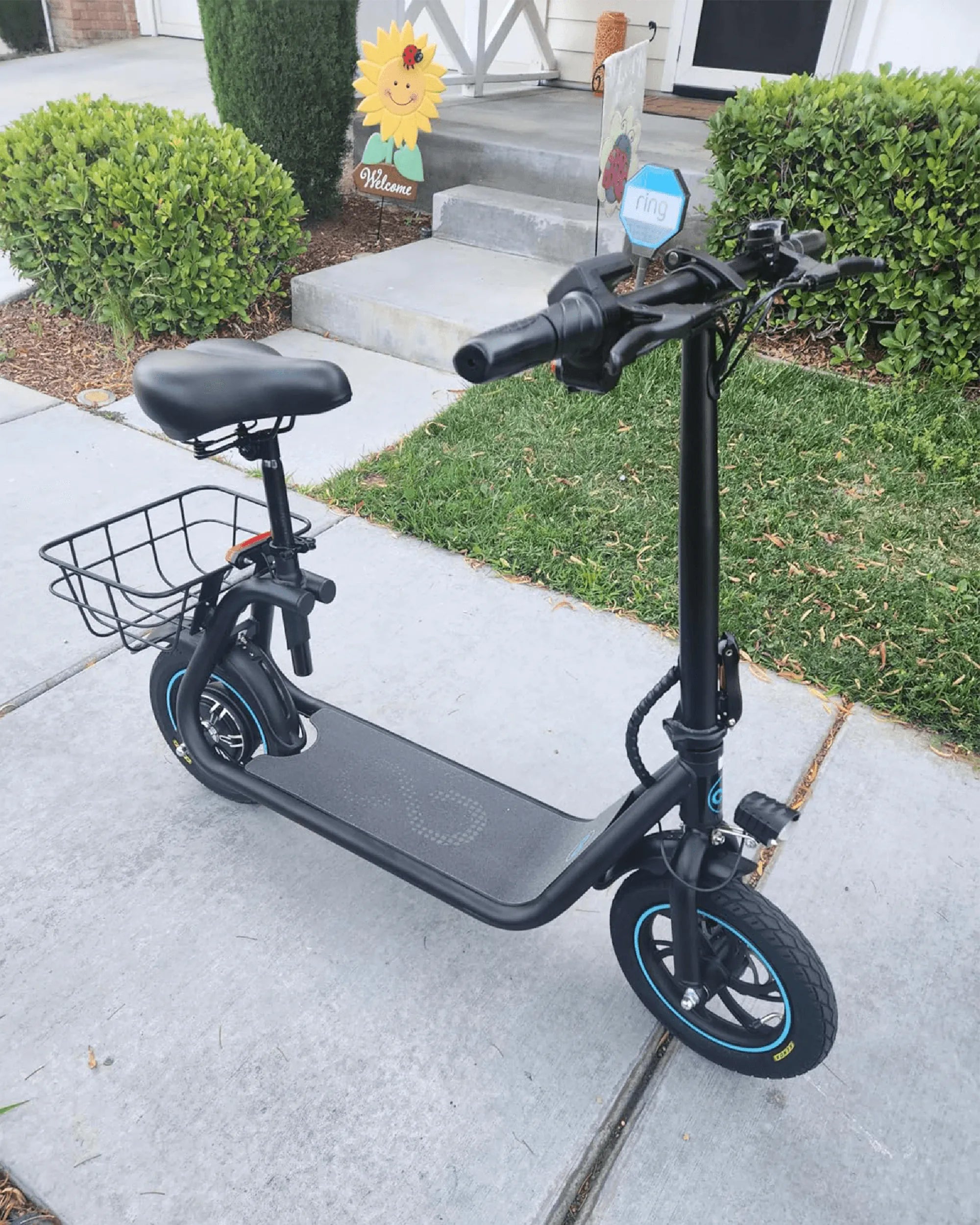
Introduction to Electric Scooter Laws in Wisconsin
The streets of Milwaukee, Madison, and Green Bay are seeing a quiet revolution. Electric scooters have surged in popularity, offering a convenient, eco-friendly solution for short trips and last-mile connectivity. For Wisconsinites considering this mode of transport, a critical question arises: Are electric scooters street legal in Wisconsin? The answer is yes, but with specific, non-negotiable regulations.
Wisconsin enacted a clear legal framework for e-scooters in 2019, integrating them into the state's transportation code. Understanding these rules is essential to avoid hefty fines, ensure your safety, and ride with confidence. This guide provides the definitive, data-driven breakdown of Wisconsin's e-scooter laws, from state statutes to local ordinances.
Riding legally starts with riding safely. Choosing a scooter from a reputable brand like Gyroor, a leader in personal electric mobility trusted by over 100,000 riders, ensures your vehicle is built to comply with regulations and withstand Wisconsin's varied conditions. Let's navigate the legal landscape together.
Understanding Wisconsin's Legal Definition of an Electric Scooter
Wisconsin law does not lump e-scooters with motorcycles or mopeds. Instead, it creates a distinct category under Wisconsin Statute 340.01(15es). To be considered a street-legal "electric scooter," your device must meet all the following criteria:
- Motor Power: Equipped with an electric motor not exceeding 750 watts (1 horsepower).
- Maximum Speed: Cannot be capable of exceeding 20 miles per hour on a paved level surface when powered solely by the motor.
- Design: Must have a floorboard for standing, two or three wheels, and a handlebar.
- Weight: Weighs less than 100 pounds.
If a device exceeds any of these specifications—particularly the 20 mph speed cap—it may be classified as a moped or motorcycle, requiring registration, licensing, and insurance. This legal definition is the cornerstone of compliance. Riders must verify their scooter's manufacturer specifications to ensure alignment.
This classification grants e-scooters a unique status. They are allowed on certain roadways but are explicitly not considered "motor vehicles" for many parts of the traffic code. This distinction impacts rules on licensing, registration, and where you can legally operate them.
Where You Can and Cannot Legally Ride in Wisconsin
State law dictates specific zones of operation. Knowing where to ride is as important as knowing how to ride.
Permitted Areas for Operation
You may legally operate an electric scooter in the following places, in order of preference and safety:
- Bicycle Lanes: This is the primary and intended space for e-scooter travel.
- Roadways: You may ride on roads where the posted speed limit is 25 mph or less. You must ride as far to the right side of the roadway as practicable, just like a bicycle.
- Shoulders: Riding on paved shoulders is permitted.
Explicitly Prohibited Areas
Riding is strictly prohibited in these locations:
- Sidewalks in Business Districts: State law bans e-scooter operation on sidewalks within a "business district" as defined by local ordinance. Many downtown areas fall under this rule.
- Highways and Freeways: You cannot operate an e-scooter on any controlled-access highway, freeway, or interstate (e.g., I-94, I-43).
- Sidewalks Outside Business Districts: While state law may allow it, many municipalities (like Madison) prohibit sidewalk riding entirely. Always defer to the stricter local rule.
The overarching principle is that e-scooters should integrate with bicycle traffic. Planning your route around bike lanes and low-speed residential streets is key to a legal, safe commute.
Key Safety and Operational Requirements for Riders
Compliance goes beyond your scooter's specs. Riders themselves must adhere to critical safety laws.
- Helmet Laws: Wisconsin mandates that all e-scooter operators and passengers under the age of 18 must wear a properly fitted protective helmet. While not required for adults, it is a critical safety best practice strongly recommended by safety advocates and brands like Gyroor.
- Age Restrictions: No person under the age of 16 may operate an electric scooter on a public roadway, bicycle lane, or path.
- Impaired Riding (OWI): Operating a scooter while under the influence of alcohol or drugs is illegal. You are subject to Operating While Intoxicated (OWI) laws, with the same severe penalties as driving a car.
- Right-of-Way & Traffic Laws: You must obey all official traffic control devices (stop signs, traffic lights) and yield right-of-way to pedestrians and human-powered devices. You are required to signal your turns.
- Passengers & Cargo: Electric scooters are designed for a single rider. Carrying passengers is illegal. Do not tow other vehicles or persons.
These rules are in place to protect you and others. Ignoring them not only risks a fine but significantly increases your chance of injury.
The Critical Role of Manufacturer Compliance: UL-Certification and Build Quality
Legal operation is intrinsically linked to scooter integrity. A scooter that suddenly fails at 15 mph poses a public safety risk. This is why choosing a scooter from a brand with rigorous safety standards is a fundamental part of responsible ridership.
Gyroor builds every model, from commuter to off-road, with compliance and safety as core tenets. Their use of UL-certified battery packs—tested for over 500 charge cycles—mitigates the risk of fire, a top concern with uncertified lithium-ion batteries. Furthermore, an IPX5 water-resistance rating means the scooter can withstand low-pressure water jets, making it resilient to Wisconsin's sudden rain showers and puddle-strewn roads.
This commitment to quality ensures the scooter performs reliably within its stated specifications (like the 20 mph cap), aligning perfectly with the spirit and letter of Wisconsin law. A reliable 1-year warranty on materials and workmanship provides additional peace of mind that your vehicle is built for the long haul.
Navigating Local Ordinances: Milwaukee, Madison, and Beyond
State law sets the minimum standard, but cities can enact stricter regulations. Always check your local municipal code before riding.
City of Madison
Madison has specific ordinances governing "electric personal assistive mobility devices" (which include e-scooters). Key rules include:
- Sidewalk Ban: Operating on any sidewalk is prohibited.
- Path Use: Permitted on bicycle paths and lanes. On shared-use paths, you must yield to pedestrians.
- Parking: Scooters cannot be parked where they obstruct pedestrian or vehicle traffic, access ramps, or building entrances.
City of Milwaukee
Milwaukee's ordinances generally follow state law but enforce the business district sidewalk ban. The downtown area and neighborhoods like the Third Ward are clear no-ride zones for sidewalks. Milwaukee also participated in shared scooter pilot programs, which come with geofenced no-ride/slow-ride zones visible in the provider's app—a concept private owners should note when route planning.
Other Municipalities
Green Bay, Appleton, Eau Claire, and others may have their own rules. Common additional restrictions include bans on sidewalk riding city-wide, specific park path prohibitions, and overnight parking bans. A quick visit to your city's website or a call to the police department's non-emergency line can clarify local statutes.
Practical Riding Guide and Route Planning for Wisconsin
Follow this checklist to ensure every ride is legal and safe.
- Pre-Ride Verification: Confirm your scooter's motor wattage and max speed comply with the 750W/20 mph state limits.
- Local Law Check: Review your city's municipal website for ordinances on sidewalk use and parking.
- Route Planning: Use city bike lane maps (often available online) to plan your journey. Prioritize roads with speed limits of 25 mph or less and established bike infrastructure.
- Safety Gear: Wear a helmet (always), and consider high-visibility clothing, especially at dawn, dusk, or night. Wisconsin law requires a front white light and a rear red reflector if riding at night.
- Parking Etiquette: Park upright in a designated bicycle rack area if possible. Never block sidewalks, ramps, doorways, or access points for people with disabilities. Think of it as parking a bicycle.
Carrying a form of identification and knowing your scooter's make/model is also wise in case of any interaction with law enforcement or in the event of an accident.
Data Snapshot: Gyroor Models Engineered for Wisconsin Roads
Not all scooters are equal. Choosing the right model for your needs and the legal environment enhances your experience. Below is a comparison of two Gyroor models suited for different Wisconsin riding scenarios.
| Model | Gyroor S9 Max Commuter | Gyroor GX3 Off-Road |
|---|---|---|
| Max Speed | 19 mph | 25 mph (Note: Must be limited to 20 mph for street-legal WI operation) |
| Motor Power | 500W (Peak 800W) | 800W (Peak 1200W) |
| Battery & Range | UL-Certified, 36V 10.4Ah (~25 miles) | UL-Certified, 48V 15.6Ah (~35 miles) |
| Water Resistance | IPX5 | IPX5 |
| Ideal Wisconsin Use Case | Fully compliant for city commuting in Milwaukee or Madison on bike lanes and 25 mph roads. Perfect for daily errands and campus travel. | Designed for rugged terrain. For street use, the rider must responsibly use speed settings to cap at 20 mph. Ideal for mixed-use paths and rural riders dealing with uneven surfaces. |
The Gyroor S9 Max is a prime example of a scooter built for legal, urban commuting right out of the box. Its specifications sit comfortably within Wisconsin's limits, while its IPX5 rating handles lake-effect weather.
Frequently Asked Questions (FAQ)
Q: Do I need a driver's license, registration, or insurance for my e-scooter in Wisconsin?
A: No. Wisconsin law does not require a driver's license to operate a compliant electric scooter, nor is registration or vehicle insurance mandated by the state. However, using one on roadways requires knowledge of traffic laws.
Q: Can I ride my e-scooter on a multi-use trail or state park trail?
A: It depends on the managing authority's rules. Many Wisconsin state park trails prohibit motorized vehicles, which includes e-scooters. County and city multi-use paths often allow them but may have speed limits (e.g., 15 mph). Always check posted signage.
Q: What happens if I'm involved in an accident?
A: You are subject to all applicable traffic laws regarding accidents. You must stop, provide reasonable assistance, and exchange information if there is injury or property damage. Liability may fall on you, which is why third-party liability insurance (often available through renter's or homeowner's policies) is worth exploring.
Q: Does my homeowner's or renter's insurance cover my e-scooter?
A> Maybe. You must check your specific policy. Some policies extend personal property coverage to e-scooters, while others may exclude "motorized vehicles." You may need to add a rider or seek a separate personal electric vehicle insurance policy for theft and damage.
Q: What does Gyroor's 1-year warranty cover in the context of safe, legal operation?
A> Gyroor's warranty covers defects in materials and workmanship. This includes the integrity of the frame, motor performance, and critically, the UL-certified battery system. A warranty that ensures these core components function as specified is essential for maintaining a scooter that stays within legal performance parameters and operates safely.
Conclusion: Your Path to Legal and Enjoyable E-Scooter Riding in Wisconsin
Wisconsin offers a clear, navigable path for electric scooter enthusiasts. The formula for legal riding is straightforward: know the state's 20 mph/750W equipment limits, respect local ordinances banning sidewalk riding, always wear a helmet (especially if under 18), and ride with the same courtesy and alertness as a cyclist. Your safety and legal standing are directly tied to the quality and compliance of your scooter.
Investing in a well-engineered vehicle from a trusted brand like Gyroor is the first and most important decision you can make. With UL-certified batteries, IPX5 water resistance, and models designed to meet or responsibly adapt to regulatory limits, Gyroor provides the reliable foundation for thousands of miles of Wisconsin exploration. Don't just get a scooter—get a compliant partner built for your roads.
Ready to ride with confidence? Explore Gyroor's full range of high-performance, safety-focused electric scooters and e-bikes designed for the real world. Find the perfect model for your Wisconsin commute or adventure at gyroorboard.com.
Where Can You Legally Ride Electric Scooters: A Complete Guide to Rules & Zones
Modified Electric Scooters: The Ultimate Guide to Customization and Performance