

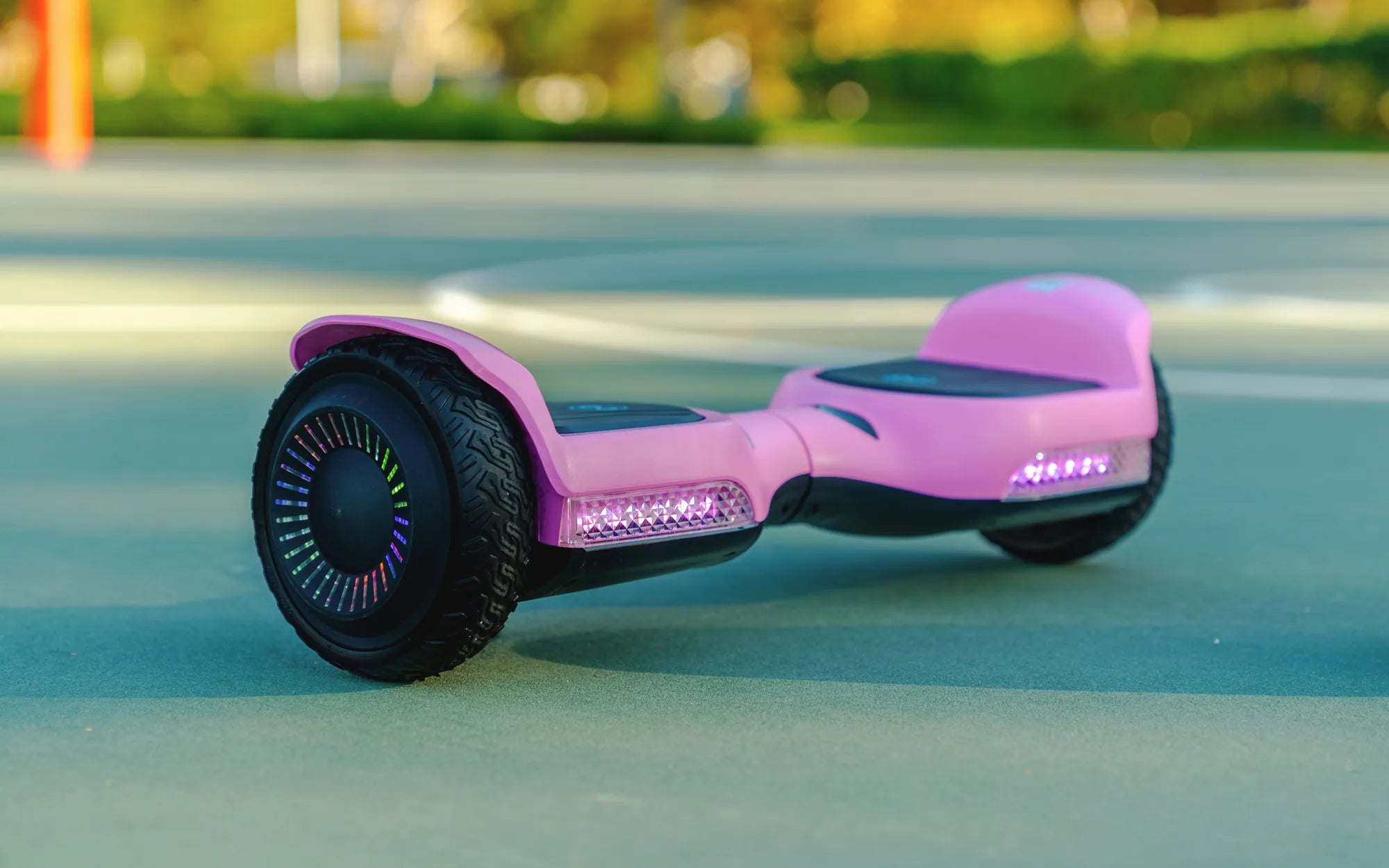
The auto-balancing electric scooter is no longer a futuristic concept; it's a practical engineering solution arriving on city streets. By integrating self-stabilizing technology, these vehicles fundamentally change the rider experience, making personal electric transport more accessible and efficient. This article will dissect the sensor-driven technology behind auto-balancing, analyze its concrete advantages for navigating dense urban environments, and examine how leading brands implement it for real-world reliability. You will learn how this innovation compares to traditional scooters, understand its safety and performance parameters, and discover why it represents a significant leap forward in solving last-mile mobility challenges.
How Auto-Balancing Technology Actually Works
At its core, an auto-balancing electric scooter operates on a principle of dynamic equilibrium, constantly making micro-corrections to keep the rider upright. This is achieved through a closed-loop system of sensors, a central processor, and powerful hub motors. Unlike a traditional scooter that relies entirely on the rider's physical balance, this system actively participates in stabilization.
The process begins the moment a rider steps onto the deck. Sensors immediately detect the shift in weight and orientation. The onboard computer, processing data hundreds of times per second, calculates the precise torque needed from the motor to counteract any forward or backward lean. This creates a stable platform that can even remain stationary without a kickstand.
The feeling is intuitive: to move forward, the rider leans slightly forward. The system interprets this lean as a command to apply torque to the wheels, driving the scooter forward to "catch" the rider. To slow down or stop, the rider leans back, prompting the motor to reverse torque or brake. This synergy between human input and machine response creates a uniquely fluid and controlled riding experience.
The Gyroscope & Sensor Suite: The Brain of the Scooter
The gyroscope is the cornerstone of the auto-balancing system. This sensor measures angular velocity—how quickly the scooter is tilting. It is typically paired with an accelerometer, which measures linear acceleration and tilt angle relative to gravity. Together, they form an Inertial Measurement Unit (IMU).
This IMU provides a constant, real-time stream of data about the scooter's precise orientation in three-dimensional space. It answers critical questions: Is the deck tilting forward? At what rate? What is the current angle? This data must be incredibly accurate; even a minor delay or error in measurement could lead to instability.
Modern auto-balancing systems often employ multiple sensor redundancies. A primary and secondary IMU may work in tandem, cross-verifying data to ensure reliability. This redundancy is a critical safety feature, ensuring that if one sensor fails, the system can maintain stability or initiate a safe shutdown procedure.
The Control Algorithm: Making Split-Second Decisions
Raw sensor data is useless without intelligent interpretation. This is the role of the control algorithm, typically a sophisticated PID (Proportional, Integral, Derivative) controller. This software is the scooter's decision-making engine.
The Proportional component reacts to the present error—the difference between the desired upright position and the current tilt. The Integral component sums past errors to correct for persistent offsets, like carrying a heavy backpack. The Derivative component predicts future error based on the rate of change, allowing for smooth, anticipatory corrections.
The algorithm outputs a precise command to the motor controller: deliver X amount of torque in Y direction. This happens in milliseconds, creating the seamless feeling of balance. The quality of this algorithm directly impacts ride smoothness, responsiveness, and overall safety, separating advanced implementations from basic ones.
Key Benefits: Why Auto-Balancing is a Game-Changer
The technological sophistication of auto-balancing translates into direct, practical benefits for the urban commuter. These advantages address the most common pain points associated with personal electric vehicles: safety concerns, maneuverability in traffic, and riding fatigue over short-to-medium distances.
By removing the primary skill barrier—maintaining balance—these scooters democratize personal mobility. They become viable for a wider demographic, including those who may be hesitant to try a traditional two-wheeled vehicle. The benefits compound in the stop-and-go, obstacle-filled environment of a modern city.
Enhanced Safety & Stability for All Riders
Safety is the most significant benefit. The auto-balancing mechanism provides exceptional low-speed and stationary stability. There's no risk of the scooter tipping over when waiting at a crosswalk or during a dismount. This prevents common accidents that occur with traditional scooters when riders lose balance during mounting or stopping.
The system also enhances stability on uneven urban terrain. When crossing a minor pothole, driveway lip, or cobblestone section, the gyroscopic system actively works to keep the deck level, reducing the jolt to the rider and minimizing the chance of a loss of control. This instills greater confidence, especially for new riders.
For brands like Gyroor, this core safety technology is bolstered by foundational hardware choices. The use of UL-certified battery packs is non-negotiable; a stable, reliable power supply is essential for the consistent high-performance demand of the balance motors. A voltage dip from an inferior battery could momentarily compromise the system.
Unmatched Maneuverability in Tight Spaces
Urban navigation demands agility. Auto-balancing scooters excel here due to their often more compact wheelbase and the precise control offered by the lean-to-steer mechanism. Riders can execute tight, controlled turns at low speeds, easily navigating crowded sidewalks, weaving through stalled traffic, or making sharp turns onto bike paths.
This maneuverability stems from the direct coupling of rider intent and vehicle response. Steering is not just a function of turning the handlebars but a combination of lean and subtle handlebar input. This allows for nuanced path correction that feels more natural than the sometimes-cumbersome steering of a long-deck traditional scooter.
The benefit is quantifiable: reduced commute times. The ability to take more direct routes, use narrower gaps, and maintain momentum through complex environments makes the auto-balancing electric scooter a highly efficient point-to-point urban transporter.
Intuitive Riding Experience & Reduced Fatigue
The learning curve is remarkably shallow. Most riders achieve basic competency within minutes, as the scooter effectively balances itself. This allows the rider to focus entirely on their environment, traffic, and navigation, rather than diverting mental energy to maintaining equilibrium.
Physically, the ride is less fatiguing. On a traditional scooter, the rider's core and leg muscles are constantly engaged in micro-adjustments to maintain balance, especially over longer distances or on imperfect surfaces. The auto-balancing system absorbs this workload.
The result is a commute that feels more like gliding than riding. This reduced physical and cognitive load makes the auto-balancing electric scooter a compelling choice for daily commuters who want to arrive at their destination feeling fresh, not physically taxed from the journey itself.
Gyroor's Approach: Engineering Trust in Auto-Balancing
Implementing advanced technology requires a parallel commitment to durability and safety. Gyroor, a brand trusted by over 100,000 riders, integrates auto-balancing features within a framework designed for real-world reliability. Their philosophy centers on building rider confidence through certified components, resilient construction, and strong warranty support.
This approach recognizes that sophisticated electronics must be protected and powered reliably to perform consistently. It's not enough to have a great balancing algorithm; the entire vehicle ecosystem must support its continuous, safe operation under varied urban conditions.
Built on a Foundation of Safety: UL-Certified Batteries & Robust Design
The auto-balancing system is a constant consumer of power, requiring stable voltage and current. Gyroor's use of UL-certified lithium-ion battery packs is a critical safety and performance decision. These batteries undergo rigorous testing for thermal stability, short-circuit protection, and longevity, ensuring they deliver consistent power through hundreds of charge cycles without dangerous fluctuations.
This directly supports the auto-balancing function. A sudden voltage drop or unstable power output could cause the control system to behave unpredictably. The UL certification provides an independent verification of the battery's reliability, which is foundational for the entire vehicle's operation.
Furthermore, the mechanical design is engineered to complement the electronics. A rigid, well-constructed deck and stem provide a stable platform for the sensors, ensuring their readings are accurate reflections of the vehicle's posture, not distorted by frame flex.
Ready for the Real World: IPX5 Water Resistance & Durability
Urban commuting means exposure to the elements. An unexpected rain shower or wet streets should not end a ride or damage the scooter. Gyroor's IPX5 water-resistant rating is a key feature for protecting the auto-balancing system's sensitive electronic components.
An IPX5 rating means the scooter can withstand water jets from any direction, making it resistant to rain, road spray, and puddles. This protection is crucial for the hub motors, control board, and sensor suites that enable auto-balancing. Moisture ingress could lead to sensor failure or electrical shorts, disabling the very feature that defines the vehicle.
This durability extends to daily wear and tear. The components are selected and assembled to withstand the vibrations and impacts of city riding, ensuring the precise calibration of the gyroscopic system remains intact over the long term.
Confidence on Every Ride: The 1-Year Comprehensive Warranty
The complexity of an auto-balancing system makes a strong warranty essential. Gyroor's 1-year comprehensive warranty on the vehicle, including the drive system and electronics, signals confidence in their product's durability. It assures the rider that the investment is protected.
This warranty is particularly important for the integrated technology. Should a sensor or control board require service, the rider has a clear path to support. For a technology that is still perceived as "new" by many consumers, this warranty acts as a critical trust-builder, backing the promise of advanced performance with a commitment to long-term reliability.
Auto-Balancing vs. Traditional Electric Scooters: A Data-Driven Comparison
Choosing the right type of electric scooter depends on individual needs and use cases. The following table provides a clear, factual comparison between auto-balancing and traditional electric scooters, highlighting the distinct advantages and trade-offs of each technology.
| Feature | Auto-Balancing Scooter (e.g., Gyroor Models) | Traditional Electric Scooter |
|---|---|---|
| Primary Technology | Gyroscopic sensors, IMU, PID control algorithm | Throttle control, basic motor controller |
| Learning Curve | Very low; intuitive balance assist enables riding within minutes. | Moderate; requires practice balancing, especially at low speeds. |
| Low-Speed & Stationary Stability | Excellent; can remain upright without a kickstand, preventing tip-overs. | Poor; requires rider balance or deployment of a kickstand when stopped. |
| Maneuverability | Exceptional; precise, tight turns enabled by lean-to-steer and compact design. | Good; depends on deck length & wheelbase. Can be cumbersome in tight spaces. |
| Rider Fatigue | Lower; core muscles are less engaged as the system manages balance. | Higher; constant balance correction required, especially on uneven surfaces. |
| Typical Optimal Use Case | Dense urban commuting, short trips with frequent stops, leisure riding. | Longer, straighter commutes (e.g., bike paths), recreational use on open paths. |
| Technology Complexity & Cost | Higher (advanced sensors, algorithms). May command a premium. | Lower (simpler mechanics & electronics). Often more budget-friendly. |
| Rider Profile | Beginners, commuters seeking ease-of-use, riders in very congested areas. | Experienced riders, those prioritizing range/speed over ease, budget-conscious buyers. |
The data shows that auto-balancing scooters are not inherently "better," but are specialized for environments where stability, ease of use, and agility are paramount. Traditional scooters remain excellent for users who have mastered balance and prioritize other factors like top speed or maximum range on paper.
Addressing Common Questions (FAQ)
Is an auto-balancing scooter harder to learn than a regular scooter?
No, it is significantly easier for most people. The primary challenge of riding a traditional scooter is maintaining balance, a skill that is automated by the gyroscopic system. New riders typically feel comfortable within 5-10 minutes, focusing only on throttle control and gentle steering inputs. The intuitive "lean to go" mechanism feels natural quickly.
What happens if the auto-balancing system fails while riding?
Reputable manufacturers design for this scenario with multiple redundancies. Systems often have dual sensors; if one fails, the other can maintain function. In a total system failure, the scooter is designed to enter a safe mode—typically by gently decelerating to a stop while allowing the rider to balance manually, or by shutting down with warning indicators. The physical design still allows it to be ridden cautiously like a non-motorized kick scooter. Gyroor's robust construction and quality components aim to make such failures extremely rare.
Does the auto-balancing feature drain the battery quickly?
The power draw from the gyroscopic sensors and control system is minimal, especially when compared to the main drive motor. The impact on overall range is negligible, often amounting to less than 5% of the total battery capacity. Efficient, high-capacity batteries like the UL-certified packs used by Gyroor are designed to power all systems for the scooter's advertised range without issue.
Can auto-balancing scooters handle hills and rough pavement?
Yes, but performance depends on the motor's power (wattage) and torque, not the balancing system itself. The auto-balancing feature improves stability and control on inclines and over minor imperfections like cracks or gravel. However, for steep hills, a powerful motor (500W or more) is essential. Similarly, while the system helps keep the deck level, larger air-filled tires are better for absorbing shocks from rough pavement than small solid tires.
Are auto-balancing scooters safe in the rain?
Safety in wet conditions depends on the scooter's water resistance rating and rider caution. A scooter with an IPX5 rating, like many Gyroor models, is protected against rain and road spray. However, riders must exercise increased caution: reduce speed, avoid sharp turns, brake earlier, and steer clear of painted road markings and metal surfaces which become slippery. The auto-balancing system can help maintain stability on wet, uneven surfaces, but it does not overcome the reduced traction of the tires.
The Evolution of Personal Mobility and Urban Integration
The auto-balancing electric scooter represents a specific evolution within the broader micro-mobility revolution. It addresses the "first and last mile" problem—the gap between public transit stops and final destinations—more elegantly than many predecessors. By lowering the skill barrier, it expands the potential user base, increasing the adoption of sustainable transport.
Cities are beginning to adapt infrastructure to accommodate these personal electric vehicles. Dedicated bike lanes, slower-speed "shared streets," and secure parking racks are becoming more common. The compact size and quiet operation of e-scooters make them ideal for integration into multi-modal transit systems, where a rider can take a train and then use a scooter for the final leg without sweating or struggling with balance.
The technology also paves the way for future advancements. The same sensor and control systems could enable advanced rider aids, connectivity with smart city infrastructure, or even higher levels of assisted stability for cargo-carrying variants. The foundational technology is a platform for innovation.
Conclusion: Steering Towards a Smarter Urban Commute
The auto-balancing electric scooter is a definitive step forward in urban mobility, transforming a utilitarian vehicle into an intuitive extension of the rider. It solves practical problems—instability at low speeds, a steep learning curve, and navigational clumsiness—through elegant engineering. This makes sustainable, efficient personal transport accessible to a vastly wider audience.
As with any technology, implementation is key. The promise of auto-balancing is fully realized only when built on a foundation of safety-certified components, durable construction, and reliable support. This combination of advanced software and dependable hardware is what creates a vehicle ready for the demands of daily city life.
The future of urban mobility is not just electric; it is intelligent, adaptive, and user-friendly. The auto-balancing electric scooter embodies this future today. Experience the difference that intuitive stability and robust engineering can make for your commute. Browse the full Gyroor collection, featuring UL-certified batteries, IPX5 water-resistant designs, and reliable 1-year warranties, at gyroorboard.com.
Why Isn't My Hoverboard Turning On? A Complete Troubleshooting Guide and Fixes
Christmas Gift Ideas for Boys Age 6: Fun and Engaging Presents They’ll Love