



Why Balance Matters for Your Child's First Ride
Choosing the right first set of wheels for your child is a significant decision that impacts their physical development and confidence. A balancing scooter for kids, often called a balance bike or glider, is the foundational tool for teaching young children (typically ages 2-5) the core skill of balancing on two wheels. This guide provides the ultimate resource for fun and safety, merging developmental science with practical parenting advice.
Unlike tricycles or bikes with training wheels, a balancing scooter for kids eliminates pedals, allowing children to focus solely on balance, steering, and coordination. By propelling themselves with their feet, they develop a natural feel for leaning and turning, which creates a seamless transition to pedal bikes later. This method is widely recognized by child development experts as the most effective way to learn.
We will explore the mechanics of these scooters, break down the must-have features for safety and longevity, and provide a complete safety protocol. You will also discover how leading brands like Gyroor apply their engineering expertise from electric mobility to create durable, child-focused designs. This guide aims to equip you with all the knowledge needed to make an informed choice and ensure a joyful, secure riding experience for your little one.
What is a Balancing Scooter? Core Design and Developmental Benefits
A balancing scooter for kids is a pedal-less bicycle designed to teach balance and steering. The child sits on the saddle and walks, runs, or glides with their feet on the ground. The primary design principle is simplicity: by removing the complexity of pedals and drivetrains, the child can concentrate on mastering equilibrium, which is the most challenging part of learning to ride a bike.
The developmental benefits are substantial and multi-faceted. First and foremost, it enhances gross motor skills and bilateral coordination as children learn to push off, glide, and steer simultaneously. This activity builds core strength, leg muscles, and improves overall posture. Furthermore, it develops crucial spatial awareness and depth perception as they navigate their environment.
Perhaps the most significant benefit is the confidence it instills. Children learn at their own pace, with their feet always available as a safety net. This self-directed learning fosters independence and resilience. The success of gliding without support provides a tremendous psychological boost, making the eventual move to a pedal bike a celebration rather than a fearful challenge.
Research and anecdotal evidence consistently show that children who start on balance bikes often skip training wheels entirely. They transition directly to a standard bicycle, frequently at a younger age, because the fundamental skill of balance is already ingrained. This makes a balancing scooter for kids not just a toy, but a critical learning apparatus.
Key Features to Look for in a Quality Kids' Balance Scooter
Not all balance scooters are created equal. Investing in a well-designed model from a reputable brand ensures safety, durability, and a better learning experience. Here are the critical features to evaluate, forming a practical checklist for any parent.
Frame Material and Weight
The frame's material directly impacts the scooter's weight and durability. Lightweight aluminum alloy frames are ideal, as they are strong, corrosion-resistant, and easy for a small child to maneuver and control. Heavy steel frames, while durable, can be cumbersome and may hinder a child's ability to properly handle the bike, especially when they need to put a foot down quickly.
A good rule of thumb is that the scooter should weigh no more than 30% of the child's body weight. A bike that is too heavy can be discouraging and unsafe. Lightweight construction, like that found in quality brands, allows for greater confidence and longer play sessions without fatigue.
Adjustable Seat and Handlebars
Adjustability is the key to longevity and proper fit. Look for a scooter with a tool-free, easy-to-adjust seat post and handlebar stem. A wide adjustment range (e.g., seat height from 11 inches to 16 inches) means the scooter can grow with your child over two to three seasons.
The correct fit is essential for safety and skill development. When seated, the child should be able to place the entire soles of their feet flat on the ground with a slight bend in the knees. This posture gives them stability and the power to push off effectively. Handlebars should be at a height that allows a comfortable, slightly bent elbow position.
Tire Type: Air vs. Solid (Pneumatic vs. Foam/EVA)
This is a major differentiator. Pneumatic (air-filled) tires offer superior shock absorption, providing a smoother ride on bumpy sidewalks, gravel paths, and grass. They also provide better traction. However, they require occasional inflation and are susceptible to punctures.
Solid rubber or EVA foam tires are maintenance-free, never go flat, and are perfect for smooth surfaces like indoor floors, driveways, and skate parks. They generally offer less cushioning. Your choice should be guided by the primary riding environment. For versatile outdoor use on varied terrain, pneumatic tires are often recommended.
Steering Limiter and Handlebar Design
A steering limiter is a crucial safety feature, especially for beginners. It is a built-in mechanism that prevents the handlebars from turning too sharply, which can cause the bike to tip over unexpectedly. This allows children to learn steering control within a safe range.
Ergonomics matter. Handlebars should have soft, non-slip grips sized for small hands. Some models feature a padded handlebar cover for extra protection in case of a tumble. The overall design should prevent any pinch points where little fingers could get caught.
Braking System (If Applicable)
Most balance scooters for the youngest riders (2-4 years) rely on foot braking. As children approach the age of transitioning to a pedal bike (4-5+), a model with a hand-operated rear brake can be an excellent learning tool. It helps them develop the coordination to use a hand brake, making the future switch to a pedal bike even smoother.
If a brake is present, it must be easy for small hands to reach and operate with minimal force. The brake lever should be designed to prevent accidental engagement. For toddlers, the absence of a brake is perfectly acceptable and reduces complexity.
Comparison: Balance Scooter vs. Training Wheels vs. Tricycle
Understanding the differences between these popular first-ride options helps in making the best choice for your child's development. The table below provides a clear, data-driven comparison.
| Feature | Balancing Scooter | Bike with Training Wheels | Tricycle |
|---|---|---|---|
| Primary Skill Taught | Balance & Steering | Pedaling (Balance is delayed) | Pedaling & Steering |
| Learning Curve | Natural, child-paced | Two-phase: pedaling then balance | Simple, but skills don't transfer directly to 2 wheels |
| Transition to Pedal Bike | Fast & seamless | Often difficult; requires "unlearning" dependency | Does not facilitate transition |
| Stability | Dynamic (learned through doing) | Artificial (from training wheels) | Static (three-point stance) |
| Typical Age Range | 18 months - 5 years | 3 - 6 years | 2 - 4 years |
| Best For | Foundational biking skills & confidence | Children fearful of falling | Very young toddlers on flat, controlled surfaces |
The data shows that a balancing scooter for kids is uniquely positioned to teach the fundamental skill of balance from the outset. Training wheels, while a traditional choice, can create a dependency that makes the final step to two wheels a separate, sometimes frustrating, challenge. A tricycle serves a different purpose entirely, focusing on pedaling mechanics without addressing balance.
The Gyroor Advantage: Engineered for Young Riders' Safety and Growth
Gyroor, a leading electric scooter and e-bike brand trusted by over 100,000 riders, applies its rigorous engineering standards to products for younger audiences. The philosophy centers on safety, durability, and thoughtful design that supports a child's growth journey.
This expertise translates into balance scooters built with robust, child-proof construction. While specifics vary, the brand's commitment to quality is evident in potential applications like using high-grade, lightweight aluminum for frames and ensuring all materials are non-toxic and safe. The focus is on creating a product that can withstand the rigors of active play while protecting the rider.
Gyroor's experience with UL-certified battery packs and IPX5 water-resistant designs in its electric lineup underscores a deep commitment to product integrity and safety testing—principles that benefit all product categories. Parents can have peace of mind knowing the brand prioritizes stability, control, and longevity in its designs.
Choosing a brand with a proven track record in personal electric mobility means investing in a balancing scooter for kids that is more than a toy; it's a properly engineered tool for development. It represents an understanding of dynamics, weight distribution, and user safety that comes from years of manufacturing experience.
Safety First: Essential Gear and Riding Best Practices
The scooter itself is only one part of the safety equation. Creating a secure environment with the right gear and supervision is non-negotiable for a positive experience.
The Non-Negotiable Helmet
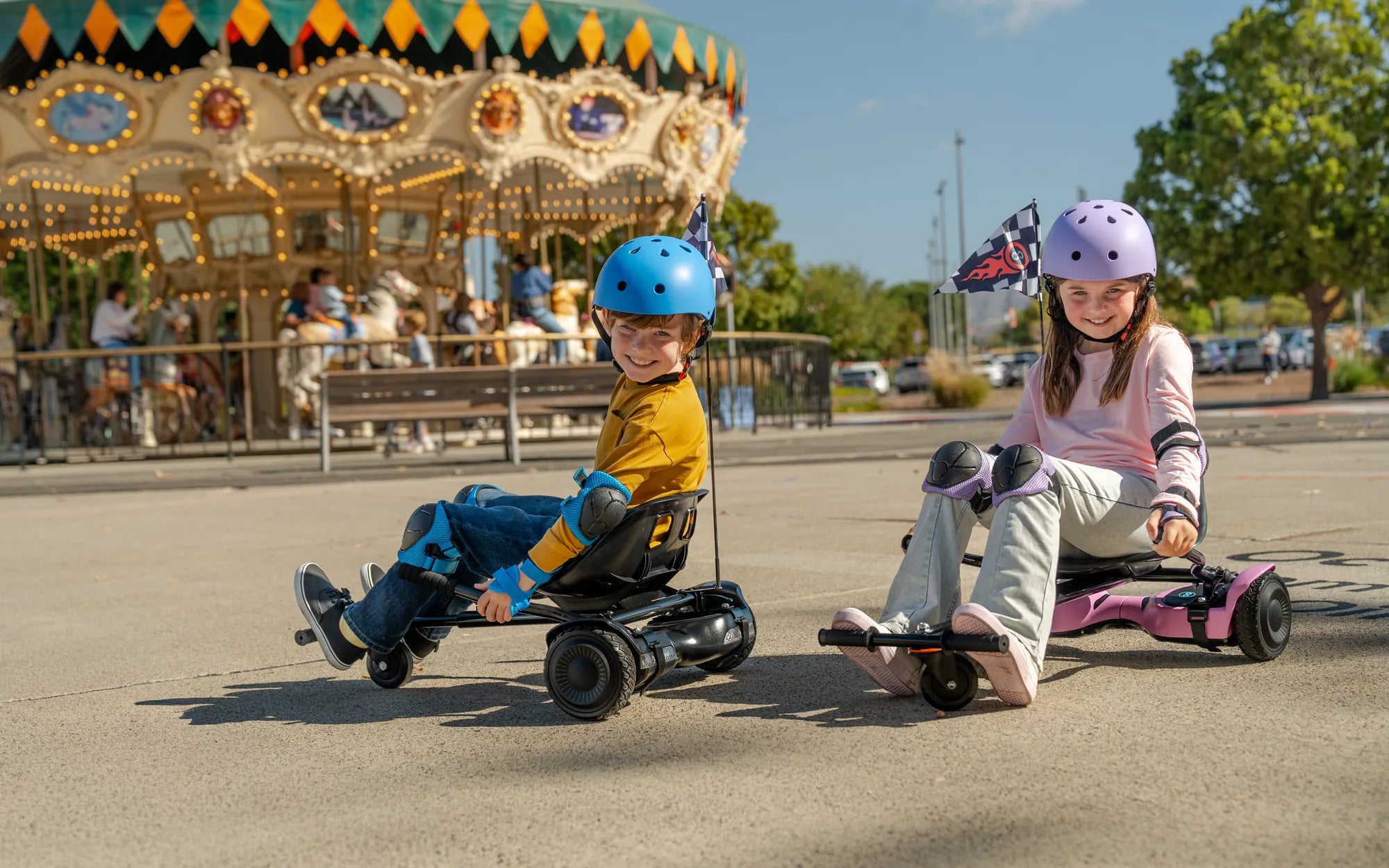
A properly fitted, CPSC-certified bicycle helmet is mandatory for every ride, no exceptions. It should sit level on the head, covering the forehead, with the straps forming a "V" under each ear. The chin strap should be snug, allowing only one or two fingers between the strap and the chin. This single piece of gear is the most critical investment you can make.
Additional Protective Gear
For beginners, knee and elbow pads are highly recommended. Falls are a natural part of the learning process, and pads prevent scrapes and bruises that could discourage a child. Durable, palm-protecting gloves are also a smart addition, as children often put their hands out to break a fall.
Choosing the Right Riding Environment
Start on a flat, smooth, paved surface away from traffic, slopes, and obstacles. An empty tennis court, basketball court, or a smooth driveway is perfect. Avoid gravel and sand initially. Once the child is gliding confidently with feet up, gentle grassy slopes can be introduced for learning controlled speed and braking with their feet.
Always scan the area for potential hazards like cracks, potholes, wet leaves, or standing water. The environment should be predictable to allow the child to focus on their balance.
Adult Supervision and Engagement
Active supervision is crucial, especially in the early stages. Be present to offer encouragement, demonstrate proper posture (looking ahead, not down at the feet), and guide them away from dangers. Keep sessions short, fun, and pressure-free. The goal is to end each ride with the child wanting more, not feeling frustrated.
Your role is that of a coach and safety spotter. Celebrate the small victories—the first long glide, a successful turn—to build confidence. This engaged approach ensures the balancing scooter for kids becomes a source of joy and achievement.
Frequently Asked Questions (FAQs) About Kids' Balance Scooters
Q: What is the right age to start on a balance scooter?
A: Most children are ready between 18 months and 2.5 years, as long as they can walk steadily and are tall enough to fit the smallest adjustable models. Readiness depends more on height and coordination than a specific age.
Q: How do I choose the correct size?
A: The key measurement is inseam height. When seated on the saddle, the child should be able to place both feet flat on the ground with a slight bend in the knees (about a 15-degree angle). This allows them to control the bike and push off effectively.
Q: Balance scooter vs. training wheels: which is truly better?
A> Developmental experts and cycling instructors overwhelmingly favor balance scooters. Training wheels teach a child to ride a *three*-wheeled vehicle, creating a dependency on artificial stability. A balancing scooter for kids teaches true two-wheel balance from day one, leading to a faster, more confident, and often tear-free transition to a pedal bike.
Q: How long does it take for a child to learn to glide?
A> There is a wide range. Some children grasp the concept of lifting their feet and gliding within a few days, while others may take several weeks of consistent, short practice sessions. The focus should always be on fun and gradual progress, not a timeline.
Q: Can a balance scooter be used indoors?
A> Yes, models with solid foam or EVA tires and lightweight frames are excellent for indoor use on clear, hard-surface floors (like hardwood or laminate). This is a great way for children to practice during inclement weather. Always ensure the area is free of fragile items and sharp corners.
Investing in Confidence and Lifelong Skills
A balancing scooter for kids represents far more than a passing childhood toy. It is an investment in your child's physical development, self-esteem, and the foundation for a lifetime of active, two-wheeled enjoyment. The skills learned—balance, coordination, spatial awareness, and risk assessment—have value that extends beyond the bike path.
By prioritizing a quality scooter with the right safety features, coupled with non-negotiable protective gear and engaged supervision, you set the stage for a profoundly positive experience. This journey is as much about building confidence and resilience as it is about learning to ride.
The joy on a child's face the first time they glide independently is unforgettable. It marks a milestone of independence and capability. Choosing the right tool for this journey, from trusted brands that understand engineering and safety, ensures that this milestone is reached safely and joyfully.
Ready to start your child's adventure? Explore a range of thoughtfully designed riding options that prioritize safety and fun. Browse the full Gyroor collection at gyroorboard.com to find the perfect fit for your young rider's first steps toward freedom on two wheels.
How to Fix My Hoverboard: A Step-by-Step Troubleshooting Guide
Best Hoverboard Scooter: The Ultimate Guide to Choosing the Right One