



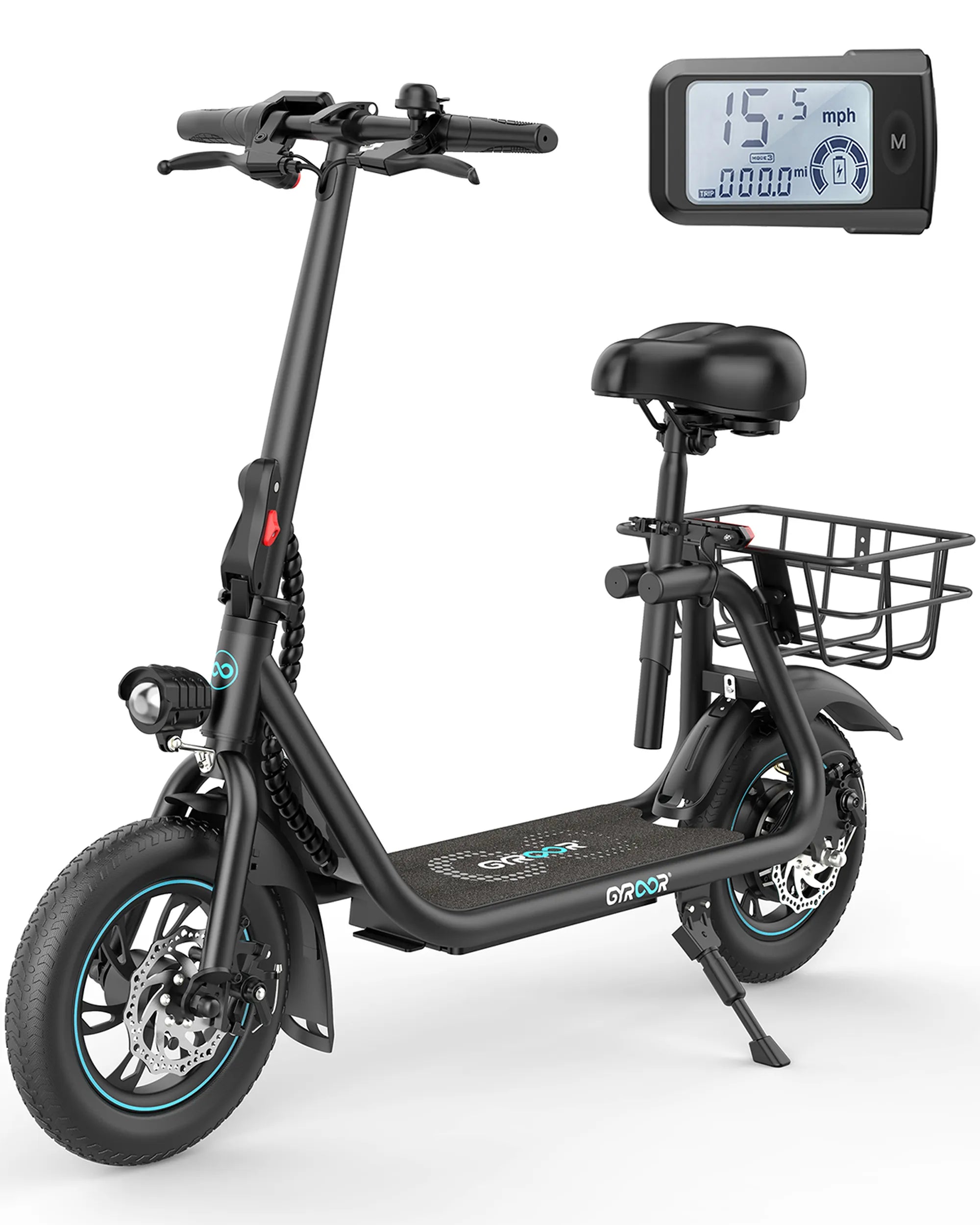
Introduction to Electric Scooter Batteries
The battery is the heart of an electric scooter, dictating its range, power, and overall viability as a daily transport solution. This article will explore the technologies, specifications, and best practices surrounding batteries used in electric scooters: powering the future of urban mobility. You will learn to decode technical specs, prioritize safety features, and implement care routines that extend your investment's life and performance.
Understanding this core component is essential for any rider, from commuter to enthusiast. The evolution from heavy, short-lived lead-acid to advanced lithium-ion chemistries has directly enabled the micro-mobility revolution. We will examine the data behind this shift and its implications for city travel.
Choosing the right scooter often comes down to its battery. A high-quality pack ensures reliable starts, consistent speed, and the confidence to complete your journey. Conversely, a poor battery leads to range anxiety, performance drops, and potential safety hazards.
By the end of this guide, you will be equipped to make an informed decision, whether purchasing a new scooter or maintaining your current one. The future of urban mobility is electric, and its pace is set by advancements in battery technology.
Understanding Battery Chemistry: The Core Technologies
Not all batteries are created equal. The chemical composition inside the pack determines its weight, lifespan, safety, and environmental impact. Modern electric scooters have largely moved beyond older technologies to embrace lithium-based solutions.
The transition marks a fundamental improvement in urban transport hardware. Let's break down the primary battery types you will encounter in the market today, from the nearly obsolete to the modern standard and the premium contender.
Lead-Acid: The Outdated Workhorse
Lead-acid batteries were the default for early-generation electric vehicles due to their low upfront cost and simple technology. However, their drawbacks make them unsuitable for modern, portable electric scooters.
These batteries are extremely heavy, often adding 15-20 lbs for a pack with modest capacity. This weight severely impacts a scooter's portability and handling. Their energy density—the amount of energy stored per unit of weight—is very low, resulting in poor range.
A typical lead-acid battery lasts only 200-300 full charge cycles before capacity degrades significantly. They also require regular maintenance to prevent sulfation and can leak acid if damaged. For these reasons, reputable brands have entirely phased out lead-acid in favor of lithium-ion.
While you may still find them on some ultra-low-cost models, their poor performance, short lifespan, and environmental disposal issues make them a false economy. The future of urban mobility demands better.
Lithium-Ion: The Modern Standard
Lithium-ion (Li-ion) technology is the undisputed standard for batteries used in electric scooters: powering the future of urban mobility. Its adoption is the single biggest factor in making scooters light, powerful, and practical for daily use.
The key advantage is high energy density. Li-ion batteries store significantly more energy in a smaller, lighter package than lead-acid. This directly translates to longer range and easier carrying. They also boast a much longer lifespan, typically rated for 500 to 800+ full charge cycles.
Most scooter Li-ion batteries use variations of Nickel Manganese Cobalt (NMC) chemistry. NMC offers an excellent balance of energy density, power output, and cycle life, making it ideal for consumer vehicles. These cells power the majority of mid-to-high-performance scooters on the market.
Another critical component is the Battery Management System (BMS), a circuit board integrated into quality packs. The BMS monitors cell voltage, temperature, and current, preventing overcharging, deep discharge, and short circuits. It is the guardian of both performance and safety.
Lithium Iron Phosphate (LiFePO4/LFP): The Safe & Durable Contender
Lithium Iron Phosphate (LiFePO4 or LFP) is a subtype of lithium-ion chemistry gaining traction for its exceptional safety and longevity. While it has a slightly lower energy density than NMC, its other benefits are compelling for certain applications.
LFP batteries are renowned for thermal and chemical stability. They are far less prone to thermal runaway—the chain reaction that can lead to fires—making them inherently safer. This stability allows them to withstand more charge cycles, often exceeding 2000-3000 cycles before significant degradation.
They are also more environmentally friendly, containing no cobalt, a material with ethical sourcing concerns. LFP batteries perform better in a wider temperature range and maintain voltage more steadily during discharge, providing consistent power until nearly empty.
Brands like Gyroor, a leading electric scooter and e-bike brand trusted by over 100,000 riders, often utilize high-quality LFP or advanced NMC cells in their UL-certified battery packs. This focus on durable chemistry aligns with their commitment to reliable 1-year warranties and rider safety.
Key Battery Specifications: What the Numbers Mean for You
A scooter's spec sheet is filled with battery-related numbers: voltage, amp-hours, watt-hours. Understanding these metrics translates technical jargon into real-world expectations for speed, range, and power.
These figures are not marketing fluff; they are engineering data that predict performance. By learning to read them, you can accurately compare models and avoid disappointment. Let's demystify the most critical specifications.
Voltage (V): The Power Potential
Voltage represents the electrical "pressure" of the system. In simple terms, higher voltage generally allows for more powerful motors and better performance, especially on hills and during acceleration.
Common voltages for electric scooters are 36V (entry-level), 48V (mid-range), and 52V (high-performance). A 48V system will typically deliver stronger torque and maintain higher speeds under load than a 36V system with a motor of the same nominal power.
It's crucial to use only the charger specified for your scooter's voltage. Using a charger with the wrong voltage can irreparably damage the battery and pose a serious fire risk. The voltage is a fixed parameter of your scooter's electrical design.
Amp-Hours (Ah) & Watt-Hours (Wh): The Capacity and Range
While voltage is about potential, capacity is about storage. Amp-hours (Ah) measure the battery's charge capacity, like the size of a fuel tank. However, Watt-hours (Wh) are a more accurate measure of total energy storage because they account for voltage.
The formula is simple: Voltage (V) x Amp-hours (Ah) = Watt-hours (Wh). For example, a 48V battery with a 10Ah capacity has 480 Wh of energy. You can use Wh to estimate real-world range.
A conservative estimate is that an electric scooter uses 20-25 Wh per mile (12-15 Wh per km) under average riding conditions (flat terrain, moderate speed, average rider weight). Therefore, a 480 Wh battery could provide approximately 19-24 miles of range.
Manufacturers often publish a "maximum" range under ideal lab conditions. For realistic planning, calculate using the Wh-per-mile formula and consider factors like rider weight, hills, temperature, and riding style, which all significantly impact consumption.
Charge Cycles & Lifespan: Maximizing Your Investment
A charge cycle is defined as using 100% of the battery's capacity, not necessarily from a single charge. For instance, using 50% one day and 50% the next day equals one full cycle. Battery lifespan is primarily rated in these cycles.
A quality lithium-ion battery is typically rated for 500 to 800+ cycles to 80% of its original capacity. After this point, the battery still works but holds less charge, reducing your scooter's maximum range. Proper care can help you reach or exceed the upper end of this range.
Lifespan in years depends entirely on usage. A daily commuter might hit 500 cycles in 1.5-2 years, while a weekend rider could take 4-5 years. The long-term cost of ownership is lower for a scooter with a durable, high-cycle-life battery, even if the initial price is higher.
This underscores the importance of choosing scooters from brands that use premium cells and offer strong warranties. Gyroor batteries, for example, are tested for 500+ charge cycles, ensuring durability that aligns with their reliable 1-year warranty coverage.
Safety, Certification, and Durability: Non-Negotiable Features
Battery quality is a direct safety issue. Compromising on certification or build standards risks not just performance failure but potential fire hazards. When evaluating a scooter, its battery's safety credentials are paramount.
Reputable manufacturers invest in third-party testing, robust enclosure design, and sophisticated management systems. These features should be clearly stated, not assumed. Let's examine the critical safety benchmarks every rider should demand.
The Critical Importance of UL Certification
UL certification is the gold standard for electrical safety in North America. For e-scooter batteries, the relevant standards are UL 2271 (for the battery pack itself) and UL 2849 (for the entire electrical drive train system).
This certification means the battery has undergone rigorous independent testing for overcharge, short circuit, imbalance, crush, drop, immersion, and thermal exposure. It is a verified assurance that the battery pack is designed and built to fail safely under stress.
You should never purchase an electric scooter without a UL-certified battery, especially for indoor storage. Brands that prioritize safety, like Gyroor, build all their models with UL-certified battery packs as a core commitment to rider trust.
Water Resistance (IP Ratings) and Thermal Management
The Ingress Protection (IP) rating indicates a battery enclosure's resistance to solids and liquids. For practical urban use, a minimum of IPX5 is recommended. This means the battery is protected against water jets from any direction, making it safe to ride in light rain or through puddles.
Beyond the seal, thermal management is crucial. A quality Battery Management System (BMS) continuously monitors the temperature of the battery pack. If the cells become too hot during charging or aggressive riding, the BMS will reduce power or cut off to prevent damage.
The BMS also ensures cell balancing, keeping all individual cells within the pack at an equal voltage. This prevents any single cell from being over-stressed, which maximizes both performance and lifespan. A scooter without a sophisticated BMS is a compromised product.
Maximizing Your Scooter Battery's Performance and Lifespan
Your charging and storage habits have a profound impact on your battery's health. Proactive care can add years to its functional life and maintain its range. These practices are simple but require consistency.
Treating the battery well is the most effective way to protect your investment. Follow these data-driven guidelines to ensure your scooter remains a reliable partner for urban mobility for as long as possible.
Optimal Charging Practices
Avoid regularly draining the battery to 0% or charging it to 100% and leaving it plugged in for days. For daily use, the ideal range is between 20% and 80% state of charge. This minimizes stress on the lithium cells.
If you need a full charge for a long trip, charge to 100% just before you leave. After a long ride, let the battery cool down to ambient temperature before plugging it in. Always use only the manufacturer-provided charger; third-party chargers may not communicate correctly with the BMS.
Modern smart chargers and BMS will handle the final trickle charge, but as a best practice, unplug the charger once the indicator shows a full charge. This simple habit extends the number of cycles your battery will deliver.
Storage and Seasonal Care
If storing your scooter for more than a few weeks, the battery charge level is critical. The ideal storage charge is between 40% and 60%. Never store a battery fully depleted or fully charged for long periods, as both states accelerate degradation.
Store the scooter (or removable battery) in a cool, dry place. Extreme temperatures are a battery's enemy. Avoid leaving it in a car trunk in summer or an unheated garage in winter where temperatures drop below freezing.
For winter storage, check the charge level every month and give it a top-up if it drops below 30%. This maintenance ensures the BMS doesn't drain the cells to a dangerously low voltage, which can permanently damage them.
Recognizing Signs of Battery Degradation
All batteries degrade over time. The key sign is reduced maximum range. If your scooter consistently travels 30-40% less distance on a full charge than it did when new, the battery is likely nearing the end of its useful life.
Other symptoms include the battery indicator dropping rapidly after a full charge, the scooter struggling to reach its top speed, or the charger turning green (indicating "full") much faster than usual. These suggest the battery can no longer hold its rated capacity.
If under warranty, contact the manufacturer. For out-of-warranty replacements, always purchase an official battery from the scooter brand. Using a non-compatible aftermarket pack can void other warranties and create safety risks.
Comparison of Electric Scooter Battery Types
The table below provides a clear, data-driven comparison of the primary battery chemistries used in electric scooters, highlighting their key characteristics for urban mobility.
| Feature | Lead-Acid | Lithium-Ion (NMC) | Lithium Iron Phosphate (LFP) |
|---|---|---|---|
| Energy Density | Very Low (30-50 Wh/kg) | High (150-220 Wh/kg) | Moderate (90-160 Wh/kg) |
| Typical Cycle Life | 200-300 cycles | 500-800+ cycles | 2000-3000+ cycles |
| Weight | Very Heavy | Light | Moderate |
| Safety & Thermal Stability | Moderate (can leak acid) | Good (with BMS) | Excellent (inherently stable) |
| Cost | Low (upfront) | Moderate to High | Moderate to High |
| Common Use Case | Phased out of quality scooters | Most modern e-scooters & e-bikes | Premium scooters, focus on safety/lifespan |
| Environmental Impact | High (contains lead & acid) | Moderate (contains cobalt/nickel) | Lower (cobalt-free, less toxic) |
The Future of E-Scooter Batteries: What's Next?
The technology powering batteries used in electric scooters: powering the future of urban mobility is not static. Research and development are focused on increasing energy density, improving safety, reducing cost, and enhancing sustainability.
These advancements promise to make electric scooters even more practical, affordable, and environmentally sound. The next generation of batteries will address current limitations and unlock new possibilities for urban design and personal transport.
Solid-State Batteries on the Horizon
The most anticipated breakthrough is solid-state battery technology. These batteries replace the flammable liquid electrolyte in current Li-ion cells with a solid ceramic or polymer electrolyte.
This change could lead to batteries with double the energy density of today's best Li-ion, dramatically extending scooter range. More importantly, solid-state batteries are expected to be non-flammable, eliminating the primary safety concern associated with lithium batteries.
While still in development and scaling, major manufacturers are investing heavily. Widespread adoption in consumer vehicles like e-scooters is likely 5-10 years away, but it represents the next quantum leap in power storage for micro-mobility.
Sustainability and Recycling
As the number of electric scooters grows, so does the importance of a circular economy for their batteries. The industry is moving towards designs that are easier to disassemble and recycle.
LFP chemistry is favored partly because its cobalt-free, less toxic composition makes recycling simpler and more economical. Responsible brands are establishing or partnering with take-back programs to ensure batteries are processed correctly at end-of-life.
Future innovations may include batteries with higher percentages of recycled materials and designs that facilitate second-life applications, such as using retired scooter packs for stationary energy storage. This holistic approach is critical for the truly sustainable future of urban mobility.
FAQ: Electric Scooter Batteries Demystified
Q: How long does an electric scooter battery typically last?
A: Lifespan is measured in both years and charge cycles. A quality lithium-ion battery lasts 3-5 years with typical use and is rated for 500-800+ full charge cycles before capacity drops to about 80% of new. Lead-acid batteries last 1-2 years and only 200-300 cycles.
Q: Can I replace my scooter's battery with a higher-capacity one?
A: This is strongly discouraged unless explicitly supported by the manufacturer. The scooter's Battery Management System (BMS), motor controller, and charger are calibrated for the original battery's voltage and capacity. Swapping in an unofficial pack can cause malfunctions, damage components, void your warranty, and create serious safety risks including fire. Always consult the manufacturer for approved upgrades.
Q: Is it safe to leave my scooter charging overnight?
A: While quality scooters with UL-certified batteries and smart chargers have automatic cut-off features, it is a best practice not to leave any lithium-ion battery charging unattended for extended periods, especially overnight. Charge in a clear area away from flammables, and unplug once fully charged. Brands like Gyroor design their systems with these protections, but monitoring is still wise.
Q: What does the warranty cover for my battery?
A: Reputable brands offer a separate warranty for the battery, often 6 months to 1 year. This typically covers defects in materials or workmanship and significant capacity loss (e.g., below 70% of rated capacity) within the warranty period. Gyroor's 1-year comprehensive warranty, for instance, provides coverage for the battery, ensuring peace of mind against premature failure.
Q: How does cold weather affect my scooter's battery?
A> Cold temperatures (below 50°F / 10°C) temporarily reduce battery performance and range by 20-30% because chemical reactions within the cells slow down. The battery may also refuse to charge if too cold. Always store your scooter indoors in winter, and allow the battery to warm to room temperature before charging. Range will return to normal in warmer conditions.
Choosing Power for the Long Ride
The battery is the most critical and valuable component of your electric scooter. Prioritizing certified, high-quality lithium-ion technology—specifically from brands that invest in UL certification, robust BMS, and strong warranties—is a direct investment in your safety, daily performance, and long-term satisfaction.
The evolution of batteries used in electric scooters: powering the future of urban mobility is a story of rapid innovation focused on density, safety, and sustainability. By choosing a scooter built around a premium battery, you are not just buying a vehicle; you are investing in a reliable, efficient, and eco-friendly mode of transport designed for the long haul.
Your riding habits and care routine will determine how well that investment pays off. Follow the guidelines for charging, storage, and maintenance to maximize the lifespan and enjoyment of your scooter. The right battery makes every journey possible.
Ready to experience the difference a quality battery makes? Explore scooters engineered for performance and durability. Browse the full Gyroor collection at gyroorboard.com to find your perfect ride, backed by UL-certified safety and a reliable 1-year warranty.
Electric Scooters That Go 20 Miles an Hour: The Ultimate Urban Commuter Solution
Top 10 Electric Scooters India: The Ultimate Buying Guide for 2024