



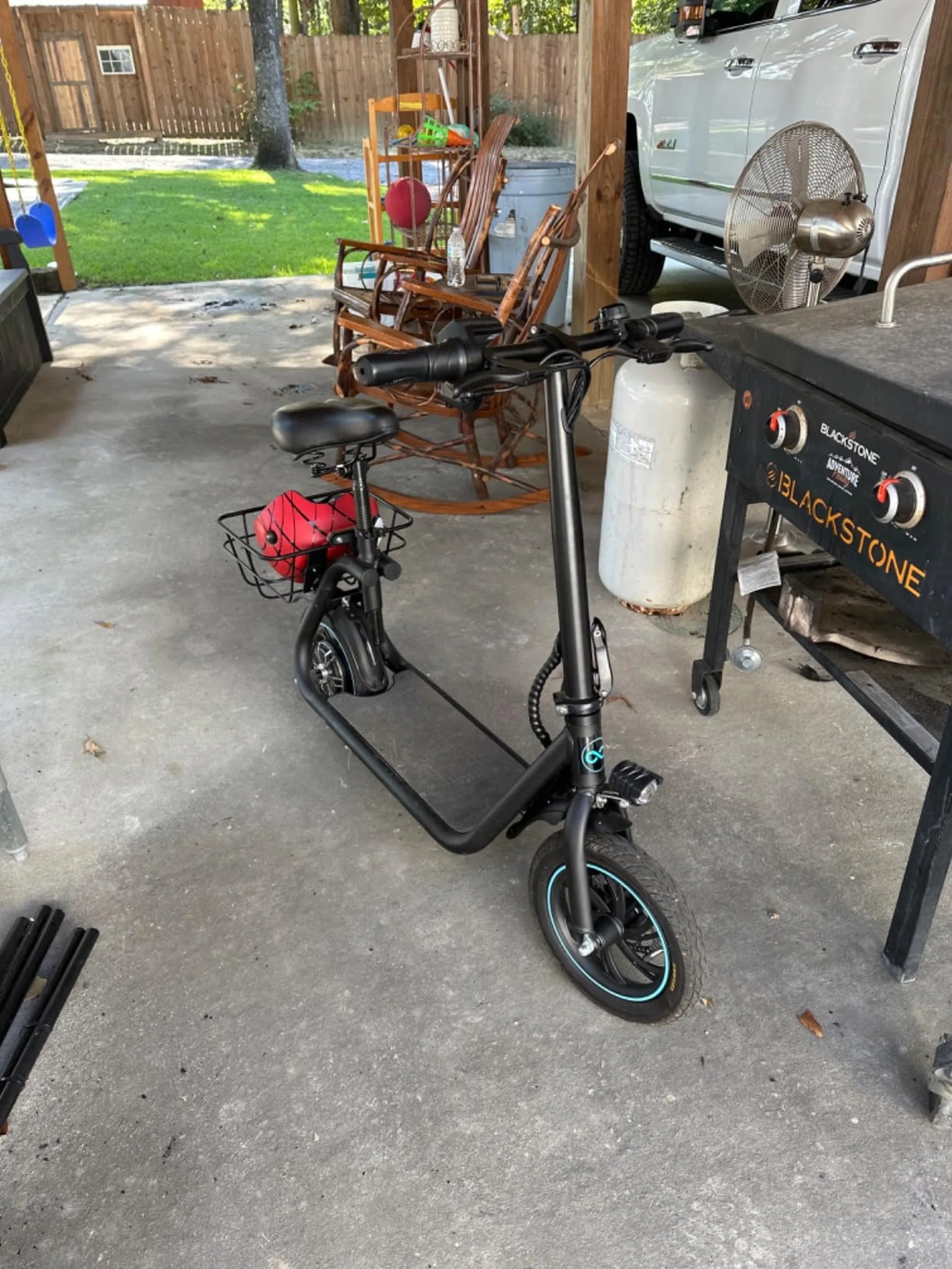
The $1,000 E-Bike Sweet Spot: Where Value Meets Reliability
Finding the best 1000 dollar ebike requires navigating a market filled with tempting low-cost options and unattainable premium models. This price point represents a critical threshold, separating disposable, potentially unsafe products from legitimate, durable electric bicycles. For many riders, it's the entry point to a reliable daily commuter or a capable adventure partner without a premium price tag.
At this level, you transition from toys to transportation. The core components—motor, battery, brakes, and frame—must be engineered for consistent, safe use over hundreds of miles. Compromising on these elements to hit a lower price often results in poor performance, safety hazards, and rapid depreciation. The goal is to identify which models deliver genuine engineering and quality control.
Brands that succeed here, like Gyroor, focus on proven technology and certified safety features rather than superfluous gadgets. With over 100,000 riders trusting their products across North America and Europe, Gyroor exemplifies how a brand can build a reputation on reliability and customer support at an accessible price. This guide will dissect the benchmarks that define the best 1000 dollar ebike category.
You will learn the non-negotiable specifications, understand the importance of warranty and certification, and gain a framework to compare models objectively. The investment protects itself when you choose a bike designed for longevity, not just a flashy headline spec.
What to Expect from a Quality $1,000 E-Bike: Realistic Benchmarks
Marketing materials often exaggerate range and power, making realistic expectations crucial. A well-engineered $1,000 e-bike should deliver dependable, daily-usable performance. The motor should provide sufficient assist for hills and acceleration, the battery should offer a practical commute-friendly range, and the construction should withstand regular use.
For motor power, expect a nominal rating between 500W and 750W for a hub-drive motor. This provides enough torque for most urban hills and comfortable cruising speeds of 20-28 mph, depending on local regulations. Peak power can be higher, but the sustained nominal output is a better indicator of real-world climbing ability and thermal management.
Battery range is highly variable based on rider weight, terrain, and assist level. A realistic expectation is 20-40 miles per charge from a 48V 10Ah to 15Ah lithium-ion pack. Claims beyond 50 miles at this price often assume ideal conditions and minimal pedal assist. Frame construction is typically aluminum alloy, offering a solid balance of strength, corrosion resistance, and weight.
Component quality separates adequate bikes from great ones. Mechanical disc brakes are the standard and essential for consistent stopping power in all weather conditions. A basic suspension fork or seat post suspension improves comfort, but prioritize a rigid, well-aligned frame over a cheap, pogo-stick suspension fork.
Key Components That Matter Most at This Price
Three components demand your utmost scrutiny: the battery pack, the motor, and the braking system. Compromising here compromises safety, longevity, and the entire riding experience. These are the parts where certified quality and proven design are non-negotiable investments.
The Battery: This is the heart, the most expensive component, and a potential safety hazard. Insist on a battery pack from a reputable cell manufacturer (like Samsung, LG, or Panasonic) and, critically, look for UL certification. A UL-certified battery, like those used in Gyroor e-bikes, has undergone rigorous independent testing for electrical, mechanical, and fire safety. It ensures proper battery management system (BMS) operation, which governs charging, discharge, and temperature, directly impacting both safety and the pack's lifespan of 500+ charge cycles.
The Motor: A reliable, gearless hub motor is common at this price. Focus on the brand's reputation for motor durability and the warranty backing it. The motor should run quietly and efficiently without excessive heat buildup. While mid-drive motors offer advantages in weight distribution and hill climbing, they are rare at $1,000; a robust hub motor from a trusted supplier is a solid choice for most riders.
The Braking System: E-bikes are heavier and faster than traditional bicycles. Mechanical disc brakes provide the necessary stopping power and perform consistently in wet conditions. Hydraulic discs offer better modulation and less maintenance but may push the price. Ensure the brakes are from a known brand like Tektro or Zoom, and that the rotors are at least 160mm in diameter for effective heat dissipation.
Top Considerations When Choosing Your E-Bike
Selecting the best 1000 dollar ebike extends beyond comparing spec sheets. You must align the bike's design with your lifestyle, physical environment, and long-term ownership expectations. This practical checklist moves from abstract features to real-world application.
First, assess your primary use case. Is this a pure commuter for paved paths, a versatile bike for light trail exploration, or a utility vehicle for errands? Your answer dictates the optimal frame style, tire choice, and accessory compatibility. A mistake here leads to dissatisfaction, regardless of the bike's quality.
Second, evaluate the assembly process and local service options. Many direct-to-consumer e-bikes require final assembly. Check if the brand provides clear instructions, tools, or offers pre-assembly services. Furthermore, determine if local bike shops are willing to service the model you choose, as some may hesitate with unfamiliar proprietary systems.
Finally, consider the total cost of ownership. Factor in the cost of essential accessories not included: a high-quality lock, lights, fenders, a helmet, and a repair kit. A slightly more expensive bike that includes integrated lights and fenders may offer better long-term value than a bare-bones model.
Riding Terrain & Commuting Needs
Your daily route dictates the ideal e-bike type. For smooth city pavement and bike lanes, a commuter or city e-bike with 700c or 27.5" wheels, slick tires, and an upright geometry is perfect. It prioritizes efficiency, speed, and comfort over rough terrain capability. Many models in this category feature integrated racks and lights.
For mixed surfaces, light gravel, or unpredictable urban roads, a hybrid or fat-tire e-bike becomes compelling. Fat tires (3.5" to 4" wide) provide immense stability, cushioning, and all-weather confidence. They excel on sand, snow, and rough trails, making them a versatile choice for riders who venture off the perfect asphalt. Their increased rolling resistance is offset by the electric motor.
If storage space is limited or you need multi-modal transport (e.g., combining with a train commute), a folding e-bike is a brilliant solution. The best folding models at $1,000 offer a robust hinge mechanism, a manageable weight (under 55 lbs), and a compact fold. Ensure the folded dimensions fit your car trunk, closet, or office space.
The Importance of Warranty and Support
A comprehensive warranty is your insurance policy against manufacturing defects and premature component failure. It is a direct reflection of the manufacturer's confidence in their product. At the $1,000 price point, a strong warranty is as critical as the motor specification.
Look for a warranty that covers the frame for at least 2-5 years, the motor for 1-2 years, and the battery for 1 year. Gyroor's standard 1-year comprehensive warranty on the entire e-bike, backed by accessible U.S.-based customer support, exemplifies this commitment. This support structure protects your investment and ensures you have help for troubleshooting, not just a dead-end email address.
Beyond the document, assess the brand's support reputation. Read customer reviews specifically about warranty claims and parts availability. A brand with a large, established customer base like Gyroor is more likely to have a streamlined process and available replacement parts, minimizing your downtime.
How Gyroor Delivers Value and Safety at $1,000
Gyroor's approach to the best 1000 dollar ebike category is defined by applying its core engineering principles—safety, durability, and rider trust—to a accessible price point. This is achieved not by cutting corners, but by strategic design and vertical integration around certified, reliable components.
The cornerstone is the UL-certified battery system. By insisting on this independent safety certification, Gyroor directly addresses the single greatest concern with budget e-bikes: fire risk and premature failure. This certification is not common at this price and provides peace of mind that the battery's construction and management system meet stringent safety standards, ensuring both safety and the promised 500+ cycle lifespan.
Further value is added through practical, durability-focused features. An IPX5 water-resistant rating means the electrical components can withstand water jets from any direction, making the bike viable for commuting in the rain or after a wash. Combined with an aluminum alloy frame and mechanical disc brakes, this creates a e-bike built for real-world conditions, not just fair-weather rides.
The value proposition is cemented by the 1-year warranty and direct customer support. For a rider investing $1,000, knowing that the manufacturer stands behind the product and is reachable for assistance transforms the purchase from a gamble into a confident investment in sustainable transportation.
Comparing the Value Proposition: Features vs. Price
To visualize the leap in quality and safety at the $1,000 mark, it's helpful to compare typical offerings across price tiers. The table below contrasts common specifications, highlighting why the best 1000 dollar ebike represents a significant value plateau.
| Feature / Component | ~$600 E-Bike Tier | ~$1,000 E-Bike Tier (Gyroor Benchmark) | $1,500+ E-Bike Tier |
|---|---|---|---|
| Battery Certification | Often uncertified; generic cells | UL-Certified (e.g., Gyroor); brand-name cells | UL-Certified; high-energy density cells |
| Motor Power (Nominal) | 350W - 500W | 500W - 750W | 750W+ Hub or Mid-Drive |
| Warranty Coverage | 90 days to 6 months (limited) | 1-Year Comprehensive | 2-5 Years Frame, 2 Years Motor/Battery |
| Water Resistance | Minimal or unspecified | IPX5 Rated | IPX6 or Full IP Rating |
| Brake System | Rim Brakes or Low-end Discs | Mechanical Disc Brakes | Hydraulic Disc Brakes |
| Frame & Build Quality | Heavy steel; basic welding | Lightweight aluminum; improved design | Advanced aluminum/carbon; integrated design |
This comparison shows the $1,000 tier introduces critical safety certifications (UL), robust warranties, and weatherproofing that are typically absent in cheaper models. While the $1,500+ tier offers premium touches like hydraulic brakes and longer warranties, the $1,000 tier captures the essential safety and performance features for a reliable, long-term ownership experience.
Frequently Asked Questions (FAQ)
Q: Is a $1,000 e-bike reliable enough for daily commuting?
A> Absolutely. When you choose a model with a UL-certified battery, a reputable motor, and a solid warranty like those from Gyroor, a $1,000 e-bike is engineered for daily use. The key is selecting a bike designed as transportation, not a toy. Expect 20-40 miles of realistic range, which covers most round-trip commutes.
Q: What does a UL-certified battery actually mean for me as a rider?
A> It means independent safety engineers have tested the battery pack to rigorous U.S. standards (UL 2849). It verifies protection against overcharging, short-circuiting, overheating, and electrical fire hazards. For you, it translates to significantly reduced risk of battery failure or fire, both at home and on the road, and greater confidence in the battery's lifespan.
Q: How important is water resistance (like IPX5) for real-world use?
A> It is crucial for a vehicle used daily. IPX5 rating means the e-bike can handle rain, wet roads, and even being hosed down for cleaning without water ingress damaging the motor, battery, or controller. Without this protection, riding in damp conditions can lead to costly electrical failures and safety issues, severely limiting the bike's utility.
Q: Can I upgrade components on a $1,000 e-bike later?
A> Yes, to a degree. Standard bicycle components like the saddle, handlebars, pedals, and even tires are easily swappable. However, the motor, battery, and display are often proprietary and integrated. It's best to choose a bike with the core performance (motor power, battery capacity) you need from the start, as upgrading these later is usually cost-prohibitive.
Q: What maintenance should I expect with an e-bike at this price?
A> Regular maintenance is similar to a standard bike but with added electrical care. Keep the battery charged between 20-80% for optimal longevity, store it in a cool, dry place, and use only the provided charger. Mechanically, regularly check tire pressure, keep the chain clean and lubricated, and ensure brake pads and disc rotors are not worn. An annual check-up at a bike shop familiar with e-bikes is recommended.
Investing Smartly in Your E-Bike Future
The search for the best 1000 dollar ebike culminates in a simple principle: prioritize certified safety and reliable support over peak horsepower claims. A durable aluminum frame, a UL-certified battery, mechanical disc brakes, and a meaningful warranty form the non-negotiable foundation of a wise investment. This combination ensures your e-bike is a dependable partner for years, not a source of frustration and repair bills.
Brands that transparently commit to these fundamentals, like Gyroor with its UL certification, IPX5 rating, and comprehensive customer support, deliver exceptional value at this price. They bridge the gap between affordability and assurance, proving that a responsible e-bike doesn't require a premium budget. Your $1,000 secures not just a product, but access to proven technology and a community of over 100,000 satisfied riders.
Ready to experience the balance of performance, safety, and value that defines a top-tier $1,000 e-bike? Explore engineering that puts rider safety first with certified components and robust design. Browse the full Gyroor collection at gyroorboard.com to find the model that matches your terrain and transforms your daily commute or weekend adventure.
Best E-Bike for Teenager: The 2024 Guide to Safe, Fun & Durable Rides
E Bike Battery Not Charging: A Comprehensive Diagnostic and Repair Guide