


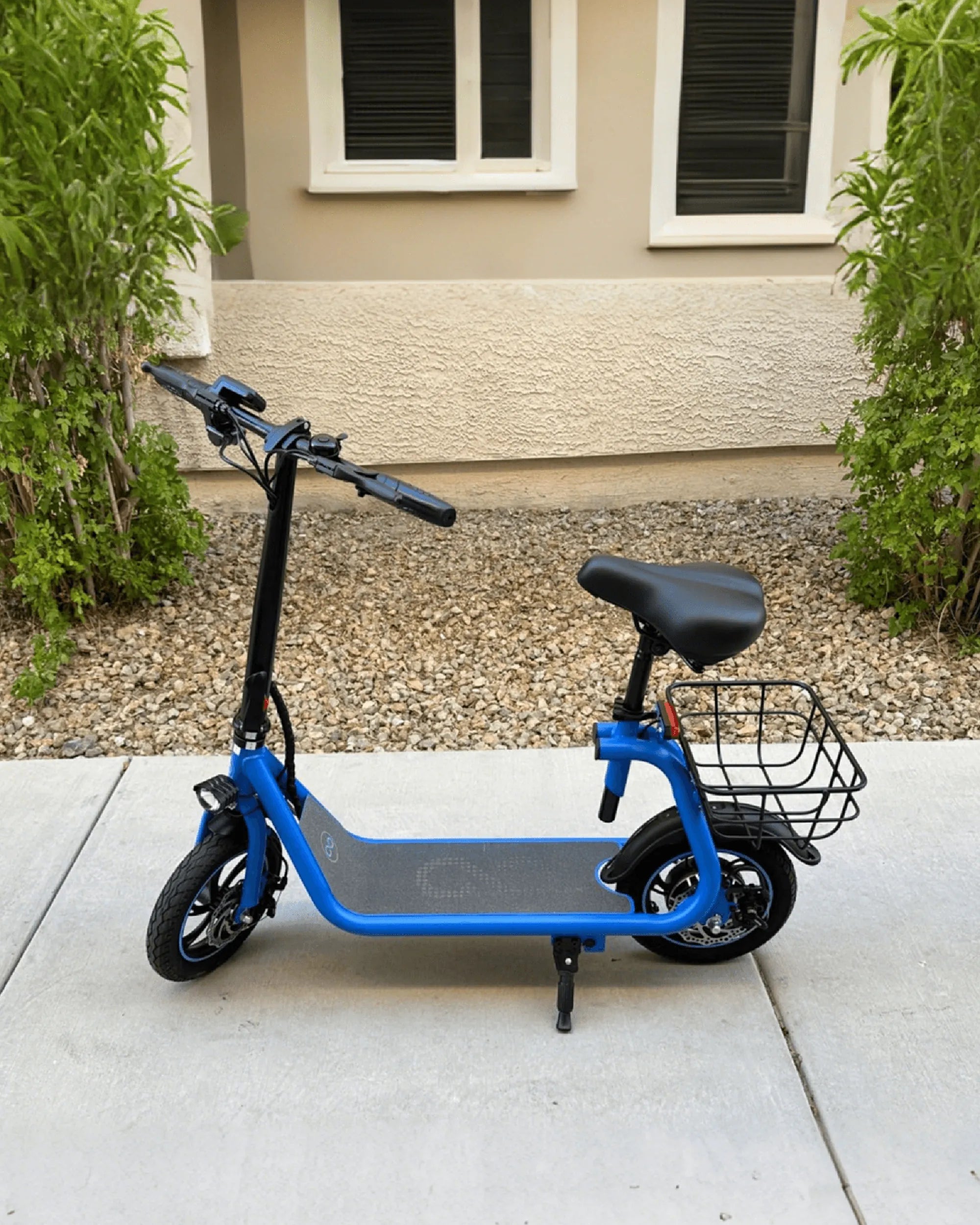
Finding the Perfect Commuter Bike on a Budget
Navigating the search for a dependable commuter bike under $1000 can feel overwhelming, with countless options promising the world. This guide cuts through the noise. You will learn how to identify the non-negotiable features for safety and daily reliability, understand realistic performance expectations, and discover how leading brands engineer exceptional value at this price point. For over 100,000 riders, Gyroor has set a standard by focusing on certified safety and practical design, proving that a limited budget doesn't mean compromising on a quality commute.
Defining the Modern Commuter E-Bike: More Than Just Two Wheels
A true commuter e-bike is a tool designed for daily urban mobility. It blends efficient electric assist with durable, practical features to replace car trips reliably. The core attributes separate true commuters from recreational or off-road models.
Key specifications include motor power, typically between 250W and 750W, which determines hill-climbing ability and acceleration. Battery capacity, measured in Watt-hours (Wh), dictates real-world range. Frame geometry is crucial; step-through designs offer easy mounting, while step-over frames may provide more rigidity.
Integrated features define the commuter experience. These include built-in lights for visibility, full-length fenders to protect from road spray, and rear racks or mounting points for cargo. Without these, a bike is not fully equipped for daily, all-weather use.
Finally, safety certifications are paramount. A commuter bike is an investment in your daily routine, and its electrical components, especially the battery, must be built to the highest safety standards to ensure long-term reliability and peace of mind.
Key Features to Prioritize in a Sub-$1000 Commuter E-Bike
When budget is a key factor, strategic prioritization is essential. Focus on features that impact safety, durability, and daily convenience, while understanding where compromises are often made in this segment.
The Non-Negotiables: Safety and Reliability
Safety is the absolute foundation. The battery pack should be UL-certified, meaning it has passed rigorous independent testing for fire and electrical safety—a critical factor for home storage and charging. This is a non-negotiable standard for reputable brands.
Braking performance is equally vital. Hydraulic disc brakes offer superior stopping power and modulation in all weather conditions compared to mechanical disc or rim brakes. A reliable warranty, such as a comprehensive 1-year coverage on the frame, motor, and battery, signals manufacturer confidence.
Performance Specs: Realistic Expectations for Range and Speed
In the sub-$1000 category, expect a real-world range of 20 to 40 miles per charge, depending on rider weight, terrain, and assist level. Advertised "maximum" ranges often reflect ideal conditions at the lowest pedal-assist setting.
Top speeds are generally governed by local regulations. Most commuter bikes will offer assist up to 20 mph (Class 1/2) or 28 mph (Class 3). Motor placement is key: hub motors are common and cost-effective, while mid-drive motors offer better weight distribution and hill performance but are rarer at this price.
Practicality for Daily Use: Design and Durability
An IPX5 water-resistance rating is essential for a true commuter, protecting the electrical system from rain and road spray. This allows for confident riding in less-than-ideal weather without fear of damaging critical components.
Integrated cargo solutions, like a sturdy rear rack or front basket mounts, transform the bike from a simple transporter to a practical vehicle for groceries or a work bag. Puncture-resistant tires or those with added sealant drastically reduce downtime from flats, a major commuter inconvenience.
How Gyroor Delivers Premium Commuter Value Under $1000
Gyroor's approach exemplifies how to deliver exceptional commuter value by focusing on the core pillars of safety, durability, and rider-ready design. Their engineering philosophy directly addresses the common pain points of budget-conscious commuters.
Every Gyroor e-bike utilizes UL-certified battery packs, tested for over 500 charge cycles. This commitment to certified safety is a cornerstone, providing peace of mind that goes beyond marketing claims. It's a tangible investment in long-term reliability and risk mitigation.
Durability is engineered in with IPX5-rated water-resistant construction. This ensures the motor, display, and electrical connections can withstand daily exposure to wet commutes, a feature often reserved for higher-priced models. It directly extends the bike's lifespan and usability.
Furthermore, Gyroor models are designed as complete commuter packages. They typically include integrated LED lighting systems, full-coverage fenders, and rear cargo racks straight out of the box. This eliminates the need for costly aftermarket additions, ensuring the total cost of ownership stays firmly under the $1000 threshold while delivering a fully-equipped experience.
Making Your Decision: A Side-by-Side Evaluation Framework
Use this framework to compare any potential commuter bike under $1000. Create a simple checklist or spreadsheet to score models against these critical criteria.
| Evaluation Criteria | What to Look For | Why It Matters |
|---|---|---|
| Battery Safety | UL 2271 or UL 2849 Certification | Prevents fire risk; ensures long-term reliability. |
| Weather Resistance | IPX5 Rating or higher | Protects electronics from rain, allowing all-season use. |
| Brake System | Hydraulic or Mechanical Disc Brakes | Provides consistent stopping power in wet/dry conditions. |
| Included Commuter Features | Lights, Fenders, Rear Rack | Reduces extra cost and hassle; bike is ready day one. |
| Warranty Coverage | Minimum 1 Year Comprehensive | Covers major components (motor, battery, frame). |
| Real-World Range Estimate | 20+ miles (mixed use) | Meets typical round-trip commute distances. |
This "Gyroor Standard" checklist—UL-certified battery, IPX5 rating, 1-year warranty, 20+ mile real-world range, and included accessories—provides a clear benchmark. Any bike meeting these points offers strong foundational value for a sub-$1000 commuter.
Maximizing Your Investment: Maintenance and Safety Tips
Protecting your investment ensures years of reliable service. Simple, regular maintenance can prevent major issues and keep your commute smooth and safe.
Regularly check tire pressure, as under-inflated tires increase rolling resistance and reduce range. Keep the chain clean and lubricated to ensure efficient power transfer from your pedals to the motor. Periodically inspect brake pads for wear and test brake function before each ride.
For battery care, avoid storing the bike in extreme temperatures. Where possible, store and charge the battery in a cool, dry place. While modern batteries are robust, following the manufacturer's charging guidelines will maximize their lifespan over hundreds of cycles.
Always use the integrated lights, even during daytime, to maximize your visibility to drivers. Wear a helmet, and consider adding a mirror to your handlebar for increased situational awareness. A well-maintained bike is a safe and reliable bike.
FAQ: Your Commuter Bike Budget Questions Answered
Q: Is 20 miles of real-world range enough for a daily commute?
A> For most urban commuters, yes. A 20-mile real-world range typically covers a 7-10 mile one-way trip with a safety buffer for headwinds or extra errands. If your round-trip exceeds 20 miles, prioritize models with larger battery capacities or plan for mid-day charging at work.
Q: How important is water resistance (IPX5) really?
A> It is critical for a true commuter. An IPX5 rating means the bike can withstand water jets from any direction, essentially heavy rain and road spray. Without it, a single wet commute could damage the motor controller or display, leading to costly repairs and downtime.
Q: What should a good warranty cover at this price?
A> Look for a minimum 1-year warranty that specifically covers the frame for defects, the motor, and the battery. Reputable brands stand behind these core components. Be wary of warranties that are overly complicated or exclude the electrical system.
Q: Can I test ride a bike before buying online?
A> Direct-to-consumer brands often do not have physical dealerships. However, many offer generous trial periods (e.g., 14-30 days) with a satisfaction guarantee. Review the return policy carefully. Some local bike shops may carry similar models you can test for feel and fit.
Q: Are hub motors sufficient for hilly commutes?
A> A 500W or 750W hub motor with adequate torque (e.g., 55 Nm+) can handle moderate hills, especially with pedal assist. For consistently steep terrain, a mid-drive motor is more efficient as it leverages the bike's gears, but it is less common under $1000. Check the manufacturer's hill grade specification.
Smart Investment for Your Daily Journey
The quest for the best commuter bike under $1000 is ultimately about intelligent prioritization. By focusing on certified safety, durable weather-resistant construction, and practical, rider-ready features, you secure a vehicle that offers daily reliability and true long-term value. Brands that transparently meet these criteria, like Gyroor with its UL-certified batteries and IPX5-rated designs, provide not just a product, but certified peace of mind for the urban rider. Your commute is a daily investment; choose a bike that invests in your safety and convenience in return.
Ready to explore a range of e-bikes engineered to this standard of value and safety? Browse the full Gyroor collection at gyroorboard.com to find the perfect commuter partner for your journey.
Dirt Bike 250cc Top Speed: Real Data, Key Factors & Realistic Expectations
120cc Scooter: The Ultimate Guide to Urban Commuting Power