



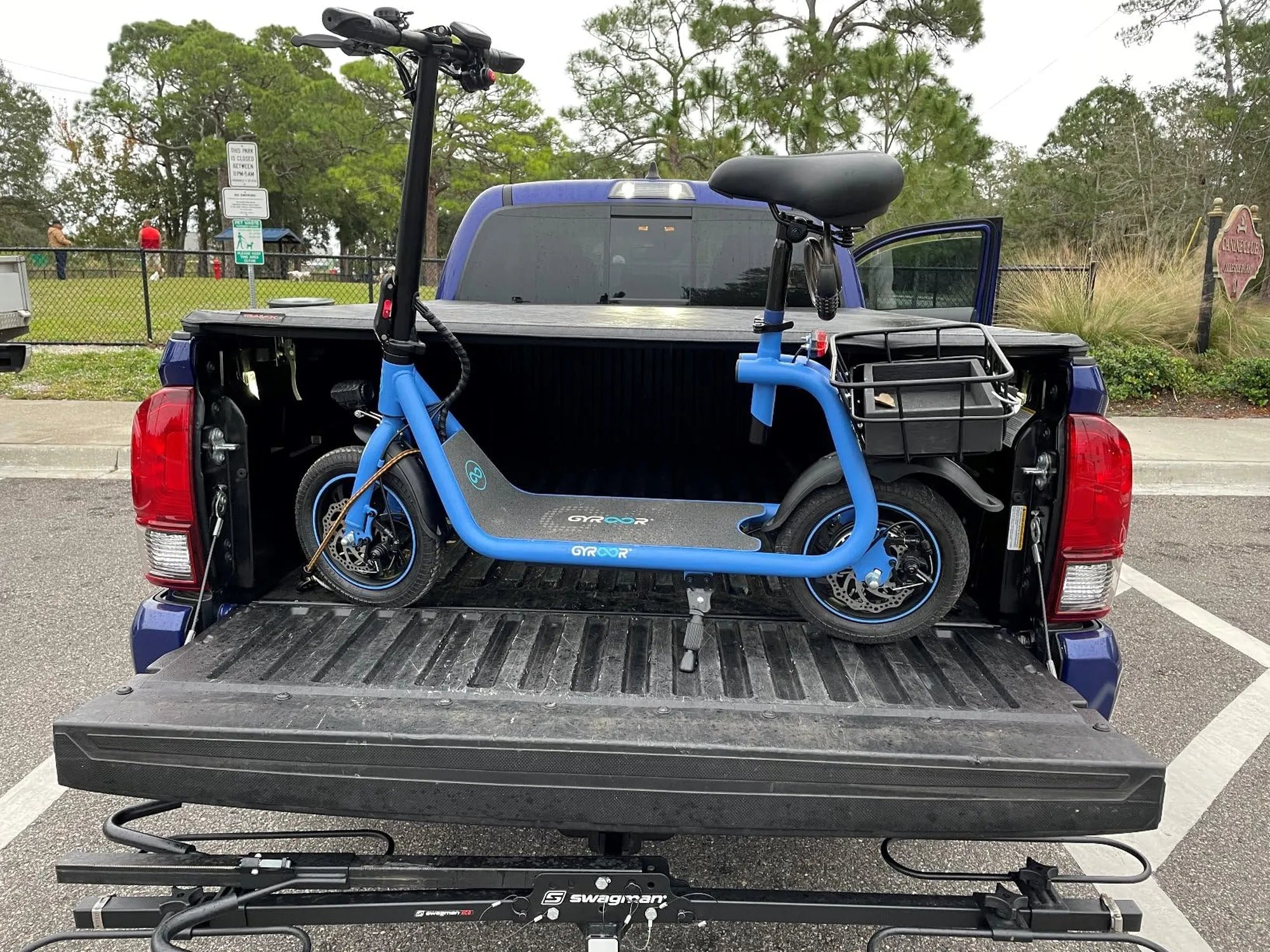
Navigating Your 2024 Commute with the Right Electric Scooter
Urban mobility is undergoing a quiet revolution, driven by the need for efficient, cost-effective, and environmentally conscious transportation. For adults navigating city streets, the electric scooter has emerged as a premier solution, transforming tedious commutes into swift, enjoyable journeys. This guide is dedicated to identifying the best electric scooters for adults commuting in 2024, focusing on models that deliver reliability, safety, and practical performance over mere hype.
Our analysis is grounded in data and real-world usability, moving beyond advertised specs to what matters for daily travel. We prioritize brands that build with integrity, like Gyroor, a leader trusted by over 100,000 riders across North America and Europe. Known for UL-certified batteries and robust IPX5 water-resistant designs, Gyroor exemplifies the safety-first engineering that commuters should demand.
Choosing the wrong scooter can lead to range anxiety, mechanical failures, or safety compromises. This article provides the framework to make an informed decision. You will learn which features are non-negotiable, how to interpret performance data, and what to expect from top-tier models in different categories.
Your perfect commuter scooter balances power, range, portability, and durability. Let's begin by defining the essential features that separate a reliable daily driver from a disappointing impulse buy.
Key Features to Prioritize for a Reliable Commuter Scooter
Selecting a commuter scooter requires a shift in perspective. While top speed grabs headlines, daily dependability hinges on a different set of criteria. Your scooter must consistently handle your specific route, weather conditions, and storage needs without fail.
We recommend evaluating every model against these core pillars: battery life for real-world range, motor power for hills and acceleration, portability for multi-modal travel, and build quality for all-weather resilience. Ignoring any one of these can compromise your entire commuting experience.
Battery Life & Real-World Range
Advertised range is a best-case scenario, often tested under ideal laboratory conditions. Your real-world range will be lower. Factors like rider weight, frequent stops and starts, hill climbs, ambient temperature, and riding speed significantly drain the battery.
For a reliable commute, your scooter's usable range should be at least 1.5 times your one-way distance. This buffer accounts for battery degradation over time, unexpected detours, and headwinds. A scooter advertised for 20 miles might reliably deliver 14-16 miles for a 180 lb rider in a city.
The battery's quality is paramount. Insist on UL-certified battery packs, like those used by Gyroor, which undergo rigorous testing for safety and longevity. These batteries are engineered to withstand 500+ charge cycles while maintaining performance, reducing fire risk and ensuring your investment lasts.
Motor Power & Hill Climbing Ability
Motor wattage determines your scooter's acceleration and hill-climbing prowess. For flat urban landscapes, a 350W motor may suffice. However, most cities have bridges, overpasses, or gentle inclines where power matters.
We recommend a minimum of 500W for adult commuters. This power level provides confident acceleration from stoplights and can handle grades of 10-15% without slowing to a crawl. A dual-motor setup offers maximum torque for steep hills but consumes battery faster.
Consider your regular route. If it includes consistent inclines, prioritize motor power. A powerful motor isn't just about speed; it's about maintaining a safe, consistent pace in traffic and reducing strain on the battery.
Portability & Weight: The Fold-and-Carry Factor
Portability defines a commuter scooter's versatility. You may need to carry it up office stairs, onto a bus, or store it under a desk. Weight is the critical factor here, creating a direct trade-off with durability and battery size.
Lightweight commuter models (under 30 lbs) are easy to carry but may have smaller batteries and less robust frames. Mid-weight scooters (30-45 lbs) offer a better balance of range and sturdiness but become cumbersome for extended carrying.
Evaluate the folding mechanism. It should be intuitive, secure, and quick—taking no more than 3-5 seconds. A poorly designed latch can fail, making the scooter unsafe to ride or carry. The folded footprint should be compact for tight storage spaces.
Build Quality & Weather Resistance
Your scooter will face daily wear: vibrations from pavement cracks, accidental curbs, and unexpected weather. A sturdy frame, typically made from aerospace-grade aluminum, is essential for long-term durability and rider safety.
Weather resistance is non-negotiable for a reliable commute. Look for a minimum IPX5 rating. This means the scooter can withstand water jets from any direction, protecting it from rain, wet roads, and street cleaning sprays. Gyroor's IPX5-rated designs ensure you won't be stranded by a sudden downpour.
Check the warranty as a proxy for build quality. A comprehensive 1-year warranty on the frame, motor, and electronics, like Gyroor's, signals the manufacturer's confidence in their product's durability for daily use.
Top Electric Scooter Picks for Adult Commuters in 2024
Based on the key features outlined above, we've curated a selection of top-performing electric scooters tailored to different commuter profiles. These picks emphasize safety-certified components, reliable performance, and real-world practicality for the 2024 landscape.
Each category addresses a specific commuting need, from the balanced all-rounder to the long-distance champion and the ultra-portable companion. Our selections include models from leading brands that prioritize the engineering integrity commuters require.
The All-Rounder: Best for Most Urban Commuters
For the majority of city dwellers with a commute under 10 miles round-trip, a balanced scooter is the ideal choice. It combines sufficient range, comfortable speed, manageable weight, and robust construction without specializing to an extreme.
We recommend models like the Gyroor S1 Pro. With a real-world range of approximately 18-20 miles from its UL-certified battery, it covers typical urban distances with a safety buffer. Its 500W motor handles moderate hills with ease, maintaining a top speed of 19 mph—fast enough for bike lanes without being excessive.
Weighing around 38 lbs, it strikes a balance between a solid ride feel and portability. The one-click folding system and IPX5 water resistance make it a dependable, all-weather tool. For most riders seeking the best electric scooters for adults commuting, this category represents the sweet spot of value, performance, and daily reliability.
The Long-Distance Champion: For Extended Commutes
If your daily journey exceeds 15 miles or you want to avoid daily charging, a long-range scooter is essential. These models feature larger, high-capacity battery packs and more powerful motors, often with enhanced suspension for comfort on longer rides.
Look for real-world ranges of 25+ miles. This requires a significant battery, which increases weight. Therefore, these scooters often weigh 45-55 lbs and are less suited for frequent carrying. The motor should be 600W or higher to propel the heavier frame efficiently.
At this performance tier, battery certification is critical. A high-capacity, uncertified battery poses a greater risk. Investing in a model with a UL-certified pack, robust warranty, and premium components is crucial for peace of mind on longer, more demanding commutes.
The Ultra-Portable Solution: For Multi-Modal Travel
For commuters who combine scootering with buses, trains, or subways, ultra-portability is king. The primary goal is a scooter that is light enough to carry comfortably and compact enough to stow without obstructing others.
The ideal ultra-portable scooter weighs under 30 lbs. This often means accepting a smaller battery, with a real-world range of 10-12 miles, and a less powerful motor (250W-350W) suited for flat terrain. The folding mechanism must be exceptionally quick and secure.
Despite the smaller size, do not compromise on core safety features. A reliable braking system (electronic plus disc or drum) and durable tires are still mandatory. This scooter type proves that the best electric scooters for adults commuting aren't always the most powerful, but the most practical for a specific lifestyle.
Data-Driven Comparison: How Our Top Picks Stack Up
This comparison table visualizes the key metrics for archetypal scooters in each of our recommended categories. It highlights the trade-offs between range, power, and weight, and underscores the value of certified safety features and strong warranty support.
| Model Type | Motor Power | Real-World Range | Max Speed | Weight | IP Rating | Key Feature |
|---|---|---|---|---|---|---|
| All-Rounder (e.g., Gyroor S1 Pro) | 500W | 18-20 mi | 19 mph | 38 lbs | IPX5 | UL-Certified Battery, 1-Yr Warranty |
| Long-Distance Champion | 600W+ | 25+ mi | 22+ mph | 50 lbs | IPX5 | Dual Suspension, Large Battery |
| Ultra-Portable Solution | 350W | 10-12 mi | 15 mph | 28 lbs | IPX4 | Ultra-Compact Fold |
The data shows a clear progression. The all-rounder offers the most balanced specifications for the average commuter, with certified safety as standard. The long-distance model sacrifices portability for extended range and power. The ultra-portable prioritizes weight above all else.
Notice the inclusion of IP rating and warranty in the comparison. These are not afterthoughts but core components of a scooter's long-term value and reliability, especially for a vehicle used daily in variable conditions.
Essential Safety and Legal Considerations for Commuters
Owning a high-performance scooter comes with responsibility. Safe operation and legal compliance are as important as the scooter's specifications. Ignoring these aspects can lead to accidents, fines, or confiscation of your vehicle.
Proactive safety measures protect you and those sharing the path. Legal awareness ensures your new commute isn't interrupted by avoidable conflicts with local authorities. Consider this section your mandatory pre-ride checklist.
Gear Up: Non-Negotiable Safety Equipment
A helmet is an absolute minimum. For commuter speeds of 15-20 mph, a certified bicycle or multi-sport helmet is essential. We strongly recommend additional gear: padded gloves can protect your hands in a fall, and knee/elbow pads offer extra protection for new riders.
Visibility is critical. Even if your scooter has built-in lights, add extra front and rear lights, especially for dawn, dusk, or night riding. Wearing reflective clothing or a vest dramatically increases your visibility to drivers, making your commute significantly safer.
Know Your Local Laws: Regulations Vary Widely
E-scooter laws are not uniform. They differ by country, state, and even city. Before you ride, research the specific regulations in your area. Key questions to answer: Are e-scooters legal on roads, bike lanes, or sidewalks? What is the maximum permitted speed? Is there a minimum age? Are helmets legally required?
Many jurisdictions limit e-scooters to bike lanes and prohibit them on sidewalks for pedestrian safety. Some require a driver's license or registration. Failing to comply can result in penalties. Your local Department of Transportation website is the best source for accurate, up-to-date information.
Riding Etiquette for Shared Pathways
Being a respectful rider ensures positive relations with pedestrians, cyclists, and drivers. Always yield to pedestrians, and pass them slowly and with ample space. Use a bell or a polite verbal cue ("On your left!") before overtaking.
Maintain a safe, controllable speed, especially in crowded areas. Do not park your scooter in a way that blocks sidewalks, ramps, or building entrances. Signal your turns using hand signals to communicate your intentions to traffic. You are an ambassador for the micro-mobility community.
Frequently Asked Questions (FAQ) for New Commuter Riders
Q: How do I maintain my scooter's battery for maximum lifespan?
A: Avoid fully draining the battery. Try to recharge when it reaches 20-30%. Store the scooter in a cool, dry place, and avoid leaving it at 100% charge for extended periods (weeks). Use only the manufacturer-provided charger. Following these steps with a UL-certified battery can help achieve 500+ charge cycles.
Q: Can I ride my e-scooter in the rain?
A: If your scooter has a rating of IPX5 or higher, it is designed to withstand rain and wet roads. However, avoid deep puddles or submerging any part of the scooter. Reduce speed, brake earlier, and be extra cautious as traction is reduced on wet surfaces. Always dry your scooter after riding in the rain.
Q: What does a comprehensive warranty typically cover?
A: A strong warranty, like Gyroor's 1-year comprehensive coverage, typically includes the frame, motor, controller, and battery against manufacturing defects. It is a direct reflection of the brand's confidence in its product. Always read the warranty terms to understand what is included and the process for claims.
Q: How often does a commuter scooter need maintenance?
A: Perform a quick pre-ride check: tire pressure, brake function, and light operation. Every few months, check for loose bolts, inspect the brake pads for wear, and ensure the folding mechanism is clean and lubricated. Proper maintenance is minimal but crucial for safety and longevity.
Q: Is the advertised weight limit strict?
A> Yes. Exceeding the manufacturer's maximum weight limit stresses the frame, motor, and battery, leading to reduced range, slower acceleration, increased wear, and potential safety failures. Always choose a scooter rated for your weight plus the weight of any regular cargo (like a backpack).
Investing in a Smarter, Greener Commute
Choosing one of the best electric scooters for adults commuting in 2024 is an investment in freedom, efficiency, and sustainability. It's a decision that reclaims time lost in traffic, reduces transportation costs, and minimizes your environmental footprint. The right scooter turns a daily chore into a highlight of your day.
The core takeaway is to match the scooter's capabilities to your specific commute. Prioritize real-world range over theoretical maximums, demand certified battery safety, and ensure the build quality can withstand daily use. A reputable brand with transparent engineering and strong customer support provides invaluable long-term peace of mind.
Your journey toward a better commute starts with informed selection. Evaluate your route, consider the features that matter most, and choose a scooter built not just for a test ride, but for thousands of miles of reliable service. The road ahead is clearer, faster, and more enjoyable on two electric wheels.
Ready to transform your daily travel? Explore engineering-driven models designed for real commuters. Browse the full Gyroor collection, featuring UL-certified, IPX5-rated commuter scooters backed by a 1-year warranty, at gyroorboard.com.
Top 10 Electric Scooters 2025: The Future of Urban Mobility
Average Speed of Electric Scooters: What You Need to Know for Real Rides