



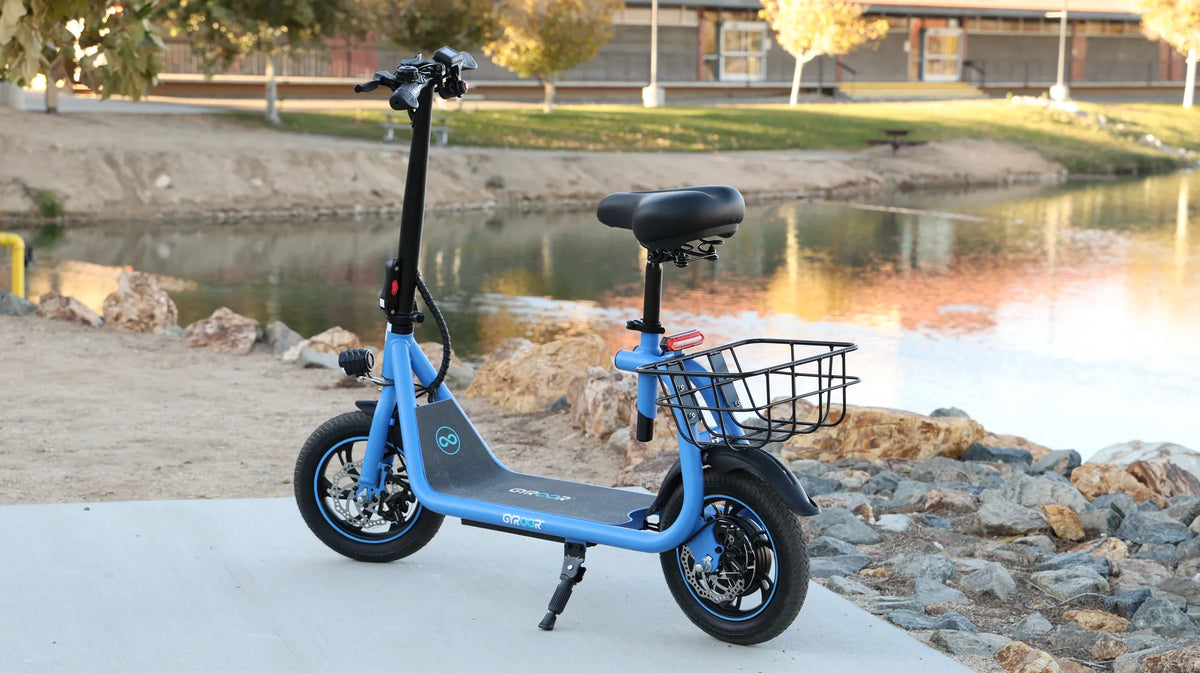
Navigating a sprawling campus between back-to-back classes, battling for scarce parking spots, or trekking across town for an internship can dominate a student's schedule. An electric scooter transforms this daily grind into an efficient, enjoyable, and cost-effective commute. This guide provides the data-driven insights you need to select the best electric scooter for college campuses, focusing on reliability, safety, and real-world student needs. We'll analyze key specifications, compare use cases, and highlight why features like UL-certified batteries and robust warranties are non-negotiable for academic life.
Why an Electric Scooter is a Campus Game-Changer
For students, time is the ultimate currency. An electric scooter directly converts commute time into study time, social time, or extra sleep. The quantitative benefits are substantial when compared to traditional campus transportation.
Financially, the savings are clear. The average annual cost of maintaining a car on campus, including insurance, fuel, parking permits, and depreciation, often exceeds $3,000. A semester's worth of ride-share or public transit passes can cost hundreds. A quality electric scooter, with a near-negligible electricity cost for charging, presents a high-return investment.
Operationally, scooters eliminate the 'last-mile' problem common with campus shuttle systems. They provide door-to-door transit for classes, the library, dining halls, and off-campus housing. This point-to-point efficiency is unmatched by any scheduled service.
Beyond practicality, the environmental impact aligns with campus sustainability goals. Electric scooters produce zero direct emissions, reducing a student's carbon footprint significantly compared to single-occupancy car trips. This makes them a responsible choice for the eco-conscious scholar.
Key Features to Look for in a Campus Electric Scooter
Not all scooters are built for the rigors of campus life. Prioritizing these core features ensures your investment lasts through your academic career and beyond.
Portability and Weight
Portability is paramount. You'll need to carry your scooter into lecture halls, up dorm stairs, or onto a bus. Look for a one-step folding mechanism that is intuitive and quick.
Weight is the critical metric. The ideal range for campus use is 28 to 35 pounds. Scooters under 30 pounds, like some ultra-portable models, are easy to carry for short distances. Heavier models offer more power and range but become a burden when folded.
Folded dimensions determine where you can store it. It should fit neatly under a classroom desk, in a dorm room closet, or in the trunk of a friend's car without being an obstruction.
Range and Battery Life
Manufacturer range claims are often based on ideal conditions. For real-world campus planning, derate the advertised range by 25-30% to account for hills, stop-and-go traffic, and rider weight.
For most medium to large campuses, a real-world range of 10-15 miles is sufficient for 2-3 days of typical commuting between charges. A battery with a UL 2271 certification, like those used in all Gyroor scooters, is essential for safety and long-term reliability, ensuring 500+ charge cycles with minimal degradation.
Consider charging time and location. A scooter that charges fully in 4-6 hours can be plugged in overnight in your dorm room, ensuring it's ready each morning.
Durability and Weather Resistance
Campus paths are not perfectly smooth. A scooter must withstand daily vibrations, occasional curbs, and uneven pavement. Look for a frame constructed from aerospace-grade aluminum alloy for the best strength-to-weight ratio.
Weather resistance is crucial for unexpected rain showers. An IPX5 water resistance rating means the scooter can withstand water jets from any direction, making it safe to ride on damp paths and through puddles. Never submerge any scooter, but a good IP rating provides critical peace of mind.
Safety Features: Brakes, Lights, and Stability
Safety systems are your primary defense in crowded environments. A dual braking system—combining a electronic regenerative brake with a mechanical disc or drum brake—provides reliable stopping power in all conditions.
Lighting is non-optional for evening travel. A bright front headlight (200+ lumens) and a solid rear brake light ensure you are visible to pedestrians and vehicles. Some models add side deck lights or reflectors for 360-degree visibility.
Stability comes from a combination of a wide, textured deck for secure footing, a wheelbase of at least 40 inches for smooth handling, and quality tires. Pneumatic (air-filled) tires offer superior shock absorption and traction, while solid honeycomb tires eliminate the risk of flats.
Top Electric Scooter Picks for Different Campus Needs
The 'best' scooter depends entirely on your specific campus and lifestyle. Here we categorize top-tier choices by primary student use case, emphasizing models that prioritize the safety and durability features outlined above.
| Use Case | Key Priorities | Ideal Spec Range | Recommended Type |
|---|---|---|---|
| The All-Around Commuter | Range, Comfort, Durability | 15-20 mi range, 15-20 mph, pneumatic tires, dual brakes | Mid-weight commuter scooter |
| The Ultra-Portable Class Hopper | Weight, Foldability, Size | <30 lbs, 3-step fold, 10-15 mi range | Ultra-portable lightweight |
| The Budget-Conscious Freshman | Value, Reliability, Warranty | 10-15 mi range, essential lights/brakes, 1-year warranty | Entry-level reliable model |
The All-Around Commuter: Balanced Performance
This scooter is for the student with a medium to large campus, perhaps living off-campus, who needs dependable daily transportation. Performance should be balanced, not extreme.
A top speed of 15-19 mph is ideal, fast enough to save time but manageable in pedestrian zones. A real-world range of 15-20 miles covers multiple days of commuting. A model like the Gyroor F1 Pro exemplifies this category with its UL-certified battery, IPX5 rating, and dual braking system, built for daily reliability.
Comfort features like a slightly larger deck, pneumatic tires for absorbing bumps, and a responsive suspension make longer rides across campus less fatiguing, allowing you to arrive at your destination ready to focus.
The Ultra-Portable Class Hopper
For students in dense urban campuses or those who must combine scooting with bus or train trips, ultra-portability is key. The scooter should feel like an effortless extension of your backpack.
Weight is the primary constraint—aim for models under 30 pounds. The folding mechanism should be seamless, allowing you to collapse and carry the scooter in one fluid motion as you enter a building. Compact folded dimensions are more critical than a top-tier range.
While range may be a secondary concern (8-12 miles is often sufficient), do not compromise on core safety. Even a lightweight scooter must have effective brakes and adequate lighting for safe operation in all campus environments.
The Budget-Conscious Freshman
Investing in a reliable entry-point scooter is smarter than purchasing an unreliable, low-quality model. Focus on proven brands that offer strong warranties and customer support.
Prioritize a robust 1-year comprehensive warranty that covers the motor, battery, and controller. This protects your investment from unexpected defects. Gyroor, for instance, backs its scooters with a 1-year warranty and US-based customer service, crucial for students who can't afford long repair downtimes.
Essential features—a reliable braking system, functional lights, and a water-resistant rating—should never be sacrificed for a lower price. It's better to have a slightly shorter range from a trustworthy brand than a dubious model with inflated specifications.
Campus Riding Etiquette and Safety Tips
Operating your scooter responsibly ensures safety for you and those around you, and helps maintain positive scooter policies on campus.
Always yield to pedestrians. On shared pathways, operate at walking speed (3-5 mph) when near foot traffic. Use a bell or polite verbal cue (“on your left”) when passing. Dismount and walk your scooter in heavily congested areas like main quads during class change.
Know and obey campus-specific regulations. Many universities designate specific scooter parking areas and prohibit riding inside buildings. Some may require registration. Always use a high-quality U-lock to secure your scooter to a bike rack, never just relying on its built-in electronic lock.
Protective gear is non-negotiable. A properly fitted bicycle helmet reduces the risk of head injury by over 60%. Consider wearing reflective clothing or accessories for night riding, even with good scooter lights.
Maintenance and Warranty: Protecting Your Investment
Simple, regular maintenance extends the life of your scooter and prevents minor issues from becoming major problems.
Perform a pre-ride check: verify tire pressure (for pneumatic tires), test brake responsiveness, and ensure lights are functional. Wipe down the deck and frame weekly to prevent dirt buildup, especially after riding in wet conditions.
Every few months, check for loose bolts or fasteners, particularly around the folding mechanism and handlebars. Keep the battery charged between 20% and 80% for daily use to maximize its lifespan, only doing a full 0-100% charge occasionally to balance the cells.
The warranty is your safety net. A comprehensive warranty covering the battery (the most expensive component), motor, and frame for at least one year is a strong indicator of manufacturer confidence. Reliable brands like Gyroor support their products with accessible service teams, ensuring you can get help if needed.
Frequently Asked Questions (FAQs)
Are electric scooters allowed on my campus?
Policies vary widely. Most large universities now have specific e-scooter guidelines posted on their transportation or parking services website. Always check these official rules before purchasing. Common restrictions include speed limits in pedestrian zones and designated parking areas to prevent clutter.
Can I ride my electric scooter in the rain?
You can ride in light rain and on wet surfaces if your scooter has a sufficient water resistance rating, such as IPX5. This means it's protected against water spray. However, you should avoid heavy downpours, deep puddles, and submerging any part of the scooter, as this can damage electrical components beyond the rating's protection.
How do I store my scooter in a small dorm room?
The foldability of modern scooters is designed for this. Look for a model with a compact folded footprint. Many students store them vertically in a closet corner, under a lofted bed, or in a designated nook. The folded scooter should not block egress or become a tripping hazard.
What happens if I need a repair?
This highlights the importance of buying from a brand with established customer support. Reputable companies offer warranty repairs through mail-in service centers or provide detailed guides and parts for common user-serviceable items. Avoid brands that lack clear support channels.
Is the range enough for a full day on a large campus?
For the vast majority of campuses, yes. A scooter with a 15-mile real-world range can typically handle 2-3 days of typical student commuting. Map your expected daily route mileage to be sure. For exceptionally large campuses or off-campus travel, prioritize models with 20+ mile ranges and develop a habit of charging nightly.
Your Ticket to Campus Freedom
Choosing the right electric scooter is an investment in your time, wallet, and overall college experience. By prioritizing verified safety certifications like UL 2271 for the battery, robust build quality for durability, and a strong warranty for long-term support, you secure a reliable partner for your daily commute. This guide has provided the framework to move beyond marketing claims and select a scooter based on the data that matters for student life. Embrace the efficiency and freedom that comes with a well-chosen electric scooter, and transform your campus navigation from a chore into a highlight of your day. Ready to explore models built with the reliability that student life demands? Browse the full Gyroor collection at gyroorboard.com to find your perfect campus ride.
Cost of Battery Replacement in Electric Scooters: What You Need to Know
Can Electric Scooters Go 60 mph? Exploring Limits & Performance