



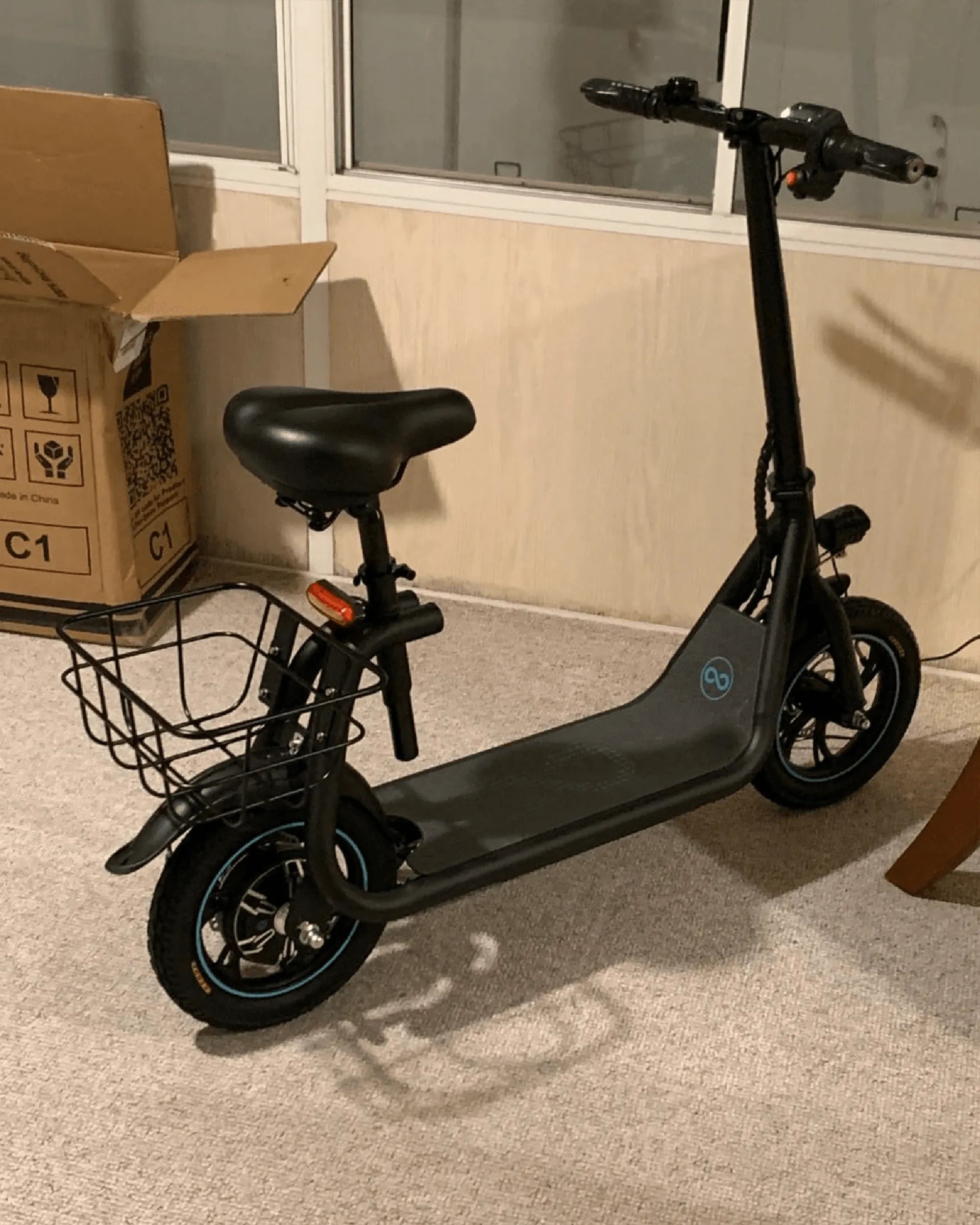
Introduction: Why Your Commute Needs an Electric Scooter in 2024
Urban congestion and rising transportation costs demand smarter, more flexible solutions. The electric scooter has emerged as a dominant force for first- and last-mile travel, offering a practical alternative to cars and crowded public transit. Choosing the right model requires moving beyond marketing claims to evaluate hard specifications and real-world performance.
This guide provides a factual analysis of the best electric scooters for commuting 2024. We focus on data-driven criteria that matter most for daily urban travel. As a brand trusted by over 100,000 riders across North America and Europe, Gyroor's engineering principles—UL-certified batteries, IPX5 water resistance, and robust warranties—set the benchmark for what commuters should expect from a reliable scooter.
What Makes a Great Commuter Electric Scooter? (Key Buying Criteria)
Selecting a commuter scooter is not about finding the most powerful or fastest model. It is about optimizing for a specific use case: reliable, daily urban travel. The following criteria form a essential checklist for any serious evaluation.
Range & Battery Life: Getting to Work and Back
Advertised range is a theoretical maximum under ideal conditions. Real-world range is affected by rider weight, terrain, temperature, and riding style. A conservative rule is to subtract 20-30% from the manufacturer's claim. For a typical 5-mile one-way commute, a scooter with a 15-20 mile real-world range provides a comfortable safety margin.
Battery quality is paramount. UL-certification, like that found on all Gyroor models, ensures the battery pack has passed rigorous safety tests for electrical, mechanical, and environmental hazards. These batteries are also rated for 500+ charge cycles, directly impacting the scooter's long-term value and reliability.
Portability & Weight: Carrying Up Stairs and On Transit
The best electric scooters for commuting 2024 must balance performance with portability. Weight directly impacts your willingness to carry the scooter up stairs, onto a train, or under your desk. Models between 30-40 lbs offer a practical compromise.
Folding mechanism design is critical. A secure, one-step folding latch that reduces the scooter's footprint by at least 50% is essential for multi-modal commuters. The folded dimensions should allow for easy storage in tight spaces.
Speed & Power: Keeping Up with City Traffic Flow
A commuter scooter needs sufficient power for safety and efficiency. A top speed of 15-20 mph allows you to keep pace with bicycle lane traffic. Motor wattage (typically 350W to 500W for commuter models) determines acceleration and hill-climbing ability.
A scooter that struggles on a 10-15% grade can become a traffic hazard. Adequate power ensures you can maintain momentum and navigate urban inclines confidently, which is a core feature of the best electric scooters for commuting.
Build Quality & Durability: Handling Daily Urban Abuse
Daily use over potholes, curbs, and debris demands a robust frame, typically made from aerospace-grade aluminum. Tire choice is crucial: pneumatic (air-filled) tires offer better shock absorption and traction than solid tires, but require maintenance.
Suspension systems (spring or hydraulic) further smooth the ride. An IP water resistance rating is non-negotiable for all-weather readiness. An IPX5 rating, standard on Gyroor commuter models, means the scooter can withstand water jets from any direction, making it safe for wet roads and puddles.
Safety & Legal Features: Riding Confidently and Compliantly
Safety integrates hardware and legality. Dual braking systems—combining electronic, disc, or regenerative brakes—provide reliable stopping power. Front and rear lights, plus side reflectors, are mandatory for visibility.
Local laws vary widely. Most cities regulate where you can ride (bike lanes vs. sidewalks), maximum speed, and helmet requirements (often mandatory for all riders). Understanding and complying with these rules is part of responsible scooter ownership.
Top Electric Scooter Picks for Urban Commuting in 2024
Based on the above criteria, we've categorized top performers for specific commuter profiles. These picks emphasize balanced performance, reliability, and value for the best electric scooters for commuting 2024.
Best Overall Commuter: The Balanced Performer
For most riders, the ideal scooter excels across all key metrics without extreme compromise. A model like the Gyroor G5 exemplifies this category. It features a 500W motor for a 19 mph top speed and solid hill climb, paired with a 10Ah UL-certified battery delivering a real-world range of 18-22 miles.
Weighing 38 lbs with a quick-folding stem, it remains portable. Its IPX5 rating, front suspension, and 10-inch pneumatic tires handle diverse urban terrain. This combination of range, power, durability, and weather resistance makes it a top pick for the best electric scooters for commuting.
Best for Long-Distance Commutes: The Range Champion
Commuters with a 10+ mile one-way trip need a scooter built for endurance. This requires a larger battery capacity, often 15Ah or more, capable of 30+ miles of real-world range. A dual motor system (e.g., 500W x2) may be included to sustain higher speeds over longer distances.
The trade-off is weight. These scooters often exceed 50 lbs, reducing portability. They compensate with enhanced comfort features like dual suspension and a wider deck. For riders who can charge at their destination, this category eliminates range anxiety entirely.
Best for Portability & Multi-Modal Travel: The Ultra-Compact
If your commute involves buses, trains, or a walk-up apartment, weight and size are paramount. Ultra-portable models weigh under 30 lbs and feature a folding mechanism that integrates the handlebars for a compact, suitcase-like form factor.
Expect compromises: smaller wheels (8-inch) for a less smooth ride, shorter range (10-15 miles), and less powerful motors (250W-350W). However, for the multi-modal commuter, the convenience of easy carrying is the defining feature of their best electric scooters for commuting 2024 search.
Best for Value & Budget-Conscious Riders: The Smart Starter
Entering the e-scooter world doesn't require a major investment. Value-focused models cover the commuting basics: a 300-400W motor for 15-17 mph speeds, a battery offering 12-15 miles of range, and a solid, if simpler, build.
The key is reliable core components backed by a strong warranty. Gyroor's 1-year comprehensive warranty on such models provides peace of mind. These scooters prove you can access reliable, safe daily transport without premium features you may not need.
The Commuter's Comparison: Key Specs at a Glance
This table provides a data-driven snapshot for quick comparison of the scooter categories discussed. Specifications are representative of models within each category.
| Category | Motor Power | Max Real-World Range | Top Speed | Weight | Key Feature | Price Range |
|---|---|---|---|---|---|---|
| Best Overall | 500W | 18-22 mi | 19 mph | ~38 lbs | IPX5, Full Suspension | $$ |
| Long-Distance | 500W x2 | 30-35 mi | 24 mph | 55+ lbs | High-Capacity Battery | $$$ |
| Ultra-Portable | 350W | 10-15 mi | 16 mph | <30 lbs | Ultra-Compact Fold | $ |
| Best Value | 400W | 12-16 mi | 17 mph | ~35 lbs | 1-Year Warranty | $ |
Beyond the Scooter: Essential Gear for the Daily Commute
The scooter is the vehicle, but a safe and comfortable commute requires the right gear and habits. This ecosystem is as important as the scooter itself.
Safety Gear is Non-Negotiable
A certified bicycle or multi-impact helmet is the most important purchase. Wrist guards, elbow pads, and knee pads are highly recommended, especially for new riders. For evening commutes, invest in a high-visibility vest, reflective ankle bands, or clothing with integrated reflective strips.
Active lighting enhances the scooter's built-in lights. A removable, high-lumen front light and a blinking rear light attached to your backpack significantly increase your visibility to drivers.
Practical Accessories for Rain or Shine
A waterproof phone mount allows for hands-free navigation. A sturdy U-lock or heavy-duty folding lock is essential for any brief stop where you must leave the scooter unattended. For carrying items, a waterproof backpack is ideal, or consider a handlebar bag or rear-mounted basket if your scooter supports it.
If your scooter lacks full fenders, adding them is a simple upgrade that keeps you and the scooter cleaner on wet roads. A small portable air pump and pressure gauge are wise for maintaining pneumatic tires.
Maintenance Tips for Longevity
Simple, regular checks prevent major issues. Inspect tire pressure weekly; under-inflated tires reduce range and increase wear. Test brakes before every ride and listen for unusual sounds. Wipe down the scooter regularly, especially after riding in wet conditions, to prevent corrosion.
For the battery, avoid draining it to 0% or leaving it at 100% charge for extended periods. The optimal storage charge is 50-80%. Following the manufacturer's charging instructions preserves the health of the UL-certified battery pack over its entire 500+ cycle lifespan.
Frequently Asked Questions (FAQs) for New Commuter Riders
How far can I really go on a single charge?
Real-world range is typically 70-80% of the advertised range. Calculate based on your commute distance, adding a 30% safety margin for variables like hills, headwinds, and rider weight. For a 10-mile round trip, a scooter with a 15-mile advertised range is a safe minimum.
Is it safe to ride an e-scooter in the rain?
Safety depends on the scooter's build. Models with an IPX5 or higher water resistance rating (like Gyroor's commuter line) are engineered to handle wet roads and light rain. However, always reduce speed, avoid deep puddles, and be extra cautious as braking distances increase on wet surfaces.
How do I maintain my e-scooter's battery?
Use only the provided charger. Store the scooter in a cool, dry place. Avoid exposing the battery to extreme temperatures for long periods. Do not charge immediately after a ride if the battery is very warm. Adhering to these practices maximizes the lifespan of the UL-certified battery.
What is the typical lifespan of an electric scooter?
With proper maintenance, a quality commuter scooter can last 2-5 years or 1,000-3,000 miles. The first components to show wear are usually tires, brake pads, and the battery. Brands with robust construction and quality batteries, evidenced by UL certification, offer the longest service life.
What does Gyroor's 1-year warranty cover?
Gyroor's warranty typically covers defects in materials and workmanship for the frame, motor, controller, and battery for one year from purchase. It is a comprehensive guarantee that underscores the brand's commitment to reliability. Always review the specific warranty terms for your model at the point of purchase.
Conclusion: Finding Your Perfect Commuting Partner
The search for the best electric scooters for commuting 2024 culminates in a personal equation matching your specific route, distance, and lifestyle to a scooter's specifications. Prioritize real-world range over advertised claims, demand proven safety features like UL-certified batteries and IPX5 water resistance, and never compromise on a reliable braking system.
Your daily commute should be efficient, affordable, and even enjoyable. A well-chosen electric scooter transforms urban travel by putting you in control. Evaluate your needs against the data, invest in essential safety gear, and embrace the freedom of a smarter commute. Explore engineering-driven options designed for the real world and backed by strong customer support.
Ready to redefine your commute? Browse the full Gyroor collection of UL-certified, IPX5-rated electric scooters at gyroorboard.com and find the model engineered for your journey.
How to Use Electric Scooters: A Complete Guide for Beginners
Electric Scooters Dubrovnik: The Ultimate Way to Explore the City