



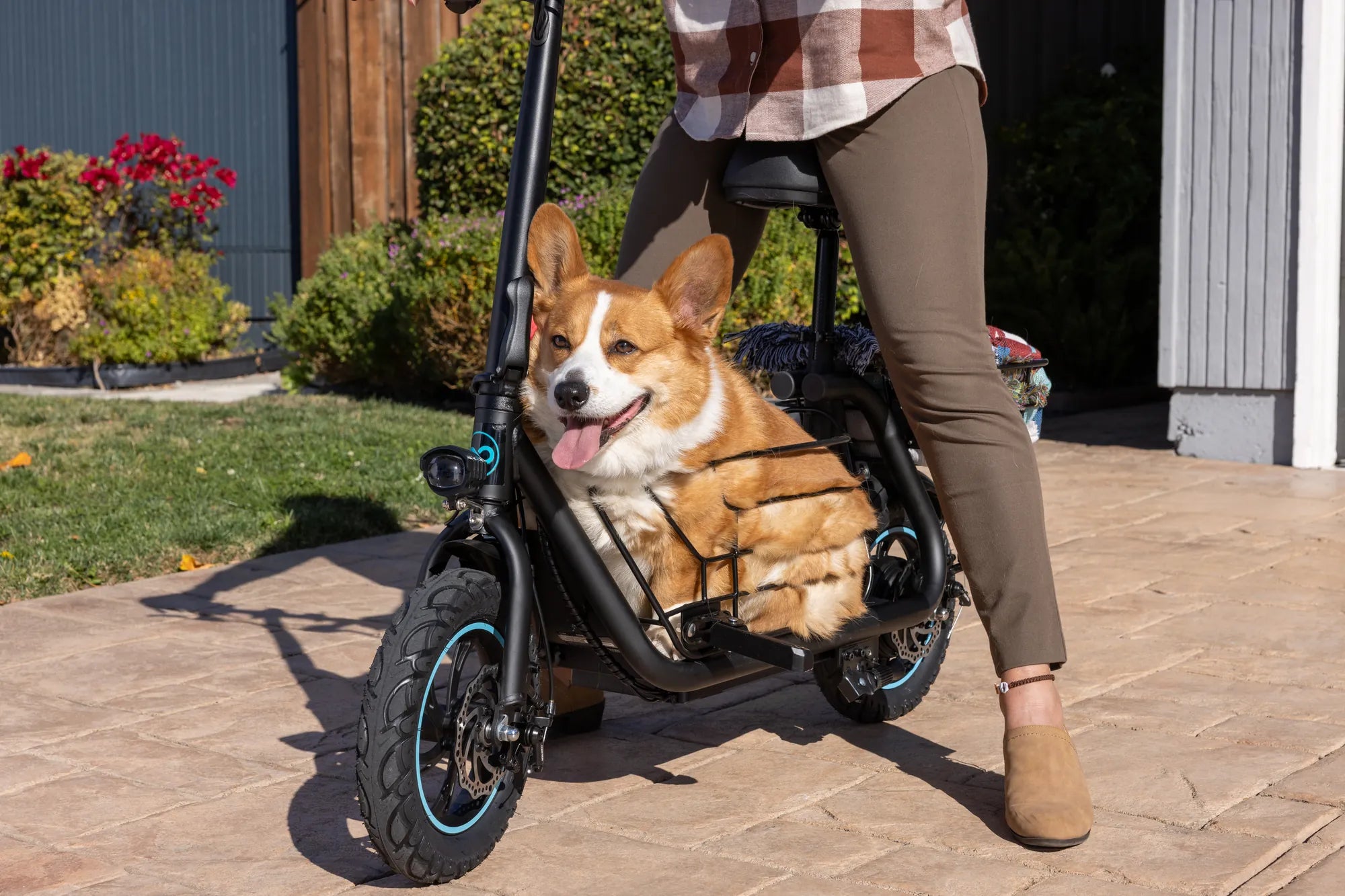
Introduction: Why Electric Scooters Are the Ultimate Student Mobility Solution
Navigating a sprawling campus between back-to-back classes, the library, and a part-time job demands a transportation solution that is fast, reliable, and doesn't break the bank. Public transit can be inconsistent, bikes require secure parking and physical effort, and walking simply eats up precious time. This is where the modern electric scooter excels, offering a trifecta of benefits that align perfectly with student life: affordability, portability, and efficiency.
For students, an electric scooter is more than a gadget; it's a practical tool for reclaiming time and reducing stress. The initial investment is often offset by eliminating parking fees, gas costs, and bus passes. When chosen wisely, the best electric scooters for students provide affordable, portable, and efficient rides that become an integral part of the daily routine. Leading brands like Gyroor engineer their models with these specific needs in mind, prioritizing features like UL-certified battery safety and IPX5 water resistance for dependable performance in a dynamic campus environment.
This guide will move beyond marketing specs to focus on real-world application. We will dissect the key features that matter most for academic life, compare scooter profiles for different campus types, and provide actionable tips for safe riding and maintenance. The goal is to equip you with the knowledge to select a scooter that is not just a purchase, but a smart investment in your campus mobility and independence.
Key Features Every Student Should Prioritize
Choosing an electric scooter involves more than comparing top speeds and flashy designs. For students, specific functional attributes directly impact daily usability, safety, and long-term value. Prioritizing these core features ensures your scooter is a help, not a hassle.
Portability and Weight: Navigating Stairs and Crowded Halls
The true test of a student scooter is its behavior off the road. You must carry it up dormitory stairs, fold it under a lecture hall desk, or lift it onto a crowded campus shuttle. A scooter that's too heavy or cumbersome fails its primary mission.
For optimal portability, target a weight under 30 pounds (approximately 14 kg). This weight range is manageable for most people to carry short distances. The folding mechanism should be intuitive, secure, and quick—allowing you to transition from riding to carrying in seconds. A compact folded footprint is equally important for tight storage in dorm rooms or crowded campus lockers.
Battery Life and Range: Making It Through a Full Day on Campus
Advertised range figures are often based on ideal conditions: a lightweight rider on flat, smooth pavement at low speeds. Real-world student use involves stops, starts, slight inclines, and sometimes a backpack full of textbooks.
To ensure you won't be left walking, interpret the advertised range conservatively. A scooter with a 20-mile claimed range will likely deliver 12-15 miles in daily use. Calculate your total daily mileage: round trip from housing to your farthest class, plus trips to the dining hall, library, and other errands. A minimum practical range of 10-15 real-world miles is advisable for most medium-sized campuses. Beyond capacity, battery safety is paramount in dense living environments. Always opt for scooters with UL-certified battery packs, like those used by Gyroor, which undergo rigorous testing for stability and longevity over 500+ charge cycles.
Affordability and Value: Maximizing Your Budget
For students, affordability is a balance between upfront cost and long-term value. The sweet spot for a reliable, feature-complete student scooter typically falls between $400 and $700. Models significantly cheaper often cut corners on battery quality, motor durability, or braking systems, leading to higher costs and safety risks down the line.
True value is measured by the warranty, build quality, and included safety features. A comprehensive 1-year warranty, like Gyroor offers, protects your investment from manufacturing defects. Consider the cost of potential repairs; a scooter with a solid frame, reputable brand support, and quality components may have a higher initial price but a lower total cost of ownership over your college career.
Durability and Weather Resistance: Ready for the Campus Grind
A student's scooter endures daily punishment: potholed pathways, curbs, and the occasional unexpected rain shower. Durability isn't a luxury; it's a requirement for a device that gets daily use.
Look for a robust frame construction, typically from aerospace-grade aluminum alloys. Pay close attention to the IP (Ingress Protection) rating, which indicates resistance to dust and water. An IPX5 rating, a standard on Gyroor scooters, means the scooter can withstand water jets from any direction, making it safe to ride through puddles and light rain. This protection is crucial for safeguarding the scooter's electrical components and ensuring reliability regardless of the weather.
Top Electric Scooter Profiles for Different Student Needs
Rather than a one-size-fits-all recommendation, the best choice depends on your specific campus geography and lifestyle. Here, we profile three distinct electric scooter categories, using industry benchmarks and Gyroor's engineering philosophy to illustrate the ideal use cases for each.
The Ultra-Portable Commuter: For Dense Urban Campuses
This profile is defined by maximum convenience in tight spaces. Ideal for schools with closely clustered buildings, frequent public transit integration, and limited storage space. The primary attributes are light weight (often 25-28 lbs) and a compact fold.
Range is sufficient for shorter, multi-trip days, usually 12-18 miles. Speed is moderate, prioritizing control and legality on crowded walkways. These models, such as those designed for urban agility, often feature simpler suspension or solid tires to minimize maintenance. Their greatest asset is how effortlessly they disappear when not in use, carried into a coffee shop or stored in a dorm closet.
The Range Champion: For Sprawling University Grounds
Large state universities or campuses with off-campus housing demand a scooter that won't quit halfway through the day. The Range Champion prioritizes battery capacity above all else, often offering 20+ miles of real-world range.
These models may weigh slightly more (30-40 lbs) due to the larger battery pack but maintain a foldable design. They often feature more powerful motors (350W-500W) to maintain speed on longer stretches and gentle inclines. For a student commuting several miles from an apartment complex, this profile eliminates range anxiety and ensures a single daily charge suffices. The design focus is on endurance and comfort for longer rides.
The All-Terrain Adventurer: For Campuses with Rough Paths
Not all campuses have pristine asphalt. Historic schools with brick pathways, campuses with gravel shortcuts, or those with pronounced cracks and tree roots require a scooter built for varied surfaces.
The All-Terrain Adventurer is characterized by larger wheels (often 8.5 or 10 inches), air-filled pneumatic tires for better shock absorption, and enhanced front and/or rear suspension. This combination smooths out vibrations and provides greater stability on uneven ground. While these features may add weight and reduce portability slightly, they transform the riding experience on challenging terrain, making the journey to that 8 a.m. lecture far more comfortable and controlled.
Data-Driven Decision Making: A Student's Scooter Comparison Checklist
Use this table to systematically compare models side-by-side. It translates specifications into practical student concerns. The benchmarks provided are based on industry standards for reliable performance in a campus setting.
| Feature | Why It Matters for Students | Ideal Benchmark / Example |
|---|---|---|
| Weight | Determines portability for stairs, buses, and carrying. | < 30 lbs (Ultra-Portable) / 30-40 lbs (Range) |
| Max Real-World Range | Dictates how far you can go on a single charge. Assume 65-75% of advertised. | 12-18 miles (Commuter) / 20+ miles (Range Champion) |
| Top Speed | Must comply with local/campus laws (often 15-20 mph). Safety first. | 15-20 mph (sufficient for campus transit) |
| Motor Power | Affects hill-climbing ability and acceleration. | 250W-350W (flat campuses) / 350W-500W (hills) |
| Charge Time | Fits into your schedule between classes. | 4-6 hours (standard) |
| IP Rating | Weather resistance for rain and puddles. | IPX5 or higher (Gyroor standard) |
| Tire Type | Impacts comfort and maintenance. | Pneumatic (comfort) / Solid (puncture-proof) |
| Warranty Length | Protects your investment from defects. | 1-year comprehensive (e.g., Gyroor) |
| Approx. Price Point | Balances features with budget. | $400 - $700 (sweet spot for value) |
Smart Riding and Ownership Tips for Campus Life
Owning an electric scooter comes with responsibilities. Adopting smart habits ensures your safety, the safety of others, and the longevity of your ride.
Safety and Etiquette on Campus Pathways
You are a vehicle operator in a shared space. Always wear a helmet—it’s the single most effective safety measure. Obey pedestrian right-of-way rules; slow down and give ample space when passing. On crowded pathways, dismount and walk.
Never use headphones at a volume that blocks ambient noise. Be predictable in your movements and use a bell or verbal cue (“on your left!”) to alert others. When parking, never block ADA ramps, building entrances, or walkways. Use designated bike racks if available, and always lock your scooter securely.
Maintenance 101: Keeping Your Scooter Reliable
A few minutes of weekly maintenance prevents major issues. Regularly check tire pressure if you have pneumatic tires; under-inflation reduces range and increases puncture risk. Ensure all folding mechanisms and bolts are tight.
Keep the scooter clean, especially the deck and wheel wells, to prevent grit from damaging moving parts. Follow proper battery charging practices: avoid leaving it on the charger indefinitely after it’s full, and try not to drain it to 0% regularly. Storing the scooter (and battery, if removable) in a cool, dry place when not in use for extended periods will maximize its lifespan.
Leveraging Your Warranty and Support
Register your product immediately upon purchase. Keep your original receipt, warranty card, and any product documentation in a safe place. Understand what is covered (typically manufacturing defects in materials and workmanship) and what is not (accidental damage, wear and tear).
Purchasing from a brand with established, accessible customer support is crucial. For instance, Gyroor’s US-based support team provides a direct line for troubleshooting warranty claims. If you encounter a persistent issue covered under warranty, contact support with your model information, proof of purchase, and a clear description of the problem for efficient service.
Frequently Asked Questions (FAQs) for Student Riders
Q: Are electric scooters allowed on my campus?
A> Campus policies vary widely. Always check your university’s official transportation or parking services website for specific regulations. Some may require registration, restrict riding in certain zones, or mandate helmet use. Proactively knowing the rules prevents fines and confiscation.
Q: How do I secure my scooter from theft?
A> Use a high-quality U-lock or heavy-duty chain lock, securing the scooter’s frame (not just the wheel) to a fixed, immovable object like a bike rack. If your scooter has a removable battery, take it with you. Consider a secondary motion alarm for added deterrence. Never leave it unattended overnight in public areas.
Q: Can I ride my scooter in the rain?
A> Scooters with an IPX5 rating or higher (like Gyroor models) are designed to withstand light to moderate rain and wet roads. However, avoid deep puddles, heavy downpours, and flooding. Water damage is often not covered under warranty. Always dry your scooter off after a wet ride, especially around the brake discs and charging port.
Q: Is it expensive to replace the battery?
A> Battery replacement is the most significant long-term cost. A quality replacement battery pack can cost between $150 and $300. This underscores the importance of choosing a scooter with a UL-certified battery from a reputable brand, as it will likely last longer and have safer, more accessible replacements available.
Q: What's the real-world range vs. the advertised range?
A> As a rule of thumb, expect 65% to 75% of the manufacturer’s advertised range. Factors that reduce real-world range include rider weight, hills, frequent acceleration/braking, cold weather, and low tire pressure. For planning, always use the conservative estimate.
Conclusion: Investing in Your Campus Freedom and Efficiency
Selecting the best electric scooter for students is an exercise in aligning practical engineering with the unique rhythms of academic life. The core tenets—affordability that respects a student budget, portability that navigates crowded spaces, and efficiency that reclaims time—are non-negotiable. By prioritizing certified battery safety, durable construction, and weather-resistant design, you invest in a reliable partner for your daily commute.
Your campus lifestyle dictates the ideal profile: the ultra-portable commuter for city grids, the range champion for sprawling grounds, or the all-terrain adventurer for uneven paths. Use the data-driven checklist to compare models objectively, focusing on real-world performance over marketing claims. Remember, the right scooter enhances your independence, reduces daily stress, and proves that smart mobility is a cornerstone of a successful and efficient student experience. Evaluate your needs, prioritize safety and durability, and choose a ride engineered for the journey ahead.
Ready to find your perfect campus ride? Explore a range of models built with student priorities in mind. Browse the full Gyroor collection at gyroorboard.com to discover UL-certified, IPX5-rated electric scooters designed for reliability and value.
Are Electric Scooters Safe for 13 Year Olds? A Parent's Guide
Electric Scooters for Winter: The Ultimate Guide to Riding Safely and Efficiently