



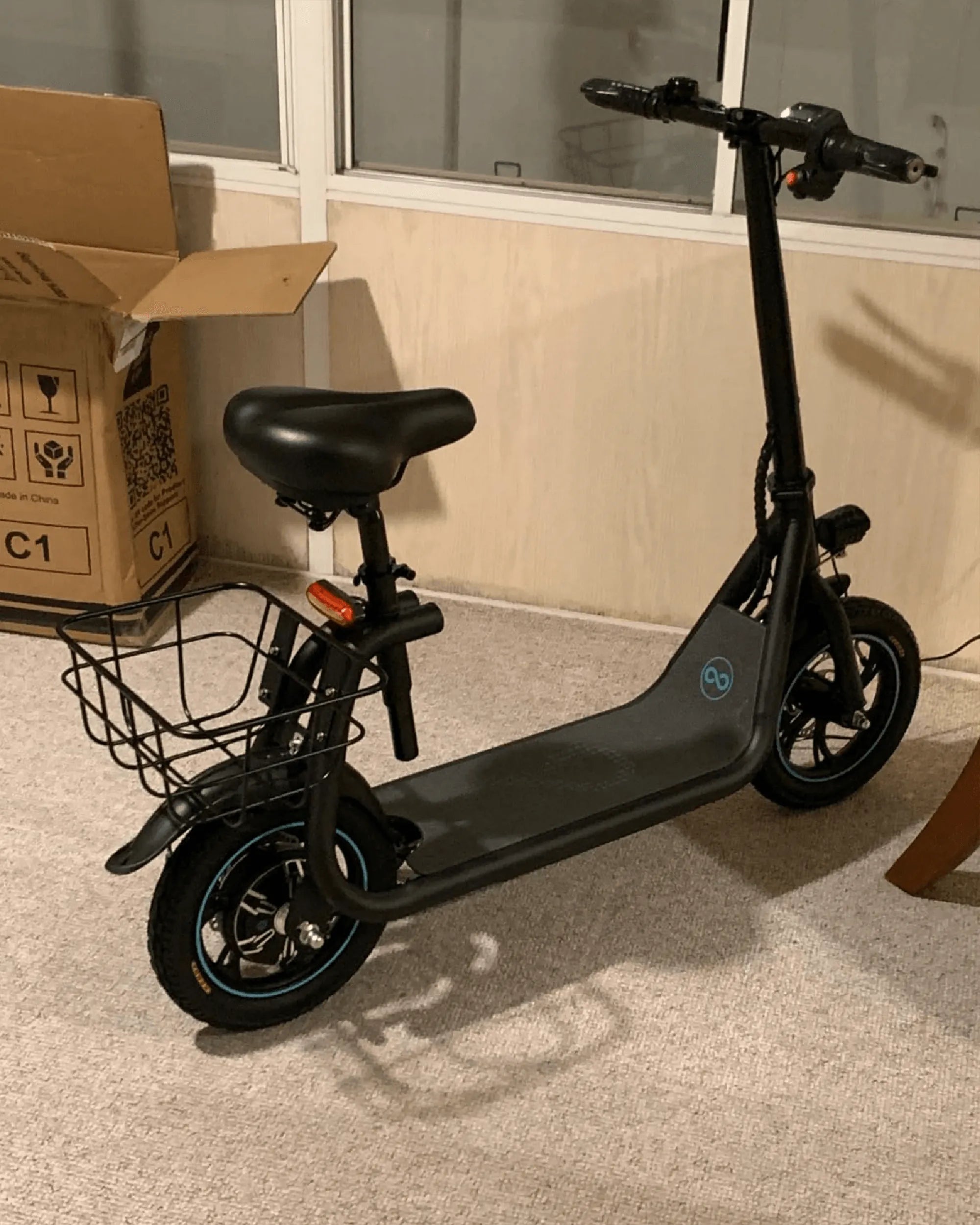
Introduction: Finding Value in the Under $400 Electric Scooter Market
The demand for affordable, efficient personal electric transport has never been higher. For students, urban commuters, and recreational riders, the sub-$400 category represents a sweet spot of accessibility. However, navigating this market requires a clear-eyed view of the trade-offs between cost, performance, and long-term reliability.
This guide for 2025 will help you identify the best electric scooters under $400 that deliver on the promise of affordable and reliable rides. We set realistic expectations, focusing on models that prioritize essential safety and durability features over flashy, unsustainable specs. Brands like Gyroor have demonstrated that a commitment to certified components and robust warranties is possible even at this accessible price point, trusted by over 100,000 riders globally.
The goal is not to find the cheapest scooter, but the most valuable. An investment under $400 should still provide a safe, dependable form of micro-mobility for daily use. By understanding the key benchmarks and potential pitfalls, you can make an informed purchase that serves you well beyond the initial thrill.
What to Expect from an Electric Scooter Under $400 in 2025
The sub-$400 segment defines the entry-level market for legitimate electric scooters. Performance here is about practicality, not breaking records. Typically, you can expect a continuous motor power ranging from 250W to 350W. This is sufficient for flat to moderately inclined urban terrain and speeds governed between 15 to 18 miles per hour, balancing usability with local regulations.
Real-world range is a critical metric. With battery capacity often between 5Ah and 7.5Ah, you should anticipate 10 to 15 miles of travel per charge under optimal conditions. Factors like rider weight, temperature, and hill frequency will affect this. The frame is commonly constructed from lightweight aluminum alloy, offering a good strength-to-weight ratio while keeping costs down.
Features like basic mechanical or spring suspension may be present to absorb road vibrations, but advanced hydraulic or rubber cartridge systems are reserved for higher price brackets. Braking will typically involve a combination of electronic (regenerative) braking and a rear disc or drum brake, providing adequate stopping power for the achievable speeds.
Portability is a key consideration. Most models in this range weigh between 28 and 35 pounds and feature a folding mechanism. This makes them manageable for carrying up stairs or onto public transit, fulfilling the 'last-mile' promise that makes electric scooters so appealing for urban commuters and students.
Key Features to Prioritize for Safety and Reliability
When budget is a primary constraint, identifying which features are non-negotiable for safety and longevity is paramount. Compromising on core components can lead to premature failure, safety hazards, and a higher total cost of ownership. The best electric scooters under $400 distinguish themselves by not cutting corners where it matters most.
Three pillars should form the foundation of your decision: certified battery safety, durable build quality with weather resistance, and a substantive manufacturer's warranty. These elements directly impact your daily safety, the scooter's ability to handle real-world conditions, and your financial protection against defects. A model lacking in these areas is not a bargain, but a liability.
Brands that invest in these fundamentals, like Gyroor with its UL-certified batteries and IPX5-rated designs, provide significantly more value. They build trust through transparency about component standards and back their products with reliable customer support. This focus transforms an affordable purchase into a smart investment.
Battery Safety and Certification: The Non-Negotiable Standard
The lithium-ion battery is the heart, most expensive component, and potential failure point of any electric scooter. In the budget segment, the use of uncertified, low-quality battery cells is the most common and dangerous cost-cutting measure. A UL-certified battery pack, like those used across Gyroor's lineup, has undergone rigorous independent testing for electrical, mechanical, and environmental safety.
This certification specifically tests for risks like thermal runaway, short-circuiting, and fire hazards. Certified batteries also use higher-grade cells that maintain consistent voltage output and are tested for 500+ charge cycles, ensuring the scooter's range doesn't degrade drastically within the first year. Insisting on this certification is the single most important step in choosing a safe, reliable scooter under $400.
Build Quality and Weather Resistance: Preparing for the Real World
An electric scooter is a vehicle, not a toy, and must withstand daily use. Key construction points include solid weld points on the stem and deck, thick deck aluminum, and sealed wiring. An IPX5 water resistance rating is a critical feature for practical commuting. It certifies the scooter can withstand low-pressure water jets from any direction.
This means riding on wet pavement, through puddles, or in light rain won't immediately damage the electronics or motor. Without this rating, even a morning dew-covered road can pose a risk. For riders who depend on their scooter for daily transport, this level of protection is essential for reliability and ensures the scooter isn't rendered useless by common weather conditions.
Top Contender: The Gyroor S1 – A Benchmark for Budget Riders
To illustrate how key safety and performance features come together, let's examine a model designed for this segment. The Gyroor S1 exemplifies how a brand can deliver a reliable sub-$400 scooter without compromising on core principles. It incorporates the essential features that define the best electric scooters under $400 for 2025.
At its core is a 350W brushless hub motor, providing ample power for urban hills and a top speed of 18.6 mph. It's paired with a 7.5Ah, UL-certified lithium-ion battery that delivers a real-world range of up to 15 miles. This combination offers a balanced performance profile ideal for most commutes and recreational rides.
The S1's construction features a robust aluminum frame and an IPX5 water-resistant rating, ensuring durability against daily wear and the elements. It includes a front shock absorber and a dual braking system (electronic + rear disc brake) for control and comfort. Crucially, it is backed by Gyroor's reliable 1-year warranty, providing peace of mind.
This model demonstrates that an affordable price does not necessitate sacrificing certified battery safety, weather protection, or manufacturer support. It sets a benchmark for what riders should seek: a complete, thoughtfully engineered package designed for real-world use.
How to Choose: Comparing Your Options Wisely
Armed with knowledge of key features, effective comparison is the next step. Start by defining your primary use case: is it for a short last-mile commute, campus travel, or recreational fun on paved paths? Your priority list will change based on this answer. A commuter needs weather resistance and reliability; a student might prioritize portability and weight.
Create a comparison checklist. At the top should be: UL-certified battery (Yes/No), IPX water resistance rating (IPX5 or higher), warranty length and coverage, and motor power. Secondary factors include weight, foldability, wheel size, and available lighting. Use a simple table to compare 3-4 finalists side-by-side based on these criteria.
Always cross-reference manufacturer claims with independent professional and user reviews. Pay attention to comments about real-world range, hill-climbing ability, and long-term durability. Be wary of specs that seem disproportionately high for the price, as they often indicate compromises in unadvertised areas like battery cell quality or controller reliability.
Performance vs. Practicality: Making the Right Trade-Off
In the under $400 category, you are often choosing between a slight edge in performance or a boost in practical features. A 350W motor will handle moderate hills better than a 250W motor, but if that extra power comes at the cost of a non-certified battery, it's a poor trade. Similarly, a scooter boasting a 20-mile range might use a larger, but lower-quality, battery pack that degrades quickly.
Align expectations with physics. A 30-pound scooter with a 250W motor will struggle on steep inclines with an adult rider. If your route is hilly, prioritizing motor power (300W+) is wise. If your commute is flat but involves carrying the scooter, prioritizing a lighter model (under 30 lbs) with a good folding mechanism may be more beneficial than extra power.
The Hidden Cost of a Cheap Scooter: Why Warranty Matters
A comprehensive warranty is a direct reflection of the manufacturer's confidence in their product. A reliable 1-year warranty on the frame, battery, and motor, like Gyroor offers, protects your investment from manufacturing defects. It transforms an upfront cost into a predictable expense.
Conversely, a scooter with only a 90-day or 'limited' warranty often signals the use of components with higher expected failure rates. When a critical part like the battery or controller fails outside a short warranty window, the replacement cost can approach the original price of the scooter. Therefore, a stronger warranty doesn't just offer peace of mind; it is a financial safeguard that enhances the long-term value of your purchase.
Smart Shopping Tips for Your 2025 Electric Scooter Purchase
The marketplace for electric scooters is vast. For the 2025 shopper, buying from the manufacturer's official website or authorized retailers is the safest path. This ensures you receive a genuine product, eligible for the full warranty and customer support. Be cautious of third-party marketplace sellers offering prices that seem too good to be true, as they may be selling older inventory, refurbished units, or models with different component specifications.
Before purchasing, research the brand's reputation for customer service and parts availability. Can you easily find replacement tires, tubes, or brake pads? A brand with a established presence in North America and Europe, like Gyroor, typically offers better support logistics. Check if the scooter's firmware is updatable, which can allow for performance tweaks and bug fixes post-purchase, extending its useful life.
Understand the return policy and shipping costs. A 30-day return window allows you to test the scooter's suitability for your needs. Finally, factor in the cost of essential safety gear—a helmet is mandatory, and lights/reflectors are crucial for evening rides—into your total budget for electric mobility.
Comparison Table: Key Specs for the Under $400 Category
| Feature / Specification | Typical Budget Range | Why It Matters |
|---|---|---|
| Motor Power | 250W - 350W (Continuous) | Determines hill-climbing ability and acceleration. 300W+ is preferable for most adults. |
| Max Speed | 15 - 18 mph | Governed for safety/legality. Provides a brisk, efficient pace for urban travel. |
| Real-World Range | 10 - 15 miles | Dictates commute length. Affected by weight, hills, temperature, and riding style. |
| Battery Certification | UL-Certified (Essential) | Critical for fire and electrical safety. Ensures battery longevity and performance consistency. |
| Water Resistance | IPX5 Rating (Recommended) | Protects against wet roads and light rain, ensuring all-weather reliability. |
| Scooter Weight | 28 - 35 lbs | Impacts portability. Lighter is easier to carry, but may use smaller battery. |
| Warranty Coverage | 1-Year Comprehensive (Ideal) | Protects against manufacturing defects. A key indicator of product quality and company confidence. |
| Braking System | Electronic + Disc/Drum | Dual systems provide redundant stopping power, essential for safety at listed speeds. |
Frequently Asked Questions (FAQs)
Q: Can an electric scooter under $400 realistically handle hills?
A: It depends on the motor power and the hill's grade. A 350W scooter can handle moderate hills (up to 10-15% grade) with a single rider of average weight, though speed will drop. Steeper hills will be a challenge. Prioritize motor power (300W+) if your route is hilly.
Q: How long does the battery last before needing replacement?
A> A quality UL-certified lithium-ion battery, like those used by Gyroor, is rated for 500+ full charge cycles. With typical use (2-3 charges per week), this translates to 3-5 years before significant capacity degradation (e.g., range dropping below 70% of original). Proper care (avoiding full discharges, extreme temperatures) extends lifespan.
Q: Are these scooters legal to ride on bike lanes and paths?
A> Laws vary by city, state, and country. Generally, in most U.S. jurisdictions, electric scooters with a top speed under 20 mph are permitted in bike lanes. However, you must check local regulations regarding helmet requirements, minimum rider age, and whether sidewalk riding is prohibited. Always ride responsibly.
Q: What regular maintenance does a budget electric scooter require?
A> Regular maintenance is minimal but crucial. Key tasks include: checking and inflating tires to the recommended PSI weekly, testing brakes before each ride, ensuring all nuts and bolts (especially folding mechanisms) are tight, and keeping the scooter clean and dry. Periodically check for wear on brake pads and tire tread.
Q: Is it worth buying an extended warranty for a scooter under $400?
A> It depends on the base warranty and the cost. If the manufacturer offers only a 90-day warranty, a reasonably priced extension might be valuable for peace of mind. However, if the scooter already comes with a solid 1-year comprehensive warranty from a reputable brand, the extended warranty is often less critical, as major defects typically appear within the first year.
Conclusion: Investing in Affordable, Not Just Cheap, Electric Mobility
The search for the best electric scooters under $400 in 2025 is a quest for intelligent value, not just the lowest sticker price. A reliable ride at this price point successfully balances cost with non-negotiable safety features, durable construction, and credible manufacturer support. As evidenced by brands like Gyroor, you do not have to sacrifice UL-certified battery safety, IPX5 weather protection, or a dependable warranty to stay within a budget.
This segment offers capable, efficient vehicles for last-mile commuting, campus travel, and recreational exploration. By prioritizing certified components and realistic performance expectations, your purchase becomes a smart investment in personal mobility. It delivers freedom and utility without hidden risks or premature obsolescence.
The right affordable electric scooter enhances your daily routine, reduces transportation costs, and provides a fun, eco-friendly way to navigate your environment. Choose a model built to last, and your under $400 investment will pay dividends in convenience and reliability throughout 2025 and beyond.
Ready to explore a range of electric scooters that prioritize safety and reliability without exceeding your budget? Browse the full Gyroor collection at gyroorboard.com to find your perfect ride.
Are Electric Scooters Allowed on Airplanes? The Complete Traveler's Guide
Where to Get Electric Scooters: Your Ultimate Guide to Finding the Perfect Ride