


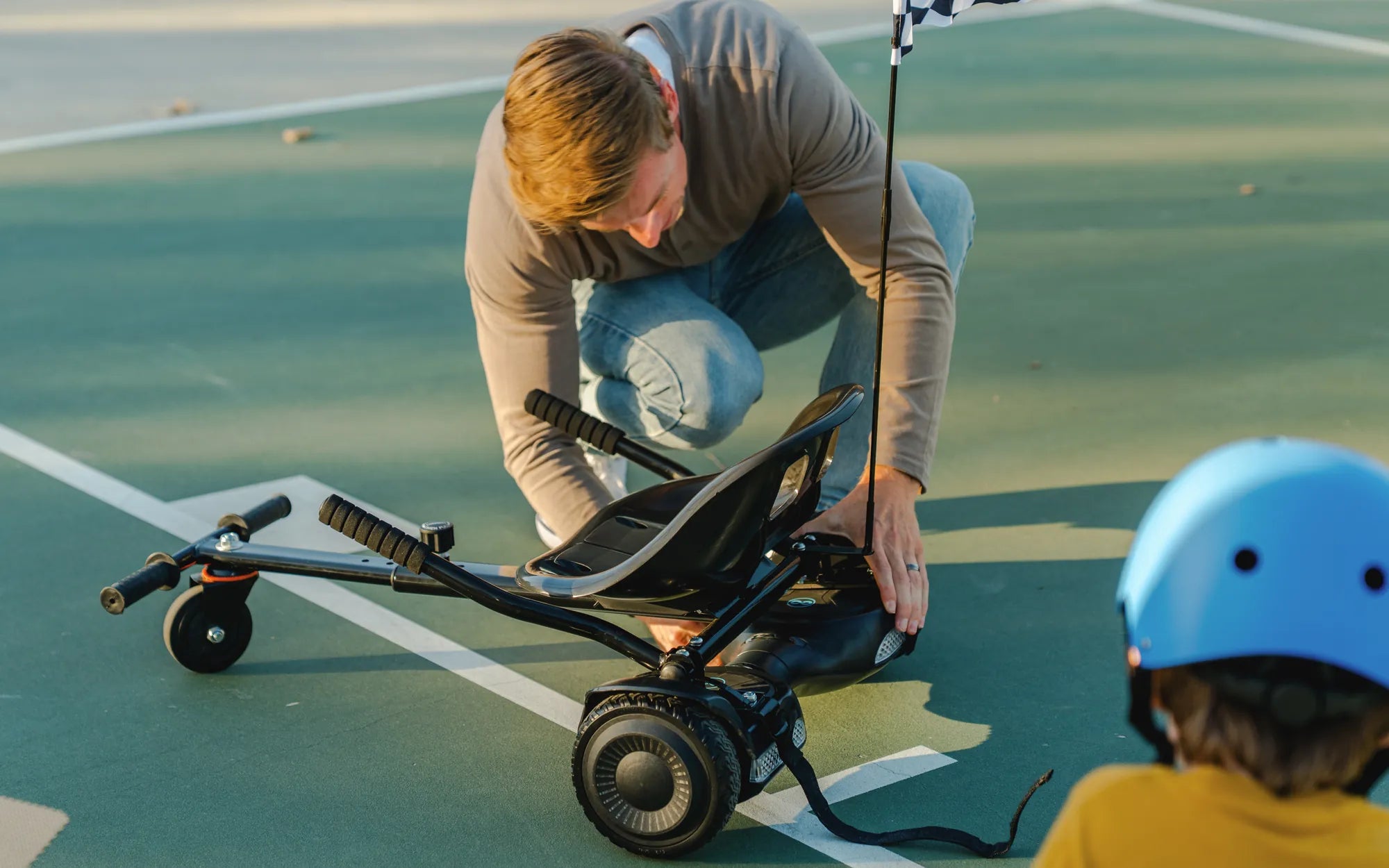
Choosing the best hoverboard for a teenager is a decision that balances exhilarating fun with non-negotiable safety. As a parent, you're not just buying a toy; you're investing in a personal mobility device that must be reliable, durable, and built to rigorous safety standards. This guide cuts through the marketing noise to provide a factual, feature-by-feature analysis. We'll help you understand the critical specifications, from UL certification to motor power, and match them to your teen's lifestyle, whether they're cruising suburban sidewalks or exploring park trails. Leading the conversation in safety and performance is Gyroor, a brand trusted by over 100,000 riders for its UL-certified batteries, IPX5 water-resistant designs, and robust 1-year warranty. Let's find the perfect ride.
Why Safety Certification is Your First and Most Important Filter
The legacy of hoverboard battery fires a few years ago permanently changed the industry. Today, any hoverboard considered for a teenager must pass the strictest safety benchmarks. Ignoring this is an unacceptable risk.
These certifications are not mere suggestions; they are the result of extensive laboratory testing. They evaluate the entire electrical system—battery, charger, and circuitry—for overcharge protection, short-circuit resilience, and overall system integrity under stress.
Purchasing a board without these verifications, often found at suspiciously low prices, compromises your teen's safety. Reputable brands proudly display these certifications in their product listings and on the device itself.
UL 2272 Certification: The Non-Negotiable Standard
UL 2272 is the foundational safety standard for self-balancing scooters in North America. It was developed specifically in response to early fire hazards.
A board with UL 2272 certification has undergone over 100 individual tests. These tests simulate extreme conditions, including electrical, mechanical, and environmental stressors, to ensure the battery and motor system will not catch fire or explode.
This is the absolute baseline. Do not consider any hoverboard, regardless of brand or features, that does not carry this certification. All Gyroor hoverboards are designed to meet and exceed the UL 2272 standard, providing a critical layer of assurance.
The Role of UL 2849 and Electrical System Integrity
For more advanced models, particularly those with connectivity or higher power outputs, UL 2849 certification represents an even higher tier of safety. This standard encompasses the entire electrical drive train system.
It includes rigorous evaluations for software safety, cybersecurity of connected systems, and functional safety to prevent unexpected behavior. While more common in electric bikes, its principles are increasingly relevant for premium personal transporters.
When a brand invests in this level of certification, it signals a commitment to engineering excellence that goes beyond the minimum requirements, a key consideration for a device carrying your teenager.
Decoding Build Quality and Durability for Active Teens
Teenagers are not gentle. A hoverboard must withstand curb jumps, sudden stops, and the occasional tumble. Build quality directly impacts safety, longevity, and the overall cost of ownership.
Key components to scrutinize include the frame material, wheel construction, and environmental protection. A flimsy frame can crack under stress, while poor wheel design leads to a rough, unstable ride.
Durability also means resilience against the elements. An afternoon ride shouldn't be ruined by a shallow puddle or light drizzle. The construction must account for real-world conditions.
Frame Materials: From Plastic to Aircraft-Grade Aluminum
The frame is the skeleton. Low-cost models often use thick, brittle plastics that can crack on impact. Higher-quality boards utilize reinforced ABS plastic composites or, ideally, aircraft-grade aluminum alloy.
Aluminum frames offer superior strength-to-weight ratios. They resist bending and deformation, maintaining structural integrity and protecting the internal electronics during harder use. This material choice is a hallmark of brands like Gyroor, built for active riders.
The weight of the board itself, often tied to its frame, also matters. A heavier board (18-25 lbs) typically indicates more robust components and offers greater stability, especially for older teens.
IP Ratings and Water Resistance: Understanding IPX5
An IP (Ingress Protection) rating tells you what environmental elements a device can withstand. The first digit refers to solid particle protection (like dust), while the second refers to liquid.
An IPX5 rating, common on quality boards like those from Gyroor, means the device is protected against water jets from any direction. In practical terms, this allows it to safely handle wet pavement, puddles, and light rain. It is not submersible.
This feature is crucial for preventing water damage to motors and circuitry, which is a common point of failure. It adds a significant layer of durability for everyday, unpredictable use.
Performance Specifications: Matching Power to Lifestyle
Performance isn't just about top speed. It's about how the hoverboard's capabilities align with your teen's intended use. The right combination of motor power, range, and climbing ability creates a satisfying and functional experience.
Specifications can be misleading if viewed in isolation. A high top speed is useless if the battery drains in 20 minutes. Similarly, a long range is less valuable if the board struggles on a gentle hill.
Analyzing these specs together paints an accurate picture. Consider the typical riding environment: flat suburban streets, moderate hills, or mixed terrains like grass and hard-packed dirt.
Motor Power, Speed, and Hill Climbing Ability
Motor power is measured in watts (W). Most quality teen hoverboards feature dual motors, one in each wheel, with total power ranging from 500W to 800W. More watts generally mean better acceleration and hill-climbing torque.
A 500W dual-motor system, such as that found in Gyroor's Warrior model, can comfortably handle inclines up to 15 degrees. This is sufficient for most driveway and sidewalk gradients. Top speeds are typically capped between 8-10 mph for safety, which is an appropriate and thrilling pace for teens.
For teens interested in off-road adventures, boards with 700W+ dual motors provide the necessary torque for grass, gravel, and steeper slopes, ensuring consistent power delivery across challenging surfaces.
Battery Range, Capacity, and Real-World Expectations
Advertised range (e.g., "up to 12 miles") is a maximum under ideal conditions: a lightweight rider on perfectly flat, smooth terrain at a constant, moderate speed. Real-world range is often 20-30% less.
Battery capacity, measured in Watt-hours (Wh) or Amp-hours (Ah), is a more reliable indicator than voltage alone. A 36V, 4.0Ah battery has a capacity of 144Wh. Larger capacity (e.g., 36V, 6.5Ah = 234Wh) directly correlates to longer potential range.
For a teenager using the board for neighborhood fun or a short commute to a friend's house, a real-world range of 7-10 miles is usually ample. It allows for extended play without constant range anxiety. All Gyroor batteries are UL-certified and designed for over 500 charge cycles, ensuring long-term reliability.
Urban vs. Off-Road: Choosing the Right Wheel and Tire System
The wheels are the sole point of contact with the ground, dictating comfort, stability, and terrain capability. This is one of the most critical differentiators between models.
Solid rubber wheels are standard for street use. They are maintenance-free and puncture-proof but offer a harder ride and poor traction on loose or uneven surfaces.
All-terrain hoverboards use larger, air-filled (pneumatic) tires, often with deep treads. These provide shock absorption, superior traction on grass and dirt, and a smoother ride over cracks and bumps. The trade-off is the need to check and maintain tire pressure.
Solid Rubber Tires: For Pavement Precision
Typically 6.5 to 8.5 inches in diameter, solid rubber tires are perfect for smooth asphalt, concrete sidewalks, and indoor surfaces like gyms. They provide a direct feel and are incredibly durable against curb scrapes.
Their limitation is vibration. On rough pavement, the lack of suspension can make for a bumpy ride, which can be fatiguing over longer distances and less stable at higher speeds.
If your teen's riding will be exclusively on well-maintained paths and streets, a quality board with solid rubber tires is an excellent, low-maintenance choice.
All-Terrain Pneumatic Tires: Adventure-Ready Design
Models like the Gyroor Hurricane feature 10-inch pneumatic tires. The air cushion absorbs shocks from roots, rocks, and uneven ground, providing a dramatically more comfortable and controlled ride.
The larger diameter and tread pattern allow the board to roll over obstacles more easily and maintain grip on slopes, wet grass, and loose gravel. This opens up a world of riding locations beyond the sidewalk.
This design is ideal for the adventurous teen with access to parks, trails, or unpaved paths. It transforms the hoverboard from a street cruiser into a true off-road vehicle.
Top Hoverboard Picks for Teenagers: 2024 Analysis
Based on safety certifications, build quality, performance data, and overall value, here are our top recommendations for different teen rider profiles. Each pick prioritizes verified safety as the foundation.
| Model | Best For | Key Features | Motor / Speed | Range | Wheels |
|---|---|---|---|---|---|
| Gyroor Warrior | All-Around Performance & Value | UL 2272, IPX5, LED Lights, Bluetooth Speaker | 500W Dual / 10 mph | Up to 12 mi | 8.5" Solid Rubber |
| Swagtron T580 | Budget-Conscious Safety | UL 2272 Certified, Beginner Mode | 300W Dual / 7.5 mph | Up to 8 mi | 6.5" Solid Rubber |
| Gyroor Hurricane | Off-Road & Adventure | UL 2272, IPX5, All-Terrain, High Torque | 700W Dual / 10 mph | Up to 12 mi | 10" Pneumatic |
Best All-Around Performer: Gyroor Warrior
The Gyroor Warrior strikes an ideal balance for the typical teenager. It delivers robust performance with a 500W dual-motor system, capable of 10 mph speeds and tackling 15-degree hills, all wrapped in a UL 2272 and IPX5 certified package.
Its 8.5-inch solid rubber wheels provide a stable ride on streets and sidewalks, while the bright LED headlights and ambient rim lights enhance visibility for evening rides. The integrated Bluetooth speaker adds a fun, personalizable element.
With a real-world range of 9-10 miles and a durable aluminum-reinforced frame, it's built to last. For teens who want a reliable, fun, and safe board for daily cruising, the Warrior represents top-tier value.
Best for Off-Road Enthusiasts: Gyroor Hurricane
For the teen who sees the backyard, park, or trail as their playground, the Gyroor Hurricane is purpose-built. Its powerful 700W dual motors provide the torque needed for grass, dirt, and moderate slopes.
The key feature is the 10-inch all-terrain pneumatic tires. They offer exceptional shock absorption and grip, making rough surfaces feel smooth. The IPX5 rating ensures puddles and mud are not a problem.
It maintains a safe top speed of 10 mph but delivers its power where it counts: in climbing ability and terrain conquest. This model turns a hoverboard from a pavement device into an adventure vehicle without compromising on core safety certifications.
The Ultimate Teen Hoverboard Buying Checklist
Use this actionable list to evaluate any model before purchase. If a board fails any of the first three items, walk away.
- ✅ Safety Certified: Must have UL 2272 certification clearly marked. This is non-negotiable.
- ✅ Build Quality: Look for a robust frame (aluminum preferred) and an IPX4 or IPX5 water resistance rating for durability.
- ✅ Right Fit: Check the manufacturer's recommended age, weight limit (typically 220-265 lbs), and ensure the real-world range meets your teen's needs.
- ✅ Appropriate Wheels: Match the tire type to primary terrain: solid rubber for streets, pneumatic for all-terrain/off-road.
- ✅ Performance Match: Ensure motor power (500W+) is sufficient for local hills and that the speed limit (8-10 mph) is appropriate.
- ✅ Warranty & Support: A minimum 1-year warranty on the board and 6 months on the battery. Check for accessible customer service. Gyroor offers a 1-year comprehensive warranty.
- ✅ Safety Gear Bundle: Factor in the cost of a certified helmet, knee pads, and elbow pads as part of the total investment.
Essential Hoverboard Safety and Maintenance Tips
Owning a hoverboard comes with responsibility. Proper use and care maximize safety, fun, and the product's lifespan. These guidelines are for both parents and teens to follow.
First and foremost, protective gear is mandatory, not optional. A full set of gear can prevent the most common injuries associated with falls, which often happen during the learning phase.
Regular maintenance is simple but crucial. A few minutes of care after rides can prevent major issues and ensure the board remains reliable for years.
Mandatory Protective Gear and Riding Etiquette
Every ride requires a CPSC-certified bicycle or multi-impact helmet. Wrist guards are highly recommended to protect against fractures from instinctive hand-breaking falls. Knee and elbow pads provide additional protection.
Riding etiquette is key for public safety. Hoverboards belong on sidewalks, bike paths, and parks—not on public roads. Teach your teen to yield to pedestrians, avoid crowded areas, and never use headphones at high volume while riding, as situational awareness is critical.
Start in a safe, open, flat area like an empty parking lot or driveway. Utilize the board's beginner mode if available, which limits speed and responsiveness until skills are developed.
Battery Care and Long-Term Storage Advice
Always use the manufacturer-provided charger. After riding, allow the board to cool for 15-30 minutes before charging. Do not leave the board plugged in indefinitely; unplug once the indicator shows a full charge.
For long-term storage (e.g., over winter), charge the battery to approximately 50-70% before storing it in a cool, dry place. Avoid storing it in extreme heat (like a garage in summer) or freezing temperatures, as this degrades battery health.
Regularly inspect the wheels for debris, check tire pressure on pneumatic models, and ensure all screws on the frame are tight. A quick visual check before each ride can identify potential problems.
Hoverboard FAQs for Parents and Teens
What is the appropriate age for a hoverboard?
Most manufacturers recommend hoverboards for riders aged 8 and up. However, for teenagers, the decision should be based more on maturity, coordination, and the ability to follow safety rules than on age alone. A responsible 13-year-old is often a better candidate than a careless 16-year-old.
How long does the battery last per charge, and what's its lifespan?
Per charge, expect 1-2 hours of ride time, translating to 7-12 miles depending on weight, terrain, and speed. The battery's overall lifespan is typically 2-3 years or 500+ full charge cycles with proper care. Using a UL-certified charger and avoiding full discharges help maximize this.
Are hoverboards allowed on public roads or sidewalks?
Laws vary by city and state. Generally, hoverboards are not permitted on public roads. They are usually allowed on sidewalks, but some municipalities classify them as "play vehicles" and restrict their use. Always check your local ordinances. The safest bet is to use them on private property, bike paths, or sidewalks while yielding to pedestrians.
What should I do if the hoverboard gets wet?
If the board has an IPX5 rating, light rain and puddles are fine. If it's heavily exposed, power it off immediately, dry it thoroughly with a towel, and allow it to air-dry in a well-ventilated area for at least 24 hours before attempting to charge or use it again. Never charge a wet board.
Is it difficult for a teenager to learn to ride?
Most teens pick it up within 30-60 minutes. The key is starting in a safe, open area and using a support (like a wall or a friend's arm) for balance. The self-balancing technology does most of the work; the rider primarily learns to control speed and direction through subtle foot movements. Beginner modes are very helpful.
Investing in Safe, Responsible Fun
The best hoverboard for a teenager is one that empowers their independence and adventure while giving you, the parent, undeniable peace of mind. That peace of mind comes from verified safety certifications like UL 2272, from durable construction with IPX5 water resistance, and from a brand that stands behind its product with a strong warranty. It's an investment in outdoor activity, skill development, and joyful mobility.
By prioritizing these factors over flashy gimmicks or the lowest price, you choose a product built to last and perform safely. Pair that smart purchase with essential protective gear and clear safety guidelines, and you create the perfect environment for responsible fun. For a curated selection of hoverboards that meet these rigorous standards, from versatile street models to rugged all-terrain adventurers, browse the full Gyroor collection at gyroorboard.com.
Why Is My Hoverboard Constantly Beeping? Troubleshooting Guide
What Self Balancing Scooter to Buy: A Complete Guide for 2024