



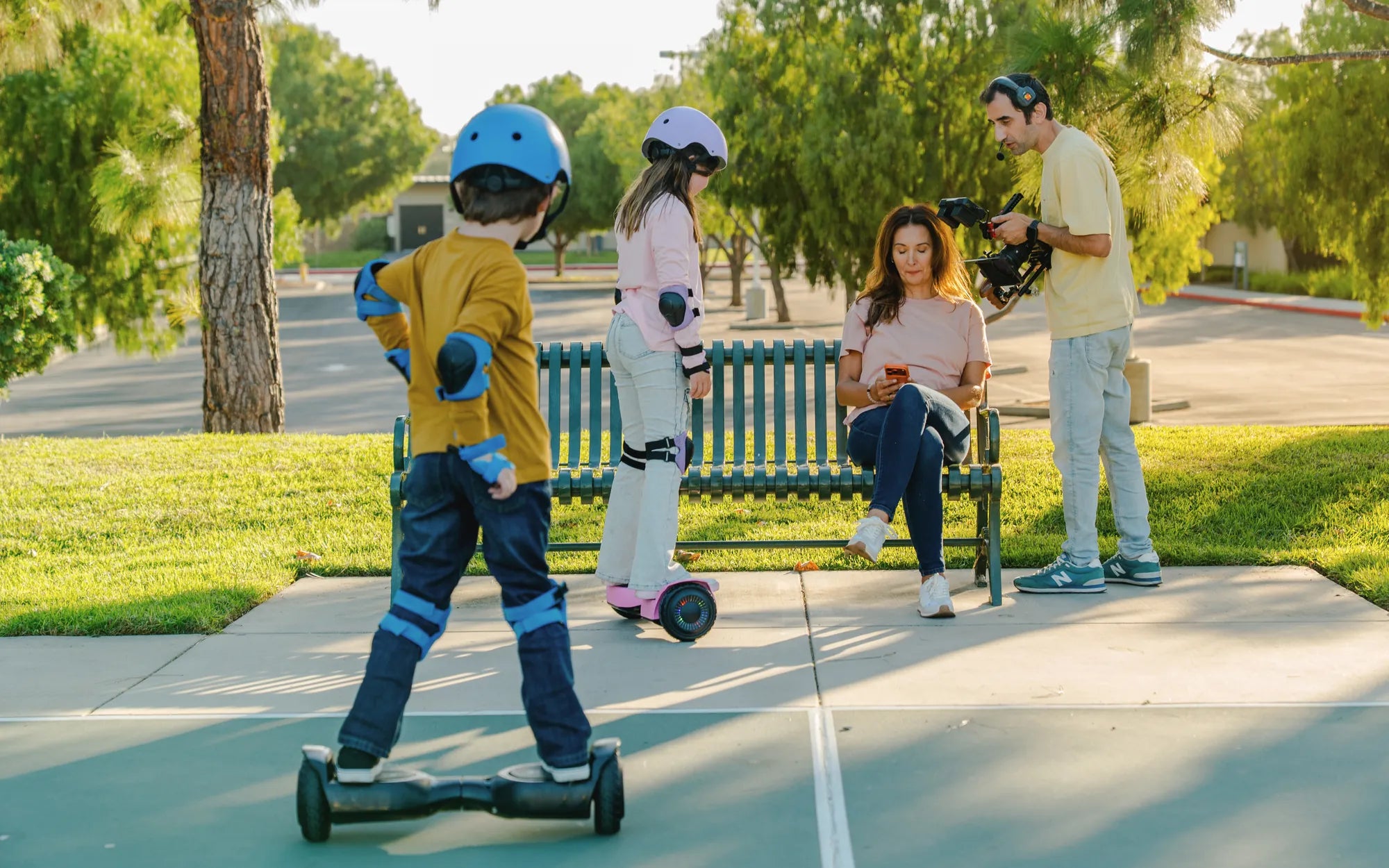
Finding the best kids scooter for a 3 year old is about more than just a toy; it's about selecting a tool that fosters physical development, confidence, and safe outdoor play. At three, children are rapidly developing gross motor skills, balance, and coordination. The right scooter can significantly enhance these abilities, while the wrong choice can lead to frustration or, worse, injury. This guide cuts through the noise to provide parents with data-driven insights on safety standards, ergonomic design, and key features that matter most for a toddler's first wheels. You will learn how to evaluate stability, understand braking systems, match the scooter to your child's growth, and identify the models that prioritize safety without sacrificing fun.
Why the Right Scooter Matters for Your 3-Year-Old
Riding a scooter is a milestone activity that offers tangible developmental benefits. For a 3-year-old, it builds core strength, improves bilateral coordination (using both sides of the body together), and enhances spatial awareness. Psychologically, mastering a scooter boosts self-esteem and independence. However, these benefits are only realized with an age-appropriate, safe design.
A scooter that is too tall, too fast, or too tippy can turn a fun activity into a scary experience, potentially causing a long-term aversion. The best kids scooter for a 3 year old acts as a stable platform for learning. It must have a low center of gravity, intuitive controls, and a speed profile that matches a toddler's reaction time. Investing in a properly designed scooter is an investment in your child's physical confidence and love for active play.
This guide is structured to help you make an informed decision. We will dissect the critical safety features you cannot compromise on, explore designs that support your child's growth, compare the main types of scooters available, and provide a actionable checklist. By the end, you'll be equipped to choose a scooter that provides a foundation for years of safe, enjoyable riding.
Key Safety Features You Cannot Compromise On
Safety is the non-negotiable foundation when selecting any ride-on toy for a preschooler. The primary safety features for a toddler scooter revolve around preventing falls and ensuring the child remains in control at all times. These features are engineering responses to the common risks associated with young riders.
First and foremost, the scooter must have a stable, multi-wheel design. A wide, durable deck provides a secure footing area, preventing feet from slipping off during kicks or turns. The deck surface should be textured or have grip tape. Secondly, the steering mechanism must be predictable. For beginners, lean-to-steer systems (where leaning the handlebars causes the front wheels to turn) are often safer than traditional handlebar steering, as they are more intuitive and less prone to over-steering.
The braking system is equally critical. It must be simple, effective, and easy for a 3-year-old to engage without losing balance. Finally, overall construction quality is paramount. Look for reinforced joints, rounded edges, and non-pinching mechanisms. A wobbly handlebar or loose wheel can instantly undermine all other safety measures.
Stability First: Understanding Wheel Configurations
Wheel configuration is the single most important factor determining a scooter's stability. The common options are 2-wheel, 3-wheel (typically two front wheels and one rear), and 4-wheel designs.
Two-Wheel Scooters: These require significant balance and are generally unsuitable for most 3-year-olds just starting out. They are better suited for older children who have already developed core stability.
Three-Wheel Scooters: This is the gold standard for beginner toddlers. The two-front-wheel design provides a triangular base of support that prevents tipping forward or sideways during turns. This configuration allows children to focus on the motion of scooting rather than constantly correcting their balance. Many three-wheel models use a lean-to-steer mechanism linked to the dual front wheels, which further enhances stability by making turns gradual and controlled.
Four-Wheel Scooters/Scooter Boards: These offer maximum stability with a rectangular wheelbase. They are excellent for the most cautious beginners or for use primarily on smooth, flat surfaces. The trade-off can be slightly less maneuverability compared to a well-designed three-wheeler. Brands like Gyroor prioritize these stable multi-wheel designs in their youth-oriented models, ensuring a confident start for young riders.
Braking Systems and Speed Control
A reliable braking system gives both the child and parent peace of mind. For non-electric kick scooters, the most common and toddler-appropriate brake is a foot/fender brake. The child presses down on the rear fender over the back wheel, creating friction to slow and stop. This design is intuitive and keeps the child's weight low and centered during braking.
For electric scooters designed for young children, speed control is the primary safety feature. The scooter must have a strictly limited top speed, typically not exceeding 3-4 mph (5-6.5 km/h). This should be governed by a parental control mechanism, such as a key or a PIN-locked app. The throttle should be designed to prevent accidental full-power engagement.
Additionally, electric models must have a redundant braking system, often combining a electronic brake (activated by releasing the throttle) and a mechanical foot brake. The ultimate speed control, however, is parental supervision. Even with limits, an electric scooter is a powered vehicle and requires direct adult oversight during use. Always verify that any electric model uses a UL-certified battery pack for fire safety.
Developmental Design: Matching the Scooter to Your Child's Growth
A well-designed scooter supports a child's physical development rather than forcing an awkward posture. Ergonomics are key. The scooter should fit the child's current size while offering some room to grow, ensuring it remains a valued piece of equipment for more than just a single season.
The handlebar height is the most critical ergonomic factor. When standing on the deck, the handlebars should come approximately between the child's waist and lower chest. This allows for a slight bend in the elbows, promoting good posture and control. Handles that are too high force the child to overreach, while handles that are too low cause a hunched posture.
The scooter's overall weight is also a developmental consideration. A lightweight scooter (generally under 5-6 lbs or 2.3-2.7 kg) is easier for a 3-year-old to maneuver, lift, and carry when needed. It also means less kinetic energy in a potential collision. For parents, a lightweight design is easier to transport. Finally, handlebar grips must be contoured for small hands and made from a non-slip material to ensure a secure hold.
Adjustability and Long-Term Value
Adjustable handlebars are a feature that significantly extends the lifespan and value of a scooter. As your child grows an inch or two, you can raise the handlebars to maintain the proper ergonomic fit. This can add one to two years of usable life to the product, making it a more sustainable and economical choice.
The adjustment mechanism should be tool-free and simple, often involving a quick-release clamp or a series of push-button height settings. When evaluating adjustability, check the range. A good range might be from about 20 inches to 25 inches (51 cm to 64 cm) from the deck to accommodate growth from age 3 into age 5 or 6.
Consider the scooter's weight limit alongside adjustability. A model with a higher weight limit (e.g., 110 lbs vs. 44 lbs) is built with more robust components and can safely accommodate your child's growth for a longer period. Pairing a good height adjustment range with a generous weight capacity is the hallmark of a scooter designed for long-term value.
Top Scooter Types for 3-Year-Olds: A Practical Comparison
Parents face a choice between several categories of scooters, each with distinct characteristics. The main types suitable for 3-year-olds are traditional kick scooters (primarily 3-wheel), low-speed electric scooters, and hybrid scooter-balance bikes. Understanding the pros, cons, and primary use case for each is essential.
The following table provides a data-driven comparison to highlight the key differences:
| Type | Best For | Key Pros | Key Cons | Avg. Weight | Parental Role |
|---|---|---|---|---|---|
| 3-Wheel Kick Scooter | First-time riders, skill development | Promotes physical activity, excellent stability, simple mechanics, no charging needed | Requires child's effort to move, slower pace | 3-5 lbs (1.4-2.3 kg) | Encouragement, supervision |
| Low-Speed Electric Scooter | Controlled fun, smooth surfaces | Thrilling for child, less physical effort, teaches basic powered vehicle control | Requires charging & battery safety, higher cost, needs strict speed limits | 8-12 lbs (3.6-5.4 kg) | Active supervision, speed control, safety instruction |
| Scooter-Balance Bike Hybrid | Transitioning from balance bike | Combines seated balance practice with eventual scooting, very stable | Bulky, limited scooting efficiency, shorter useful lifespan | 6-9 lbs (2.7-4.1 kg) | Similar to kick scooter |
Kick Scooters vs. Electric Scooters: What's Best for a Toddler?
This is a fundamental decision for many parents. The traditional 3-wheel kick scooter is widely recommended by child development experts as the ideal starting point. It directly engages the child's body, building leg strength, cardiovascular health, and rhythmic coordination. The child controls the speed entirely through their own effort, which inherently limits it to a safe range. There are no batteries to charge, no electronics to fail, and it's a pure, simple tool for active play.
Electric scooters, like some designed for kids by Gyroor, offer a different kind of excitement. They can be excellent for controlled environments like long, smooth driveways or paved paths, providing a sense of freedom and fun. However, they introduce complexity and risk. They require diligent attention to battery care (using only UL-certified chargers), understanding of speed settings, and constant, attentive supervision. The child is operating a machine, not just propelling a toy.
For a 3-year-old, the consensus leans heavily towards the kick scooter as the first purchase. It builds foundational skills safely. An electric scooter can be a subsequent reward or a special activity toy, but it should not replace the developmental work of a kick scooter. If choosing electric, prioritize models with robust safety features: speed limiters locked by parent controls, UL-certified battery packs, and a stable multi-wheel design.
Why Trust Gyroor for Your Child's First Scooter?
When evaluating brands for a child's critical first scooter, trust is built on transparency, safety certifications, and durable design. Gyroor's approach to youth mobility products aligns directly with the stringent criteria outlined in this guide. As a leader trusted by over 100,000 riders, their design philosophy prioritizes safety without compromising on the fun factor.
For their electric models suitable for older children within the 3+ age range (with close supervision), Gyroor's use of UL-certified battery packs is a paramount safety differentiator. These batteries undergo rigorous testing for over 500 charge cycles, ensuring stability and reducing fire risk—a non-negotiable for any lithium-ion battery product near children. Furthermore, many of their scooters feature IPX5 water-resistant construction. This means they can withstand low-pressure water jets, making them resilient against sidewalk puddles, wet grass, or accidental spills, which adds to the product's durability and lifespan.
Beyond the hardware, Gyroor supports its products with a comprehensive 1-year warranty and accessible customer service. This commitment provides a safety net for parents, ensuring that any manufacturing defects will be addressed. Their product range includes models with the stable three-wheel configurations and adjustable handlebars crucial for young riders, demonstrating an understanding of developmental needs. Choosing a brand that invests in these certifications and features means investing in peace of mind.
Parent's Checklist: 5+ Questions Before You Buy
Use this actionable FAQ as your final step before making a purchase. If you can answer "yes" to these questions, you are likely selecting a safe and appropriate best kids scooter for a 3 year old.
1. Does the scooter's wheel configuration provide beginner-level stability?
Look for three wheels (two front, one rear) or four wheels. Avoid two-wheel models for a true beginner. The design should prevent easy tipping during turns and when mounting/dismounting.
2. Is the braking system simple, effective, and toddler-friendly?
A wide foot brake on the rear fender is ideal for kick scooters. For electric models, ensure there is a reliable mechanical brake in addition to any electronic cutoff, and that the top speed is limited to 3-4 mph with parental controls.
3. Can the handlebar height be adjusted to fit my child now and for the next year?
Check for a tool-free adjustment mechanism with a range that places the grips between your child's waist and chest. This is key for ergonomics and long-term value.
4. Is the scooter's weight appropriate for my child to control and for me to carry?
Aim for under 6 lbs (2.7 kg) for a kick scooter. Heavier electric models should still be manageable for you to lift easily, and the child should be able to maneuver it without strain.
5. What is the build quality and are there any relevant safety certifications?
Inspect product images and reviews for solid construction, rounded edges, and secure fastenings. For electric scooters, the presence of a UL certification for the battery is a mandatory safety check.
6. Does the scooter match my primary use case (e.g., sidewalk cruising vs. driveway play)?
Consider wheel material. Larger, air-filled (pneumatic) tires handle bumps better but require maintenance. Smaller, solid polyurethane wheels are maintenance-free but best for very smooth surfaces. Match the tool to your terrain.
Fostering Fun and Confidence on Wheels
Selecting the best kids scooter for a 3 year old is a meaningful decision that sets the stage for a child's relationship with active play and independent mobility. By prioritizing stability through multi-wheel designs, insisting on intuitive braking and speed control, and choosing a model that ergonomically supports your growing child, you are doing more than buying a toy—you are providing a platform for development. The right scooter builds confidence incrementally; each successful ride reinforces balance, coordination, and joy.
Remember, the safest scooter is one used under attentive supervision with proper safety gear, including a correctly fitted helmet, knee pads, and elbow pads. Whether you opt for a classic kick scooter to build foundational skills or a carefully vetted electric model for supervised fun, your informed choice ensures the experience is positive. The goal is to create memories of fun, not fear, and to instill a lifelong appreciation for movement and outdoor activity.
Ready to explore a range of scooters designed with these precise safety and developmental principles in mind? Browse the full Gyroor collection at gyroorboard.com to find durable, well-engineered options that can deliver safe, confidence-building fun for your young rider.
My Hoverboard Keeps Beeping: Causes, Fixes, and Prevention Tips
Ways to Ride a Hoverboard: Mastering the Art of Gliding with Confidence