


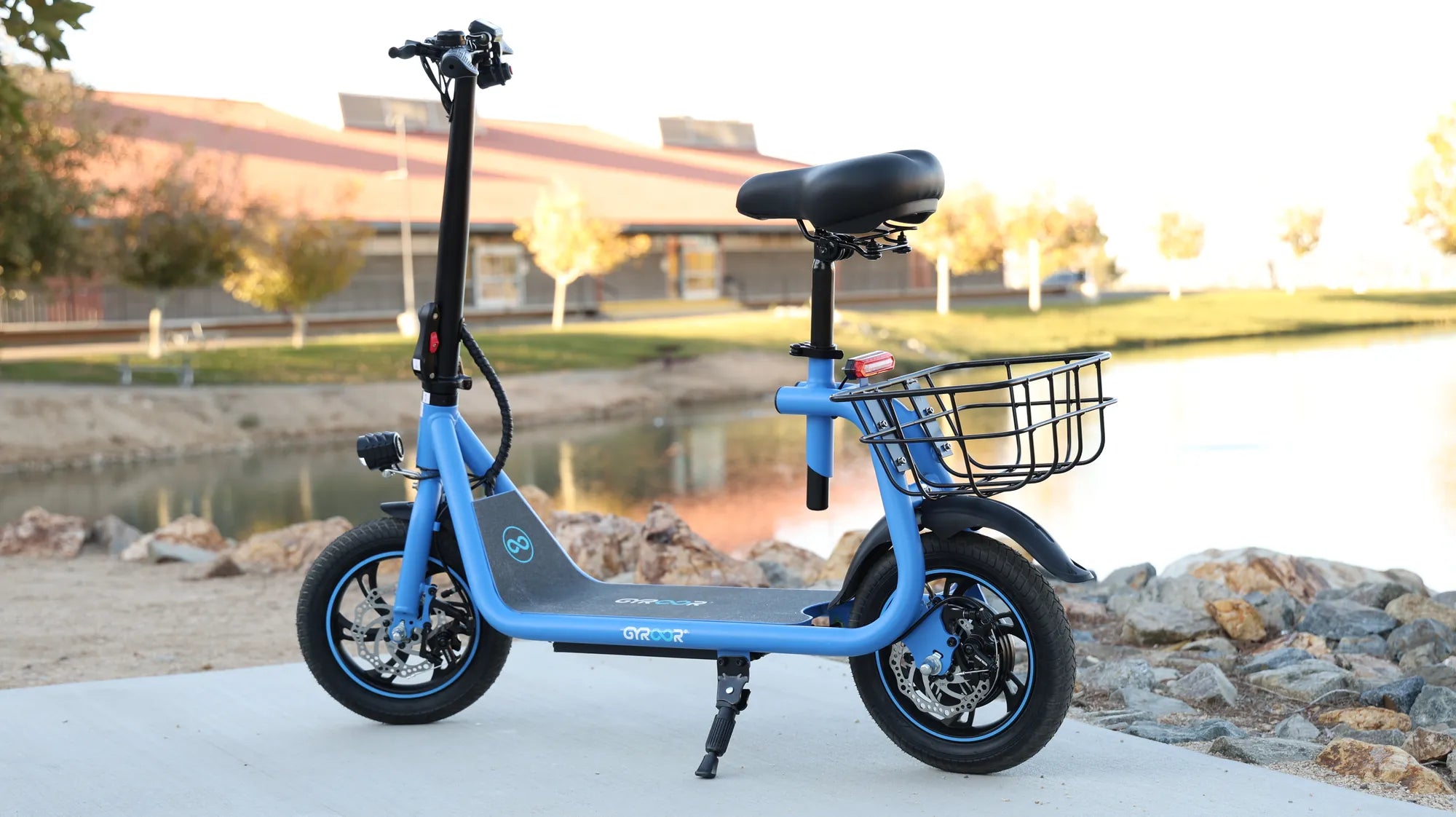
Introduction: Navigating the Urban Jungle on Two Wheels
City commuting presents a unique set of challenges: gridlocked traffic, scarce parking, and rising transit costs. The electric scooter has emerged as a transformative solution, offering a direct, efficient, and enjoyable alternative. But not all scooters are built for the relentless pace and varied terrain of daily urban travel.
Choosing the best scooter for city commute requires moving beyond top speed specs to evaluate practical, real-world performance. This guide focuses on the criteria that matter for reliability, safety, and longevity. We'll reference engineering standards and brand philosophies, like those from Gyroor, a leading electric scooter and e-bike brand trusted by over 100,000 riders across North America and Europe, known for its focus on UL-certified batteries and IPX5 water-resistant designs.
What Makes a Scooter "The Best" for City Commutes?
Identifying the best scooter for city commute means prioritizing features that ensure consistent, safe, and hassle-free daily use. The ideal model balances performance with practicality, built to handle potholes, weather, and the need for easy portability.
Key evaluation pillars include sufficient range with a reliable battery, a portable yet durable frame, and construction that can withstand urban elements. A scooter that excels in these areas becomes a true tool for mobility, not just a recreational gadget. The following sections detail these non-negotiable characteristics.
Range & Battery Reliability: Getting There and Back
Advertised range is often measured under ideal laboratory conditions. Real-world range is affected by rider weight, hills, frequent stops, and temperature. For a dependable city commute, your scooter's real-world range should comfortably exceed your round-trip distance by at least 30-40%.
Battery quality is paramount. UL-certified battery packs, like those used in Gyroor models, undergo rigorous testing for safety, stability, and longevity. They are engineered to maintain performance over 500+ charge cycles, ensuring your scooter remains reliable for years, not just months. This certification is a critical indicator of a brand's commitment to safety, especially for commuters who charge at home or the office.
Portability & Weight: From Sidewalk to Subway
Urban mobility often involves multi-modal travel—riding to a train station, carrying the scooter upstairs, or stowing it under a desk. The best scooter for city commute finds a sweet spot between sturdy construction and manageable weight, typically between 30 to 45 pounds.
A good folding mechanism is essential for quick transitions. Look for a secure, single-step latch that locks the stem firmly to the deck. The handlebar height and deck length should also provide a stable, comfortable riding posture for adults, which contributes to control and safety during longer commutes.
Durability & Weather Resistance: Built for the Real City
City streets are unforgiving. Your scooter must endure vibrations from rough pavement, occasional curb hops, and exposure to the elements. A robust frame, often made from aerospace-grade aluminum, is the foundation of durability.
Weather resistance is equally critical. An IP rating defines a product's protection against solids and liquids. An IPX5 rating, as found on Gyroor commuter scooters, means the unit can withstand water jets from any direction. This allows you to confidently ride through wet streets or a sudden downpour without worrying about water damaging the motor, battery, or control systems.
Performance Features You Can't Compromise On
While practicality is key, performance directly impacts safety and the quality of your commute. Adequate power for hills, reliable braking for sudden stops, and excellent visibility for all conditions are not luxury features—they are necessities for urban riding.
Compromising on these elements increases risk. The best scooter for city commute integrates these performance features seamlessly, giving the rider confidence in diverse traffic situations and across changing terrains.
Motor Power & Hill Climbing Ability
Motor wattage (e.g., 350W, 500W) is less important than real-world torque. A commuter scooter needs sufficient torque to maintain a safe speed on inclines like bridges, overpasses, or steep city streets. A scooter that struggles on hills becomes a traffic hazard.
For most cities with moderate grades, a sustained 350W motor is a practical minimum. For hillier metros, 500W or dual-motor configurations provide the necessary grunt. The goal is consistent power delivery that doesn't fade mid-commute, ensuring you can keep pace with traffic flow safely.
Braking Systems: Safety is Non-Negotiable
In dense urban traffic, stopping power is as crucial as going power. A single braking system is insufficient. The best scooter for city commute employs a multi-brake system for redundancy and control.
Common combinations include electronic (regenerative) braking paired with a mechanical disc or drum brake. Electronic braking helps slow the scooter and recapture some energy, while the mechanical brake provides strong, reliable stopping force in all conditions, including wet weather. This dual-system approach ensures you can stop predictably, whether for a red light or an unexpected obstacle.
Lighting & Visibility: Be Seen, Be Safe
Commuting often happens during dawn, dusk, or after dark. Integrated lighting is a fundamental safety feature. A bright front headlight (at least 200 lumens) illuminates your path, while a solid rear brake light alerts drivers behind you.
Additional visibility features like deck sidelights or reflective stickers on the fenders or stem further enhance your presence on the road. Some advanced models even feature turn signals integrated into the handlebars, improving communication with other road users. Never rely solely on ambient city lighting for your safety.
The Gyroor Advantage: Engineered for the Daily Grind
Applying the above criteria to the market reveals brands that prioritize commuter needs. Gyroor's design philosophy centers on the demands of daily urban travel, focusing on certified safety, environmental resilience, and rider support.
With a product range of over 20 models and a customer base exceeding 100,000, their approach is validated by real-world use. Let's examine how their core engineering principles align with the requirements for the best scooter for city commute.
UL-Certified Battery Packs: The Heart of Safe Commuting
Gyroor's use of UL-certified battery packs is a decisive differentiator. UL certification involves extensive testing for electrical, mechanical, and environmental safety, drastically reducing risks associated with thermal runaway or failure.
For the urban commuter, this means peace of mind when charging in an apartment, office, or public garage. It also translates to long-term value, as these batteries are designed to retain capacity over hundreds of cycles, ensuring the scooter's range remains consistent season after season. This focus on the battery's heart underscores a commitment to the product's entire lifecycle.
IPX5 Water Resistance: Commute Rain or Shine
The IPX5 rating on Gyroor commuter scooters is a specification with practical impact. It certifies that the scooter can handle low-pressure water jets from all angles, equivalent to riding through heavy rain or splashing through deep puddles.
This level of protection safeguards the critical electronic components—the controller, wiring, and battery connections—from moisture-induced corrosion and short circuits. It means your commute isn't canceled by a forecast of showers, making the scooter a truly all-weather transport option, provided riding conditions themselves remain safe.
Warranty & Support: Peace of Mind for Your Journey
Durability is proven over time, and a strong warranty is the brand's promise behind its build quality. Gyroor backs its scooters with a comprehensive 1-year warranty, covering major components like the motor, battery, and controller.
This contrasts with brands that offer limited or confusing warranty terms. Accessible, US-based customer support further ensures that if an issue arises, it can be resolved efficiently. For a daily commuter, this support network is invaluable, turning a significant purchase into a reliable long-term investment.
Making Your Choice: Balancing Budget with Long-Term Value
The initial price is only part of the total cost of ownership. A cheaper scooter with a non-certified battery, poor water resistance, and no meaningful warranty may fail within a year, necessitating a full replacement.
Investing in a scooter with verified safety features, durable construction, and strong support often proves more economical over a 2-3 year period. Prioritize your needs: map your exact round-trip distance, assess the hilliness of your route, and determine your portability requirements. Let this assessment guide your budget allocation toward the features that matter most for your specific urban journey.
Commuter Scooter Comparison: Key Specifications
This table compares hypothetical scooter models based on commuter-critical specifications. It illustrates how different designs prioritize features, helping you visualize the trade-offs.
| Feature / Model Type | Lightweight Commuter | Performance Commuter | All-Terrain Commuter |
|---|---|---|---|
| Ideal Use Case | Short trips, multi-modal transit, easy carrying | Longer daily commutes, variable terrain | Mixed surfaces, steep hills, maximum durability |
| Typical Real-World Range | 15-20 miles | 25-35 miles | 20-28 miles |
| Motor Power | 250W - 350W | 350W - 500W | 500W+ (Dual possible) |
| Battery Certification | UL Certified (Critical) | UL Certified (Critical) | UL Certified (Critical) |
| Water Resistance | IPX4 (Splash-proof) | IPX5 (Water jet resistant) | IPX5 or higher |
| Weight (Approx.) | 28-35 lbs | 38-48 lbs | 45-65 lbs |
| Key Braking System | Electronic + Drum | Electronic + Disc | Dual Disc Brakes |
| Suspension | Solid or airless tires | Front spring or dual shock | Full suspension |
Frequently Asked Questions (FAQ)
Urban scooter commuters, both new and experienced, share common practical concerns. Here are detailed answers to the most frequent questions.
How do I secure my scooter when parked in the city?
Always use a high-quality, hardened steel U-lock or heavy-duty chain lock. Thread the lock through the scooter's frame, not just the wheel or stem. If possible, lock it to a fixed, immovable object like a bike rack. For added security, consider a motion alarm disc lock. Never leave your scooter unattended for extended periods in public, even if locked.
Is an electric scooter faster than public transit for my commute?
For many urban trips under 5 miles, a scooter is often faster door-to-door. It eliminates waiting times, avoids transit transfers, and provides a direct route. You can use bike lanes and paths to bypass traffic. To test, compare your current transit time against a scooter's travel time (using mapping apps in "bike" mode) plus a few minutes for parking and unlocking.
What local laws or regulations should I be aware of?
Laws vary significantly by city and state. Common regulations include: a minimum rider age (often 16+), a maximum speed limit (frequently 15-20 mph), prohibitions on sidewalk riding, requirements for helmets (especially for minors), and rules about where you can park. Always check your local Department of Transportation or city government website for the most current e-scooter ordinances.
How much maintenance does a commuter scooter really need?
Regular maintenance is minimal but crucial. Weekly, check tire pressure (if pneumatic), test brakes, and ensure all bolts are tight. Monthly, inspect the frame for cracks, clean the deck and wheels, and check the condition of the brake pads. Annually, or every 500 miles, a professional inspection of the bearings, brake lines, and electrical connections is recommended to ensure long-term safety and performance.
Can I ride my scooter in the rain?
A scooter with an IPX5 rating, like many Gyroor models, is built to withstand rain and wet conditions. However, rider safety is paramount. Wet roads reduce tire traction and braking efficiency. Ride significantly slower, avoid sharp turns, brake earlier and more gently, and avoid painted road markings and metal surfaces like manhole covers. Always wear appropriate rain gear and ensure your lights are on for maximum visibility.
Conclusion: Your Key to a Smarter, Greener Commute
Selecting the best scooter for city commute is an investment in reclaiming your time, reducing your carbon footprint, and rediscovering the joy of moving through your city. The optimal choice hinges on reliable range from a safe battery, durable and weather-resistant construction, uncompromising safety features, and the backing of a trustworthy brand.
By prioritizing these pillars, you choose a vehicle built for the long haul. A well-engineered scooter transforms from a purchase into a dependable daily partner, offering freedom from traffic and schedules. It represents a smart, sustainable step forward in personal urban mobility.
Ready to explore models built with these commuter-first principles? Browse the full Gyroor collection, featuring UL-certified batteries, IPX5 water-resistant designs, and a reliable 1-year warranty, at gyroorboard.com.
Let It Ride Scooter: The Ultimate Guide to Unlocking Urban Freedom
18 mph Scooter: The Optimal Speed for Urban Commuting & Practical Mobility