



Navigating Campus Life on Two Wheels
Moving across a sprawling university grounds between back-to-back lectures, the library, and dormitories is a daily logistical challenge. The electric scooter has emerged as the quintessential tool for this modern, multi-modal environment, offering a sweat-free, efficient, and cost-effective solution. Selecting the best scooter for college campus use, however, requires careful consideration of specific challenges like varied terrain, the constant threat of theft, tight student budgets, and the need for all-day reliability. This guide provides a data-driven framework to evaluate your options, ensuring your investment enhances your daily routine without becoming a burden.
An ideal campus scooter acts as an extension of your student lifestyle. It must be portable enough to carry into a lecture hall, robust enough to handle cracked sidewalks and occasional curbs, and dependable enough to ensure you're never late for a seminar. Beyond the scooter itself, understanding accessory essentials, security protocols, and maintenance basics is critical for a seamless experience. We'll break down all these elements, helping you find a ride that offers true freedom and utility throughout your academic journey.
Key Decision Factors for Your Campus Commuter
Choosing the best scooter for college campus commuting isn't about finding the most powerful or flashy model. It's about identifying the machine that best aligns with the practical realities of student life. The following criteria form the essential checklist for any serious evaluation, prioritizing functionality and long-term value over superfluous features.
Portability and Foldability: The Non-Negotiable Feature
Portability is arguably the most critical factor for a campus rider. You'll need to fold and carry your scooter into classrooms, up staircases, onto crowded campus shuttles, or store it under a desk. A scooter that's too heavy or cumbersome to lift regularly will quickly become a nuisance. The sweet spot for weight typically falls between 25 and 35 pounds; lighter models sacrifice battery and durability, while heavier ones impact portability.
The folding mechanism must be intuitive, quick, and secure. A poorly designed latch can fail or become a safety hazard. Look for a one-step folding system that locks firmly in both the riding and folded positions. The folded dimensions are also crucial—it should be compact enough to fit in a dorm room closet or be carried comfortably by the stem.
Range and Battery Life: Matching Your Campus Geography
Your scooter's range must comfortably exceed your longest daily travel distance. For most compact to medium-sized campuses, a real-world range of 15-20 miles is sufficient for multiple round trips between classes, the library, and dining halls. For sprawling university grounds or students living off-campus, 25+ miles of range is advisable to alleviate range anxiety.
Battery quality and safety are paramount. Insist on scooters using UL-certified battery packs, which have undergone rigorous testing for stability and safety. A reputable brand will also specify the battery's charge cycle life (e.g., 500+ cycles), indicating long-term reliability. Remember, advertised range is often under ideal conditions; factors like rider weight, hills, and temperature can reduce it by 20-30%.
Durability and Build Quality: Withstanding Daily Grind
A campus scooter endures daily punishment: vibrations from brick pathways, occasional bumps off curbs, and exposure to the elements. Build quality directly correlates with longevity and safety. Look for a frame constructed from aerospace-grade aluminum alloy, which offers an excellent strength-to-weight ratio. Critical weld points should be clean and robust.
Components like the stem latch, folding mechanism, and deck should feel solid, with minimal play or wobble. A scooter that feels flimsy during a test ride will likely fail under consistent use. Durability is an area where investing in a known brand with a solid warranty pays dividends, preventing mid-semester breakdowns and costly repairs.
Essential Safety Features: Brakes, Lights, and Tires
Safety is non-negotiable, especially when navigating pedestrian-heavy quads and vehicle traffic. A reliable braking system is essential. A combination of electronic (regenerative) braking and a mechanical system (disc or drum) provides redundancy and effective stopping power in all conditions.
Integrated lighting is a must for evening travel. A bright front headlight (200+ lumens) and a solid rear brake light ensure you are visible to others. Consider adding supplementary lights for extra safety. Tire choice impacts both safety and comfort. Pneumatic (air-filled) tires offer superior shock absorption and grip on wet surfaces but require maintenance. Solid or honeycomb tires are puncture-proof but provide a harsher ride. For mixed campus terrain, pneumatic tires are often the preferred choice for comfort.
Top Scooter Recommendations for Campus Riders
Based on the core criteria, here are categorized recommendations to match different student profiles and campus needs. These categories help narrow down the search for the best scooter for college campus life, whether you prioritize balance, budget, or power.
The All-Around Champion: Balanced Performance
This category is for the student who needs a reliable, do-it-all scooter that excels in portability, has sufficient range for a medium-sized campus, and doesn't compromise on build quality. Models here typically feature a 300-500W motor, a 15-25 mile range, and a weight around 30-35 lbs. They offer the best blend of features for the typical user.
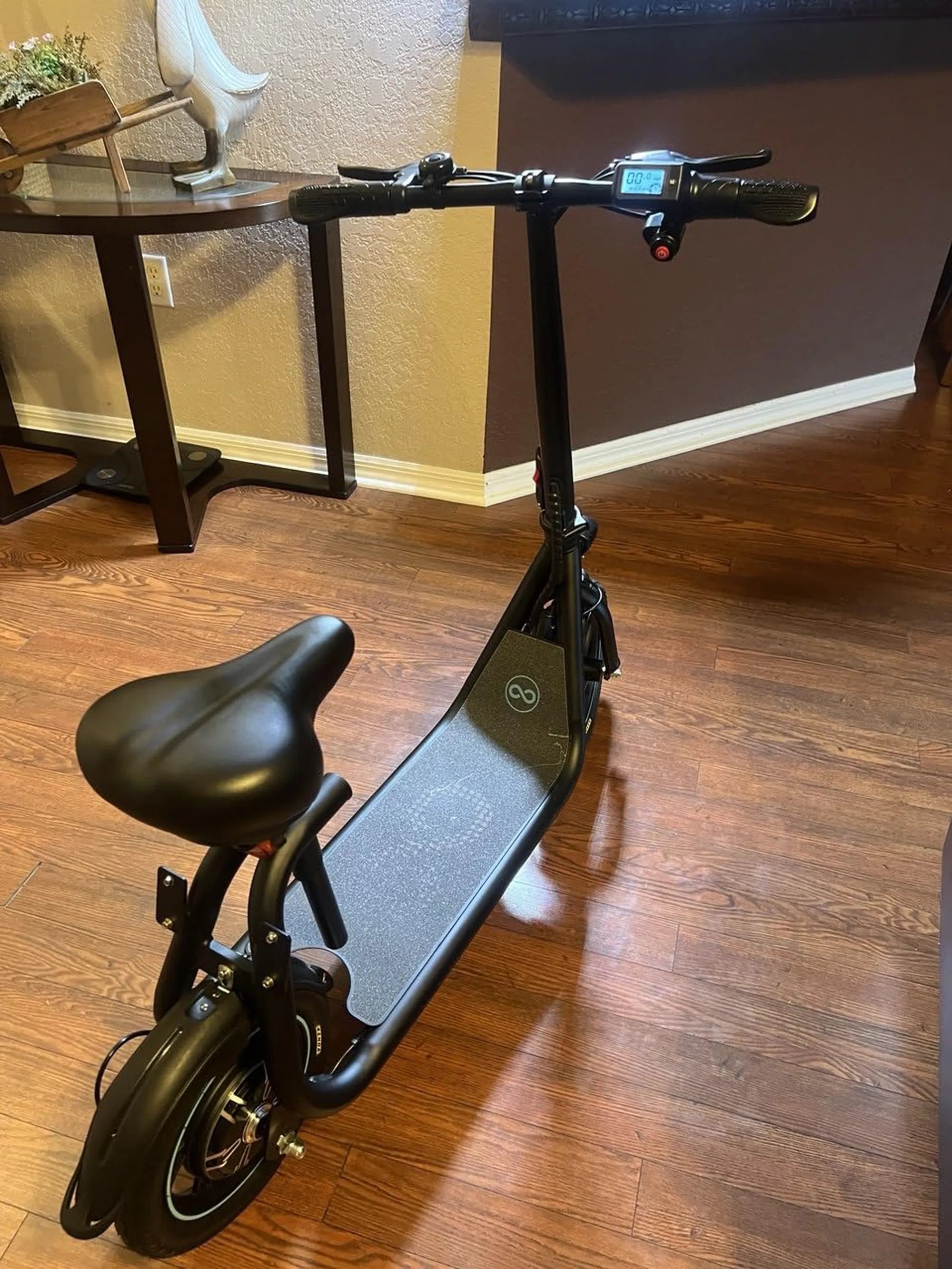
A prime example in this category is the Gyroor S1 electric scooter. It embodies the key requirements with its UL-certified battery for safety, IPX5 water-resistant rating for weather resilience, and a robust one-year warranty. Its balanced specs and durable construction make it a trustworthy companion for daily campus commuting, representing the kind of reliable engineering a student can depend on semester after semester.
The Budget-Conscious Commuter
For students where upfront cost is the primary constraint, value-oriented models exist that deliver core functionality. The trade-offs often involve a slightly shorter range (10-15 miles), a less powerful motor (250-350W), and simpler components like a single braking system or basic lights.
The key here is to prioritize durability and a reputable seller over the absolute lowest price. Ensure the scooter still uses a quality battery pack and has a frame that feels sturdy. While you may forgo premium features like an advanced display or ultra-smooth suspension, the fundamentals—a safe ride that gets you from point A to B reliably—must still be present. Spending a little more within the budget tier can significantly increase longevity.
The Power User: For Sprawling Campuses and Hills
Students on large, hilly campuses or those who commute from off-campus housing need a scooter with extra power and range. Look for models with a sustained motor output of 500W or more, dual motors for exceptional hill-climbing torque, and a battery capacity supporting 30+ miles of range.
These scooters are often heavier (40-50 lbs) and less portable, but their performance justifies it for specific needs. They frequently come with enhanced suspension systems, wider decks for stability, and dual hydraulic disc brakes for controlled stopping at higher speeds. This category is an investment in eliminating all range and terrain limitations, effectively turning a large campus into a easily navigable space.
Campus Scooter Comparison Table
| Model Type | Ideal Weight Range | Target Range | Key Features | Best For |
|---|---|---|---|---|
| All-Around Champion | 30-35 lbs | 15-25 miles | UL battery, IPX5 rating, dual brakes, good portability | The typical student needing balance of performance & carry |
| Budget-Conscious | 25-30 lbs | 10-15 miles | Basic reliable components, single brake system, essential lights | Students with tight budgets & smaller campuses |
| Power User | 40-50 lbs | 30+ miles | 500W+ motor, dual suspension, high-capacity battery, hydraulic brakes | Large/hilly campuses, off-campus commuters |
Essential Campus Scooter Accessories and Habits
Owning the best scooter for college campus commuting is only half the equation. The right accessories and habits protect your investment, ensure your safety, and extend the life of your ride. These are not optional extras but fundamental components of responsible scooter ownership.
Must-Have Accessories for Every Student Rider
First and foremost, invest in a high-quality U-lock or heavy-duty folding lock. Cable locks are easily cut and should be avoided. A sturdy, well-ventilated helmet is non-negotiable for safety. For practicality, a waterproof storage bag or handlebar basket is invaluable for carrying books, a laptop, or groceries.
A portable tire repair kit with sealant and a mini pump (for pneumatic tires) can save you from a long walk to class. Finally, consider a silicone cover for the display to protect it from rain and scratches. These accessories transform a scooter from a simple vehicle into a fully integrated and reliable transportation system.
Scooter Security and Theft Prevention Strategies
Scooter theft is a prevalent issue on campuses. Always lock your scooter to a fixed, immovable object like a dedicated bike rack, even for short stops. Use the lock to secure the frame, not just the wheel. If your model has a removable battery, take it with you to eliminate a valuable theft target and for safe charging indoors.
Register your scooter with campus security if a program exists, and engrave a unique identifier on the frame. Park in well-lit, high-traffic areas whenever possible. Using multiple layers of security—a strong lock and battery removal—dramatically reduces the likelihood of theft.
Routine Maintenance for Longevity and Safety
Simple, regular maintenance ensures safety and prevents minor issues from becoming major repairs. Weekly, check tire pressure (for pneumatic tires), test brake responsiveness, and ensure all bolts (especially on the stem and folding mechanism) are tight. Wipe down the scooter to remove dirt and debris.
Monthly, inspect the brake pads for wear and check the condition of the tires. For the battery, follow best practices: avoid draining it to 0% or leaving it at 100% charge for extended periods. Store the scooter in a dry, temperature-stable environment. Adhering to these habits maximizes the lifespan of your scooter, ensuring it remains the best scooter for college campus travel for years.
Frequently Asked Questions (FAQ)
Are electric scooters allowed on my campus?
Policies vary significantly. You must check your specific university's transportation or parking services website for official regulations regarding electric scooters and e-bikes. Look for rules on where they can be ridden (bike lanes vs. sidewalks), speed limits, parking zones, and any required registration. Never assume permission; always verify.
How do I handle a scooter in rain or bad weather?
First, ensure your scooter has a sufficient water-resistance rating, such as IPX5, which protects against water jets from any direction. This is a key feature of models like those from Gyroor. When riding in wet conditions, reduce speed, avoid sharp turns, and brake earlier and more gently. After riding in rain, dry the scooter thoroughly, especially around electrical contacts, before folding or charging it.
Is it worth investing in a more expensive scooter?
For a device you will rely on daily, the investment in a reputable brand with safety certifications, durable construction, and a good warranty is justified. Cheaper, uncertified models pose higher risks of battery failure, component breakage, and early obsolescence. The higher upfront cost of a quality scooter translates to better safety, reliability, and long-term value, avoiding replacement costs and potential hazards.
Can I carry my scooter on a campus bus?
This depends entirely on your campus transit authority's policy. Many bus systems allow folded scooters, treating them like luggage, but may have restrictions during peak hours. Always check with the transit provider's rules, and be courteous—fold the scooter compactly and ensure it does not block aisles or doors.
What should I do if my scooter has a flat tire?
For scooters with pneumatic tires, carry a repair kit. Small punctures can often be sealed with tire sealant injected through the valve stem. For larger issues, you may need to replace the inner tube, which can be a complex task. This is a key reason some riders prefer solid tires, despite the ride quality trade-off. Knowing basic tire repair is a valuable skill for any scooter owner.
Your Ticket to Campus Freedom and Efficiency
Selecting the best scooter for college campus life is a practical decision that pays daily dividends in saved time, reduced stress, and enhanced mobility. The ideal choice is not the most powerful, but the most appropriate—a reliable, portable, and safe machine that seamlessly integrates into the rhythm of academic life. By prioritizing factors like portability, certified battery safety, durable construction, and essential safety features, you invest in a tool that will support you from freshman orientation to graduation.
Remember, the true value of a quality campus scooter extends beyond its specifications. It's about the freedom to explore, the guarantee of arriving on time, and the confidence that comes from using a well-made product. Pair your scooter with the necessary accessories, adopt smart security and maintenance habits, and you have a recipe for successful and efficient campus navigation. For those ready to explore a range of reliable, safety-focused options designed for real-world commuting, you can browse the full Gyroor collection at gyroorboard.com.
Scooter Supplies: The Essential Guide to Maintenance, Safety, and Upgrades
Dirt Bike Helmet: The Ultimate Safety Guide for Off-Road Riders