



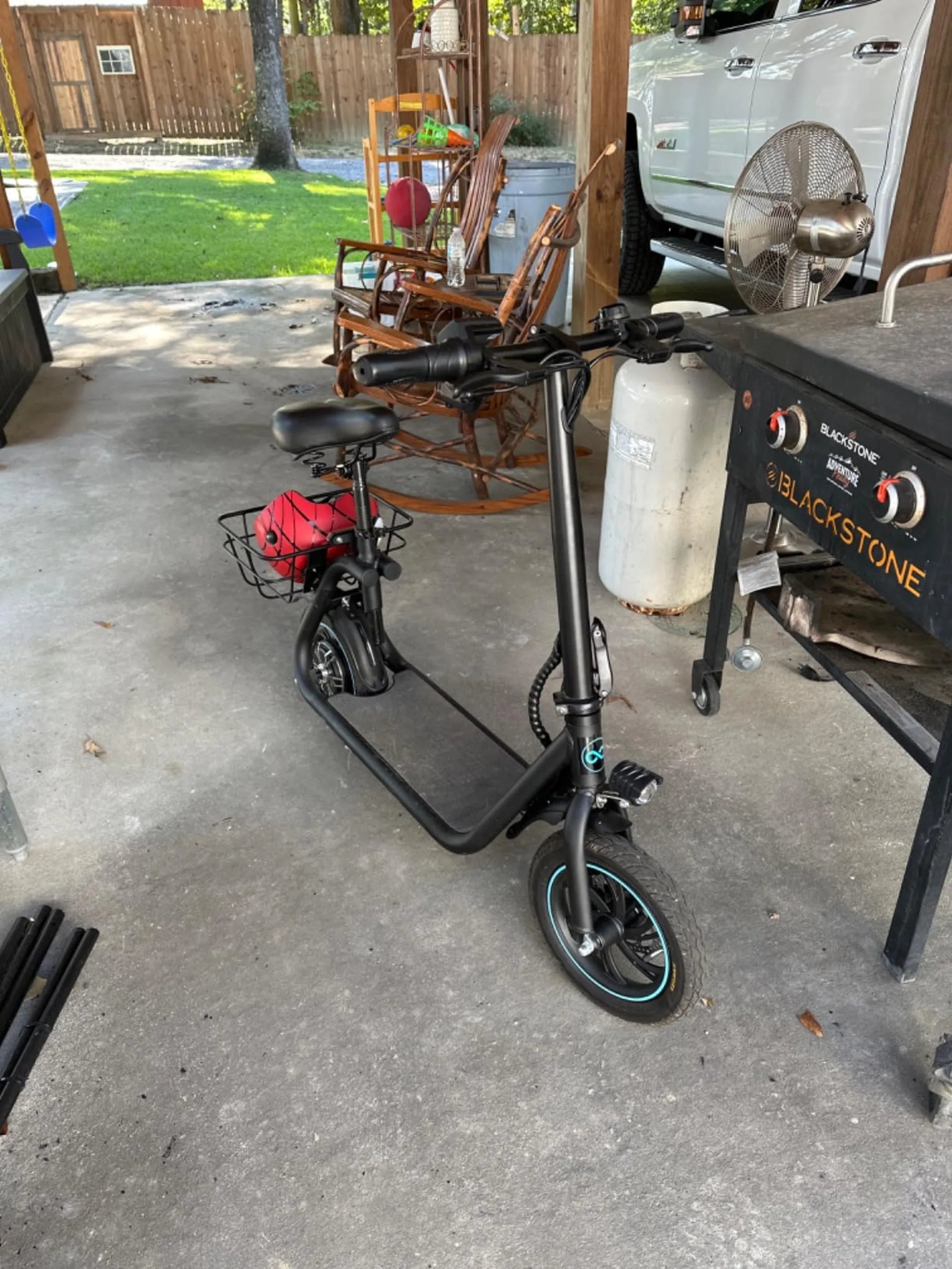
Navigating the world of adult electric scooters can be overwhelming, but one choice stands out for serious riders: opting for a model with big wheels. This ultimate guide to Big Wheel Electric Scooters for Adults: The Ultimate Guide to Choosing the Right Ride will cut through the noise. We’ll define what makes a "big wheel" scooter (typically 10 inches or larger in diameter), explain why this design is a game-changer for stability and comfort, and provide a detailed, data-driven framework to select your ideal model. You’ll learn to evaluate motor power, battery range, build quality, and safety features, ensuring your investment delivers reliable, enjoyable transportation for years.
Introduction: Why Big Wheels Are a Game-Changer for Adult Riders
In the electric scooter market, wheel size is a critical differentiator. While standard commuter scooters often feature 8-inch or 8.5-inch wheels, big wheel electric scooters for adults are defined by wheels of 10 inches or more in diameter. This seemingly small increase has a profound impact on performance and safety. The primary advantage is a larger contact patch with the ground, which fundamentally enhances stability.
For adult riders, who are typically heavier and travel longer distances, this stability is non-negotiable. Larger wheels reduce the gyroscopic effect that can lead to dangerous speed wobbles at higher velocities. They also bridge gaps in pavement, cracks, and expansion joints more effectively. This transforms the riding experience from a tentative journey to a confident commute.
The shift towards big-wheel designs reflects a maturation in the market. Riders are no longer just seeking a novelty; they demand practical, reliable urban transportation. Brands like Gyroor have responded by engineering scooters around this principle, combining larger wheels with robust frames and UL-certified battery systems. This focus on foundational engineering ensures the scooter is built for the real-world challenges adult riders face daily.
Choosing a scooter is about matching the machine to your environment and physiology. A 120-pound rider on smooth bike paths has different needs than a 220-pound commuter navigating potholed city streets. This guide will help you understand how big wheel electric scooters for adults address these varied demands through superior engineering, making them a cornerstone of modern micro-mobility.
Key Advantages of Big-Wheel Electric Scooters
The benefits of larger wheels extend far beyond aesthetics. They directly influence core performance metrics that affect safety, comfort, and practicality. Understanding these advantages is the first step in appreciating why they are often the superior choice for discerning adult riders.
Enhanced Stability and Control
Stability is the most significant benefit. A larger wheel diameter increases the wheel's moment of inertia. In practical terms, this means the wheel is more resistant to changes in its plane of rotation. This directly counters the "speed wobble" or "tank slapper" phenomenon, where the handlebars oscillate violently at higher speeds—a common and hazardous issue with smaller-wheeled, lightweight models.
The stability gain is especially pronounced for heavier riders. A scooter with 8-inch wheels may feel twitchy and unstable under a 200+ pound load, while a 10-inch or 12-inch wheel setup maintains composure. This instills confidence, allowing the rider to focus on traffic and navigation rather than fighting to maintain balance. The control improvement is measurable in safer cornering and more predictable handling over uneven surfaces.
Superior Ride Comfort and Obstacle Handling
Comfort is directly tied to wheel size due to basic physics. A smaller wheel hits a bump or pothole and must climb its entire height, transmitting a sharp, jarring impact through the frame to the rider. A larger wheel, by virtue of its diameter, effectively "sees" the obstacle as a smaller relative bump. It rolls over cracks, gravel, and minor debris with significantly reduced shock.
This translates to less fatigue on your wrists, knees, and back during a commute. For example, navigating a typical city block with brick crosswalks or tar seams becomes a non-issue. While suspension systems add comfort, big wheels provide a primary layer of vibration damping that suspension alone cannot replicate on small wheels. This combination is why high-end models often feature both.
Increased Safety for Daily Commuting
Stability and comfort are precursors to safety. A stable scooter is less likely to be involved in a loss-of-control accident. A comfortable rider is less fatigued and more alert. Furthermore, bigger wheels often accommodate larger, more effective brake discs or drums, leading to shorter, more controlled stopping distances.
The improved traction from a larger contact patch also enhances safety during braking and cornering, particularly on wet or slick surfaces. When you combine these mechanical advantages with essential features like bright LED lighting and reflective accents—standard on quality models like those from Gyroor—you create a comprehensive safety package designed for adult commuting in real-world conditions.
Critical Features to Consider When Choosing Your Scooter
Selecting the right big wheel electric scooter for adults requires careful evaluation of its specifications. These technical details directly predict real-world performance. Use this checklist to compare models and find the perfect match for your needs.
Motor Power & Performance (Matching Your Terrain)
Motor power, measured in watts (W), dictates acceleration and hill-climbing ability. For flat urban commutes, a 350W motor is often sufficient. However, for riders who encounter bridges, overpasses, or live in hilly areas, a 500W or 600W motor is a wise investment. Dual-motor setups (e.g., 500W x2) offer maximum torque for steep inclines but consume battery faster.
Consider your weight and typical load. A 250W motor may struggle with a 180-pound rider and a backpack on a 10% grade. A more powerful motor maintains speed without straining, which is also better for long-term component health. Look for a scooter whose motor rating aligns with your heaviest expected use case, not just ideal conditions.
Battery Range & Charging (Planning Your Commute)
Manufacturer range claims are based on ideal lab conditions. A more reliable metric is the battery's watt-hour (Wh) rating. Simply put, a higher Wh rating means more energy storage. For a big wheel electric scooter for adults used for commuting, a battery under 300Wh may necessitate daily charging. A 400-500Wh battery provides a comfortable buffer for a 10-15 mile round trip.
Battery safety is paramount. Insist on UL-certified battery packs, like those used by Gyroor, which undergo rigorous testing for short-circuit, overcharge, and thermal stability. These batteries typically support 500+ full charge cycles before significant capacity loss. Also, note charge time; a 4-6 hour full charge is standard, but some fast-charging options can reduce this significantly.
Build Quality, Weight, and Portability
Big-wheel scooters inherently use more material and are often heavier than their compact counterparts. Frame construction is key—aircraft-grade aluminum alloys offer the best strength-to-weight ratio. Pay attention to the maximum weight rating; a robust scooter will have a rating of 265 lbs (120 kg) or more.
Portability is a trade-off. A sturdy, 45-pound scooter with 10-inch pneumatic tires will be less convenient to carry up stairs than a 30-pound model with solid tires. However, a reliable folding mechanism with a secure latch is non-negotiable for mixed-mode commuting (e.g., scooter + train). An IPX5 water-resistance rating, indicating protection against water jets from any direction, is essential for all-weather reliability and longevity.
Braking Systems and Lighting
Effective braking is a critical safety system. The hierarchy typically places hydraulic disc brakes at the top for sheer stopping power and modulation, followed by mechanical disc brakes and then drum brakes. Electronic (regenerative) braking is useful for extending range but should not be the sole braking system.
For urban riding, a combination (e.g., disc brake in front, electronic in rear) is excellent. Lighting is not an accessory; it is a necessity. Your scooter must have a bright front headlight, a rear brake light, and side reflectors. Integrated lighting wired to the battery is far superior to clip-on options. This ensures you are seen by drivers at dusk, dawn, and night.
Gyroor's Big-Wheel Scooter Lineup: Built for Confidence
As a leader in personal electric transportation, Gyroor's philosophy centers on safety and reliability, making their big-wheel models exemplary of the category. Trusted by over 100,000 riders, their scooters integrate the features discussed with a focus on certified components and durable construction.
Model Spotlight 1: The Urban Commuter Champion
Gyroor's commuter-focused models, designed for daily city travel, exemplify the practical benefits of big wheels. These scooters typically feature a 10-inch pneumatic tire setup, balancing roll-over capability with a manageable footprint. A potent 350W or 500W motor provides zippy acceleration for keeping pace with city traffic, while a 360Wh or larger UL-certified battery ensures reliable range for most metropolitan commutes.
The design prioritizes user-friendly features. A one-step folding mechanism allows for quick storage under a desk or in a car trunk. The IPX5 rating means a sudden rain shower isn't a cause for panic. Combined with a bright headlight, rear reflectors, and a responsive braking system, this package offers a dependable, low-stress solution for the daily grind, embodying the ideal of a practical big wheel electric scooter for adults.
Model Spotlight 2: The Performance & Capability Model
For riders seeking more power or enhanced terrain capability, Gyroor's performance series takes the big-wheel concept further. These models may boast motors of 600W or more, delivering exceptional torque for steep hills and quicker acceleration. They often pair 10-inch or larger air-filled tires with a front and/or rear suspension system, creating a plush, controlled ride over rougher pavement, brick roads, or hard-packed trails.
The frame on these models is engineered for higher dynamic loads, supporting a greater weight capacity. The battery system is scaled accordingly, often exceeding 500Wh for extended adventure or demanding commutes. While slightly heavier, these scooters are for the rider who refuses to compromise on performance and wants the utmost in stability and comfort, whether navigating urban canyons or exploring park pathways.
Big Wheel Scooters vs. Standard Models: A Practical Comparison
This table summarizes the key differences to help you decide which scooter type aligns with your primary needs and riding environment.
| Feature | Big Wheel Scooters (10"+) | Standard Scooters (8"-9") |
|---|---|---|
| Primary Benefit | Superior stability, comfort, and obstacle handling. | Maximum portability and compactness. |
| Ideal Use Case | Longer daily commutes, uneven urban pavement, heavier riders. | Short, last-mile trips, smooth surfaces, multi-modal transit with frequent carrying. |
| Ride Quality | Smoother; significantly reduces impact from cracks and bumps. | Firmer, more direct feel; small bumps are more noticeable. |
| Typical Trade-off | Often heavier and less compact when folded. | Can feel less stable at speed and over obstacles. |
| Best For Rider Priority | Safety, comfort, and reliability as primary transport. | Ultimate convenience and easy storage in tight spaces. |
Frequently Asked Questions (FAQ)
Are big-wheel electric scooters significantly heavier?
Yes, they are generally heavier. The increase comes from larger wheels, tires, and often a more robust frame to handle the increased forces. A typical 10-inch big-wheel scooter may weigh 35-50 pounds, compared to 25-35 pounds for a similar-quality 8-inch model. The trade-off is the substantial gain in ride stability and durability.
Can they still be folded and carried easily?
Most big-wheel scooters retain a folding design for portability. However, "easily" is relative. Carrying a 45-pound scooter up a long flight of stairs daily is challenging. They are best suited for scenarios where you fold for storage (under a desk, in a trunk) or for brief carries (onto a bus, up a few steps). Always check the folded dimensions and weight if portability is a top concern.
Are they suitable for beginner adult riders?
Absolutely. In many ways, they are more suitable. The enhanced stability provided by the larger wheels makes learning to balance and control the scooter easier and less intimidating. A beginner is less likely to be unnerved by small pavement imperfections, leading to a more confident and safer initial riding experience.
How does the warranty and support work?
Reputable brands stand behind their products. Gyroor, for instance, offers a comprehensive 1-year warranty on the scooter, covering manufacturing defects. Crucially, their use of UL-certified batteries provides an additional layer of verified safety and reliability. Look for brands with clear warranty terms and accessible customer support, as this is a strong indicator of product quality and company confidence.
What maintenance do big-wheel scooters require?
Maintenance is generally minimal but important. The key tasks are checking and maintaining proper tire pressure in pneumatic tires (usually monthly), periodically checking bolt tightness (especially on folding mechanisms), and keeping the braking system clean and adjusted. Unlike solid tires, air-filled tires on big wheels may eventually need patching or replacement, but they provide a far superior ride.
Finding Your Perfect Ride: A Framework for Decision
Choosing the right big wheel electric scooter for adults is an exercise in honest self-assessment. Start by defining your primary use case: Is it a 5-mile each-way commute, weekend recreation, or mixed errands? Map your route—note the worst hills and road conditions. Then, match the scooter's specs to those challenges: sufficient motor power for the hills, ample battery range with a safety margin, and the tire size/suspension to handle the terrain.
Prioritize certified safety features. A UL-certified battery and a robust warranty are not just marketing points; they are your insurance policy. A scooter is an investment in your daily life. The right model saves time, reduces stress, and provides genuine joy. The wrong model becomes a source of frustration and potential hazard.
For adults who value a stable, comfortable, and safe riding experience, the evidence is clear. A big wheel electric scooter for adults represents the optimal choice. It transforms the scooter from a toy into a legitimate transportation tool. By focusing on the engineering fundamentals—larger wheels, quality batteries, and solid construction—you invest in reliability that pays dividends on every ride.
Ready to experience the confidence of a big-wheel ride? Evaluate your needs against the features outlined in this guide. For a range of models that embody these principles with UL-certified safety and proven reliability, browse the full Gyroor collection at gyroorboard.com to find the scooter engineered for your journey.
Electric Scooters Mallorca: The Ultimate Guide to Exploring the Island
Electric Scooters 50 km/h: The Future of Urban Mobility