

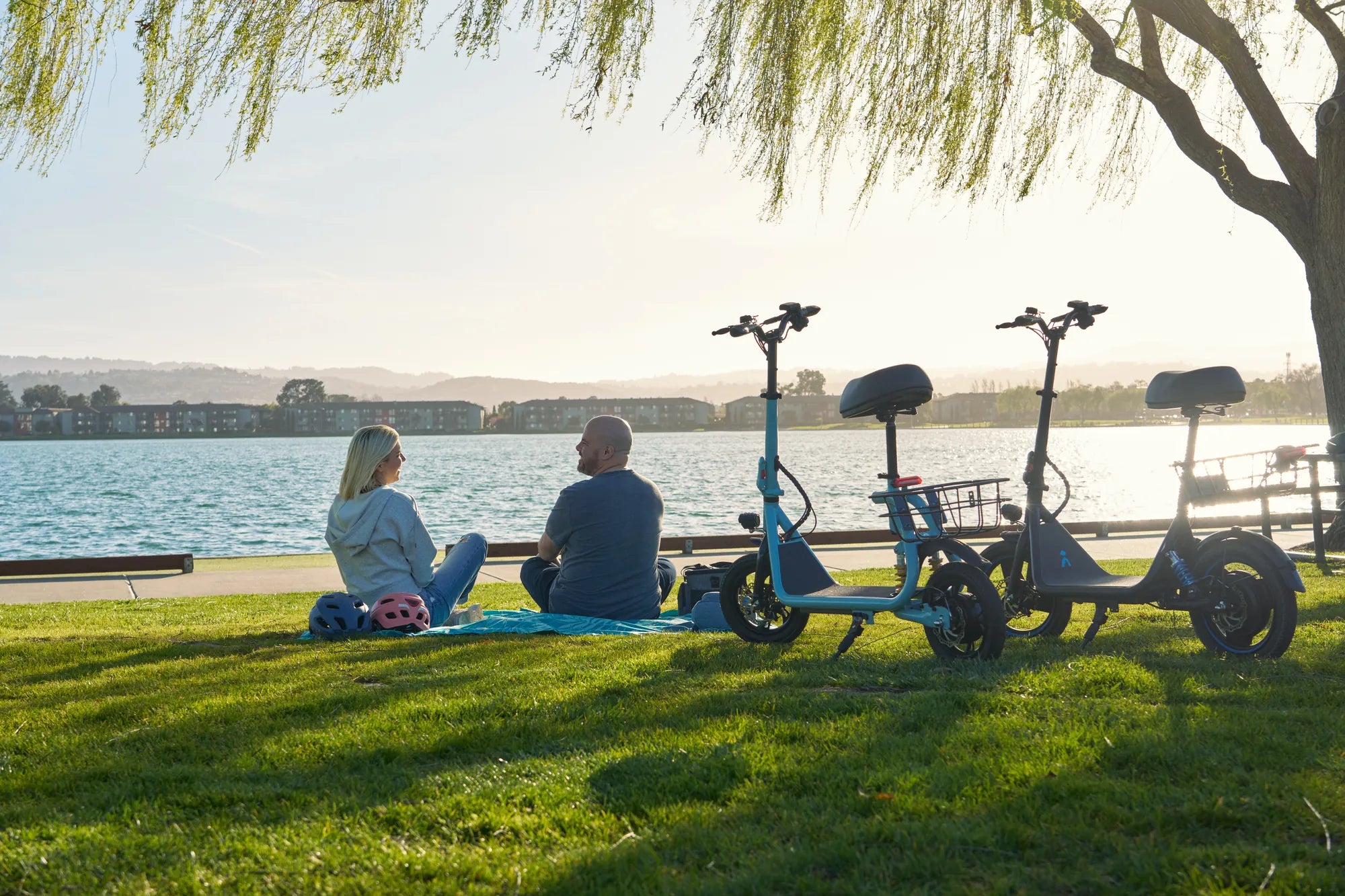
Navigating the World of Electric Mobility Scooters
Choosing an electric mobility scooter is a significant decision that directly impacts independence, daily routine, and quality of life. This ultimate guide is designed for first-time buyers and those considering an upgrade, providing a trustworthy, comprehensive resource to cut through the noise. You will learn how to match your specific lifestyle and physical needs with the right technical specifications and scooter type.
Our goal is to empower you with factual knowledge, not promotional hype. We will explore critical factors like motor power, battery safety, build quality, and ergonomic design. As a leader in personal electric mobility, Gyroor’s commitment to UL-certified batteries, IPX5 water resistance, and reliable 1-year warranties informs our perspective, emphasizing that the perfect ride balances performance with proven safety standards.
Understanding Your Needs: The Foundation of a Smart Purchase
The quest to buy electric mobility scooters begins with honest self-assessment. The "perfect ride" is highly personal, defined by how and where you plan to use it. Investing time here prevents the common mistake of choosing a scooter that looks good but doesn’t fit your actual life.
Start by envisioning your typical week. Are your trips short bursts to the local store, or longer recreational outings? Do you need to navigate tight indoor spaces or cruise on paved park paths? Your primary use case is the most critical filter for every subsequent decision.
Primary Use Case & Environment
Your daily environment dictates fundamental scooter requirements. For primarily indoor use or combination indoor/outdoor errands, maneuverability in tight spaces is key. This often points toward three-wheel models with a tighter turning radius.
If your routine involves suburban sidewalks, community paths, or occasional trips across grassy park areas, you need a scooter with slightly larger tires and more power. Outdoor-focused use demands better suspension, higher ground clearance, and robust construction to handle minor imperfections in the pavement.
Consider your typical trip distance. A scooter used for quick grocery runs needs less range than one used for all-day community events or lengthy outdoor excursions. Terrain is equally important; living in a hilly area necessitates a more powerful motor, while flat urban landscapes offer more flexibility.
User Physical Requirements & Comfort
Comfort is non-negotiable for a device you’ll use daily. Begin with the seat. A padded, contoured seat with adjustable positioning is essential. Swivel seats that lock into place dramatically ease the process of getting on and off the scooter.
Armrests and backrest support are crucial for posture and stability during longer rides. Ensure the seat provides adequate legroom and that the floorboard offers a secure, comfortable place for your feet. Always check the scooter’s weight capacity against your own weight, plus any items you’ll regularly carry, with a safe margin of error.
Storage & Portability Considerations
Practicality extends beyond riding. Do you need to carry groceries, a handbag, or medical supplies? Look for integrated storage solutions like a front basket, under-seat storage compartment, or optional rear cargo bags. These features transform a scooter from a simple transporter into a practical daily assistant.
Portability is vital if you plan to transport the scooter in a car. Many models are designed for easy disassembly. The weight of the heaviest component—often the frame or battery—is the key metric. A lightweight, removable, UL-certified battery pack, like those used in Gyroor scooters, simplifies charging and reduces lift weight during transport.
Key Features and Specifications Decoded
Technical specifications are the blueprint of a scooter’s capability. Understanding this data allows for objective comparison between models and ensures your expectations align with real-world performance.
Focus on the relationship between key specs. Motor power influences hill climb, but battery capacity determines how long you can use that power. Build quality affects durability, which is backed by warranty length. This section translates jargon into practical benefits.
Motor Power & Performance (Range, Speed, Hill Climb)
Motor power, measured in watts (W), is the engine of your scooter. A 300W motor is typically sufficient for flat terrain and lighter riders at moderate speeds. For tackling inclines, carrying more weight, or desiring quicker acceleration, a 400W to 500W motor is recommended.
Speed is usually capped for safety, often between 4-6 mph for indoor/comfort models and up to 8-10 mph for outdoor models. Real-world range is perhaps the most important performance metric. It’s determined by battery capacity (Ah), rider weight, terrain, and speed. A 10Ah battery may offer 10-15 miles under ideal conditions, but always plan for a realistic buffer.
Battery Life, Safety, and Charging
The battery is the heart of your electric mobility scooter. Its quality dictates safety, range, and long-term value. Insist on UL-certified battery packs, which have undergone rigorous testing for electrical, mechanical, and fire safety—a standard Gyroor meets across its lineup.
Lithium-ion batteries typically offer 500+ full charge cycles before significant capacity degradation. Charging time varies from 4 to 8 hours for a full charge. A removable battery is a major convenience, allowing you to charge securely indoors without parking the entire scooter near an outlet.
Build Quality, Safety Features, and Warranty
Frame material matters. Aluminum alloys offer a good strength-to-weight ratio, while steel provides maximum durability at a heavier weight. Look for a low center of gravity and a stable wheelbase to prevent tipping.
Essential safety features include electromagnetic brakes (which engage automatically when you release the throttle), anti-tip wheels at the rear, and bright LED lighting. A comprehensive warranty is your best indicator of a manufacturer’s confidence. Gyroor’s 1-year warranty on the scooter, coupled with IPX5 water resistance for protection against rain and splashes, exemplifies a commitment to all-weather reliability.
Making the Choice: A Comparison of Mobility Scooter Types
Electric mobility scooters generally fall into three broad categories, each optimized for different priorities. The following table provides a clear, data-driven comparison to help narrow your focus.
| Type | Best For | Key Features | Trade-offs |
|---|---|---|---|
| Travel/Portable | Frequent car transport, travel, multi-modal trips (bus/train), limited storage space. | Ultra-lightweight (often under 50 lbs), quick-disassembly (≤30 sec), compact fold, removable battery. | Smaller wheels (6”-8”), less suspension, slightly reduced range and speed, smaller seat. |
| Mid-Size / 3-Wheel | Indoor/outdoor versatility, suburban sidewalks, shopping malls, tighter turning. | Tighter turning radius, good stability, balanced comfort/portability, often more storage options. | Less stable on very rough terrain than 4-wheel, moderate weight (60-90 lbs). |
| Full-Size / 4-Wheel | All-day outdoor use, rougher paths, higher weight capacity, maximum comfort. | Superior outdoor stability, largest range & battery, most comfortable seating, highest weight capacity. | Heavier (100+ lbs), less maneuverable in tight spaces, requires more storage. |
Travel/Portable Scooters
These models prioritize portability above all else. They are engineered to disassemble into 2-4 pieces quickly, with the heaviest part often weighing less than 30 pounds. This makes them ideal for placing in a car trunk or for travelers who need a reliable scooter at their destination.
The trade-off for this compact design is often found in ride comfort. Smaller wheels (6 to 8 inches) are more sensitive to pavement cracks and bumps. Range and speed may be slightly lower than larger models, but for their intended use—short trips and travel—they are perfectly capable.
Mid-Size / 3-Wheel Scooters
The three-wheel mobility scooter is arguably the most popular category, and for good reason. It strikes an excellent balance between indoor maneuverability and outdoor capability. The single front wheel allows for a very tight turning radius, making navigation in stores or crowded spaces effortless.
With typically larger wheels (8-10 inches) than travel scooters and a longer wheelbase, they offer a smoother ride on sidewalks and paved paths. They often feature more comprehensive comfort options and storage, making them the versatile workhorse for daily errands and community mobility.
Full-Size / 4-Wheel Scooters
When your primary use is outdoors and you prioritize comfort, stability, and range, a full-size four-wheel scooter is the answer. The wider wheelbase and dual rear wheels provide exceptional stability on uneven surfaces, grassy areas, or gentle slopes.
These scooters accommodate the largest batteries, offering the longest possible range per charge—often 15-25 miles or more. They feature the most luxurious, captain-style seats with full adjustments. Their size and weight make them less suitable for frequent car transport, but they are the ultimate choice for robust, daily outdoor independence.
The Smart Buyer's Checklist: From Research to Ride
With knowledge of your needs and the scooter landscape, this actionable checklist guides you through the final steps to a confident purchase.
Research and Shortlisting
Start by verifying the safety credentials of any brand you consider. Look for explicit mention of UL certification for the battery and electrical system. Read professional reviews for technical analysis and user reviews for long-term reliability insights.
Compare warranty terms in detail. What is covered (frame, electronics, battery)? What is the duration? A strong warranty, like Gyroor’s 1-year comprehensive coverage, is a sign of quality. Based on your needs analysis, create a shortlist of 2-3 models from reputable brands that fit both your functional requirements and your budget.
Final Considerations & Purchase
Decide on your purchase channel. Authorized dealers offer the advantage of a test drive and in-person setup but may have higher prices. Reputable online retailers often provide better value and direct shipping but require self-assembly.
Critically assess after-sales support. Does the brand have a US-based service center or reliable support channels? Understand the return policy and shipping costs. If possible, arrange a test drive at a local mobility shop to assess comfort and controls firsthand before you buy electric mobility scooters online or in-store.
FAQ: Your Electric Mobility Scooter Questions Answered
Q: What is the average lifespan of an electric mobility scooter?
A>With proper maintenance, a quality scooter can last 3-5 years or more. The battery is the component most subject to wear; a UL-certified lithium battery typically retains good capacity for 2-3 years of daily use before needing replacement.
Q: Can I ride my mobility scooter in the rain?
A>It depends on the scooter’s IP rating. An IPX5 rating, like those on Gyroor models, means the scooter is protected against water jets from any direction, making it safe for riding in light to moderate rain. You should avoid deep puddles, submerging any part, and severe weather.
Q: How do I maintain the battery for maximum life?
A>Avoid fully draining the battery. Recharge it after each use or when it drops to 20-30% capacity. Store the scooter or battery in a cool, dry place. If not using for extended periods, charge the battery to about 50-60% and recharge every 2-3 months.
Q: Are electric mobility scooters covered by insurance or Medicare?
A>Medicare Part B may cover a portion of the cost for a power-operated vehicle (POV) if you meet specific medical criteria and get a prescription from your doctor. It typically does not cover scooters for convenience or outdoor recreation. Private insurance plans vary widely; you must consult directly with your provider to understand your specific coverage.
Q: How important is the weight capacity rating?
A>It is critical for safety and performance. Exceeding the rated weight capacity can stress the frame, motor, and brakes, leading to premature failure and unsafe handling. Always choose a scooter with a capacity at least 30-50 pounds greater than your body weight to account for clothing and carried items.
Conclusion: Embarking on a Journey of Greater Freedom
The decision to buy electric mobility scooters is an investment in autonomy, convenience, and an active lifestyle. By methodically assessing your needs, understanding the technical specifications that matter, and choosing a scooter type aligned with your daily reality, you secure a tool that genuinely enhances your life.
Prioritize brands that transparently commit to safety through UL-certification, back their products with strong warranties, and design for real-world reliability. With over 100,000 riders trusting Gyroor for their electric mobility needs, the path to your perfect ride is clear. Take the final step with confidence and discover the freedom that awaits.
Ready to explore models that combine safety, performance, and comfort? Browse the full Gyroor collection at gyroorboard.com to find your ideal electric mobility scooter today.
Childrens Electric Scooters: The Ultimate Guide for Parents - Safety & Selection
Electric Scooters Under $150: Affordable and Efficient Commuting Solutions