



Understanding the Core Question: Dirt Bikes, Roads, and Age
The question, can a 14 year old ride a dirt bike on road, is a common one from enthusiastic teens and concerned parents. The direct answer, in the vast majority of the United States, is a firm no. This isn't just about preference; it's a complex intersection of strict vehicle codes, licensing laws, and critical safety considerations. A dirt bike is engineered for off-road terrain, not the shared, predictable environment of public streets.
This article will provide a comprehensive, factual breakdown of the legal landscape, the inherent dangers, and the exciting, legal alternatives available. For a 14-year-old, the path to responsible riding begins with understanding and respecting these rules, not attempting to circumvent them. We'll explore state-specific regulations, the process of making a dirt bike street-legal, and why options like electric scooters from trusted brands offer a safer gateway.
Our goal is to equip you with the knowledge to make informed decisions that prioritize safety and legality. Riding is a thrilling activity, but it must be approached with the right vehicle, in the right place, and at the right age. The journey to becoming a skilled rider starts with foundational knowledge and responsible choices.
The Legal Landscape: It's a State-by-State Matter
There is no single federal law governing whether a 14 year old can ride a dirt bike on road. Jurisdiction falls entirely to individual state laws, which vary significantly. However, nearly all states converge on two non-negotiable points: the vehicle must be officially registered and street-legal, and the operator must possess a valid motorcycle license or permit. For a 14-year-old, the second requirement is almost always an insurmountable barrier.
State Departments of Motor Vehicles (DMVs) or their equivalents set the minimum age for motorcycle licensing. This age is typically tied to the graduated driver's license system. In most states, the minimum age to obtain even a motorcycle learner's permit is 15 or 16, with full licensing often requiring the rider to be 16 or 17. A handful of states may have provisions for instructional permits at 14, but these are exceptionally rare and come with severe restrictions, such as requiring direct supervision by a licensed adult rider at all times.
Furthermore, these permits are designed for street-legal motorcycles, not converted dirt bikes. Attempting to use a minor's permit for a non-compliant vehicle would result in citations for both the rider and likely the parent or guardian who allowed it. The legal risk involves fines, impoundment of the vehicle, and potential liability in the event of an accident.
Common State Requirements for On-Road Use
Even if age were not a factor, transforming a dirt bike for road use is a detailed and often costly process. States generally require a motorcycle to pass a safety inspection and be issued a title and registration. To pass inspection, a dirt bike typically needs a comprehensive set of add-ons, which fundamentally change its off-road nature.
Key modifications include headlights, taillights, and brake lights that are always on with the engine; turn signals front and rear; a horn audible from a specific distance; at least one rearview mirror (often two); a speedometer and odometer; and DOT-approved tires, as standard knobby dirt bike tires are unsafe and illegal on pavement. The bike must also have a valid Vehicle Identification Number (VIN) that can be registered with the state.
This process is designed for adults modifying dedicated dual-sport or enduro models. For a 14-year-old, navigating this bureaucratic and mechanical process is impractical, especially when the core licensing hurdle cannot be cleared. The investment in time and money is better directed toward legal and age-appropriate riding alternatives.
Safety First: The Inherent Risks of Dirt Bikes on Pavement
Beyond the black-and-white letter of the law, there are profound safety reasons why the answer to can a 14 year old ride a dirt bike on road is negative. Dirt bikes and street motorcycles are engineered for fundamentally different environments. Using one in the other's domain creates significant, often underestimated, hazards.
Dirt bike suspension is soft and long-travel, designed to absorb the impacts of jumps and rough terrain. On smooth pavement, this leads to excessive dive during braking and a vague, wallowy feeling in corners, reducing stability and control. The aggressive, knobby tires that provide grip in dirt, mud, and sand offer minimal contact patch on asphalt, leading to dangerously poor traction, especially in wet conditions or during emergency maneuvers.
Furthermore, dirt bike geometry is tailored for standing riding and quick direction changes off-road. This makes them less stable at the constant, higher speeds typical of road travel compared to the relaxed geometry of a street bike. The lack of road-specific safety features like bright, always-on lighting compounds the risk, making the rider less visible to car and truck drivers.
Physical Demands and Rider Maturity
Operating any vehicle in traffic requires a high level of cognitive development, risk assessment, and emotional maturity. Traffic is a complex, fast-moving system where split-second decisions have serious consequences. Most 14-year-olds are still developing these executive functions and the ability to anticipate the actions of other drivers.
Physically, controlling a powerful dirt bike, even a smaller displacement model, requires substantial strength, coordination, and endurance. Emergency braking or avoiding a road hazard demands precise clutch, throttle, and brake control while managing balance. The physical and mental workload of managing a motorcycle in traffic is immense and is a key reason states set minimum age and training requirements for licensure.
Practical & Legal Alternatives for the 14-Year-Old Enthusiast
For a teen passionate about riding, the good news is there are fantastic, legal, and thrilling alternatives that build skills and responsibility without breaking the law. The key is channeling that enthusiasm into the appropriate venue and vehicle type.
The first and best alternative is to embrace the dirt bike's intended purpose: off-road riding. This provides the full, unfiltered experience of the sport in a controlled environment. The second is to explore on-road personal mobility options that are legally accessible to teens, which can serve as a stepping stone to motorcycling later.
Off-Road Parks and Designated Trail Systems
This is the ideal and safest outlet for a young dirt bike rider. Across the country, there are thousands of miles of designated Off-Highway Vehicle (OHV) trails, motocross tracks, and riding parks. These areas are specifically designed for dirt bike use, with varied terrain that challenges and improves riding skills.
Riding in these controlled environments removes the dangers posed by cars, trucks, and road laws. It allows the rider to focus purely on bike control and terrain reading. Many parks offer beginner tracks and training classes. Parents should research local OHV areas through state park websites or organizations like the BlueRibbon Coalition. Always ensure the rider wears full safety gear: DOT-approved helmet, goggles, gloves, boots, and protective jersey/pants with padding.
Transitioning to Street-Legal Options: E-Bikes and E-Scooters
For the desire to ride on neighborhood streets or bike paths, electric bikes and electric scooters present a perfect, legal solution for many 14-year-olds. Laws for these personal mobility devices are often more lenient than for motorcycles, though they still vary by city and state. Typically, e-bikes (especially Class 1 and 2) are treated like bicycles and can be used by teens, often without a license.
These vehicles teach core road safety principles—observing traffic, signaling, wearing a helmet—without the extreme power or complexity of a combustion engine. They provide a genuine sense of freedom and independence while operating within a legal framework parents can trust. Choosing a reliable brand is crucial for safety and durability.
Why a Gyroor E-Bike or E-Scooter is a Smart First Step
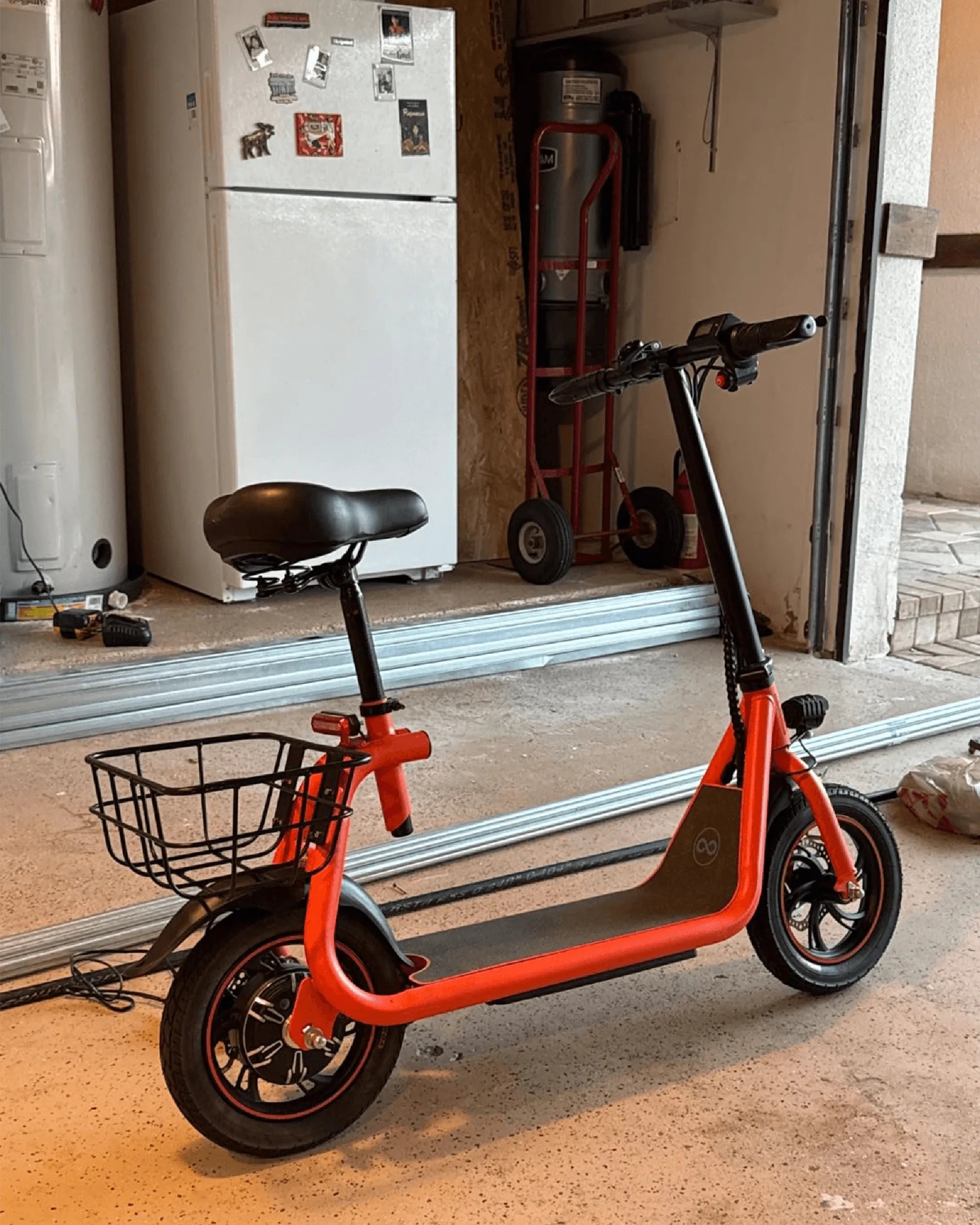
For parents seeking a trustworthy entry into personal electric mobility, Gyroor offers a compelling solution. As a leading brand trusted by over 100,000 riders in North America and Europe, Gyroor prioritizes safety and reliability—key concerns for any parent.
All Gyroor models use UL-certified battery packs, rigorously tested for safety and longevity over 500+ charge cycles. This addresses the foremost worry about electric vehicles. Furthermore, with IPX5 water-resistant designs, riders don't have to panic at a sudden rain shower, and the comprehensive 1-year warranty ensures support is available. Starting with a Gyroor e-scooter or e-bike allows a teen to demonstrate responsible riding habits, understand basic vehicle maintenance, and earn the trust required for more advanced vehicles in the future.
Age and Licensing Requirements: A Closer Look
To fully understand why a 14 year old cannot ride a dirt bike on road, we must examine the typical licensing ladder. Most states use a graduated system for motorcycles similar to that for cars.
The first step is usually a motorcycle learner's permit. The minimum age for this permit is most commonly 15 or 16. It allows practice riding under strict conditions, such as only during daylight hours and never with a passenger. Crucially, it requires the rider to be under the direct visual supervision of a licensed motorcycle rider who is at least 21 years old. Even if a 14-year-old could obtain this, the supervision requirement makes independent road use impossible.
The next step is a motorcycle endorsement (added to a driver's license) or a standalone motorcycle license. The minimum age for this is almost universally 16 or 17, and it requires passing both a written knowledge test and a hands-on skills test administered by the state on a street-legal motorcycle. Some states mandate completing a Motorcycle Safety Foundation (MSF) Basic Rider Course as a prerequisite or as a waiver for the skills test. These courses are invaluable but have their own minimum age requirements, typically 15 or 16.
Comparison: Dirt Bike vs. Street-Legal E-Scooter for a Teen
The table below highlights the fundamental differences between a dirt bike and a street-legal electric scooter from a brand like Gyroor, clearly showing why the latter is a viable option for a teen while the former is not.
| Feature | Dirt Bike (for On-Road Use) | Gyroor Electric Scooter |
|---|---|---|
| Legal On-Road Use at Age 14 | Almost universally illegal due to licensing age laws. | Often permitted on bike lanes/paths; local laws vary, but no motorcycle license required. |
| Required License | Motorcycle license/permit (min. age 15-16+). | Typically none, treated as a bicycle or personal mobility device. |
| Vehicle Registration & Insurance | Mandatory title, registration, and liability insurance. | Not required. |
| Safety Equipment for Road | Extensive modifications needed (lights, signals, horn, mirrors, DOT tires). | Fully integrated from factory: lights, electronic brake lights, bell/horn. |
| Primary Environment | Off-road trails, tracks. Unsafe/illegal on road. | Paved paths, bike lanes, neighborhood streets. |
| Parental Safety Concerns | High-speed potential, complex controls, high accident severity. | Governed speeds (15-20 mph), simple controls, UL-certified battery safety. |
| Skill Development | Advanced off-road riding techniques. | Fundamental road awareness, balance, and responsible riding habits. |
Frequently Asked Questions (FAQ)
Q1: Is there ANY state where a 14-year-old can legally ride a dirt bike on the road?
A1: It is extraordinarily rare. A tiny number of states may have a provision for a restricted farm or agricultural permit at 14, but this is for specific, limited use on rural roads, not general transportation. It would not apply to a recreational dirt bike. For all practical purposes, the answer is no.
Q2: Can a parent just supervise a 14-year-old on the road?
A2> No. Supervision does not override state law. If the vehicle is not street-legal (registered, insured, equipped) and the rider is not licensed, it is illegal regardless of supervision. The parent could be cited for allowing an unlicensed minor to operate an unregistered vehicle.
Q3: What about riding on the sidewalk or in an empty parking lot?
A3> Sidewalks are for pedestrians; operating any motorized vehicle on them is illegal and dangerous. Private property like an empty parking lot requires the explicit permission of the property owner. However, the moment you cross a public road to get there, you are breaking the law if the bike is not street-legal and you are not licensed.
Q4: What should a 14-year-old do if they are passionate about motorcycles?
A4> Focus on off-road riding at designated areas. Simultaneously, start learning! Study for the motorcycle permit test online, take a bicycle safety course, and consider a non-motorized dirt bike (like a mountain bike) to build balance and terrain skills. When old enough, immediately enroll in an MSF Basic Rider Course.
Q5: Are electric scooters like Gyroor's really a good alternative?
A5> Absolutely. They provide a legitimate, fun form of personal transportation that teaches road awareness. Brands like Gyroor build models with safety as a priority—UL-certified batteries, reliable brakes, and good lighting. It's a responsible way to grant independence while waiting to be old enough for a motorcycle license.
Parental Guidance and Essential Next Steps
For parents navigating this request, clear and firm guidance is essential. First, research your specific state's DMV website for the exact motorcycle licensing laws and minimum ages. This provides an undeniable factual basis for your decisions.
Second, if your teen is interested in off-road riding, invest in proper safety gear before anything else. A high-quality helmet, boots, gloves, and body armor are non-negotiable. Then, seek out local OHV clubs or tracks; these communities are excellent resources for safe, supervised riding.
Third, consider an age-legal electric vehicle as a compromise. It satisfies the desire for independent mobility while operating within a safe and legal framework. Use it as a teaching tool for traffic laws, route planning, and vehicle care. Finally, plan for the future: when your teen approaches the legal age, sign them up for the Motorcycle Safety Foundation (MSF) Basic Rider Course. This professional training is the single best investment in their long-term safety on two wheels.
Building a Foundation for Responsible Riding
The desire to ride and explore is a positive one, but it must be channeled correctly. Asking can a 14 year old ride a dirt bike on road opens a critical conversation about legality, safety, and responsibility. The clear answer is that on-road dirt bike use at 14 is not the path forward.
The true path involves mastering the dirt bike in its natural off-road habitat and embracing legal, on-road alternatives that build skill and trust. This responsible approach lays the groundwork for a lifetime of enjoyable riding. When the time is right and the legal age is reached, the transition to street motorcycling will be smoother, safer, and fully earned.
For a safe, reliable, and exciting introduction to personal electric mobility, explore the range of UL-certified, feature-packed e-scooters and e-bikes designed for real-world use. Discover the model that fits your teen's adventure and your peace of mind.
Browse the full Gyroor collection at gyroorboard.com to find the perfect electric scooter or e-bike to start a responsible riding journey today.
Best Dirt Bike for Kids Gift: The Ultimate 2024 Parent's Guide
Tricycle News: The Complete Guide to the Three-Wheeled Mobility Revolution