

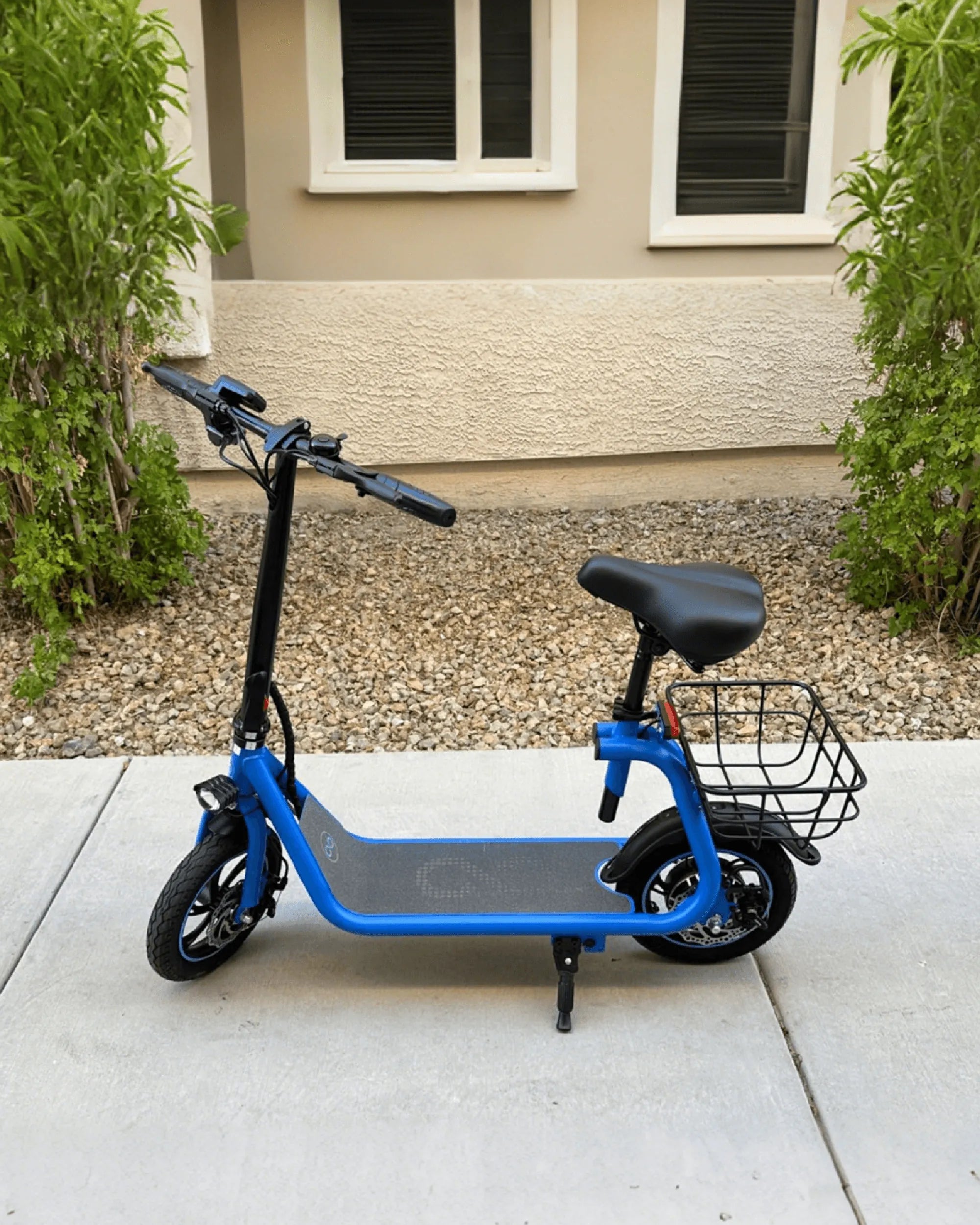
Navigating the Urban Jungle on Two Wheels
The electric scooter has surged from a novelty to a mainstream solution for first-mile/last-mile travel, urban exercise, and recreational fun. This rapid adoption leaves many new and prospective riders with a pressing, practical question: Can electric scooters be driven on the road? The answer is not a simple yes or no; it's a complex matrix of local laws, safety considerations, and rider responsibility.
This definitive guide will dissect the fragmented legal landscape, assess the real-world risks with data, and outline the equipment and practices that enable safe, legal road and bike lane use. Understanding these factors is the key to transforming your e-scooter from a sidewalk toy into a legitimate commuting vehicle.
The Legal Landscape: A State-by-State and City-by-City Patchwork
In the United States, there is no single federal law governing electric scooters. Their legality is determined at the state and, more commonly, the municipal level. This creates a patchwork of regulations that can vary dramatically between neighboring cities. The core question of whether electric scooters can be driven on the road is answered differently in each jurisdiction.
Common regulatory themes emerge, however. Most locales that permit e-scooter use establish rules around rider age (typically 16+ or 18+), helmet requirements (often for minors, sometimes for all riders), and speed limits (frequently capped at 15-20 mph). Crucially, laws define where you can operate your scooter: roads, bike lanes, multi-use paths, or sidewalks.
Ignorance of local law is not a valid defense and can result in fines or confiscation. Before riding, a quick search for your city's "micromobility" or "personal mobility device" ordinances is essential. This local specificity is the primary reason asking, "Can electric scooters be driven on the road?" requires a local answer.
Understanding Key Terms: Classifications and Designations
How an e-scooter is legally classified dictates where it can go. Most states define them as "Electric Scooters" or "Personal Mobility Devices," distinct from bicycles, mopeds, or motor vehicles. This classification usually grants them access to bicycle infrastructure and, under certain conditions, roadways.
A critical distinction exists between privately owned scooters and shared rental fleets. Cities often craft specific rules for rental companies—like geofencing no-ride zones or mandatory parking corrals—that may not apply directly to a scooter you own. Always consult regulations for "privately owned e-scooters."
Where Can You Legally Ride? Roads, Bike Lanes, and Sidewalks
The hierarchy of permissible riding surfaces is crucial for legal and safe operation. In most areas where e-scooters are legal, the intended and safest place to ride is in a designated bicycle lane. This is the golden standard, separating riders from fast-moving car traffic and slow-moving pedestrians.
Riding on sidewalks is frequently prohibited, especially in busy urban districts. Where it is allowed, speed is often limited to walking pace. Sidewalk riding poses significant risks to pedestrians, particularly the elderly or disabled, and to the rider from driveways and intersections.
So, can electric scooters be driven on the road? On local streets with lower speed limits (often 25-35 mph), riding on the road is commonly permitted when a bike lane is absent. On highways, freeways, or roads with speed limits above a certain threshold (e.g., 35 mph), e-scooters are almost universally banned for safety reasons.
The Road Rules: Riding Like a Vehicle
When you operate an e-scooter on the road, you are considered a vehicle operator. This comes with a full set of responsibilities. You must obey all traffic signals, stop signs, and lane markings. You are required to ride in the same direction as traffic, never against it.
Use hand signals to indicate turns and stops. Yield the right-of-way to pedestrians at crosswalks. Riding predictably and visibly is paramount. At night, front and rear lights are not just a good idea—they are often a legal requirement, just as they are for bicycles.
Assessing the Risks: Safety Data and Common Hazards
Data from the Consumer Product Safety Commission (CPSC) and academic studies reveals a clear picture: e-scooter-related emergency room visits have increased with their popularity. Common injuries include fractures, contusions, and head injuries, often resulting from falls, collisions with objects, or interactions with cars.
Beyond the statistics lie everyday hazards. Road surface imperfections like potholes, cracks, and gravel can easily cause a loss of control. Vehicle blind spots are a constant danger, especially at intersections where a right-turning car may not see a scooter proceeding straight. Pedestrians stepping unpredictably into bike lanes and mechanical failures like brake or tire issues compound the risk.
Mitigating Risk: The Role of Scooter Design and Rider Gear
Safety starts with your equipment. A well-built scooter from a reputable brand directly mitigates key risks. For example, Gyroor electric scooters incorporate features designed for real-world safety. Their UL-certified battery packs undergo rigorous testing for over 500 charge cycles, drastically reducing the fire risk associated with cheap, uncertified cells.
IPX5 water-resistant design ensures the scooter can handle wet roads and puddles without short-circuiting, a critical factor for reliability. Paired with a reliable 1-year warranty, this engineering focus provides a foundation of safety. Rider gear is non-negotiable: a certified bicycle or multi-impact helmet, bright lights (even during the day), reflective clothing, and sturdy, closed-toe shoes form your primary defense.
Choosing the Right Scooter for Road Readiness
Not all electric scooters are created equal for road and bike lane commuting. The right model bridges the gap between legality and practicality. Key features to prioritize include a top speed that matches local limits (typically up to 20 mph), a real-world range exceeding your daily commute, and bright, always-on headlights and brake lights for visibility.
Effective suspension (spring or hydraulic) is crucial for absorbing road imperfections and maintaining control. The braking system is arguably the most critical safety component; disc brakes (hydraulic or electronic) offer far superior stopping power and control in all conditions compared to basic foot or drum brakes. Tire size and type (pneumatic vs. solid) also significantly affect ride stability and traction.
Why Certification and Warranty Matter for Road Use
When asking if electric scooters can be driven on the road, the scooter's build quality becomes part of the answer. Certifications like UL 2271 for the battery system are not mere paperwork; they are evidence of rigorous safety testing against electrical, mechanical, and environmental hazards. This is essential for a device subjected to daily vibration, weather changes, and charging cycles.
A comprehensive warranty, like Gyroor's 1-year coverage, is a brand's commitment to the durability and safety of its product. It ensures that if a component critical to safe operation—like the motor, controller, or braking system—fails due to a manufacturing defect, it will be repaired. This peace of mind is invaluable for a commuter relying on their scooter daily.
Electric Scooter Comparison: Key Models for Different Needs
Selecting a scooter depends on your primary use case: compact commuting, all-terrain capability, or high-performance riding. The following table compares hypothetical models based on critical road-readiness features.
| Model Type | Ideal Use Case | Key Features for Road Use | Range & Speed |
|---|---|---|---|
| Urban Commuter | Daily city travel, mixed bike lane/road use | Foldable design, integrated lights, hydraulic brakes, IPX5 rating | Up to 20 mph, 15-25 miles |
| All-Terrain | Rough pavement, light trails, variable conditions | Large pneumatic tires, dual suspension, high-ground clearance, powerful motor | Up to 22 mph, 20-30 miles |
| Performance | Longer commutes, higher speed road use where legal | Dual motors, advanced braking (ABS), superior suspension, extended battery | 25+ mph, 30+ miles |
Brands like Gyroor offer models across these categories, ensuring features like UL-certified batteries and robust warranties are standard, providing a safe baseline for any riding style.
Frequently Asked Questions (FAQ)
Q1: Do I need a license, insurance, or registration to ride an e-scooter on the road?
A: In the vast majority of U.S. jurisdictions, no driver's license, vehicle registration, or insurance is required for privately owned e-scooters classified as personal mobility devices. However, this can vary, so always check local laws.
Q2: Can I carry a passenger on my electric scooter?
A: Almost universally, no. E-scooters are designed and certified for a single rider. Carrying a passenger compromises stability, braking, and control and is explicitly illegal in nearly all areas.
Q3: What is the penalty for riding an e-scooter on a prohibited road like a highway?
A> Penalties vary but can include substantial fines (often $100+), points on your driver's license (if you have one), and potentially the impoundment of your scooter. The legal and physical risks are extremely high.
Q4: How do I know if my local bike lane allows e-scooters?
A: Unless specifically signed as prohibited (e.g., "No Motorized Vehicles"), e-scooters are generally permitted in bicycle lanes. When in doubt, treat the bike lane as your default route, riding courteously and yielding to bicycles.
Q5: Are e-scooter laws different at night?
A: The core laws are the same, but equipment requirements intensify. Most localities mandate a white front light and a red rear light or reflector when riding after dark. Enhanced reflectivity on your person and scooter is also a smart safety practice.
Responsible Riding Checklist and Final Thoughts
Before every ride, internalize this checklist: 1) Verify your route complies with local laws; 2) Wear a helmet—always; 3) Perform a pre-ride check (tire pressure, brake function, light operation); 4) Plan your path to maximize time in bike lanes; 5) Ride defensively, assume you are not seen, and avoid distractions.
The question, "Can electric scooters be driven on the road?" ultimately depends on your location, your scooter, and you. With diligent research into local ordinances, investment in a properly certified and equipped scooter, and a commitment to defensive riding practices, the answer can be a confident and safe yes. Electric scooters, when used responsibly, are a legitimate, efficient, and enjoyable part of the modern urban mobility mix.
Ready to choose a road-ready electric scooter built with safety certifications and rider-focused design? Browse the full Gyroor collection, trusted by over 100,000 riders, at gyroorboard.com.
36V Electric Scooters: The Ultimate Guide to Choosing the Right One
Top Selling Electric Scooters in India: A Comprehensive Guide to Market Leaders