

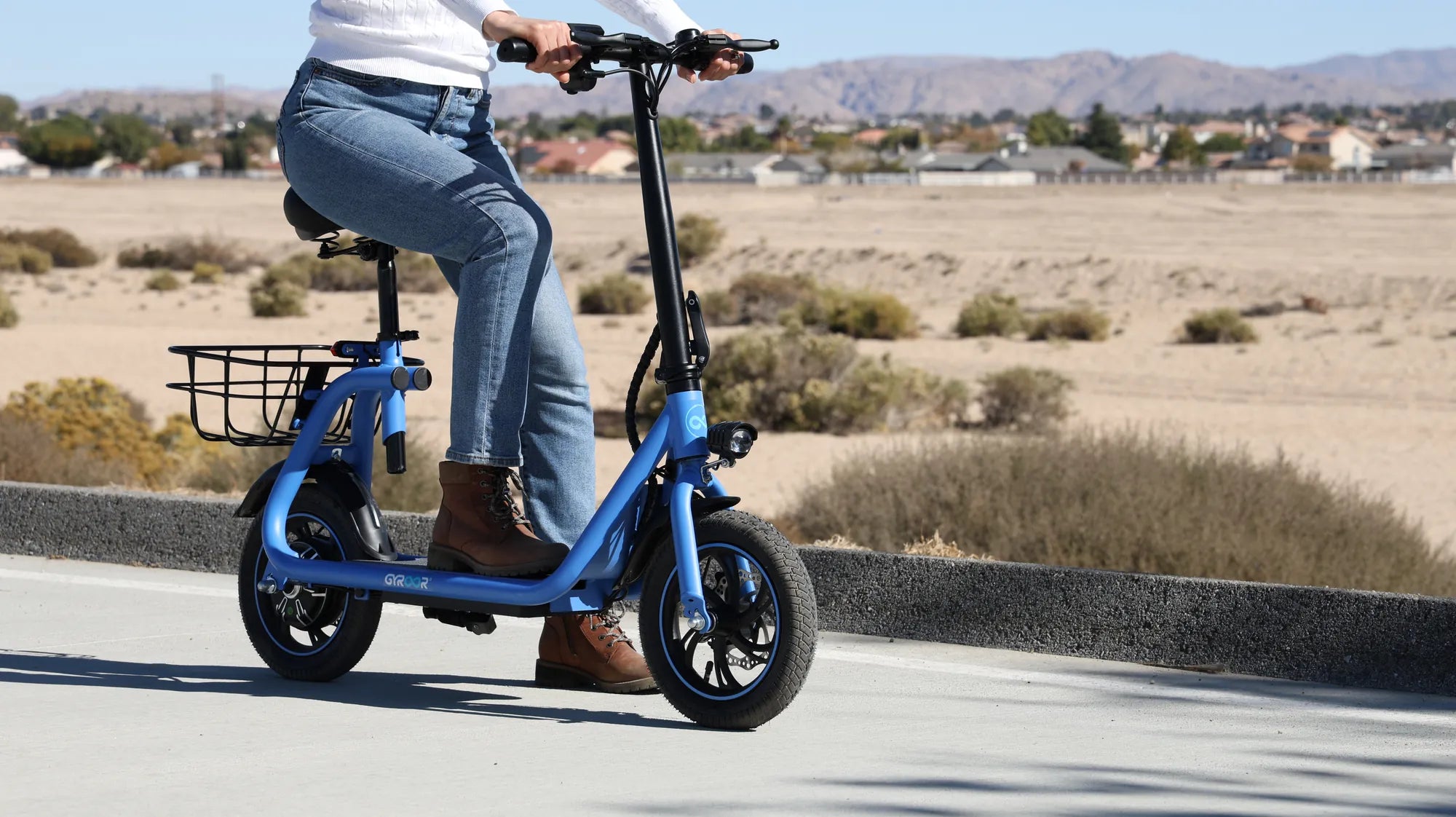
The Winter Riding Question
Can electric scooters be used in winter? This is the critical question for riders who don't want to store their primary commute away for months. The short answer is yes, but it demands respect for the elements and proactive preparation. Winter riding is less about brute forcing your scooter through a blizzard and more about intelligent risk management and equipment care.
With the right knowledge, you can confidently extend your riding season. This guide provides a data-driven, step-by-step framework for cold-weather operation. We'll cover the physics of cold on your scooter's components, essential pre-ride checks, safe riding techniques, and vital post-ride maintenance.
Brands like Gyroor engineer their electric scooters and e-bikes for real-world conditions, including damp and chilly environments. Understanding both your scooter's capabilities and its limits is the key to safe winter use. Let's dive into the core challenges cold weather presents.
Understanding the Core Challenges: How Cold Affects E-Scooters
Winter isn't just uncomfortable for riders; it's a harsh environment for machinery. Cold temperatures fundamentally alter the performance of your scooter's most critical systems. Recognizing these challenges is the first step toward mitigating them.
Lithium-ion batteries, tires, and electronics all behave differently below freezing. Ignoring these changes can lead to stranded riders, reduced component lifespan, or safety hazards. A strategic approach to winter riding begins with this foundational knowledge.
Battery Performance and Range Reduction
The lithium-ion battery is the heart of your electric scooter, and cold is its kryptonite. Chemical reactions inside the battery cells slow down significantly as temperatures drop. This increases internal resistance, causing voltage to sag under load.
You'll experience a substantial reduction in available capacity and range. A scooter that gets 25 miles in summer may only achieve 15-18 miles in freezing temperatures—a 20-40% loss is typical. The battery gauge may also behave erratically, showing a full charge that plummets once you start riding.
It's crucial to understand that this is a temporary performance loss, not permanent damage, provided the battery isn't charged while frozen. However, repeatedly draining a cold battery to zero can stress it over time. This is why brands like Gyroor use UL-certified battery packs with sophisticated Battery Management Systems (BMS) to monitor cell temperature and health.
Tire Traction and Handling on Slick Surfaces
Standard electric scooter tires, especially solid or airless varieties, harden in cold weather. Rubber loses its pliability, which drastically reduces its ability to grip the road surface. This is compounded by winter hazards like wet leaves, frost, black ice, and snow.
The contact patch—the tiny area of tire actually touching the ground—becomes less effective. This leads to longer braking distances, a higher risk of skidding during turns, and less stability overall. Pneumatic (air-filled) tires fare slightly better as the air pressure decreases in the cold, but they are still susceptible to hardening rubber.
Traction is the single most important safety factor in winter riding. Losing grip often happens suddenly and without warning, making proactive tire management and cautious riding non-negotiable.
Electronic Component and Water Resistance Limits
Modern scooters are packed with electronics: controllers, displays, wiring, and sensors. Cold can cause condensation to form inside these components when moving between temperature extremes, leading to potential corrosion or short circuits.
While many scooters, including Gyroor models with IPX5 ratings, are built to withstand water jets from any direction, this is not a license for submersion. IPX5 is excellent for wet roads and light snow but is not designed for riding through deep slush puddles or prolonged, heavy wet snow.
Salt and de-icing chemicals are particularly corrosive. They can accelerate wear on brake components, screws, and the folding mechanism. Understanding your scooter's ingress protection rating helps set realistic expectations for its use in winter precipitation.
Pre-Ride Preparation: Getting Your Scooter Winter-Ready
Proactive preparation separates a successful winter ride from a problematic one. This isn't just about checking tire pressure; it's a holistic approach to configuring your scooter for colder, wetter conditions. A well-prepared scooter is a safer and more reliable one.
This preparation involves upgrades, adjustments, and a new inspection routine. Investing time here will pay dividends in performance, safety, and the long-term health of your investment. Let's break down the essential steps.
Battery Care and Storage Protocol
Your battery care routine must adapt for winter. The golden rule: store the scooter or, ideally, just the battery pack, indoors at room temperature. Never leave it in a freezing garage or car overnight. Charging should only ever be done when the battery has warmed to room temperature.
For long-term storage if you won't ride for weeks, store the battery at a 40-60% charge state. Avoid storing it fully charged or completely empty, as both can stress the cells in combination with cold. Before a planned ride, bring the scooter indoors several hours ahead of time to allow the entire system to warm up.
This practice ensures the battery starts its discharge cycle at optimal temperature, maximizing the available range. It also prevents the BMS from having to work overtime to protect frozen cells.
Essential Winter Upgrades and Accessories
Certain upgrades can significantly enhance winter safety and capability. Consider these key investments:
- Tires: If your scooter allows, switch to pneumatic (air-filled) tires with a pronounced, aggressive tread pattern for better grip. Some riders opt for all-terrain tires. For extreme ice, studded tires exist but are niche.
- Tire Pressure: Slightly lower pressure (by 5-10 PSI) can increase the contact patch for better traction, but be cautious—too low increases the risk of pinch flats.
- Fender Extensions: Add longer or wider fenders to keep slush and road spray off you and the scooter's deck.
- Lighting: Ensure front and rear lights are bright, clean, and fully functional. Consider adding extra waterproof LED strips for side visibility in gloomy conditions.
The Critical Pre-Ride Inspection
Before every winter ride, conduct a quick but thorough five-point check. This should become as habitual as putting on your helmet.
First, inspect tire condition and pressure. Look for cracks, embedded debris, or excessive wear. Second, test both brakes. Disc brakes generally outperform electric regen brakes in wet, cold conditions as they are less affected by wheel slip. Ensure they engage smoothly and firmly.
Third, check all lights are working. Fourth, wipe the deck clean of any ice, snow, or salt residue to ensure secure footing. Finally, give the scooter a quick shake to check for any unusual looseness in the stem or folding mechanism, which can be exacerbated by temperature contraction.
Safe Riding Techniques for Winter Conditions
Winter riding demands a complete shift in technique. Smoothness and anticipation are your primary tools. Aggressive acceleration or braking that might be fine in summer can lead to a loss of control in winter. Your mindset should be one of maximum caution and defensive riding.
Assume every shaded corner, bridge, and intersection could be icy. Assume cars will not see you as easily. This section outlines the tactical adjustments you need to make once you're on the road.
Mastering Acceleration, Braking, and Turning
All inputs must be gentle and progressive. Use the lowest power mode (Eco mode) to prevent wheel spin from a standstill. Accelerate as if there's an egg between your foot and the throttle.
Braking requires significantly more distance. Begin braking early and apply pressure gradually. Use a combination of electronic and mechanical brakes if available, favoring the latter in wet conditions. Avoid sharp turns. Slow down before entering a turn, and coast through it without accelerating or braking, keeping the scooter as upright as possible.
Route Planning and Hazard Awareness
Plan your route strategically. Choose main roads that are plowed and salted first. Avoid shortcuts through parks or alleys that may be untreated. Be hyper-aware of specific hazards: metal bridge decks, sewer grates, painted road lines, and railway tracks become extremely slippery when wet or frosty.
Watch for "black ice"—a thin, transparent coating of ice on asphalt. It's often found in shaded areas or where water runoff crosses the road. Increase your following distance from vehicles dramatically, as your stopping power is compromised.
Dressing for the Ride (and the Fall)
Dress with the assumption you might fall. Your gear should protect you from both the cold and abrasion. A proper winter-rated helmet is essential. Wear waterproof, insulated gloves that allow for brake control.
Layer your clothing for warmth, with a windproof and waterproof outer shell. High-visibility colors or reflective strips are critical for low-light winter days. Sturdy, waterproof boots with good grip will help you stabilize at stops and provide protection.
Post-Ride Maintenance: Protecting Your Investment
What you do after your ride is just as important as your pre-ride prep. Winter roads are covered in a corrosive cocktail of salt, magnesium chloride, sand, and grime. Failing to clean your scooter will lead to accelerated rust, corrosion, and component failure.
This maintenance routine doesn't need to be long, but it must be consistent. A few minutes of care after each wet or salty ride will add years to your scooter's life.
The Immediate Clean and Dry Routine
As soon as you get indoors, take a few minutes to clean the scooter. Use a damp cloth to wipe down the entire frame, focusing on the underside, fenders, brakes, and folding mechanisms where salt and muck accumulate.
Avoid high-pressure hoses, which can force water into seals. For stubborn grime, a mild soap solution is fine. Dry the scooter thoroughly with a clean towel, especially around electronic ports and brake calipers. This simple act prevents freezing and corrosion overnight.
Proper Indoor Storage and Charging Practices
Always store your scooter indoors after a winter ride. Allow it to sit for 30-60 minutes to reach room temperature before plugging in the battery to charge. This allows any minor internal condensation to evaporate and brings the battery to its optimal charging temperature.
Check the manufacturer's guidelines; for example, Gyroor's UL-certified batteries are designed for safe charging within a specified temperature range, which always assumes indoor conditions. Store the scooter in a dry place, away from direct heat sources like radiators.
Gyroor's Winter-Ready Features: Built for Resilience
Choosing a scooter designed with durability in mind makes winter riding more viable. Gyroor engineers its products to handle the demands of daily commuting, which includes resilience against damp and cold conditions. Specific design choices directly address the challenges outlined in this guide.
From battery safety to water resistance, these features provide a robust foundation. They are not a substitute for rider caution and maintenance, but they offer a critical margin of safety and reliability.
UL-Certified Battery Safety in Temperature Flux
The UL certification on Gyroor battery packs is a major safety differentiator. It signifies the battery system has passed rigorous tests for electrical and fire safety. The integrated Battery Management System (BMS) is crucial for winter.
This BMS actively monitors cell temperature, voltage, and current. It helps prevent the battery from operating outside its safe temperature window and protects against over-discharge—a real risk when cold weather saps capacity unexpectedly. This built-in protection layer is essential for managing the inherent stresses of cold-weather riding.
IPX5 Water-Resistance: A Foundation for Damp Conditions
An IPX5 rating is a meaningful specification for winter. It means the scooter's electrical components are sealed against water jets from any direction. In practical terms, this protects against wheel spray from wet roads, light snowfall, and accidental splashes.
It gives riders confidence to commute in typical rainy or slushy conditions. However, it's vital to reiterate the limits: IPX5 is not IP67 (submersion). It does not make the scooter a submarine, and deep puddles or driving rain should still be avoided.
Warranty and Support: Riding with Confidence
Gyroor backs its products with a comprehensive 1-year warranty and US-based customer support. This provides peace of mind that if a component does fail due to a manufacturing defect, you have recourse.
It also encourages proper maintenance; following the guidelines in this guide and the user manual helps ensure your warranty remains valid. Knowing you have support allows you to focus on safe riding practices.
Scooter Type Comparison for Winter Use
Not all electric scooters are equally suited for winter. Key specifications dramatically affect their capability and safety in cold, wet conditions. The table below compares common scooter types.
| Feature / Scooter Type | Commuter (Solid Tires) | Commuter (Pneumatic Tires) | Off-Road / All-Terrain |
|---|---|---|---|
| Winter Traction | Poor. Hardened rubber offers minimal grip on ice/snow. | Fair to Good. Softer rubber & adjustable pressure improve grip. | Good. Aggressive tread patterns shed slush, better for loose snow. |
| Battery Range Impact | High (30-40% loss). Often smaller batteries. | High (30-40% loss). | Very High (40-50%+ loss). Larger batteries but more power draw. |
| Water Resistance | Often good (no flats from punctures). | Varies. Check IP rating (e.g., IPX5 on Gyroor). | Varies. Must have high IP rating for off-road use. |
| Maintenance Burden | Low. No tire pressure checks. | Higher. Must monitor pressure, risk of pinch flats. | Highest. Requires frequent cleaning after slushy rides. |
| Best Winter Use Case | Short trips on fully cleared, dry pathways. | General urban commuting on treated roads. | Light snow or unpaved, snowy paths (with caution). |
Frequently Asked Questions (FAQ)
What is the lowest safe temperature to ride an electric scooter?
There's no universal cutoff, but a practical guideline is to avoid riding below 20°F (-7°C) for casual use. The battery performance degrades severely, and risks from ice increase. More importantly, consider road conditions: 32°F (0°C) with wet roads is often more dangerous than 25°F (-4°C) on dry pavement.
Can I use my scooter on snow or ice?
You can use it on a light dusting of snow on a cleared pavement with extreme caution. It is strongly advised against using a standard scooter on packed snow or ice. For ice, only specialized studded tires provide real safety, and these are not commonly available for most scooter models.
How can I maximize my battery range in the cold?
Store the battery indoors, warm it before riding, use the lowest assist mode (Eco), keep your speed moderate, and avoid hills. Dress very warmly so you don't rely on the scooter for body heat. Plan shorter trips and have a backup transport plan.
Does riding in the rain or snow void my warranty?
It depends on the manufacturer's stated IP rating. Riding a scooter within its rated water-resistance (e.g., in rain for an IPX5 model like many Gyroor scooters) should not void the warranty. However, water damage from submersion, pressure washing, or neglectful post-ride care typically is not covered.
Should I put different tires on my scooter for winter?
If your model supports tire changes, switching to high-quality pneumatic tires with a solid tread pattern is one of the best winter upgrades you can make. It improves traction and shock absorption. Always consult your scooter's manual or manufacturer to ensure compatibility.
Embracing Winter with Wisdom
Winter riding on an electric scooter is a test of preparation, adaptability, and respect for the environment. It is unequivocally possible with the right approach, transforming your scooter from a fair-weather friend into a year-round mobility tool. The core principles are managing the battery's temperature, maximizing tire traction, adapting your riding style to the conditions, and committing to diligent cleaning and maintenance.
Choosing a robustly built scooter from a brand like Gyroor, with its focus on UL-certified safety and meaningful water resistance, provides a reliable foundation. However, the rider's knowledge and caution are the most critical safety features. By understanding the challenges and implementing the strategies in this guide, you can navigate the colder months safely and extend your riding season without compromising your safety or your scooter's longevity.
Ready to explore scooters designed with real-world conditions in mind? Browse the full collection of UL-certified, IPX5 water-resistant electric scooters and e-bikes at gyroorboard.com. Find the model that fits your commute, in every season.
Electric Scooters Seville: The Ultimate Guide to Exploring the City on Two Wheels
Best Electric Scooters USA: Top Picks for Commuters and Enthusiasts