

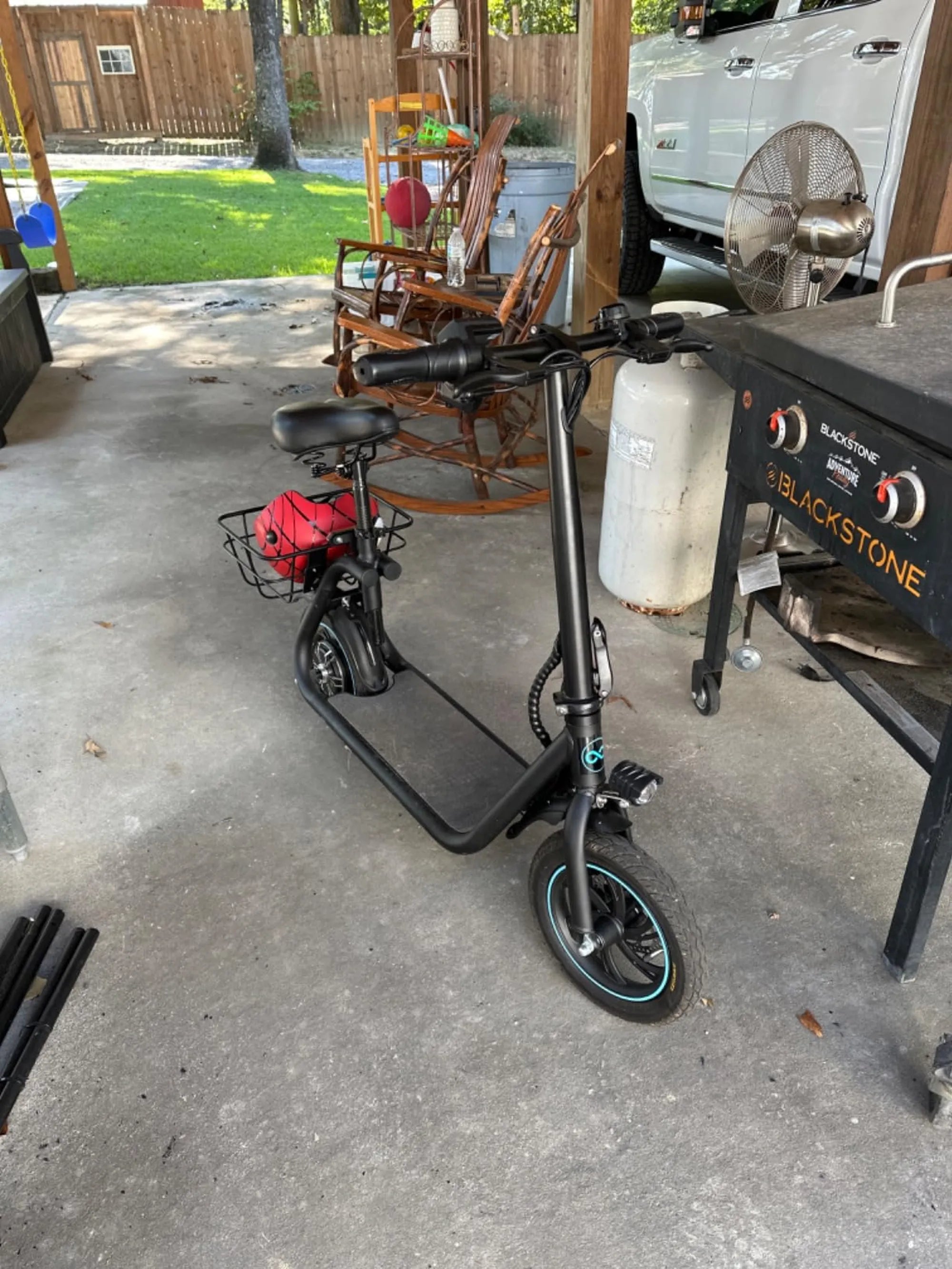
You just got a new e-bike and are planning your first commute. The road looks busy, and the sidewalk seems empty and inviting. This leads to the critical question every rider must ask: can I ride my ebike on the sidewalk? The answer is rarely a simple yes or no. It's a complex web of local ordinances, state laws, and safety considerations that directly impact your legal liability and personal safety. Ignorance isn't just risky—it can lead to fines, accidents, and increased regulatory scrutiny. This guide provides the definitive, location-aware framework you need to navigate this issue, ensuring your ride is both enjoyable and compliant.
Understanding the Rules: Can You Ride Your E-Bike on the Sidewalk?
The legality of sidewalk e-biking is almost never governed by a single, universal rule. While the federal government provides a framework for classifying e-bikes, the authority to permit or prohibit their use on sidewalks rests almost exclusively with state and, more commonly, municipal governments. This creates a patchwork of regulations where the rules can change completely by crossing a city limit.
Asking can I ride my ebike on the sidewalk is the first step toward responsible ownership. The core principle is that sidewalks are primarily designed for pedestrian travel at walking speeds. Introducing a vehicle capable of 20+ mph creates inherent conflicts. Most major metropolitan areas explicitly prohibit it, while some smaller towns or suburban areas may allow it, often with strict speed restrictions.
The consequences of getting it wrong extend beyond a ticket. Riding illegally on a sidewalk increases your risk of collision with pedestrians, especially at driveways and intersections where drivers do not expect fast-moving traffic. It also fuels negative perceptions of e-bike riders, hindering broader acceptance and infrastructure development.
Your e-bike's classification is the first legal filter. The widely adopted three-class system, which we will explore next, directly influences where you are legally allowed to operate. A higher-class, faster e-bike is almost never permitted on sidewalks, even in more permissive jurisdictions.
The Legal Landscape: Federal, State, and Local Regulations
E-bike regulation in the United States operates on three distinct levels: federal, state, and local. Understanding this hierarchy is key to decoding the rules for your specific location.
At the federal level, the Consumer Product Safety Commission defines a "low-speed electric bicycle" as a two- or three-wheeled vehicle with fully operable pedals, a motor under 750 watts (1 hp), and a maximum motor-powered speed of 20 mph. This definition paved the way for the 3-class system adopted by most states.
At the state level, legislation typically adopts the 3-class system and determines whether e-bikes are treated as bicycles or motor vehicles. This is crucial, as being classified as a bicycle generally grants access to bike lanes and paths. However, states rarely make specific rulings on sidewalk use, instead delegating that authority to cities and counties.
The local municipal level—your city, town, or county code—is where the question can I ride my ebike on the sidewalk is definitively answered. Local ordinances can override or add specificity to state laws. For example, a state may allow Class 1 e-bikes on multi-use paths, but a city can ban all e-bikes from sidewalks within its limits.
Failing to check your local code is the most common mistake riders make. A state's permissive law does not grant a local sidewalk license. Always consider your city's municipal code the final legal authority for sidewalk riding.
How E-Bike Classification Affects Where You Can Ride
The three-class system is the cornerstone of modern e-bike regulation. Your bike's class is usually labeled on the motor or frame and dictates its legal capabilities.
| Class | Motor Assistance | Max Assisted Speed | Typical Road & Path Access | Typical Sidewalk Status |
|---|---|---|---|---|
| Class 1 | Pedal-assist only (no throttle) | 20 mph | Bike lanes, paths, roads | Often prohibited in urban areas; sometimes allowed with restrictions. |
| Class 2 | Throttle-assisted (can propel without pedaling) | 20 mph | Bike lanes, paths, roads | Similar to Class 1, but sometimes viewed less favorably due to throttle. |
| Class 3 | Pedal-assist only (no throttle) | 28 mph | Roads, bike lanes; often prohibited on multi-use paths. | Almost universally prohibited on sidewalks. |
This classification matters because local laws frequently reference it. An ordinance may state "Class 1 and 2 e-bikes are permitted on sidewalks in business district B, but must not exceed 10 mph," while explicitly banning Class 3. The higher the speed potential, the less likely sidewalk use is permitted.
The Importance of Checking Your Local Municipality's Code
Finding your local law is a straightforward but essential task. Start with a web search for "[Your City Name] municipal code" or "[Your City Name] bicycle ordinances." Navigate to the transportation or vehicles section of the code.
Look for keywords like "electric bicycle," "motorized bicycle," "sidewalk," and "pedestrian way." If the online code is difficult to navigate, contact your city's Department of Transportation, Public Works, or Police Department's non-emergency line for clarification.
Local bike shops are also invaluable resources. They operate within the local legal framework and often have clear, practical knowledge of enforcement patterns and upcoming regulatory changes.
Remember, signage can also dictate local rules. A "No Bicycles" sign on a sidewalk is legally binding for e-bikes classified as bicycles. Always defer to posted signage, even if your broader research suggested permissibility.
The Safety Debate: Sidewalks vs. Bike Lanes vs. Roads
Beyond legality, a critical safety analysis must inform your decision on where to ride. Each option—sidewalk, bike lane, or road—presents a unique risk profile for you, pedestrians, and drivers.
Statistically, sidewalks are not the safe haven they appear to be. A study by the Insurance Institute for Highway Safety found that sidewalk-cycling injury rates are significantly higher than riding on the road, primarily due to conflicts at intersections and driveways.
Drivers pulling in or out of driveways or turning at intersections are scanning the road for vehicle-speed traffic, not sidewalk-speed pedestrians. An e-bike moving at 15-20 mph on a sidewalk becomes a high-speed surprise, leading to "right-hook" or driveway pull-out collisions.
Conversely, taking the lane on a busy, high-speed arterial road can feel intimidating and dangerous without protected infrastructure. The ideal, safest environment for an e-bike is a protected bike lane or a calm, low-speed residential street.
Risks to Pedestrians and Yourself
Sidewalk riding externalizes risk onto pedestrians, the most vulnerable users of that space. The speed differential between a walking pedestrian (3-4 mph) and an e-bike (15-20+ mph) is extreme.
This creates high-risk scenarios: startling seniors or children, colliding with a suddenly opened door from a parked car, or clipping a pedestrian stepping out of a shop. Visually impaired individuals who rely on predictable sidewalk traffic are particularly at risk.
For the rider, sidewalks are filled with hazards like uneven slabs, signposts, litter, and low-hanging branches not designed for vehicular traffic. Maneuvering at speed is dangerous. The social contract of the sidewalk is broken, leading to justified frustration from the community and negative attention from law enforcement.
Riding against the flow of road traffic on a sidewalk is especially perilous, as drivers will not look for you coming from the opposite direction when turning.
When the Road Feels Too Dangerous: Assessing Your Route
If your planned route involves a dangerous stretch of road, the solution is not to default to the illegal sidewalk. Proactive route planning is a fundamental skill for the urban e-biker.
Use the cycling layer on Google Maps or dedicated apps like Ride with GPS or Komoot to identify calmer parallel streets, designated bike boulevards, or multi-use paths. A slightly longer route on quiet streets is almost always safer and less stressful than a direct route on a stroad.
If you must traverse a short, dangerous section, the safest and most legal option is often to dismount and walk your e-bike on the sidewalk. You become a pedestrian, eliminating the legal and safety conflicts. This is a responsible practice endorsed by advocacy groups.
Investing in high-visibility gear, powerful lights (like those integrated into many Gyroor models), and a loud bell or horn increases your safety and predictability on the road, making the legal option feel more secure.
Practical Guidance for the Gyroor Rider
For riders of reliable, UL-certified e-bikes and scooters from brands like Gyroor, responsible operation is part of the ownership experience. Your vehicle's dependable performance should be matched by informed, lawful riding habits.
The first step is to know your machine. Identify its class (1, 2, or 3) and understand its capabilities. A Gyroor e-bike's stable frame geometry and responsive braking systems are designed for controlled stopping in traffic or bike lane scenarios, not for dodging pedestrians on a crowded sidewalk.
Next, research before you roll. Spend 20 minutes confirming the laws in your city and any destination city for your commute. Bookmark the relevant municipal code page on your phone for quick reference.
Finally, adopt a mindset of courtesy and predictability. Whether in a bike lane or on a rare permitted sidewalk stretch, your behavior shapes public perception of all micro-mobility riders. Responsible riding supports the growth of better infrastructure for everyone.
Best Practices for Legal and Courteous Riding
If you find yourself in a location where sidewalk riding is permitted (e.g., a suburban area with a specific ordinance), these practices are non-negotiable.
- Yield Absolutely to Pedestrians: They have the right-of-way at all times. Be prepared to stop or dismount.
- Ride at Walking Speed (≤ 5 mph): Match the environment's expected speed. Your e-bike's lower pedal-assist settings are perfect for this.
- Use Audible Signals: A friendly bell or a verbal "passing on your left" is essential. Never assume a pedestrian hears you.
- Dismount in Crowded Areas: Around bus stops, outside schools, or in shopping districts, walk your bike.
- Extreme Caution at Intersections & Driveways: Slow to a crawl, make eye contact with drivers, and assume you have not been seen.
These practices minimize risk and demonstrate respect, helping to preserve access where it exists.
Utilizing Gyroor Features for Safer Urban Navigation
Gyroor designs its e-bikes and electric scooters with urban safety and reliability in mind. Leverage these features to ride confidently in the correct, legal environments.
The UL-certified battery pack ensures not just safety from fire risk but also reliable range, preventing you from being stranded in an unsafe location. The IPX5 water-resistant rating on key components means wet roads or unexpected weather don't compromise your bike's functionality, allowing you to safely use bike lanes in various conditions.
Features like dual braking systems (disc + electronic) and bright, always-on headlights and taillights are critical for road riding. They ensure you can stop effectively and be seen by drivers, which is far more relevant for legal road/bike lane use than for sidewalk navigation.
The robust 1-year comprehensive warranty and U.S.-based support provide peace of mind, but they underscore an expectation of proper use within designed and legal operating parameters.
Consequences and Alternatives: What If You Can't Ride on the Sidewalk?
If your local code prohibits sidewalk e-biking, the responsible path is to embrace the alternatives. The primary consequence of illegal riding is a citation. Fines vary widely but commonly range from $50 to $250 for a first offense. In some jurisdictions, repeat offenses can lead to higher fines or even impoundment of the vehicle.
Beyond fines, you assume full liability in the event of a collision with a pedestrian. This can mean civil lawsuits and significant personal financial responsibility, as your auto insurance likely won't cover an illegal act on a sidewalk.
The better alternative is to become an advocate for your own safety through infrastructure and route choice. Dedicated, protected bike lanes reduce crash risk with cars by over 90% compared to riding on the street. Seek them out.
Finding and Advocating for Better Infrastructure
Use city and third-party cycling maps to plan your routes around existing bike lanes and greenways. Apps like Pointz or BikeMap can show rider-popular routes that often favor quieter streets.
If your commute lacks safe options, get involved. Join local advocacy groups like your city's chapter of the League of American Bicyclists or a local sustainable transportation coalition. These groups work with city planners to install protected bike lanes, calmed streets, and secure parking.
Attend city council or transportation commission meetings. Politely and persistently asking "When will this corridor get a protected bike lane?" puts the need for safe infrastructure on the official record. Data-driven arguments about reducing traffic congestion and increasing local commerce via bike access are effective.
The Gyroor Warranty and Responsible Riding
It's important to understand the intersection of product warranties and legal operation. Gyroor's 1-year warranty covers defects in materials and workmanship under normal use.
However, operating the vehicle in a manner that violates local law—such as illegal sidewalk riding that results in a crash—could void warranty coverage for related damage. Warranties are designed for use within specified parameters, which include following all applicable vehicle and traffic laws.
The warranty is a promise of product quality and safety, like the UL-certified battery. It is not a license for illegal operation. For questions about your e-bike's functionality, Gyroor's U.S.-based support team is an excellent resource. For legal questions, always refer to your local authorities.
Electric Scooters vs. E-Bikes: Sidewalk Rule Differences
It's common to group all micro-mobility together, but the law often distinguishes between electric scooters (stand-up kick-style) and e-bikes (pedal bicycles with motor assistance).
In many jurisdictions, electric scooters face even stricter sidewalk prohibitions than e-bikes. They are frequently classified separately, sometimes as "motorized scooters," and are explicitly banned from sidewalks in municipal codes. This is due to their smaller wheels, different rider posture, and often, their prevalence in rental fleets associated with sidewalk clutter.
For a brand like Gyroor, which produces both high-quality e-bikes and robust electric scooters, this distinction is critical for owners to understand. A Gyroor electric scooter, despite its portability and IPX5-rated durability, is almost certainly intended for use in bike lanes or on the road where legal, not on sidewalks.
Always check your local code for specific definitions. The search term "motorized scooter" or "electric scooter" may yield different results than "electric bicycle." When in doubt, apply the strictest interpretation—assume sidewalk use is prohibited unless you find an explicit, current ordinance that says otherwise.
Frequently Asked Questions (FAQ)
Q: Are electric scooters (like Gyroor scooters) treated the same as e-bikes for sidewalk rules?
A: Usually not. In most municipal codes, electric kick-scooters are in a separate legal category, often with stricter rules. They are frequently explicitly banned from sidewalks, even in places where some classes of e-bikes might be tolerated. Always check your local "motorized scooter" ordinances.
Q: What's the typical fine for riding an e-bike on the sidewalk where it's prohibited?
A: Fines vary by city but typically range from $50 to $250 for a first offense. Major cities like New York City, Chicago, and San Francisco enforce these fines actively. Repeat offenses can lead to steeper penalties.
Q: If my city's law is unclear, who should I contact?
A: Start with your city's Department of Transportation or Traffic Engineering division. If they cannot answer, the non-emergency line for the local police department can often clarify enforcement policies. Document who you spoke with and when.
Q: Do these rules apply to children riding e-bikes?
A: Yes, the law applies to all operators. In fact, many states have minimum age requirements for certain e-bike classes (often 14 for Class 1 & 2, and 16 for Class 3). Parents can be held liable for fines or damages caused by a child riding illegally.
Q: Is it ever legal to ride my e-bike on the sidewalk?
A: It is legal only if a specific local ordinance in your exact location permits it. This is rare in dense urban cores but more common in certain suburban or rural townships. The permission is almost always coupled with a mandatory low speed limit (e.g., 10 mph) and a requirement to yield to all pedestrians.
Conclusion: Knowledge is Your Best Safety Feature
The question can I ride my ebike on the sidewalk is answered not by convenience, but by the specific text of your local municipal code and a clear-eyed assessment of safety data. The safest and most legally sound practice is to use your e-bike as it was designed: on the road, in bike lanes, or on multi-use paths where permitted. For Gyroor riders, this means leveraging your vehicle's reliable performance, UL-certified safety, and robust construction where it matters most—in shared traffic environments. Prioritize route planning, advocate for protected infrastructure, and always ride with predictability and courtesy. This approach ensures your personal safety, protects vulnerable pedestrians, and fosters a positive future for micro-mobility. Explore the full range of purpose-built, reliable e-bikes and scooters designed for real-world commuting at the Gyroor collection.
E Bike Levels: The Complete Guide to Pedal Assist Modes
Automatic Street Legal Dirt Bike: The Ultimate Guide to 2024's Hybrid Machines