



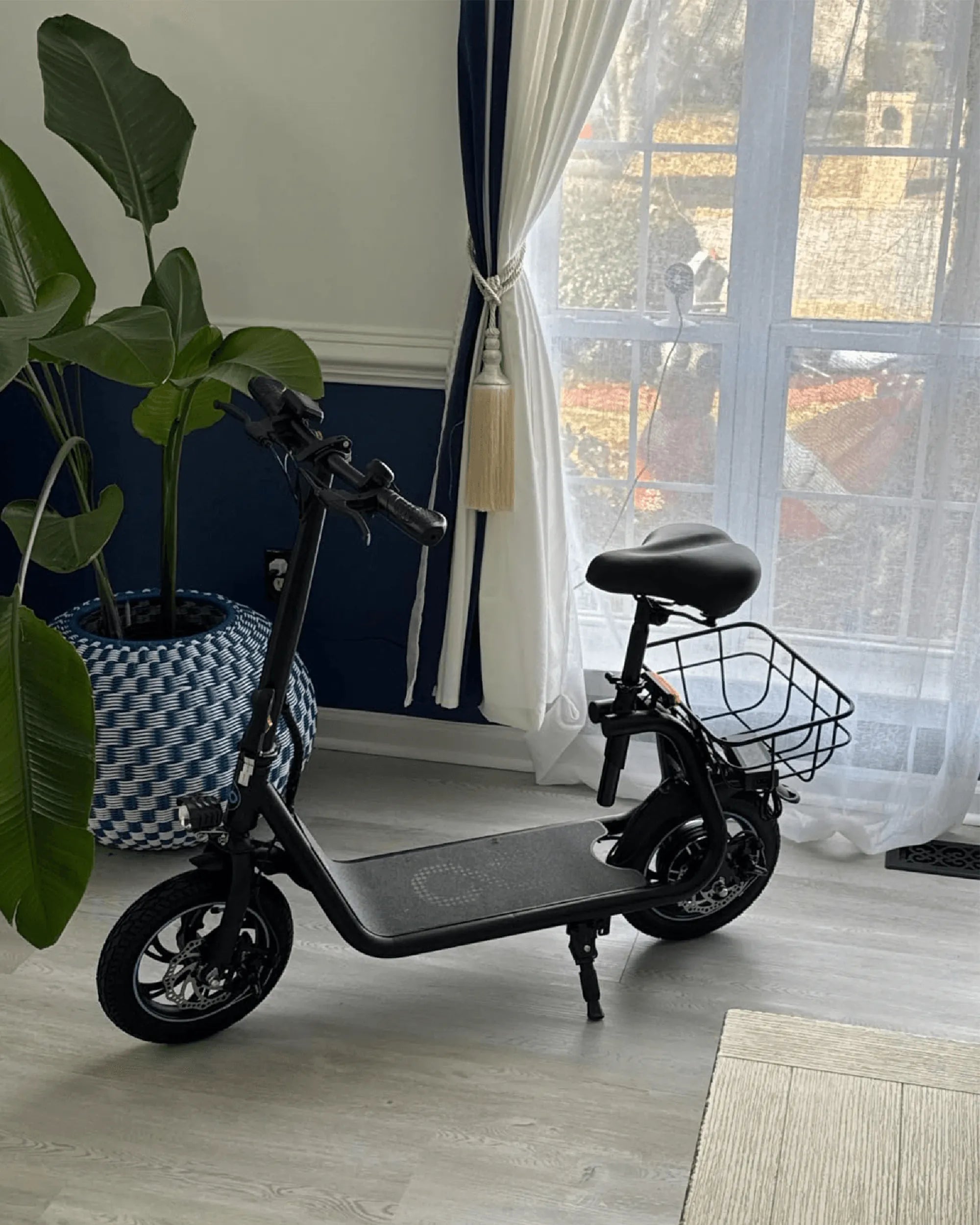
Introduction: Navigating the Urban Landscape on Two Wheels
Electric scooters have transformed urban mobility, offering an efficient solution for short-distance commuting and recreational travel. The central question for many new and experienced riders remains: Can you drive electric scooters on the road? The answer is not a simple yes or no but depends on a complex web of local regulations, vehicle specifications, and rider behavior.
This guide provides a comprehensive examination of road legality, safety fundamentals, and practical riding strategies. Whether you're considering a Gyroor scooter for daily commuting or occasional use, understanding the rules is essential for legal and safe operation.
We will demystify the regulatory patchwork across different jurisdictions and provide data-driven safety advice that applies regardless of your location. The goal is to equip you with knowledge that promotes confident, compliant riding on appropriate roadways.
Understanding the Legal Landscape: It's More Than a Yes or No
Electric scooter legality on public roads varies dramatically between countries, states, and even municipalities. There is no universal answer to whether you can drive electric scooters on the road, making local verification the rider's first responsibility. Regulations are evolving rapidly as cities adapt to this new mode of transport.
In the United States, for example, states classify e-scooters differently—some as bicycles, others as motorized vehicles, and some have created entirely new classifications. This directly impacts where you can ride, what safety equipment is mandatory, and whether registration or insurance is required.
European regulations also show significant variation, with many countries implementing specific power and speed limits for road-legal scooters. Generally, the trend is toward formalizing rules rather than outright bans, recognizing e-scooters' role in sustainable urban transit.
Before riding any electric scooter on the road, you must consult your local department of transportation or city government website. Assuming legality based on another region's rules can result in fines, impoundment, or legal liability in an accident.
Key Regulatory Factors That Determine Legality
Several technical and operational criteria commonly determine if you can legally drive an electric scooter on the road. Maximum speed capability is often the primary factor; many jurisdictions only allow scooters on roads if their maximum assisted speed is below 20-25 mph (32-40 km/h).
Motor wattage is another critical specification. Limits often range from 250W to 750W for road use without requiring a motorcycle license. Scooters exceeding these power limits may be classified as mopeds or motorcycles, subject to stricter regulations.
Minimum rider age, helmet requirements, and lighting/reflector mandates are standard safety provisions. Many areas require riders under 18 to wear helmets, while some mandate them for all ages. Front white lights and rear red lights are frequently required for road use after dark.
Finally, the legal classification—whether as a “personal mobility device,” “electric foot scooter,” or “motorized vehicle”—dictates the applicable rules. This classification determines if you must use bike lanes, can access certain roads, or need insurance.
Riding on Roads vs. Bike Lanes vs. Sidewalks
Where you can operate your scooter creates a hierarchy of safety and legality. Bike lanes and shared-use paths are typically the safest and most legally permissible locations for e-scooters. They separate riders from faster vehicular traffic and are legal in most jurisdictions that allow scooters.
When asking, “Can you drive electric scooters on the road?” the answer often depends on the type of road. Low-speed residential streets (with limits under 25-35 mph) are more commonly permitted than arterial roads or highways. Scooters are generally prohibited on highways and freeways.
Sidewalk riding is heavily restricted or banned in most urban areas due to pedestrian safety concerns. Even where legal, it requires extremely low speeds (often walking pace) and right-of-way must always be yielded to pedestrians. Fines for illegal sidewalk riding can be substantial.
The safest approach is to plan your route using bike lanes and low-traffic streets. Apps and city maps often highlight preferred cycling routes, which are equally suitable for compliant e-scooter travel. This minimizes conflict with both cars and pedestrians.
Gyroor Scooters: Built for Compliance and Confidence
Choosing a reputable brand like Gyroor simplifies navigating legal and safety requirements. Gyroor designs its electric scooters with road readiness in mind, focusing on specifications that align with common regulatory frameworks in North America and Europe.
With over 100,000 riders trusting the brand, Gyroor’s commitment to safety and reliability is proven in real-world commuting. Their scooters are engineered not just for performance but for predictable, lawful operation in mixed traffic environments.
When you invest in a Gyroor, you’re getting a vehicle built to meet recognized safety standards, which is the foundation for legal road use. This proactive design approach helps riders avoid the common pitfall of purchasing an overpowered or non-compliant scooter that restricts where it can be used.
Understanding your local laws remains essential, but starting with a compliant scooter removes a major variable. Let’s explore how specific Gyroor features directly support road legality and safe operation.
How Gyroor's USPs Align with Road Readiness
Gyroor’s use of UL-certified battery packs is a critical safety feature for road use. These batteries undergo rigorous testing for stability and performance over 500+ charge cycles, reducing the risk of fire or failure—a key concern for regulators and a prerequisite for legality in many areas.
The IPX5 water-resistant rating on many Gyroor models ensures reliability in varied weather conditions. Riding on roads exposes scooters to puddles and rain; this ingress protection rating means the scooter can withstand water jets, making it a more dependable and safe choice for daily commuting.
A reliable 1-year comprehensive warranty and customer support provide peace of mind. If a component affecting safety or performance needs attention, Gyroor’s support system ensures your scooter can be maintained in road-ready condition, promoting long-term compliance.
Features like bright LED headlights, brake lights, and reflectors are standard on commuter-focused models. These are not just accessories but often legal requirements for road use, especially for evening rides. Gyroor integrates them into the design for both visibility and compliance.
Model-Specific Guidance for Road Use
Gyroor’s lineup includes models suited for different environments. Their commuter series (with speeds up to 20-25 mph) typically features larger wheels, enhanced suspension, and robust lighting systems, making them ideal for well-maintained roads and bike lanes where higher speeds are safe and legal.
For urban environments with mixed bike lane and road use, mid-range foldable models offer a balance of portability and performance. These often have speeds around 15-18 mph, aligning with many city speed limits for micro-mobility devices on roads.
It’s crucial to match the scooter’s capabilities to your local laws. A Gyroor dealer or the official website can help identify which models meet the specific power, speed, and equipment regulations in your region, ensuring you can confidently and legally drive your electric scooter on the road.
Essential Safety Tips for Road Riding: Beyond the Law
Legal compliance is the baseline; proactive safety is what protects you. Adopting defensive riding habits and proper gear reduces accident risk significantly, regardless of the specific rules in your area. Safety is the rider’s ultimate responsibility.
Data from urban safety studies consistently shows that riders following best practices—wearing helmets, using lights, and riding predictably—have dramatically lower injury rates. These practices should become as automatic as checking your local laws before riding.
The following sections outline a systematic approach to pre-ride preparation and in-traffic strategy. Implementing these tips will make you a more visible, predictable, and competent road user, whether you’re on a Gyroor scooter or any other brand.
Pre-Ride Checklist: Gear and Scooter Inspection
Always start with a helmet. A properly fitted bicycle or multi-impact helmet is the single most effective injury-prevention device. Even if not legally required for adults in your area, it is a non-negotiable safety essential for road riding.
Conduct a quick mechanical inspection: check tire pressure and for signs of wear, test both brake systems (electronic and mechanical if equipped), ensure the throttle and controls respond correctly, and verify that all lights (front, rear, and side reflectors) are functional.
Wear appropriate clothing: avoid loose pant legs or shoelaces that could catch. High-visibility elements, like a reflective vest or bands, are invaluable for dawn, dusk, or night riding. Consider gloves for better grip and protection in a fall.
Plan your route. Use apps to identify roads with bike lanes or calm traffic. Check the weather; avoid riding in heavy rain, ice, or strong winds, as traction and visibility are severely compromised. This two-minute prep can prevent most common roadside issues.
Defensive Riding Strategies in Traffic
Ride predictably and defensively. Follow all standard traffic laws as if you were driving a car: stop at signs and lights, signal your turns with clear hand signals, and ride in the direction of traffic, never against it. Assume drivers do not see you.
Maintain a safe buffer. Avoid riding in a driver’s blind spot. When in a lane, position yourself visibly—often just to the right of the center of the lane on slow roads to discourage unsafe passing. On faster roads, use the bike lane if available.
Scan constantly for hazards: car doors opening, potholes, debris, wet manhole covers, and pedestrians stepping into the bike lane. Listen for approaching traffic; consider using only one earbud if you listen to audio, so you remain aware of your surroundings.
Control your speed according to conditions. Slow down in crowded areas, intersections, and poor visibility. The ability to stop safely within your line of sight is a fundamental rule. A Gyroor scooter’s responsive dual braking system provides this control when properly maintained.
Data and Comparison: E-Scooter Safety in Context
Understanding the relative risk of e-scooter riding helps make informed decisions. While media often highlights e-scooter injuries, data shows context is crucial. Most serious injuries are associated with rule-breaking: riding on sidewalks (leading to pedestrian collisions), not wearing helmets, or riding under the influence.
Compared to cars for short urban trips, e-scooters produce far fewer fatal incidents per mile traveled in city centers. Their lower mass and speed reduce the force in collisions, though rider exposure is greater. The key is leveraging their safety potential through infrastructure and behavior.
The presence of protected bike lanes is the single biggest external factor reducing e-scooter and bicycle collision rates with cars. Advocating for and using this infrastructure is a powerful safety action. This is why the question “Can you drive electric scooters on the road?” must be followed by “On which roads?”
| Transport Mode (Urban, Short Trip) | Estimated Injury Rate per Million Trips | Key Risk Factors | Safety Mitigations |
|---|---|---|---|
| Car / Passenger Vehicle | Low | High speed, driver distraction, multi-vehicle collisions | Seatbelts, airbags, crash structure |
| Bicycle | Moderate-High | Vehicle conflict, road surface hazards, no helmet use | Helmet, bike lanes, visibility |
| Electric Scooter (with rules compliance) | Moderate | Falls, vehicle conflict, road hazards | Helmet, lower speed, dedicated lanes |
| Electric Scooter (rules non-compliance) | High | Sidewalk riding, intoxication, no helmet, excessive speed | Education, enforcement, design (e.g., speed limiters) |
This comparison illustrates that responsible e-scooter riding, using a compliant model like those from Gyroor, presents a manageable risk profile, especially when compared to the carbon emissions and congestion impacts of private car use for the same short journeys.
Frequently Asked Questions (FAQ)
Q: Do I need a license, registration, or insurance to drive my Gyroor scooter on the road?
A: Requirements vary. In most U.S. states and European countries, e-scooters under a certain power (e.g., 750W) and speed (e.g., 20 mph) do not require a driver’s license, vehicle registration, or mandatory insurance when used on roads. However, some cities or states may have different rules. Always check local regulations. Personal liability insurance is always a wise consideration.
Q: Can I ride my e-scooter on a 40 mph (64 km/h) road?
A: Generally, no. It is unsafe and often illegal. Most jurisdictions prohibit e-scooters on roads with speed limits above 30-35 mph unless there is a designated bike lane separate from traffic. Riding on fast roads creates a dangerous speed differential and increases collision risk. Always seek alternative routes using slower streets or parallel bike paths.
Q: What should I do if I’m involved in an accident while riding on the road?
A> First, ensure your safety and call emergency services if anyone is injured. Exchange information with any other involved parties (driver, pedestrian) as you would in a car accident. Document the scene with photos. Report the accident to the police, as a report may be needed for insurance. If you were riding a Gyroor scooter, contact customer support for guidance on assessing any product-related issues.
Q: Are there times of day or weather conditions when road riding is prohibited?
A> Laws rarely prohibit riding based on time, but many require specific lighting from dusk to dawn. De facto prohibitions exist in hazardous weather. It is strongly advised not to ride in heavy rain, snow, ice, or dense fog due to drastically reduced traction and visibility. Some cities may temporarily ban e-scooter use during severe weather events.
Q: How do I know if my specific Gyroor model is legal for road use in my city?
A> First, review your local transportation authority’s website for rules on motor wattage, max speed, and equipment. Then, compare these to your Gyroor scooter’s specifications listed in the manual or on gyroorboard.com. If in doubt, contact Gyroor customer service; they track common regulatory requirements and can advise on model compliance.
Conclusion: Your Path to Confident and Legal Commuting
The ability to legally and safely drive electric scooters on the road hinges on three pillars: knowing your local laws, choosing a compliant and reliable scooter, and committing to defensive riding practices. By verifying regulations, investing in a responsibly engineered brand like Gyroor, and wearing appropriate safety gear, you transform your e-scooter into a legitimate and efficient urban vehicle.
Electric scooters offer a sustainable, convenient solution for short trips, reducing traffic congestion and emissions. Embracing this technology responsibly ensures its positive impact continues to grow. The question, “Can you drive electric scooters on the road?” ultimately has a positive answer for informed riders who prioritize compliance and safety.
Ready to explore a road-ready electric scooter that balances performance, safety, and legal compliance? Browse the full Gyroor collection, featuring UL-certified batteries, IPX5 water resistance, and models designed for confident urban commuting, at gyroorboard.com.
Electric Riding Scooters for Adults: The Ultimate Urban Commuting Solution
Inexpensive Electric Scooters: Affordable and Efficient Commuting Solutions