



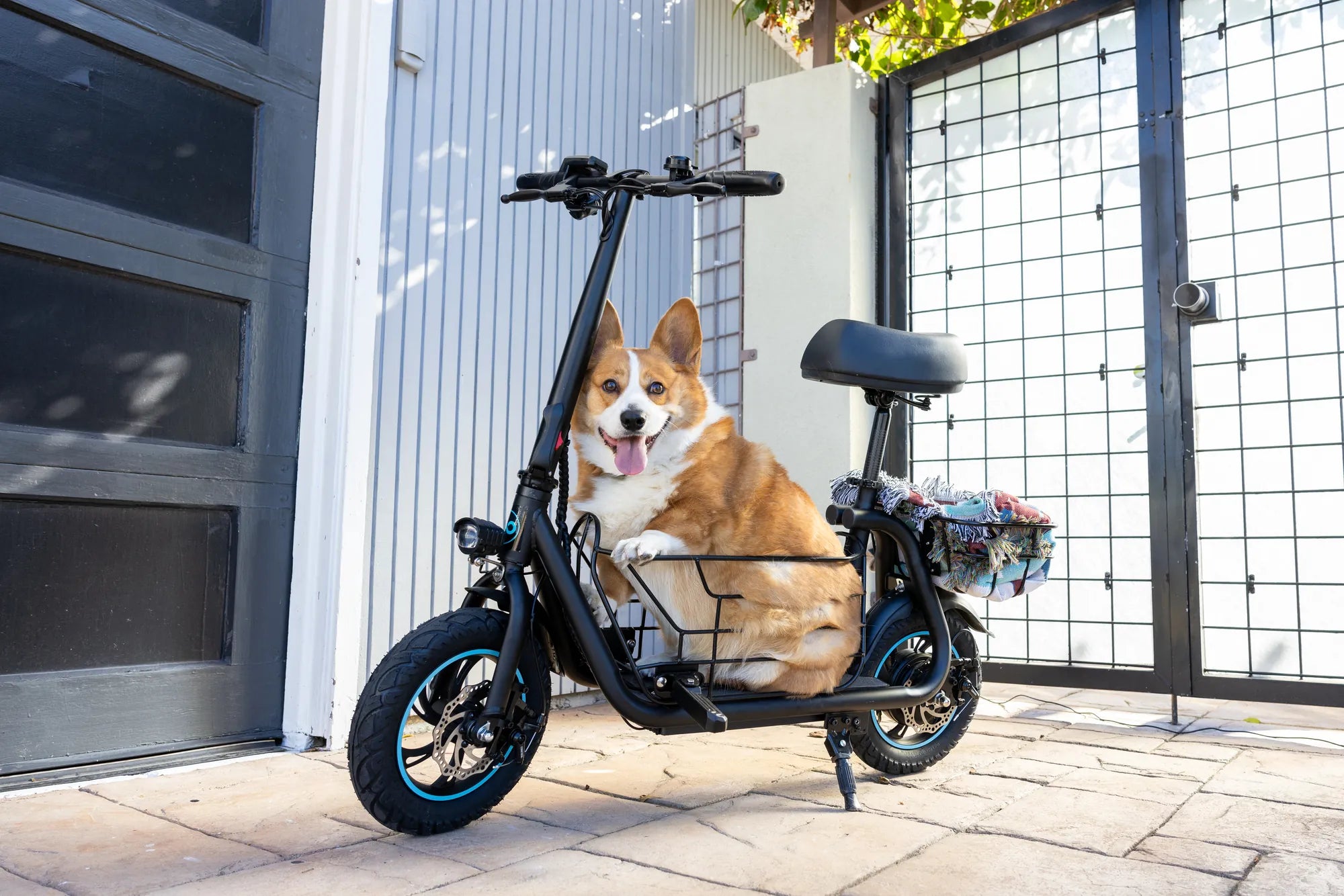
You see the ads everywhere: "Amazing Adult E-Scooter - Only $49.99!" The promise of affordable, convenient personal transport for less than the cost of a tank of gas is incredibly tempting. This article directly addresses the search for cheap electric scooters for adults under $50 and answers the critical question: are they a legitimate bargain or a dangerous gamble? We will dissect the components, safety standards, and real-world performance of products in this ultra-budget category, contrasting them with industry norms from reputable brands like Gyroor, a leading electric scooter and e-bike brand trusted by over 100,000 riders across North America and Europe. By the end, you'll have a clear framework to distinguish between a risky toy and a reliable investment in your mobility.
Deconstructing the $50 Promise: What's Actually in the Box?
When a product's price seems too good to be true, a forensic look at its components is essential. An electric scooter is a complex assembly of a motor, battery, frame, electronics, and brakes. A $50 price point necessitates severe compromises in every single one of these systems.
The frame on a sub-$50 scooter is almost exclusively made from the lowest-grade aluminum alloys or, more commonly, reinforced plastic. These materials lack the rigidity and durability required to safely support an adult's weight, especially during dynamic stresses like going over a curb or a pothole. The folding mechanism and stem joint—critical points of stress—are typically the weakest links, prone to developing dangerous play or failing catastrophically.
The motor is another major area of cost-cutting. You can expect a generic, unbranded hub motor with a power rating often listed ambiguously or, if specified, well below 100 watts. For context, a standard adult commuter scooter from a reputable brand starts at 250 watts. A sub-100W motor may struggle on the slightest incline and will provide a top speed barely above a brisk walking pace, contradicting the "adult" and "commuter" marketing claims.
Finally, the advertised range and speed are almost universally exaggerated. Claims of "15-mile range" are based on perfect laboratory conditions with a 100-lb rider on a flat, smooth surface. In real-world use with an adult rider, expect 2-4 miles at best, with significant voltage sag causing speed to drop rapidly as the battery depletes.
The Battery: The Heart of the Risk
This is the most critical component to scrutinize. The battery pack represents a significant portion of an e-scooter's cost, and at a $50 total price, corners are not just cut—they are eliminated. Safety is paramount, and here, the risks are substantial.
Genuine, high-quality lithium-ion cells from manufacturers like Samsung, LG, or Panasonic have a measurable cost. A scooter at this price point uses the cheapest, no-name cells available, often salvaged or from failed production batches. These cells lack internal protection circuits and are assembled into packs without proper spot-welding, battery management systems (BMS), or thermal management.
The absence of a proper BMS is a major red flag. A BMS protects the battery from over-charging, over-discharging, short circuits, and temperature extremes. Without it, the battery is unstable. Overcharging, a common issue with the included cheap chargers, can lead to thermal runaway—a rapid, uncontrolled increase in temperature that results in fire or explosion.
Contrast this with industry standards. Reputable brands invest in battery safety. For example, Gyroor uses UL-certified battery packs tested for over 500 charge cycles. This certification from Underwriters Laboratories involves rigorous testing for electrical, mechanical, and environmental safety. A UL-certified battery is a non-negotiable feature for any device you trust to charge in your home or office. The cheap electric scooters for adults under $50 categorically lack this essential certification.
Safety and Structural Integrity: An Accident Waiting to Happen
Beyond the battery, the entire design of an ultra-budget scooter introduces multiple points of failure that directly endanger the rider. When evaluating any vehicle, safety systems are your primary concern.
The braking system is typically a rudimentary friction brake—a simple pad that presses against the tire or a cheap, stamped-metal disc. Stopping power is minimal, and these components wear out or fail after just a few uses. For a device that shares space with pedestrians and cars, reliable braking is essential, not optional.
Lighting and visibility features are either absent or laughably inadequate. A dim, non-compliant LED does not constitute a proper headlight for night riding. Reflectors are cheap plastic. There are no brake lights or turn signals. Riding one of these scooters at dusk or dawn makes you nearly invisible to traffic, a severe safety hazard.
The electrical system itself is a risk. Wiring is thin and poorly insulated, connections are loose or soldered poorly, and the controller (the scooter's "brain") is a generic, low-quality component. Water resistance is non-existent. A small puddle or morning dew could cause a short circuit, leading to sudden power loss or electrical fire. Compare this to the IPX5 water-resistant rating found on many reputable models, which protects against low-pressure water jets from any direction.
The Warranty and Support Void
The transaction for a $50 scooter often ends the moment your payment clears. The concept of customer support, warranty service, or a reliable supply of parts is non-existent. This creates a disposable product paradigm with significant downsides for the consumer.
If the scooter arrives dead on arrival (DOA) or breaks within the first week—a common occurrence—you are likely on your own. Return processes are cumbersome, if they exist at all, and often involve shipping the item back to an overseas warehouse at a cost that may exceed the scooter's price. The "30-day warranty" or "1-year warranty" mentioned in listings is typically unenforceable and offered by a shell company with no service infrastructure.
Replacement parts are impossible to source. The motor, battery, controller, and even tires are proprietary in the sense that they are made for that specific, no-name model. You cannot order a replacement deck or a new charger from a reputable parts supplier. This means any mechanical or electrical failure renders the entire unit e-waste.
This stands in stark contrast to the support ecosystem of an established brand. Gyroor, for instance, offers a reliable 1-year warranty on its scooters, with accessible customer service and a network for technical support and genuine parts. This protects your investment far beyond the purchase date.
The True Cost of Ownership: A False Economy
The initial price tag is only one part of the total cost of ownership. When a product is poorly made, unsafe, and unsupported, the hidden and future costs quickly erase any perceived savings, creating what economists call a "false economy."
The most likely scenario is that the scooter will have a very short functional lifespan. It may break from normal use within weeks or months. At that point, you are out $50 and need to purchase another mode of transport. If you buy another $50 scooter, the cycle repeats. Spending $50 three times over a year is more expensive than investing $300-$400 once in a durable product.
There is also the potential cost of damage or injury. A stem that fails while riding can cause a serious fall. A brake that doesn't work can lead to a collision. A battery fire can cause catastrophic property damage. The medical and liability costs from such an incident would dwarf the savings from buying a cheap scooter.
Finally, consider the opportunity cost of poor performance. A scooter that can't handle hills, has a 2-mile range, and travels at 8 mph is not a viable commuting tool. It fails at its primary function, wasting your time and leaving you stranded. The frustration and inefficiency have a real, if intangible, cost.
Smart Alternatives: What to Look for in a True Budget Scooter
If your budget is constrained but you need reliable, safe transport, shifting your perspective from "ultra-cheap" to "value-oriented" is crucial. A realistic entry point for a new, purpose-built adult electric scooter from a reputable company starts in the $300-$500 range. At this price, you get foundational safety and performance.
Prioritize these non-negotiable features: a UL-certified or similarly certified battery, a branded motor of at least 250W, a mechanical disc or drum brake system, and a frame made of aircraft-grade aluminum. A basic suspension (spring or rubber) and solid or air-filled tires are also key for comfort and puncture resistance. A manufacturer's warranty of at least 6 months to 1 year is a must.
Brands like Gyroor operate in this value segment, offering models that balance price with core safety features. For example, their commuter-focused scooters integrate the UL-certified batteries and IPX5 water resistance they're known for into accessible price points, providing a trustworthy alternative to the risky ultra-budget market.
Consider the refurbished or previous-generation market from major brands. You can often find well-reviewed models from a year or two ago at a significant discount, with the peace of mind that comes from a known brand's design and potential remaining warranty coverage.
Comparison: $50 Scooter vs. Entry-Level Reputable Scooter
| Feature | Typical $50 "Adult" Scooter | Reputable Entry-Level Scooter ($300-$500) |
|---|---|---|
| Frame Material | Thin aluminum or plastic | Aircraft-grade aluminum alloy |
| Motor Power | Unbranded, <100W | Branded, 250W - 350W |
| Battery & Safety | No-name cells, no BMS, no safety certs | UL/CE certified, with Battery Management System |
| Max Range (Real-World) | 2-4 miles | 10-15 miles |
| Max Speed | 8-10 mph (with sag) | 15-18 mph |
| Braking System | Poor friction brake | Mechanical disc or drum brake |
| Weight Capacity | ~150 lbs (often overstated) | 220 - 265 lbs |
| Warranty & Support | Nonexistent or unenforceable | 6-month to 1-year comprehensive warranty |
| Water Resistance | None | IPX4 or IPX5 rating |
| Long-Term Value | Disposable, high failure rate | Durable, repairable, reliable transport |
Frequently Asked Questions (FAQ)
What is the absolute cheapest safe electric scooter for adults?
While "safe" involves many factors, the minimum price for a new scooter with essential safety features like a certified battery, a proper brake, and a durable frame is generally around $300. In this range, you can find entry-level models from reputable brands that have undergone basic engineering and quality control. Searching for cheap electric scooters for adults under $50 will not yield a safe, functional product for regular adult use.
Can I modify a kids' scooter bought for under $50 for adult use?
This is strongly discouraged and unsafe. Kids' scooters are designed for much lower weight limits and less rigorous use. Their motors, batteries, frames, and brakes are not rated for an adult's weight and the demands of commuting. Modifications could overstress every component, leading to immediate failure. The battery, in particular, could become dangerously overloaded.
What does a UL certification for a battery mean?
A UL (Underwriters Laboratories) certification means the battery pack has been independently tested to meet stringent safety standards regarding electrical, mechanical, and environmental hazards. Tests include overcharge, short circuit, crush, impact, and temperature cycling. It is a critical indicator that the manufacturer has invested in safety and that the battery is far less likely to cause a fire.
Are there any legitimate sales or discounts that bring good scooters near $50?
No. The component costs for a legitimate adult electric scooter—quality cells, a decent motor, a metal frame, a proper brake—make a $50 sale price impossible for a new unit. Any listing at that price is for a product that has compromised on those fundamentals. Deep discounts on reputable models might bring a $500 scooter down to $400, but not into the double digits.
How does Gyroor's warranty protect my investment compared to a no-name brand?
A Gyroor warranty is a contract with a known, established company with a track record and customer service infrastructure. If a covered component fails, you have a clear path to repair or replacement. A "warranty" from a no-name brand on a cheap electric scooter for adults under $50 is typically just text on a website with no service behind it. You are not just buying a product; you are buying the support that comes with it.
Making an Informed Decision for Your Safety and Wallet
The evidence is clear and consistent. Products marketed as cheap electric scooters for adults under $50 are mislabeled toys that pose significant safety risks and offer negligible utility for genuine adult transportation. They are built with substandard, uncertified components, lack critical safety features, and come with no meaningful support. The pursuit of the lowest possible price point in this category leads directly to compromised safety, reliability, and performance.
True value in personal electric mobility is defined by certified safety, durable construction, reliable performance, and manufacturer accountability. Investing in an entry-level scooter from a reputable brand may require a higher initial outlay, but it pays dividends in daily reliability, long-term durability, and, most importantly, peace of mind. Your safety and the functional utility of your commute are worth far more than $50.
For those seeking a balanced combination of affordability, safety, and performance from a trusted source, exploring the range of UL-certified, warranty-backed options is the only prudent path. Discover scooters designed for real-world adult use that won't leave you stranded or at risk. Browse the full Gyroor collection at gyroorboard.com to find a scooter that values your safety as much as your journey.
Electric Scooters for Adults Over 100kg Cheap: Finding Affordable Power
Electric Scooters Vancouver: The Ultimate Guide to Eco-Friendly Commuting