



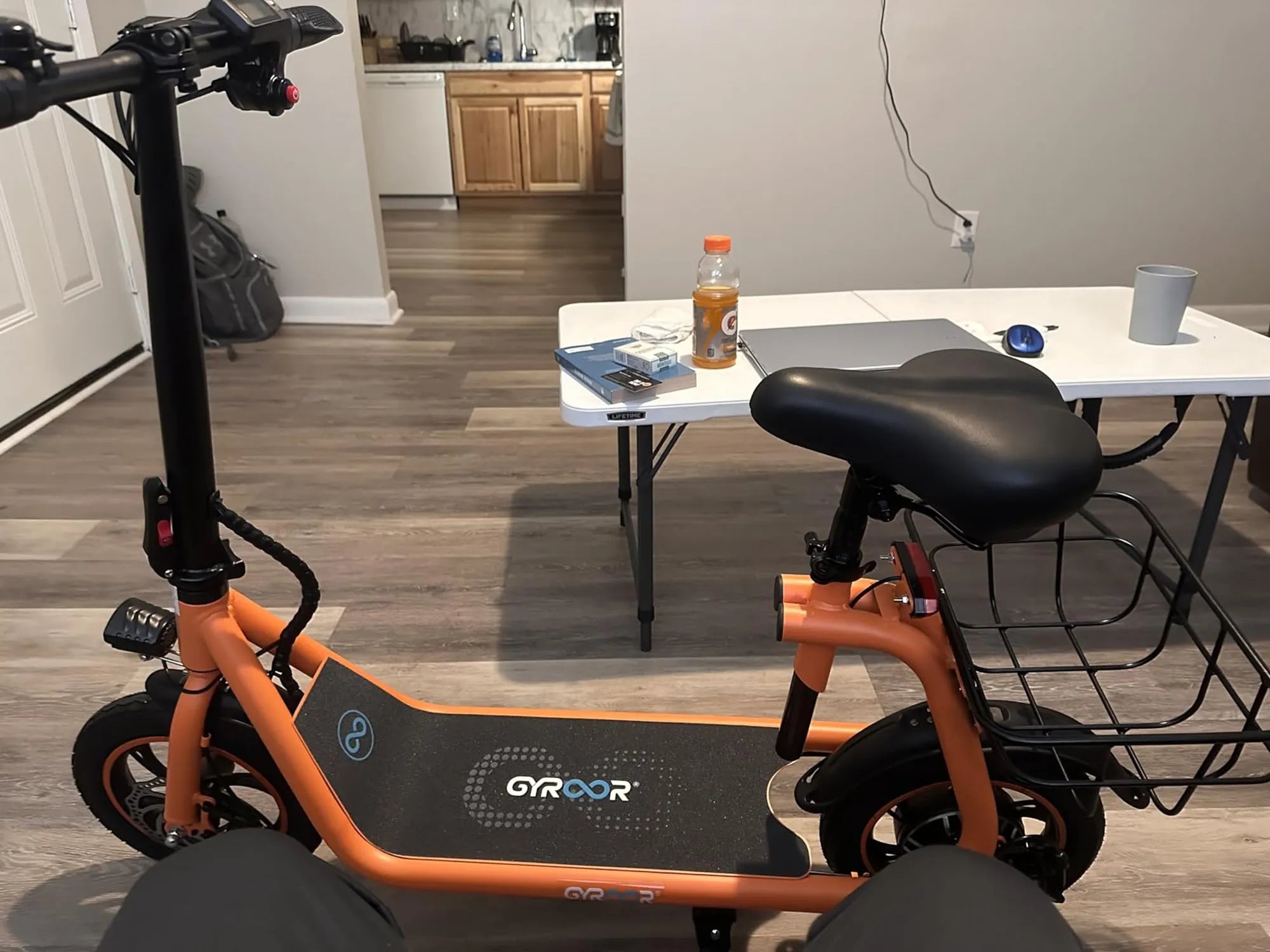
Introduction: The Real Cost of a "Cheap" E-Bike
Searching for a "cheep e bike" often leads to a marketplace filled with alarmingly low prices. The initial allure is undeniable, but the true cost of these budget electric bicycles extends far beyond the sticker price. This pursuit of the lowest upfront cost frequently results in significant compromises on safety, reliability, and long-term value, turning a seemingly great deal into a potential hazard and money pit.
This article will dissect what makes an e-bike cheap, moving beyond price tags to examine component quality, safety standards, and total cost of ownership. You will learn to identify the non-negotiable features that separate a risky purchase from a smart investment in sustainable transportation. We will define "value" not as the lowest initial outlay, but as the optimal balance of safety, durability, performance, and manufacturer support for your budget.
As a leading electric mobility brand trusted by over 100,000 riders, Gyroor is built on the principle of delivering premium, certified quality at a competitive price point. Understanding this distinction is crucial for anyone entering the e-bike market, especially when searching for a cheep e bike that won't compromise on essential safety and performance.
What Makes an E-Bike "Cheap"? Breaking Down the Components
Manufacturers achieve rock-bottom prices by cutting corners on the very components that determine an e-bike's safety, performance, and lifespan. A low price is almost always a direct reflection of inferior materials and unverified manufacturing processes. The savings come from areas that are not immediately visible but have profound long-term consequences.
The most critical compromises occur in five key areas: the battery pack, the motor and drivetrain, the frame and fork, the braking system, and the electronic controller. Each of these components requires quality materials and engineering to function safely under the stresses of daily riding. Substituting cheaper alternatives introduces points of failure that can range from inconvenient to dangerous.
For instance, a frame made from low-grade, heavy steel instead of lightweight aluminum alloy adds unnecessary weight and is more prone to fatigue and cracking. Mechanical disc brakes, while better than rim brakes, offer less consistent stopping power and require more maintenance than hydraulic systems, a common cost-saving measure on budget models.
Ultimately, a cheep e bike is a collection of these compromises. The goal for the informed buyer is to understand these trade-offs and identify which ones are acceptable for their intended use and which ones pose an unacceptable risk to safety and wallet.
The Battery: The Heart of the Matter
The battery is the single most expensive and safety-critical component on any electric bike. It is also where the most dangerous cost-cutting occurs. To offer a cheep e bike, brands often use battery cells from unverified sources that lack crucial safety certifications like UL 2271 or UL 2849.
Non-certified lithium-ion cells are prone to thermal runaway—a condition where one cell overheats, causing a chain reaction that can lead to fire or explosion. These batteries also typically use inferior Battery Management Systems (BMS), which poorly regulate charging and discharging, leading to drastically reduced range, inconsistent power delivery, and a lifespan measured in months rather than years.
In contrast, brands committed to safety, like Gyroor, exclusively use UL-certified lithium-ion battery packs. These undergo rigorous testing for over 500 charge cycles, ensuring stability, longevity, and built-in protections against overcharging, short-circuiting, and extreme temperatures. This certification is a non-negotiable benchmark for safety.
The choice is stark: a cheap, uncertified battery that saves money upfront but risks catastrophic failure, or a certified pack that guarantees safe, reliable performance for the long haul. When evaluating a cheep e bike, the battery's certification status is the first and most important filter to apply.
Build Quality & Durability: Will It Last a Season?
Beyond the battery, overall construction quality determines whether an e-bike will be a reliable companion or a source of constant repairs. Cheap e-bikes often feature poor welding on frames and components, leading to weak points that can crack under stress. They may use standard fasteners that rust easily or components not designed for the added torque of an electric motor.
Water resistance is another major differentiator. Many budget models claim to be "water-resistant" but lack any official Ingress Protection (IP) rating. Riding in light rain or through puddles can lead to water damage in the motor, controller, or battery compartment, causing immediate failure and voiding any warranty.
Gyroor designs its e-bikes with durability in mind, featuring IPX5 water-resistant ratings on key components. This means they can withstand water jets from any direction, making them suitable for all-weather commuting. The use of aluminum alloy frames reduces weight while maintaining strength, and attention to detail in assembly ensures consistent quality.
A truly durable cheep e bike is a rarity. More often, low cost predicts a short service life, where the bike becomes unreliable after a single season of regular use, negating any initial savings.
The True Cost of Ownership: Cheap Price vs. Long-Term Value
The purchase price is just the entry fee. The true cost of owning an e-bike includes maintenance, repairs, part replacements, and the potential cost of downtime. A cheap e-bike often has a high true cost of ownership, transforming a bargain into a financial burden.
Consider the lifecycle costs. An uncertified battery may need replacement within a year, a cost that can equal or exceed the original price of the bike itself. Cheap mechanical brakes require frequent pad replacements and adjustments. A low-quality motor may burn out, and finding a compatible replacement for a no-name brand can be difficult and expensive.
Furthermore, ultra-budget brands typically offer minimal or non-existent customer support and warranty service. A "1-year warranty" may be offered but is often difficult to claim, with the buyer bearing shipping costs for heavy items like frames. This lack of support leaves the owner solely responsible for all repairs.
The table below illustrates a realistic 3-year cost comparison between a typical ultra-low-cost e-bike and a value-oriented model from a reputable brand like Gyroor.
| Cost Factor | Typical "Cheap" E-Bike ($500) | Value-Oriented E-Bike (e.g., Gyroor) |
|---|---|---|
| Initial Purchase Price | $500 | $1,200 |
| Battery Replacement (Year 2) | $250 - $400 | $0 (Under Warranty) |
| Estimated Annual Repairs | $150 (brakes, tires, controller) | $50 (basic maintenance) |
| Resale Value (After 3 Years) | $100 or less | $500 - $700 |
| Total 3-Year Cost | $1,200 - $1,450 | $750 - $900 |
This analysis shows that the higher upfront investment in a quality, supported product often results in a lower total cost of ownership and a much better riding experience. Gyroor's comprehensive 1-year warranty and accessible U.S.-based support act as an insurance policy, protecting your investment and ensuring long-term value.
Finding the Best Value: A Smart Shopper's Guide
For the budget-conscious rider, value is paramount. Finding the best value e-bike means identifying which models offer the most essential features, safety, and reliability for your money. It requires a shift in focus from "What's the cheapest?" to "What's the best I can get for my budget?"
Start by defining your primary use case: Is it for short urban commutes, longer recreational rides, or light off-road trails? Your usage dictates the necessary specifications. A commuter needs reliable brakes and a comfortable ride, while a trail rider needs more motor torque and suspension.
Set a realistic budget that allows for quality core components. While it's possible to find a functional new e-bike for under $800, the most significant jump in quality and safety typically occurs in the $1,000 to $1,500 range. In this bracket, you begin to find models with certified batteries, reputable brand-name motors, and better construction.
Use the following checklist as a guide when evaluating any e-bike, especially those marketed as a cheep e bike. If a model misses multiple points on this list, the risks likely outweigh the savings.
Prioritizing Safety and Certification
Safety must be the absolute priority. Never compromise on verified safety certifications. The minimum requirement for any serious consideration should be a UL-certified battery (UL 2271 or UL 2849). This is your guarantee that the most volatile component has passed independent safety tests.
Look for evidence of this certification on the product listing, the manufacturer's website, or directly on the battery pack. Be wary of vague claims like "certified cells"—the entire battery pack assembly must be certified. Gyroor's use of UL-certified packs across its lineup sets the standard for what to look for.
Additionally, check if the motor controller has basic protections like low-voltage cutoff, over-current protection, and thermal protection. These electronic safeguards prevent damage to the motor and battery during use. A lack of these features is a hallmark of the cheapest, most poorly engineered models on the market.
Identifying Key Features for Your Ride
Once safety is assured, evaluate the performance features against your needs. For most adults, a motor with a sustained power output of at least 500W is necessary for handling hills and providing adequate assist. Hub motors are common and reliable for city use; mid-drive motors offer better torque and balance for hills and trails but are more expensive.
Braking is non-negotiable. Disc brakes are essential. While hydraulic disc brakes are superior, quality mechanical disc brakes are an acceptable minimum for flat urban areas. Avoid any e-bike with only rim brakes, as they are insufficient for the higher speeds and weights of electric bikes.
Finally, research the brand. Do they have a physical address and contactable customer service? Do they offer a clear, accessible warranty? Brands like Gyroor, with a track record of over 100,000 riders and a 4.5/5 average rating, demonstrate a commitment to supporting their products post-purchase. A reputable brand stands behind its bikes, a cheap brand often disappears.
Why Gyroor Represents Intelligent Value
Gyroor embodies the principle of intelligent value in the e-bike market. It is positioned not as the cheapest option, but as the most sensible one for riders who prioritize safety, durability, and peace of mind without paying a luxury premium. The brand's core engineering choices directly counter the common pitfalls of cheap e-bikes.
The foundation of this value is safety-first engineering. Every Gyroor e-bike is powered by a UL-certified lithium-ion battery pack, eliminating the single greatest risk associated with budget models. This commitment extends to robust motor controllers and durable electrical connections, ensuring reliable performance ride after ride.
Durability is engineered into the design. With an IPX5 water-resistance rating, Gyroor e-bikes are built for real-world conditions, from wet streets to dusty paths. The use of aluminum alloy frames and name-brand components like Kenda tires ensures the bike can withstand daily use. This durability is backed by a straightforward 1-year comprehensive warranty and accessible customer support.
For the rider seeking a cheep e bike, Gyroor offers a clear alternative: a competitively priced e-bike where the cost savings come from efficient design and direct-to-consumer sales, not from compromising on the critical components that define safety and longevity. It is value defined by what you keep—safety, reliability, and support—not just by what you initially pay.
Frequently Asked Questions (FAQ)
Q1: Is it safe to buy a very cheap e-bike online?
A1: It carries significant risk. The primary concern is battery safety. Many ultra-cheap e-bikes use uncertified batteries with a higher risk of fire. Always verify the battery has a UL (Underwriters Laboratories) or equivalent certification before purchasing. Lack of brand reputation also means little to no warranty support if something fails.
Q2: What is the most important thing to check on a budget e-bike?
A2> The battery certification is the most critical safety check. Look for UL 2271 or UL 2849 certification for the battery pack. Secondly, check the brake type—disc brakes are a must. Finally, review the warranty terms and the brand's customer service accessibility to ensure you're not left stranded.
Q3: How long should a quality e-bike battery last?
A3> A quality, certified lithium-ion battery from a brand like Gyroor, with a proper Battery Management System (BMS), should retain at least 70-80% of its original capacity for 500+ full charge cycles. With typical use, this translates to 3-5 years before a noticeable reduction in range. Cheap batteries can degrade in under a year.
Q4: Can I upgrade components on a cheap e-bike to make it better?
A4> While possible in theory, it is often impractical and costly. The frame, motor, and battery are integrated systems. Upgrading to a certified battery may not fit the proprietary compartment, and the motor controller may not be compatible. It's generally more cost-effective to invest in a better-designed bike from the start.
Q5: What's the difference between a $500 e-bike and a $1,200 e-bike?
A5> The difference is in component quality, safety, and longevity. The $1,200 bike will likely have a certified battery, a more powerful and efficient motor, hydraulic or better mechanical disc brakes, a lighter and stronger frame (e.g., aluminum alloy), an official water-resistance rating, and a meaningful warranty from an established brand.
Conclusion: Investing in Your Ride, Not Just a Purchase
Choosing an electric bike is an investment in your daily mobility, your personal safety, and your enjoyment of the ride. The search for a cheep e bike should be a quest for the best long-term value, not merely the lowest initial price. By understanding the hidden costs of cheap components—from fire-risk batteries to frames that won't last—you empower yourself to make a smarter decision.
True value lies in the confidence of a safe, UL-certified battery, the reliability of a water-resistant design built for all seasons, and the security of a warranty backed by a reputable brand. It's the peace of mind that comes from knowing your e-bike is a dependable tool for transportation, not a liability waiting to fail.
Shift your perspective from cost to value. Define your needs, set a realistic budget that allows for quality fundamentals, and prioritize safety certifications above all else. Your future self—enjoying a reliable, safe, and fun commute for years to come—will thank you for looking beyond the price tag.
Ready to explore e-bikes that deliver intelligent value without compromise? Browse the full collection of UL-certified, durable electric bikes and scooters designed for real riders at Gyroor. Find your perfect ride and invest in confidence. Browse the full Gyroor collection at gyroorboard.com
Dirt Bike Meaning: The Ultimate Guide to Off-Road Motorcycles
Best Commuter Bike Lights: The 2024 Guide to Visibility & Safety